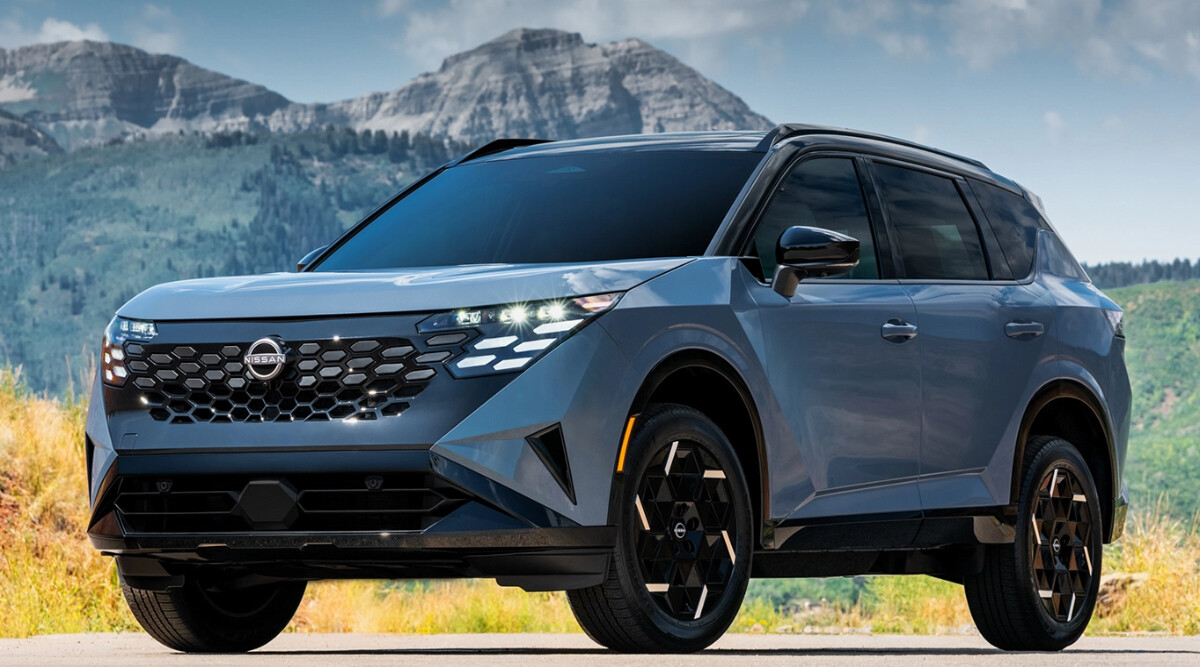
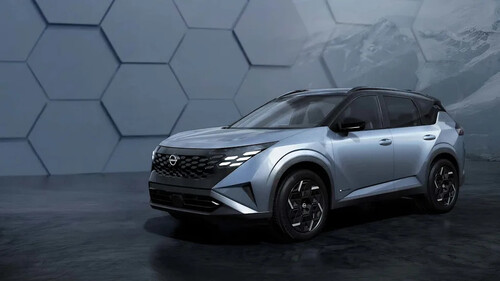
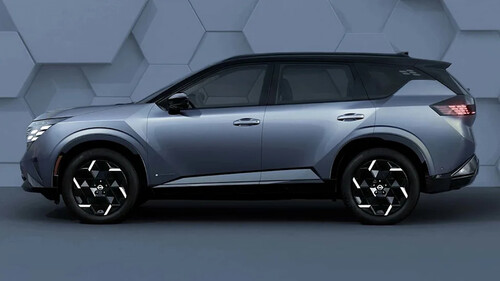
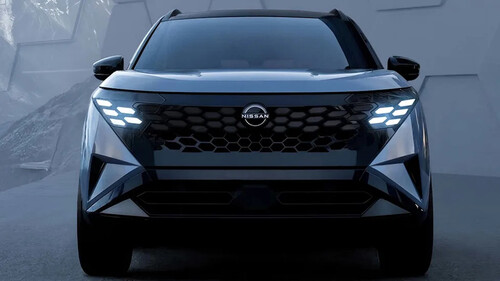
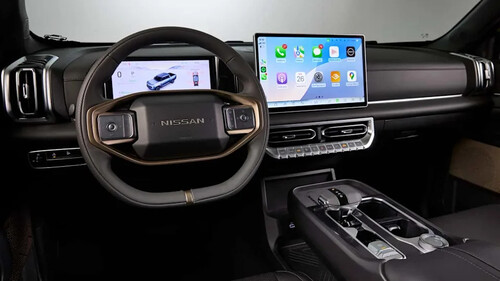
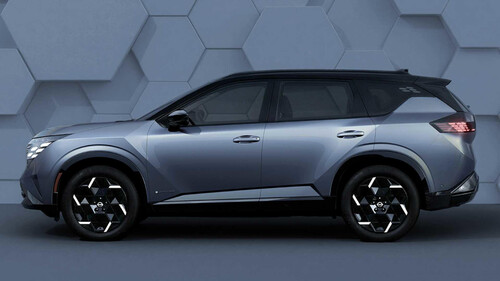
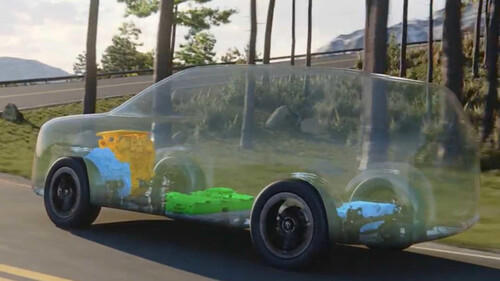
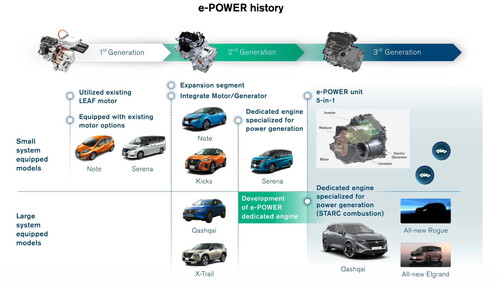
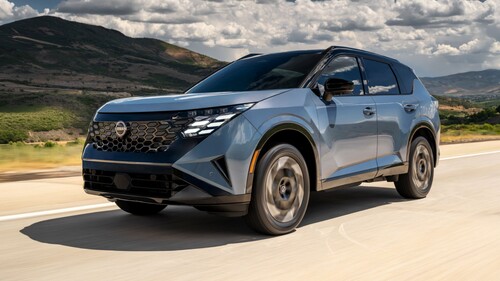
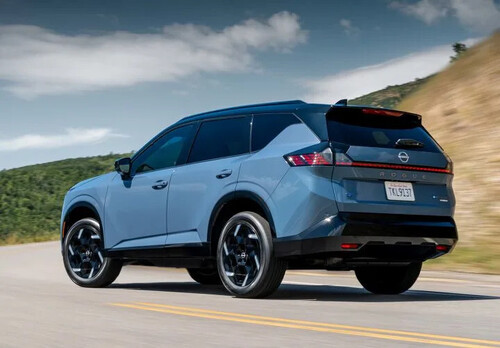
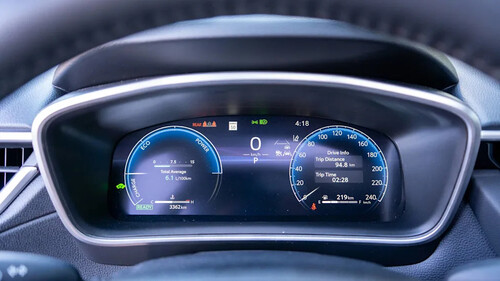
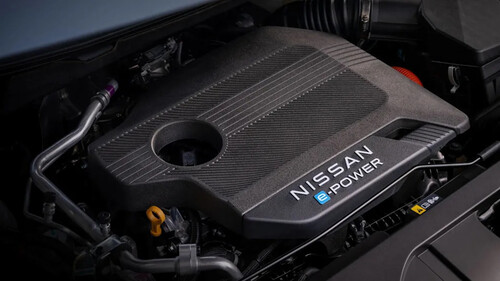
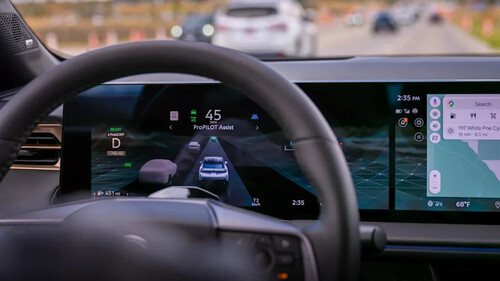
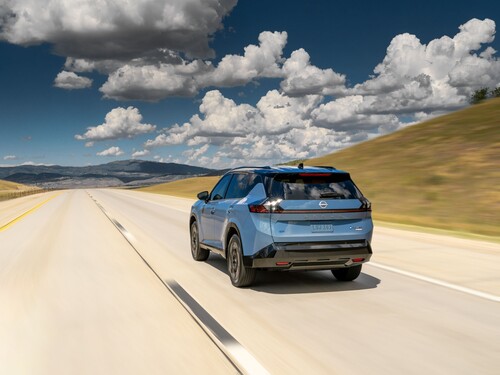
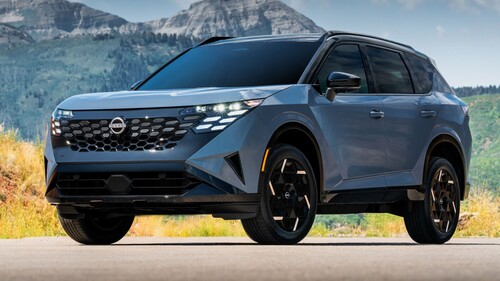
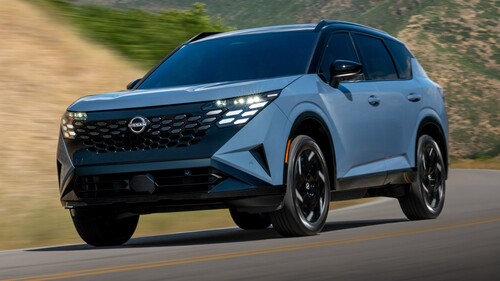
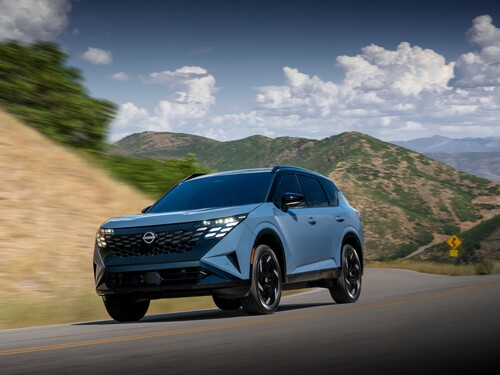
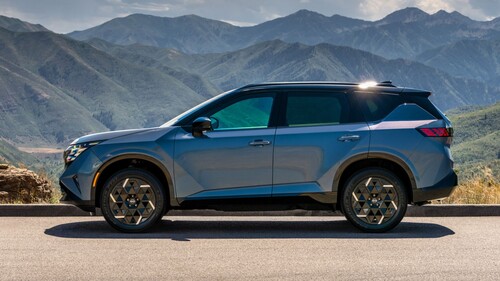
Nissan has a spiffy new model for the US market — the Rogue Hybrid — which uses what the company calls its e-POWER technology. Unlike conventional hybrids, which have a direct mechanical connection between the gasoline engine and the wheels, with e-POWER the engine does absolutely nothing other than spin a generator to keep the battery charged. There is no mechanical connection to the wheels, which eliminates the need for a transmission entirely. Step on the accelerator, and the Rogue Hybrid responds like a true electric car with instant torque from its nearly silent powertrain. According to Kelley Blue Book, the Rogue Hybrid does drive like an electric car. Stomp on the accelerator, and it scoots forward with the kind of instant torque from its dual motors that EV drivers love. Nissan has added a new system it calls Smooth Stop, which “automatically modulates brake pressure at the end of a stop, reducing head-toss and creating a more controlled, refined stopping experience,” according to a company press release. The Rogue Hybrid behaves like most electric cars, thanks to what Nissan calls e-Pedal. Most of us refer to it, though, as regenerative braking, which harvests electrons while bringing the car to a stop. A Self-Charging Electric Car? Kelley Blue Book compares the Rogue Hybrid to the Chevy Volt, but that comparison is inaccurate. The Volt had a plug that allowed its 17 kWh battery to be charged by an external source. It had about 50 miles of battery-only range, which meant many drivers could drive using battery power exclusively the majority of the time. Several CleanTechnica readers own Volts and report using less than 10 gallons of gasoline a year. Chevrolet engineers even programmed the engine to start up every few months just to make sure the oily bits were kept properly lubricated. The Rogue Hybrid has no plug. The only way its battery can be charged is by using the turbocharged 1.5 liter three cylinder gasoline engine that sits under the hood. Nissan says that the engine is 42 percent efficient, which is a wonderful measure. But the Rogue Hybrid is still a gasoline powered car, no matter how many fancy badges you slap on its exterior. The company claims that in internal testing, the Rogue Hybrid achieved 40 mpg city, 36 mpg highway, and 38 mpg combined. Official EPA numbers are not yet available. Being the fierce EV advocates that we are, we have to point out that a true electric car would likely be nearly three times more efficient, with an EPA MPGe rating of around 120. The e-POWER Promise Nissan has been promoting its e-POWER system for several years now and says it has sold more than 4 million vehicles equipped with the system in more than 68 countries around the world. But the Rogue Hybrid is the first time the technology has been available in the US. Every major automaker is jumping into the hybrid space with both feet. Is it any wonder that buyers are confused about the difference between series and parallel hybrid powertrains, or between plug-in hybrids and ordinary hybrids? We can’t help but feel that Nissan is pulling a bit of a bait-and-switch here, much the way Toyota used to refer to its hybrids as “self charging electric cars.” The truth of the matter is the Rogue Hybrid is 100 percent powered by gasoline and any inference to the contrary is inaccurate. The e-POWER system may originally have been created to allow Nissan to get around patents held by Toyota on its hybrid technology, but the car is a generation behind the Chevy Volt and hardly cutting edge today. The whole idea is disingenuous, in our opinion. For instance, buried deep Nissan press release is this little tidbit. The battery is a measly 1.67 kWh affair. That’s pretty small potatoes when it comes to powering two electric motors — 202 hp with 242 lb-ft of torque in front and 134 hp with 144 lb-ft of torque in the rear. Nissan claims the powertrain “continuously adjusts torque distribution between the front and rear motors to optimize traction and stability and can apply light braking to inside wheels for more precise cornering.” The available total power is just 225 HP, not the 336 HP you might expect by simply adding the output of both motors together. Nissan is quick to point out that the gasoline engine shuts off when the battery is fully charged. That’s great, but the Chevy Volt had a battery-only range of around 50 miles. The Rogue Hybrid with a battery that is only one tenth the size should have a much shorter range than the Volt, which was introduced over a decade ago. We have to think that Nissan can and should do better. Customers May Be Confused Nissan suggests it is offering people an electric SUV experience, but that is really only part of the story. The e-POWER powertrain is rife with opportunities to mislead and confuse customers at a time when people are seeking real alternatives to sky high fuel costs. It’s hard to imagine that little 3 banger engine won’t be spinning the generator a good deal of the time while the car is in motion. Ponz Pandikuthira, the chief product and planning officer for Nissan Americas, is not concerned. “The all-new Rogue Hybrid is exactly what customers have been asking for: the functionality, technology and packaging of a Rogue, now paired with an advanced hybrid powertrain that enhances efficiency while delivering a dynamic driving experience,” he said in the press release. “By listening closely to customers and designing around their needs, we’ve created a hybrid SUV that delivers an agile and spirited driving experience while adding the benefits of a hybrid powertrain. The instantaneous torque delivery, with a quiet and efficient powertrain, will redefine what hybrid means in this segment.” Credit: Nissan Inside, the Rogue Hybrid is stuffed with all the electronic aids and creature comforts today’s drivers expect, and the press release waxes eloquent about them at all. If the Rogue Hybrid tickles your fancy, feel free to read the full presser to learn more about the various touchscreens available in the various trim levels. Suffice to say, if you are looking for a modern, dual motor SUV with all the creature comforts you could want, the Rogue Hybrid will not disappoint, as long as you fully understand what the car is and what it isn’t. According to Kelley Blue Book, prices for the new model are as follows: 2027 Nissan Rogue Hybrid SV $37,065 2027 Nissan Rogue Hybrid SV with SV Premium Package $39,165 2027 Nissan Rogue Hybrid SR $39,065 2027 Nissan Rogue Hybrid SR with SR Tech Package $43,065 2027 Nissan Rogue Hybrid Platinum $45,065 The new 2027 Rogue Hybrid will go on sale this fall, beginning with the Rogue Hybrid SR with Tech Package. The other trim levels are slated to go on sale in early 2027. It is priced well below the average cost of a new car in America today, which is good, but whether it offers good value fore the money is something only each individual customer can decide.