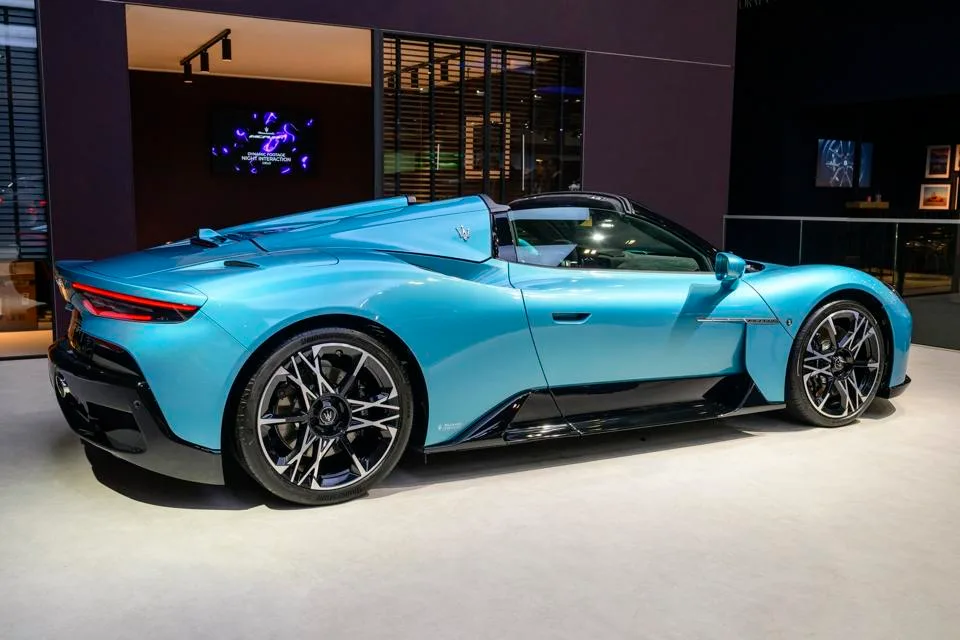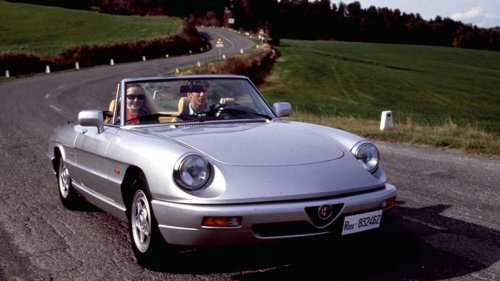
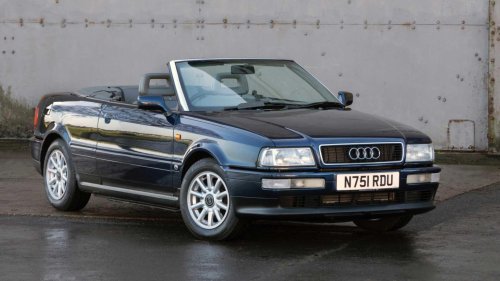
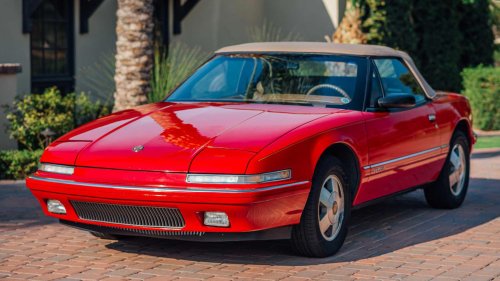
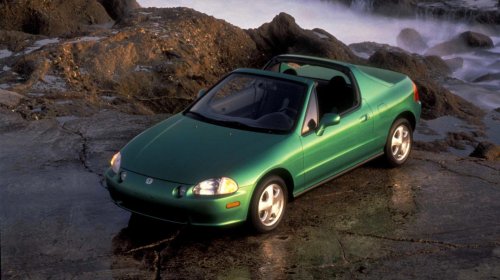
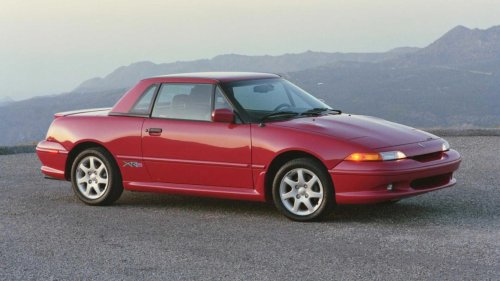
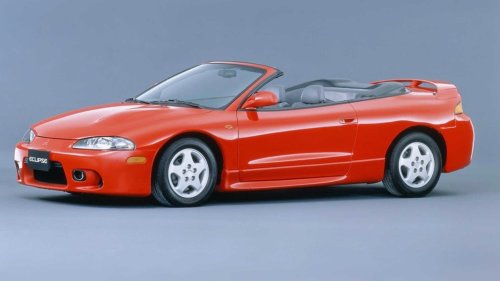
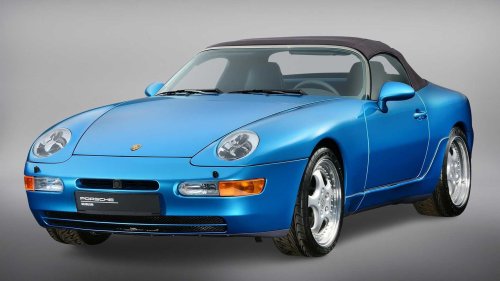
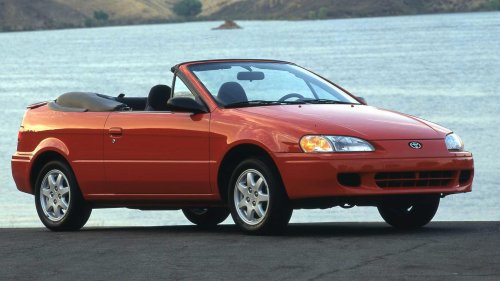
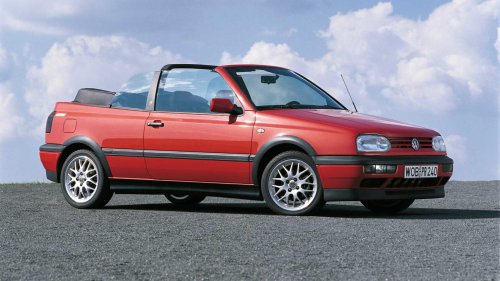
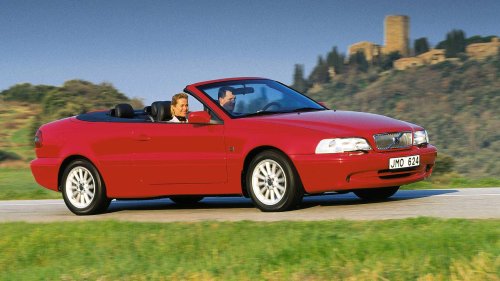


















The inexpensive convertible is a dying breed these days. While a decent number of luxury and performance cars still come as drop-tops, if you want something at the more affordable end of the market, you're pretty much limited to the Mazda MX-5 Miata, Ford Mustang, or Mini Cooper Convertible.The lack of affordable convertibles wasn't always the way, though. In the 1990s, the convertible market was booming. Here are 10 cabriolets from that era that we don't think get the love they deserve. They are listed in alphabetical order. Alfa Romeo Spider S4 An Aging Italian With A ’90s Facelift Alfa Romeo Spider S4 silverThe arrival of the original Mazda Miata in 1989 was hailed as the return of the classic two-seater, rear-wheel-drive roadster, but at Alfa Romeo, this type of vehicle never really went away. The company simply kept building a vehicle similar to the one it had launched in 1966.Sure, the Alfa Spider's styling would be gradually updated over the years. However, there was no getting around the fact that by the time the Series 4 car was launched in 1990, it was a 24-year-old platform, wearing yet another heavy facelift to keep the product competitive. Still, the appeal of its recipe was Alfa's fizzy dual-overhead camshaft four-cylinder was something that never really went away.The S4 Spider was short-lived, with the model dying off in 1993, a couple of years shy of the platform's 30th birthday. It was replaced by an all-new front-wheel-drive Spider that same year, but with Alfa's North American market exit already on the horizon, the product never came to the US. Audi Cabriolet A Muscular Drop-Top Fit For A Princess Audi Cabriolet frontWe have to imagine it was a Friday afternoon when the meeting was held to decide on the name of the first convertible ever to be sold under the Audi brand. It would be called the Audi Cabriolet. Then again, the Cabriolet, launched in 1991, was itself based on the two-door version of the 80 sedan, which was given the equally unimaginative moniker of Audi Coupe.Thankfully, Audi of the ’90s was much better at engineering cars than at naming them, and the Cabriolet was a well-built car that, in Europe, came with a range of engines, including a four-cylinder, a turbo five-cylinder, and a meaty V6. It was a hit on its home continent, where sales were boosted in 1994 when Audi was given the best bit of marketing money can't buy, due to tabloid images of Princess Diana driving her green Cabriolet around the fancier parts of London.Sales in Europe lasted from 1991 to 2000, long after the sedan it was based on had been superseded by the first A4, but in the US, the Cabriolet was far less successful. Offered only with a 2.8-liter V6 in the country, it was sold between 1993 and 1998, and only just managed to hit four-figure sales most of those years. Buick Reatta Convertible A Short-Lived Halo Car That Failed 1990 Buick Reatta Convertible Top Up Red Front Angled ViewBuick built plenty of convertibles in its heyday, but the drop-top version of the Reatta that arrived in 1990 would be its last before the equally forgotten Cascada arrived over 25 years later.The Reatta as a whole was a fascinating car. Intended as a flagship for Buick, it sat on the contemporary Riviera's front-wheel drive platform and used Buick's venerable 3.8-liter V6. The car was pretty advanced at launch in 1988, with fully independent suspension, four-wheel disc brakes, and even an early central touchscreen display, which used CRT technology and now looks almost hilariously outdated.The Reatta was also a total flop. Buick wanted to sell 20,000 a year, but it had barely broken that figure when production wrapped up four years later. The convertible version was late to the party, only arriving in 1990, by which time the infamous touchscreen display had already been dropped. Honda Del Sol A Targa-Top Oddity With A Bonkers Roof Arrangement Honda del Sol front overheadAlthough positioned as a successor to the beloved CRX, including being branded as the CR-X Del Sol in certain markets, the Del Sol was similar to its predecessor only in that they were both small, front-wheel-drive Honda sport compacts. Where the CRX had been a boxy, kamm-tailed coupe, the del Sol was extremely ’90s due to its smooth, bar-of-soap styling.More notably, the Del Sol was only available with a removable roof panel. While on US cars, that roof could only be detached manually, Europe and Japan received an option called the TransTop, an absurdly complex system even by today's standards that lifted the trunk lid to above the roofline, then sent out two mechanical arms to grab the roof panel and stash it under the trunk lid before the whole baffling contraption was lowered back into place.It's absolutely one of the most bizarre, needlessly complex ways ever devised for getting the roof off a convertible, and somewhat overshadows what was quite a feisty little car, available from 1994 with a revvy, VTEC-equipped B16 1.6-liter engine producing 160 hp. Mercury Capri An Aussie Roadster With A European Name And A Japanese Heart Mercury Capri XR2 front 3:4The Mercury Capri name has appeared on three separate vehicles. They were all two-door sports cars, but each one was very different. There was the import of the original European Ford Capri, and the second was a slightly more upmarket version of the Fox-body Mustang. Perhaps the most curious, though, was the third generation, which arrived in 1991.Looking to plug the sports-car-shaped hole in Mercury's lineup, Ford once again looked to one of its overseas divisions, this time Ford Australia, which had just recycled the Capri badge on a two-seater, front-wheel-drive roadster sitting on Mazda 323 underpinnings (Ford, at this point, owned a significant stake in Mazda).Ford Australia started building the Capri in left-hand drive, which was then shipped to the States and given Mercury badges. Power came from 1.6-liter Mazda engines, optionally turbocharged to the tune of 132 hp, but it could never compete with Mazda's own Miata. As a result, the Capri's run in the US was short-lived, with production winding up in 1994. Mitsubishi Eclipse Spyder A Convertible Version Of A Tuner Classic Mitsubishi Eclipse Spyder front 3:4 redThe Mitsubishi Eclipse is far from forgotten. It's one of the most beloved cars of the peak tuner era of the ’90s, especially in The Fast and the Furious-starring second-generation guise.However, when most people think of the Eclipse, we doubt they're picturing the soft-top Spyder version. It launched as a 1996 model, a year after the second-gen coupe arrived in 1995. The convertible never received the range-topping all-wheel-drive GSX treatment, but the GS-T version still offered 210 hp of turbocharged punch, albeit with front-wheel drive.The Eclipse Spyder survived well into the 21st century, the name adorning convertible versions of the third- and fourth-gen cars right up until the end of production in 2012. As for what has happened to the Eclipse nameplate since then, Mitsubishi turned it into a crossover. Porsche 968 Cabriolet Porsche's Forgotten Transaxle Drop-Top Porsche 968 Cabriolet front 3:4The shortest-lived of Porsche's trio of four-cylinder front-engined sports cars, the 968 arrived in 1991 and lasted until just 1995. It had the lowest production numbers in the series, including the 924 and 944 predecessors. However, the 968 was arguably the most interesting member of the trio.For one, its 3.0-liter M44 engine is one of the largest four-cylinder motors ever to appear in a production car, and it was also the first Porsche to feature the brand's VarioCam variable valve timing system. It also shared a design trait with the V8-powered 928 by having uncovered pop-up headlights.Already a reasonably rare car – most sources put production numbers somewhere between 11,000 and 13,000 – the Cabriolet was the less popular of the two body styles, making it an even rarer prospect. Sandwiched awkwardly between the much longer-lived 944 and the lauded mid-engined Boxster, the 968 Cabriolet is now something of a curiosity in Porsche's history. Toyota Paseo Convertible Looked Like A Sports Car, But Didn't Go Like One Toyota Paseo Convertible front 3:4The Toyota Paseo may have made a decent visual impression of a sports car, but the fact that its name is Spanish for "walk" (or, more accurately, a leisurely stroll) is a good indication of the sort of performance actually on offer from this front-drive subcompact.Best known as a two-door coupe, the model is often forgotten these days, despite being on sale across two generations between 1991 and 1999 in some markets. The convertible version of the second-gen, converted by the California-based firm ASC, is a real rarity 30 years later, especially since it was only available for the 1997 model year in the US.With just 93 hp from a 1.5-liter four-cylinder available in the US, it was never going to trouble the rear-drive Mazda Miata as a sports car. However, anyone who's attempted to extract maximum performance out of a small, lightweight, low-powered car knows how much fun that can be, and that's especially the case when you've got the wind in your hair. Volkswagen Cabriolet Mk3 A New Take On A Cult Classic Volkswagen Golf Mk3 Cabrio frontThe convertible version of the original VW Rabbit was such a hit that it skipped a whole generation, entering production in 1979 and remaining in production until 1993. At that point, the third generation of VW's beloved hatchback had arrived, now sold in the US as the Golf. With the tricky job of replacing a cult hit on its hands, VW chose not to throw away the rulebook, even once again enlisting the services of Karmann, the same German coachbuilder that had chopped the roof off the original Rabbit.Launched in the US for the 1995 model year, it was once again simply a Golf with a ragtop roof, albeit one that was stiffer, roomier, and more modern than before. Cars in the US had a 2.0-liter engine making just 115 hp. Still, that pill was likely easier to swallow with infinite headroom and a summer breeze just a few latches away.Like its predecessor, the Mk3 Cabriolet firmly outlived its hatchback counterpart. While the all-new Mk4 Golf arrived in 1998, the old Cabriolet was merely given a facelift that resulted in a bizarre mashup of a Mk4 face on a Mk3 body, with this look sticking around until 2002. Volvo C70 Convertible A Suave Swede With Five-Pot Power Volvo C70 frontMost people know about Saab's run of cabriolets. For many, they're what the sadly defunct manufacturer is most fondly remembered for. But fellow Swedish brand Volvo also jumped on the convertible bandwagon in the 1990s. The C70 landed in 1996 as the brand's first two-door since the big 780 was discontinued five years earlier. Initially available as a coupe, a soft-top convertible arrived the following year.A significantly curvier car than Volvo's usual boxy fare, the C70 was a niche product, with development work done by British outfit Tom Walkinshaw Racing, which was already running Volvo's racing team in the British Touring Car Championship at the time. Cementing it as the flagship of Volvo's range was the fact that it came exclusively with turbocharged five-cylinder engines, ranging from 2.0 to 2.4 liters.While the coupe was discontinued in 2002, the C70 Convertible lived on for another three years, eventually being replaced in 2005 by a second-gen model available exclusively with a folding metal hardtop. Of the 76,809 first-generation C70s produced, with almost 50,000 of them being the convertible.