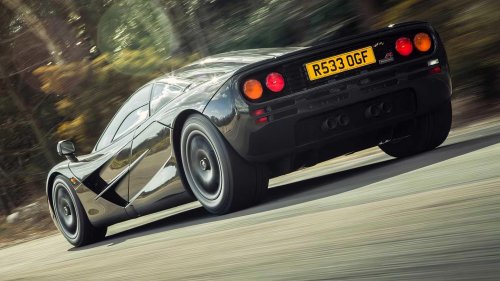
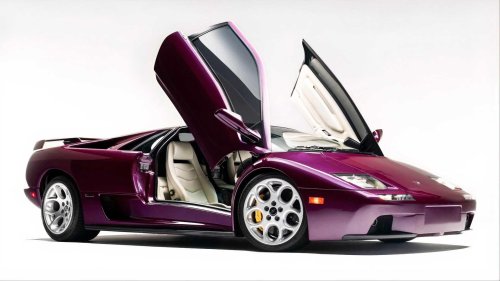
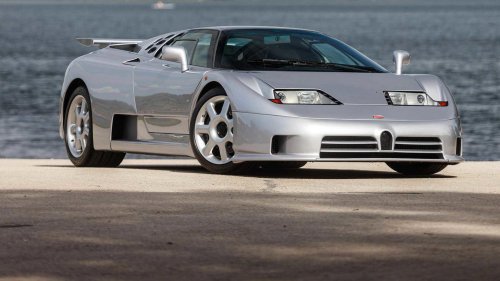
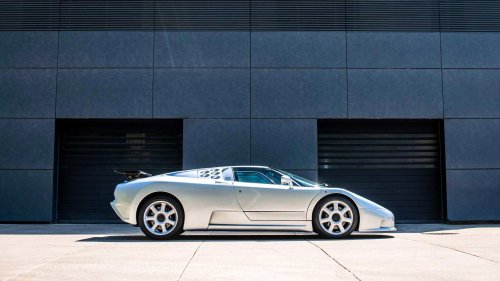
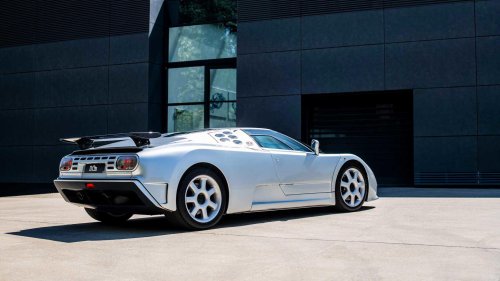
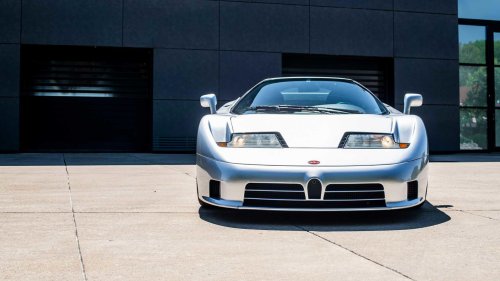
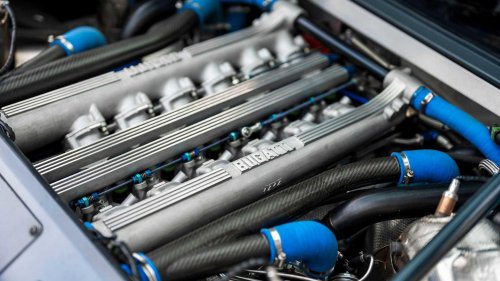
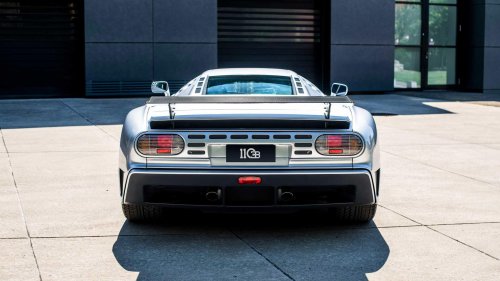
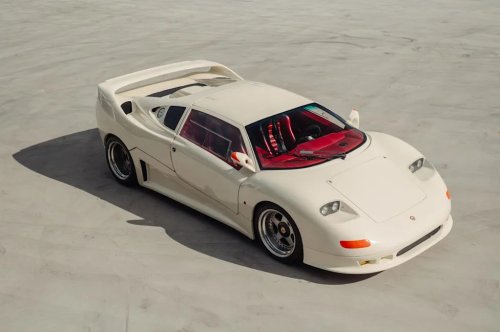
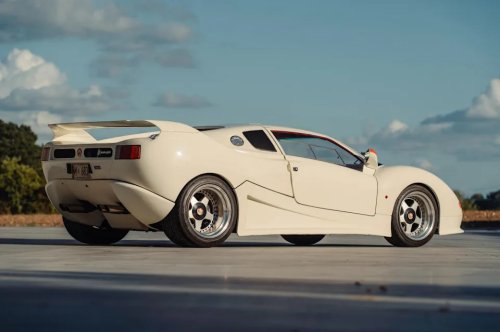
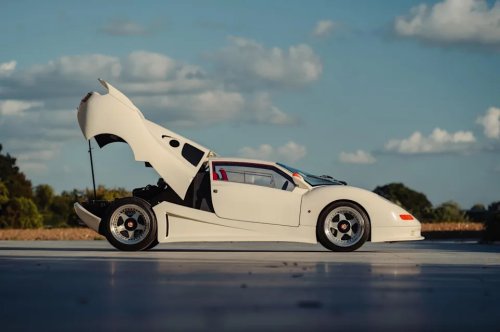
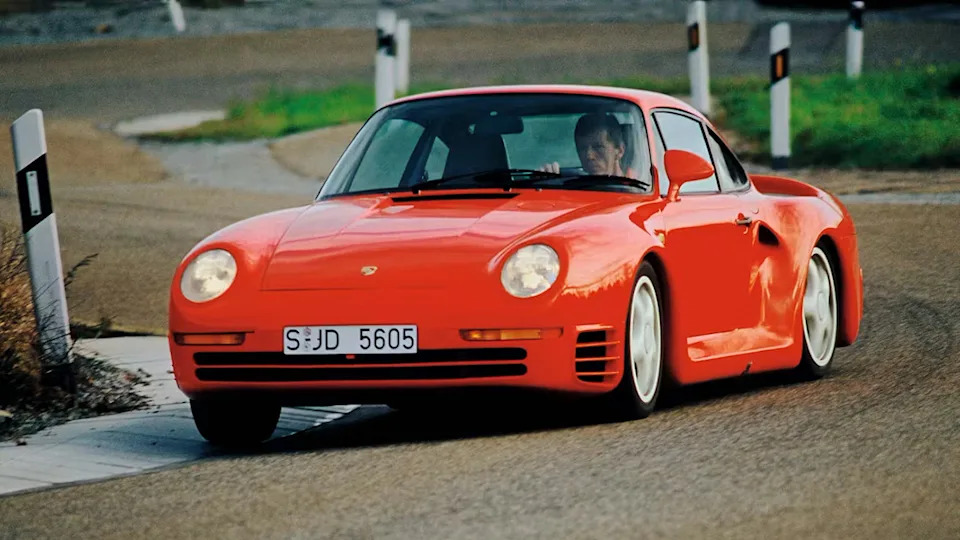
Supercars today are a cinch to drive, with a whole suite of tech to keep these mid-engined machines from ending up in a ditch. Take a Lamborghini Revuelto, Sant'Agata's flagship model, which is not only now a plug-in hybrid (how prudent is that?) and comes with the very sensible-sounding ADAS (Advanced Driver Assistance Systems). This means that this 6.5-liter V12 supercar produces 1,001 hp and features twenty-three sensors to keep the driver safe, with Active Lane Departure Warning, cruise control, Optical Parking System (whatever that is) and much more.You know what you had in supercars in the '80s and '90s to keep you safe? Your right foot, a steering wheel, and the option of wearing your seatbelt... In The '90s Supercars Were Not For The Fainthearted McLarenAt the beginning of the '90s, unless you were driving a Mazda Eunos Cosmo on the streets of Japan, you wouldn't even have sat nav in your car to tell you which way to go. It was left to the Cosmo, the first car with this tech, to lead the way with pioneering navigation assistance for the rest of us, with supercars not the leaders in electronics that they are today. For example, today, a 1.6-liter V6 turbo hybrid hypercar like the Mercedes-AMG One is a world-leader in technology, featuring driver programs drawn from Formula 1, with active aerodynamics, and tighter chassis tuning, to the full performance of all its motors combining to create an experience similar to Formula 1 qualifying.In the '90s, the fastest road cars were as analog as a cassette tape. Generally, the recipe was the same as it was in the '60s when the Lamborghini Miura hit the scene: a giant V12 or V8 strapped into the middle of the car, with a manual gearbox and the biggest kahunas possible. The Supercars Of The Last Millennium Were Completely Analog Bring a Trailer But what about the McLaren F1 I hear you ask, that 240 mph road car that was part created by Formula 1 designer Gordon Murray with a central driving position? Yes, but anyone stumping up almost a million bucks for the world's fastest car didn't get power steering, anti-lock brakes, power brakes, traction control, or anything remotely like an electronic safety net, let alone lane assist, emergency braking, or blind spot alert.The F1 is a hypercar you have to drive, and stop when appropriate, with your hands and feet. No doubt this simplicity did help contribute to a curbweight of just 2,513 lbs in the F1, which is around the same weight as the 25" rims on a modern SUV (probably). The other supercars of the era, such as the Lamborghini Diablo and Ferrari F355, were similarly old-school, with the latter having no traction control and the option for the driver to switch off the ABS. But there is one supercar from the era that everyone seems to have forgotten — and in some respects it's even wilder than all of the above. The Bugatti EB110 Is The Analog Supercar That Everyone Forgot via Supercars In 1952, 20-year-old technician Romano Artioli watched in despair as Bugatti, a maker of rare and beautiful race cars, ended production in Molsheim, France. In 1987, at the age of 59, Artoli, now a successful entrepreneur (he became the largest importer of Japanese cars in Italy) bought the Bugatti brand and brought it back from the dead. As plans go, it was ambitious, but quickly Bugatti had one of the world’s most modern car production plants, built in Campogalliano and covering 240,000 square meters, and a brand new, clean-sheet supercar called the EB 110. Suddenly, things were looking up for the storied brand. The EB110 Used Brute Force Instead Of Tech BugattiThe EB 110 featured the first series-produced carbon chassis, a 3.5-liter V12 engine with five valves per cylinder and an incredible four turbochargers, and all-wheel drive. The output of 553 horsepower and 451 lb-ft of torque was enough to propel the EB 110 to 60 mph in 3.5 seconds, and on to a top speed of over 218 mph, a world record for a standard sports car. No wonder Michael Schumacher went out and bought one.The EB 110, which launched in 1991, was still an analog supercar, however, even if it did arrive from the factory with ABS, air conditioning, electric seat adjustment, power steering, and central locking. There were no electronic stability or traction control systems, and, when Schumacher crashed his Super Sport version into a truck, he blamed inadequate brakes. The EB110 Was One Of The Fastest Cars Of Its Day Bugatti Speaking of the Super Sport variant, Artioli announced the more developed variant just six months after the launch of the standard model, featuring a 3.5-liter engine that was tuned to develop 603 horsepower. The extra power came as the result of larger injectors, a new ECU, and a freer breathing exhaust system. An incredible 440 lbs was shaved off thanks to selected aluminum panels replaced with carbon fiber. While the top speed was around the same, the EB110 SS boasted a sprint to 60 mph in just 3.2 seconds, which matched even the McLaren F1. Here's Why The EB110 Is Not Talked About Bugatti On paper, the EB 110 had all the makings of an icon. It was as fast as any other hypercar but a touch more luxurious, and with the added safety of traction to all four wheels. Unlike many supercar start-ups, it didn't make do with a name that sounded like it had been generated by Ask Jeeves either. It had one of the most illustrious badges in the business. But the early '90s economic landscape made it a tricky time to sell expensive cars, and the EB 110 was a weighty supercar too, tipping the scales at 3,571 lbs. Bugatti filed for bankruptcy in 1995 after making 128 examples of the EB110, with the Art Deco-esque factory falling into disrepair. Bugatti Was Reborn In The 2000s BugattiOf course, in 2000, Volkswagen acquired the name Bugatti and a new chapter began with the Veyron 16.4. The Veyron was such a groundbreaking car, its 8.0-liter quad-turbo, 1,000-horsepower W16 eclipsing even the EB 110's bonkers powerplant, it quickly assigned the achingly rare '90s machine to the "forgotten" section of the history books. The EB 110 had no direct successor and the fact that an illegal rave took place at the abandoned Campogalliano plant in 2025 just cemented the memory that the '90s incarnation of Bugatti had somehow failed. But that's a shame as the EB 110 is a slice of analog genius that deserves its place in the pantheon of supercar greats. The EB110 Is The Perfect Left Field Supercar Purchase Bugatti These days, the rarity of the EB 110 (or EB110 as some people call it) means these aren't exactly secret bargains on the auction circuit. A standard Bugatti EB 110 GT will still set you back $1,250,000 from any year in good condition, says Hagerty, while the more powerful EB110 SS (only around 30 were made) will be $2,050,000.That may seem like a lot, but consider that the similarly fast (and similarly rare) McLaren F1 will cost $20,500,000 — or the price of ten EB 110 SSs — and the Bugatti seems like a bit more of a bargain. Likewise, the one-time unpopular Ferrari F50, at $3,650,000, costs three times the price of the standard EB 110. If you are the kind of person who has a million bucks kicking around for a rare '90s supercar, but can't quite stretch to three milly, then the EB 110 is certainly worth a look.Sources: Hagerty.com