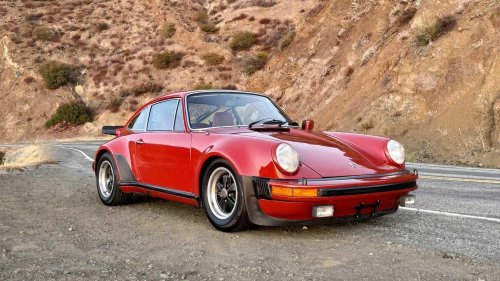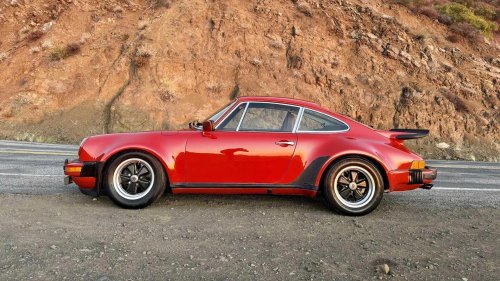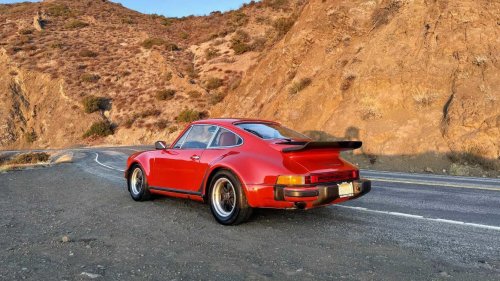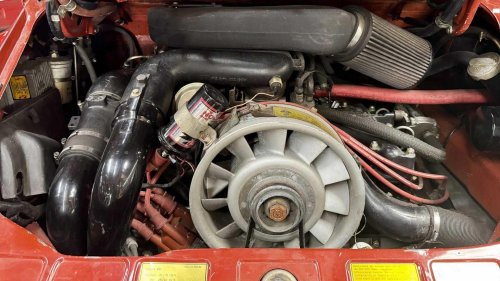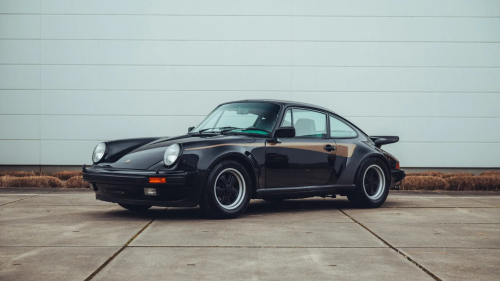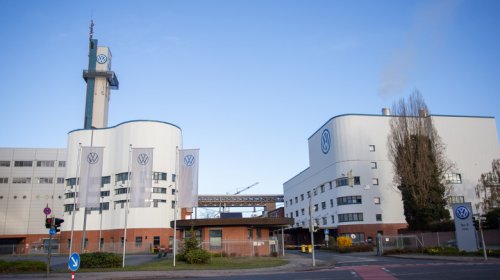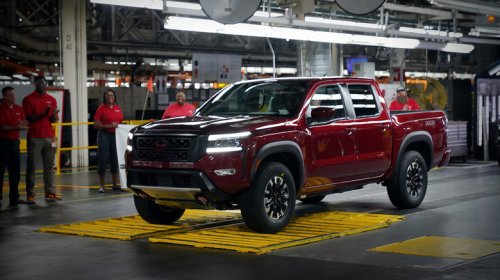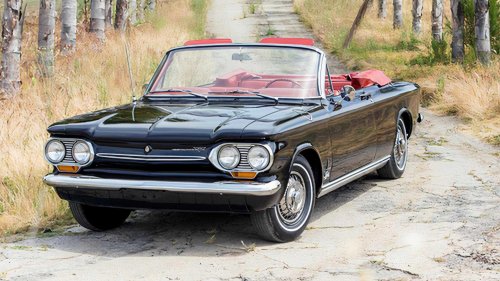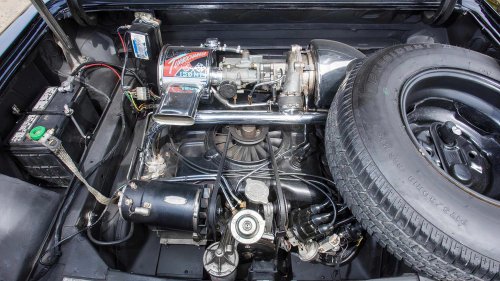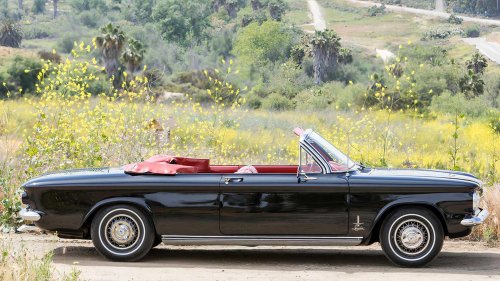
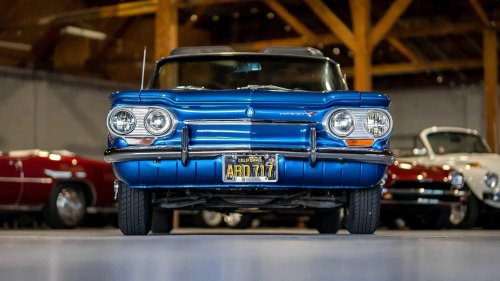
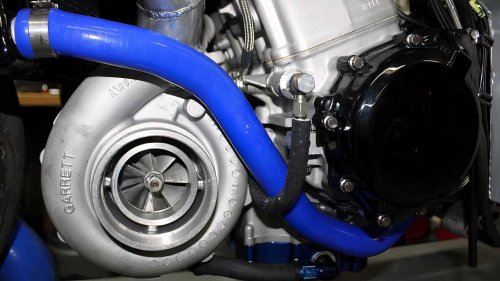
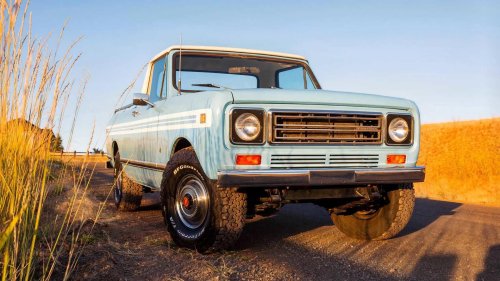
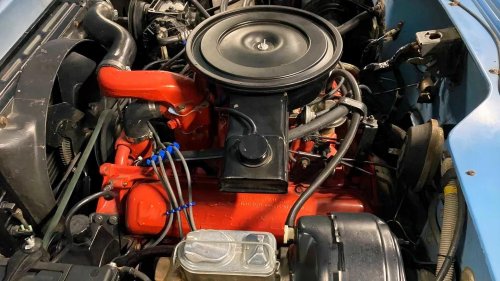
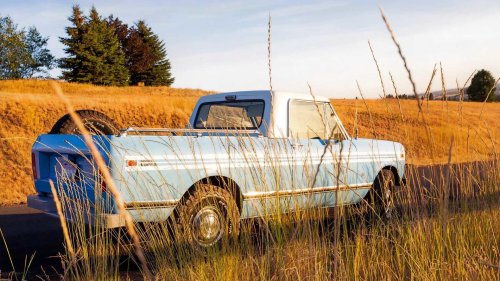
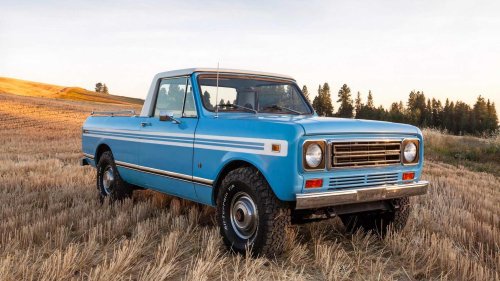
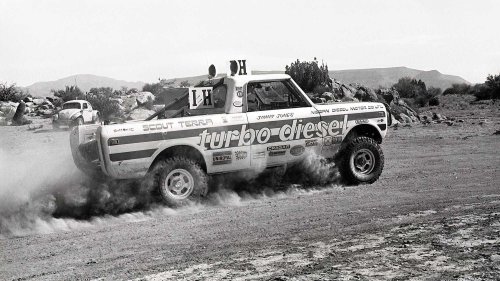
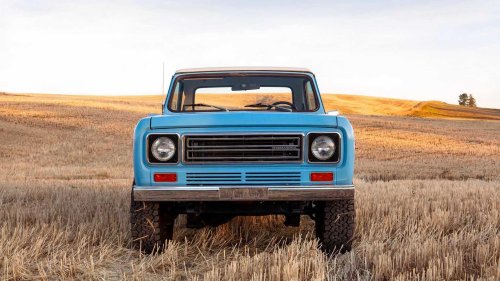
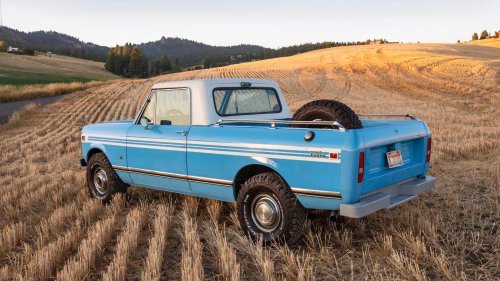
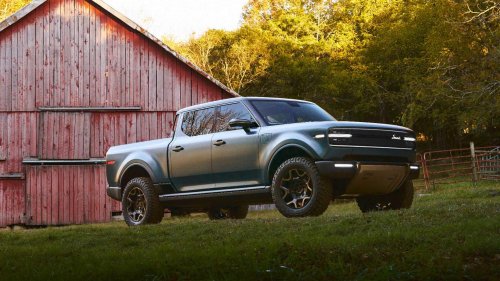



















During the latter half of the 20th century in the United States, the pickup market was the toughest niche to crack. Pickup truck buyers were hard to convince, and trucks were commercial tools picked for reliability and efficiency above everything else. Nobody was thinking about putting a turbocharger under the hood of a pickup. Turbochargers belonged to an entirely different species of vehicle. But forced induction was the practical solution to the fuel-economy crunch the industry was about to face. One brand died trying to prove it. Almost nobody remembers it ever did. American Pickups Hit A Wall In The Late 1970s Via MecumThe late 1970s was the brutal corner in the racetrack that bent the American pickup market out of shape. Two oil crises, fuel economy regulations creeping in, and the drinking problem of the big-block V8s were all fuel on the fire at the same time. Pickup buyers wanted efficiency without losing capability. Detroit's first attempts at the answer were embarrassing, and the door was wide open for someone bolder to walk through. The Fuel Crisis That Changed Everything Via Mecum The OPEC oil embargo of 1973 landed the first hit, and the Iranian Revolution of 1979 followed up with the second. The Corporate Average Fuel Economy program, created by the Energy Policy and Conservation Act of 1975, started phasing in light truck standards from the 1979 model year. The Emergency Highway Energy Conservation Act of 1974 had already imposed the 55 mph national speed limit. Three federal levers were squeezing the same buyer at once. Period half-ton pickups commonly returned 12 to 15 mpg in real-world use. Buying a truck and fueling a truck became two separate financial decisions. Detroit's Diesel False Starts Via Mecum Chevrolet sold C10 pickups with the Oldsmobile LF9 5.7-liter diesel V8 from 1978 to 1981. The LF9 was not a clean-sheet diesel. It was the Oldsmobile 350 cubic-inch gas V8 reworked into a diesel, and the conversion did not hold up. Crankshafts snapped, blocks cracked, head gaskets failed. Chevy replaced it for the 1982 model year with the Detroit Diesel 6.2-liter V8 making 135 hp and 240 lb-ft, naturally aspirated. Ford held off until 1983, launching the IH-built 6.9-liter IDI V8, also naturally aspirated. Every domestic diesel half-ton pickup was naturally aspirated. The fix was sitting on the parts shelf. Nobody picked it up. Turbocharging Was A Sports Car Party Trick Via Autoevolution Turbocharging was there in the automotive world, but it lived for the enthusiasts. It had been a party trick of the sports car set for a long time. Nobody was considering putting it under the hood of a pickup. Turbochargers had two places they lived, racing and exotic sports cars. By the late 1970s, the reputation problems creeping into passenger applications were making the technology look even less suitable for a work truck. From The Indy 500 To The Porsche 930 Bring A Trailer The first turbocharged production cars sold in the US arrived in 1962, with the Chevrolet Corvair Monza Spyder and the Oldsmobile Jetfire landing the same year. The first major race won by a turbocharged engine was the 1968 Indianapolis 500. Porsche's 911 Turbo of 1975, internally designated the 930, is widely considered the first commercially successful mass-market turbocharged production car. The turbo had a cultural meaning by the end of the decade. It was speed, exotica, and Saturday night blasts. It was not a Tuesday morning trip to the lumber yard. Putting one on a work truck would have looked, to an average pickup buyer in 1979, completely insane. Why No Truck-Maker Wanted The Risk Mecum Turbo failures were common in the early 1980s. The main culprit? Shutting the engine down without letting the turbo cool. The result was the rise of the turbo timer, a small aftermarket device that ran the engine through a cooldown cycle to keep the bearings alive. Truck buyers were the most conservative customers in the new-vehicle market, and reliability was the one thing they cared about. A broken truck was wasted money. Adding a turbo to a work truck was a straightforward technical fix, but it was commercially terrifying. Nobody in Detroit wanted to be the lab rat for that one. Meet The 1980 Scout II Terra Turbodiesel Via BaT Yes, the answer is the 1980 International Harvester Scout II Terra, and this truck with a mile-long name came with a Nissan turbodiesel under the hood. The Scout II Terra was the half-ton pickup body of the Scout II, with a 118-inch wheelbase and a six-foot bed. International Harvester did not manufacture a diesel engine small enough to fit the Scout, so it bought one from a Japanese rival in the heart of late-1970s domestic-versus-import political tension. They did it anyway.The engine Nissan gave Harvester was the SD33T turbodiesel, paired exclusively with a four-speed T-19 manual transmission. The 1980 model year was the only year IH offered the turbodiesel across the full Scout II range, alongside the gas-powered four-cylinder and V8 options. Imagine asking the competition for an engine. IH did, and with that, they beat Detroit to the punch by nearly a decade. Almost nobody remembers the turbodiesel today. Most enthusiasts know the Scout II for the gas inline-six or the V8s, not the inline-six diesel under boost. That makes the 1980 Scout II Terra turbodiesel a rare gem in the truck world. A Borrowed Nissan Engine Did The Heavy Lifting Via BaT The borrowed engine did most of the work. The base SD33 was a Nissan-built 3.2-liter inline-six diesel making 81 hp and 138 lb-ft, naturally aspirated. The turbocharged SD33T added an AiResearch TO-3 turbocharger from the same supplier family that worked with the Porsche 930. Nissan paired the turbo with oil-cooled pistons, a lower compression ratio, a stronger crankshaft with improved bearings, a higher-capacity oil pump, and a larger oil cooler. The supplier chain that built supercars in Stuttgart was the same chain that built work trucks in Fort Wayne. Nobody talks about that. The Numbers That Held Up Against Gasoline Via BaT The 1980 Scout II Terra was not a marketing exercise. The reveal was only as good as the substance behind it, and the substance was the numbers. They held up. Power for the era, fuel economy that humiliated the gas pickups, and a Baja 1000 entry to prove the truck ran in the real world. The proof points were all there. 101 Horsepower, 175 lb-ft, And A Genuine 22 MPG Via BaT This is the move that made the Scout II Terra stand on its own. Power and efficiency in the same package, two things that did not show up together in 1980. The SD33T made 101 horsepower and 175 pound-feet, returned an EPA-rated 22 mpg combined, and stretched to 24 mpg on the highway. The naturally aspirated SD33 it replaced made 81 horsepower and 138 pound-feet. The turbo added roughly 25 percent more power and 27 percent more torque. The Detroit Diesel 6.2-liter V8 that replaced the Oldsmobile diesel in the 1982 C10 made 135 horsepower from twice the displacement. The Scout was making the case for turbocharging two model years before the C10 had a diesel that worked. The Baja 1000 Entry Nobody Saw Coming Via Scout IH entered a Scout Terra fitted with the SD33T in the 1979 Baja 1000, the 12th running of the race, and the stunt went largely unnoticed. A diesel pickup running Baja should have been front-page truck news. Nobody in the automotive press was paying attention to a dying brand from Indiana. US Scout sales spiked in 1980, the only year the SD33T was offered widely, with the turbo selling about 5,400 units against the low thousands that earlier diesel Scouts moved. The Baja entry, the fuel economy, the sales spike. Every proof point was there. The audience just wasn't. A Forgotten First From A Company That Died Trying Via BaT The Scout II Terra turbodiesel was a textbook case of bad timing. It hit the market the same year its parent company took its worst fall. No follow-up, no facelift, barely a marketing budget. By October 1980 the entire Scout lineup was dead. When the name returned more than four decades later, it returned with batteries instead of a turbo. Why International Harvester Walked Away In 1980 Via BaT To be fair to International Harvester, they were carrying a knife wound. The UAW strike against the company ran 172 days, from November 1, 1979 to April 20, 1980, the fourth longest UAW strike of national importance in history. It cost IH nearly $600 million, roughly $2.5 billion in 2025 dollars. Sales fell 47.3 percent in the first half of 1980. The Scout division was put up for sale to cover the losses. There were no buyers.The final Scout rolled off the Fort Wayne, Indiana line on October 21, 1980. The first turbocharged pickup in history got buried by a labor strike that killed the company. The Scout Name Is Coming Back, This Time Electric Scout Motors Today, Scout is owned by Volkswagen Group. VW acquired Navistar in 2021 and relaunched Scout Motors as an independent subsidiary in 2022. On October 24, 2024, Scout revealed two production-intent concepts, the Traveler SUV and the Terra pickup. Both are electric. Production is scheduled for late 2027 at a $2 billion plant in South Carolina. The new Terra has a range-extender variant badged Harvester, and according to Scout Motors, around 85 percent of pre-orders are for that gas-extended version. Same brand. Same fuel anxiety. Same instinct, in different chemistry.