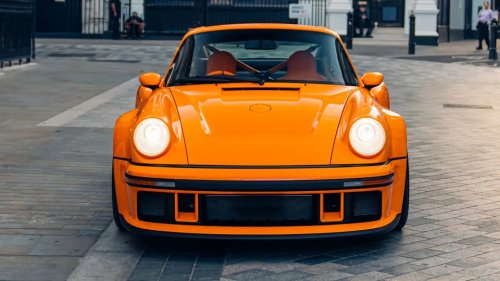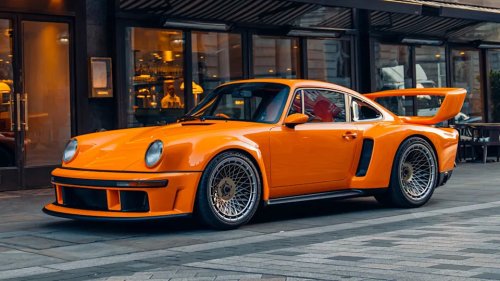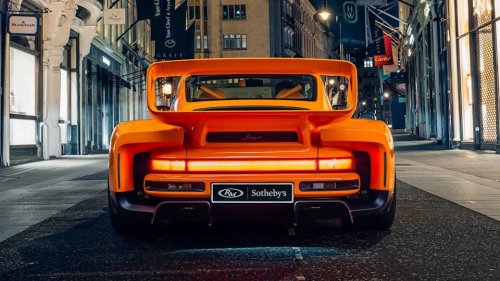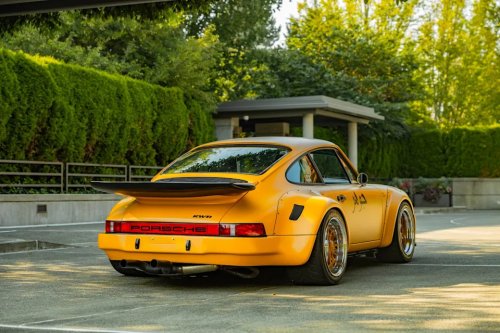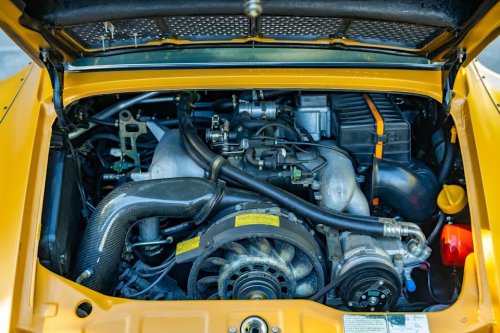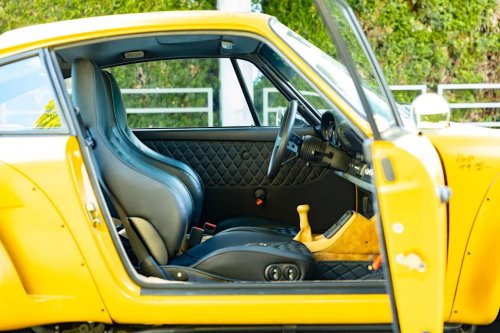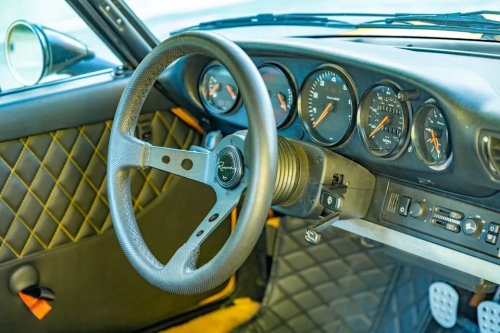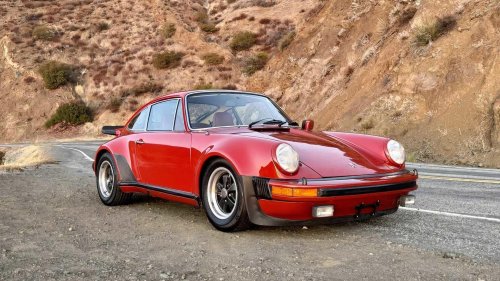
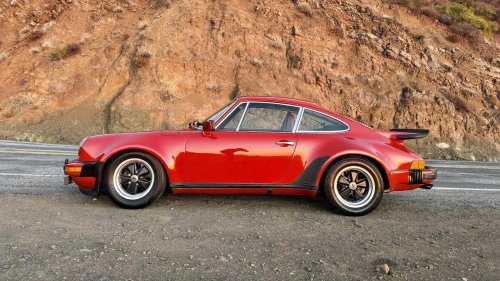
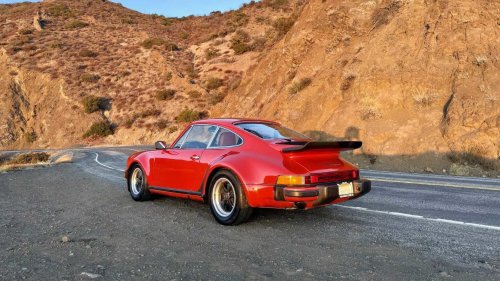
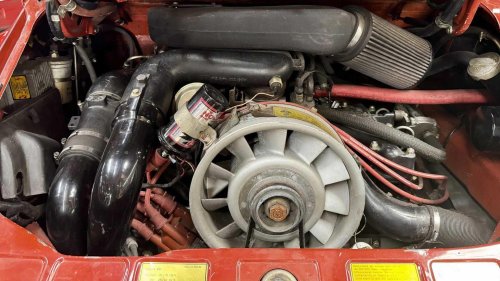
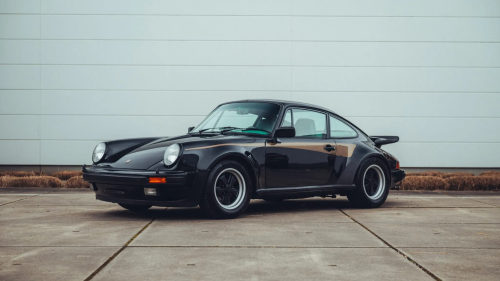
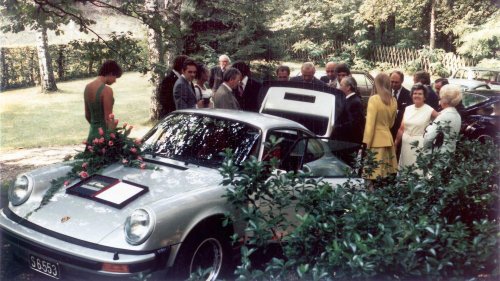
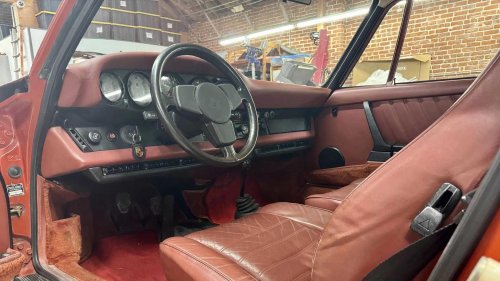
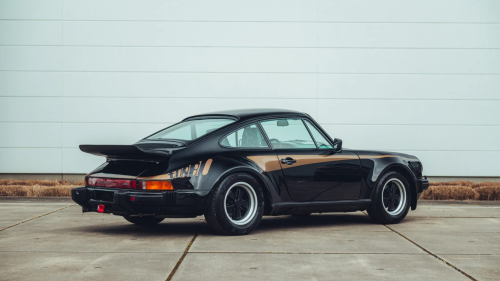


















Ever since Porsche launched the 356 model in the late '40s, the company has had a reputation for doing things a little differently. Whereas many car companies made performance models that were heavy with huge engines, finding speed through brute force, the Stuttgart firm specialized in dainty, lightweight giant killers that made the most of low-powered flat-four engines. Despite the obvious comparisons with the Volkswagen Beetle, Porsche quickly earned a strong following of car enthusiasts, with Hollywood stars queuing up to be associated with this new, cool brand.Porsche seemed to perfectly blend measured performance with high-quality engineering – everything was considered to the last nut and bolt. If you wanted something fast, reliable, and even a little bit sensible, then a Porsche was for you. Then came the '70s, and Porsche decided to go punk. The Original Porsche 911 Turbo Is Scary Fast Bring A TrailerThe 911 was unveiled in 1963 and was quickly accepted as the grown-up natural successor to the 356, with more powerful, six-cylinder air-cooled engines that asked new questions about a rear-engined, rear-drive chassis. It was no problem for Porsche. They were masters of finding engineering solutions and, as such, the 911 was quicker and just as wieldy as the 356. But in 1973, someone at the company must have asked: what happens if we make the 911 a lot quicker? The 911 Turbo Had A Low-Key Start Bring A Trailer The answer to this question was a silver 911 that stood on top of a claret red presentation podium at the International Motor Show (IAA) in Frankfurt on 13 September 1973. The car had a blue-black artificial leather interior, with the seat center panel finished in a ‘Black Watch’ tartan pattern in blue-green. The 911 RSR Turbo concept car looked like a 911 Carrera RS 3.0, but there was lettering built into the huge white stripes that ran down its flanks. It wasn't that easy to read, but if you looked closely, you could make out the word 'Turbo'. The 1975 911 Turbo Was The Birth Of An Icon Bring A Trailer This car signaled the arrival of the forthcoming top-of-the-line version of the 911. The 1974 world premiere of the 911 Turbo at the Paris Motor Show stopped visitors in their tracks. The car had flared wheel arches, and that trademark whale-tail spoiler that you could (probably) eat a picnic off of. Then there were the huge 225/50/VR15 low-profile rear tires. But the biggest eye-opener was the performance. The 3.0-liter flat-six engine pumped out 256 horsepower and 253 lb-ft of torque, and was capable of propelling the 911 Turbo to 60 mph in 4.9 seconds, and on to 156 mph.That acceleration even makes the Turbo a quick car today, in 2025, let alone 50 years ago. The car was also fitted with a four-speed transmission. For comparison, a 1973 911 S Coupe made do with 190 horsepower and could hit 60 mph in 7.8 seconds. A new, wild, era had dawned for Porsche. The 930 Quickly Earned The 'Widowmaker' Nickname Bring A Trailer1975 Porsche 911 Turbo Specs There were plenty of wild cars out there in the '70s, but perhaps it was partly Porsche's reputation for practical sports cars that made the 930 Turbo really stand out. This was a car that could keep up with a Lamborghini Countach in a straight line, but yet had all the luxury requirements you would need to drive it every day. The ferocity of its engine was almost at odds with how livable the 930 was if you were taking it relatively easily. These were cars equipped with leather, air-conditioning, stereo, and fog lights, as well as the ability to actually see out of them, unlike other supercars. The 911 Quickly Gained A Reputation As A Car That Deserved Respect via Bring A Trailer Then came the word 'widowmaker'. Some said it was derived from German Luftwaffe pilots' fear of the F104G Starfighter, others said it was related to accidents involving the 930 – neither of which can be verified – but generally it seemed to come from the sense of trepidation about the 930's handling characteristics. Reviewers said that the standard 911 could be a tricky car to balance in a bend, but when one was fitted with a single KKK turbo, a whole new dimension was added.This was when turbocharging was in its infancy, and turbo lag was a real thing. Having a sudden rush of power in a straight line is fun – mid-corner can be a bit disconcerting to say the least, especially when the engine is hung out of the rear. The turbo coming on boost would cause a sudden rush of acceleration, which is not ideal in the middle of a bend. Mostly, however, the 'widowmaker' moniker for the Turbo seems to come out of an awestruck respect for such a wild and beautiful creation. The First Person To Get The Keys To A 911 Turbo Was A 70-Year-Old PorscheTrue story: The first person to own a 911 Turbo was 70 years old. It may have been a scary car for many, but that didn't stop Ferry Porsche from giving the very first Turbo to his sister Louise Piëch on 29 August 1974 to mark her 70th birthday. This car may have been seen as a 911 Turbo 'No. 1', but it was a very special one-off and different from any other. For starters, it is a bit of a sleeper Turbo.At the back, the car has the word ‘Carrera’ instead of ‘Turbo’, and it is a narrow body style, rather than the production wide body. Oh, and this car is powered by a turbocharged test version of a 2.7-liter engine rather than a 3.0-liter. The car is painted silver on the outside and upholstered with brick-red cowhide leather for the interior, with the seat center panel in a red-blue ‘McLaughlin’ tartan pattern. How The 930 Turbo Evolved - And What It Is Worth Today Bring A Trailer Used Prices Of Porsche 911 Turbos 1975 Porsche 911 Turbo Coupe: $275,000 1979 Porsche 911 Turbo Coupe: $138,000 1986 Porsche 911 Turbo Cabriolet: $120,000 1989 Porsche 911 Turbo Coupe: $190,000 Source: Hagerty Valuation ToolsEven though the 911 Turbo remains an icon of the Porsche range even today, it didn't sell in huge numbers to start off with. Porsche sold just 284 units of the 930 Turbos in 1975, all for Europe, while sales increased to 2,596 in 1976 to 1977, with 1,176 going to the US. The engine was increased to 3.3 liters in 1978, with an air-to-air intercooler added, taking power close to 300 horsepower. The car ran all the way to 1989, when the old four-speed was replaced by the G50 5-speed transmission. The Classic Porsche 911 Turbo Doesn't Come Cheap via Bring A Trailer Prices for such an iconic Porsche are pretty healthy these days, regardless of which year you choose. A 1989 911 Turbo will cost $190,000 in good condition, says Hagerty's Valuation Tools. For something a bit cheaper, you can pick a 1986 Porsche 911 Turbo cabriolet, which sells for $120,000. Early cars command huge prices, with the 1975 model selling for $275,000. A 1979 Porsche Turbo has a price of $138,000.