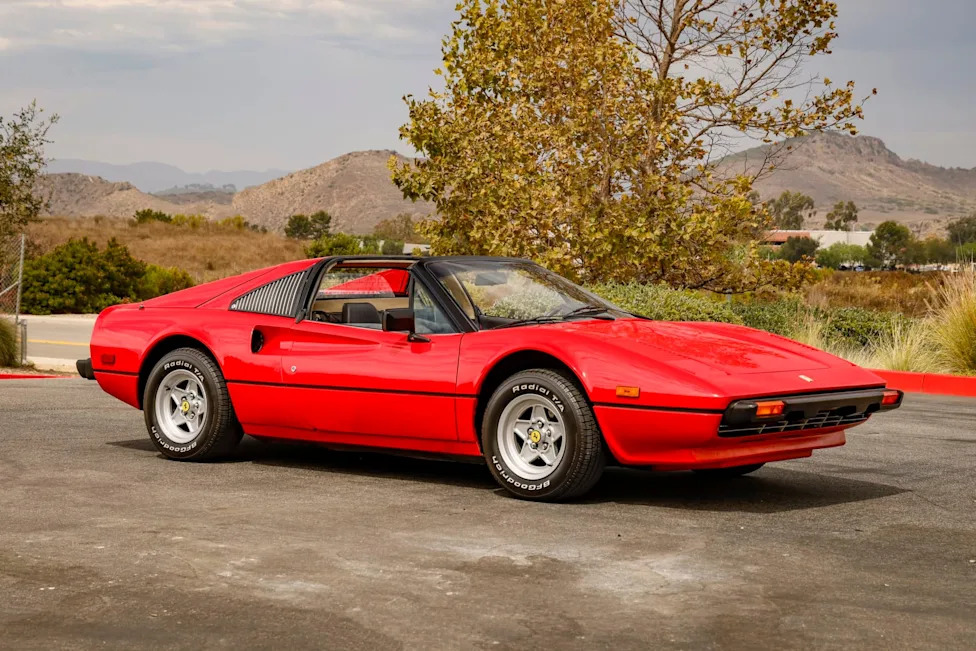
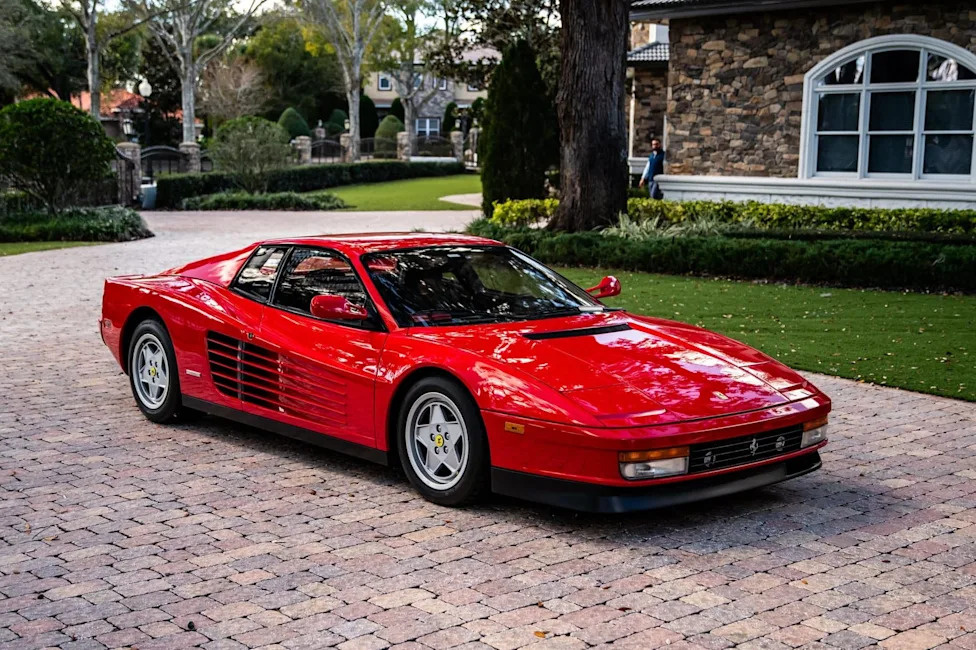
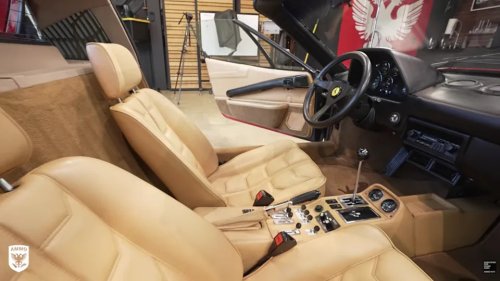
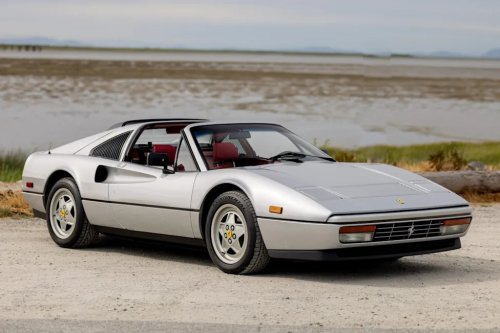
With cars like the 488, F8, and 296, turbocharging and Ferrari might seem like a natural fit today, but that was not always the case. In the early 1980s, long before turbocharged V8s became a staple of the brand, Ferrari quietly introduced a road car with a small turbocharged engine. The Prancing Horse attempted to use turbochargers amid tighter emissions rules and rising fuel costs at the time while maintaining performance, but the result was a sports car that few people asked for and even fewer remember today.Unlike modern Ferraris that use turbocharging to push boundaries, this early model delivered only modest gains. It was not slow, but it was not special enough to stand out in a crowded market. Despite wearing the Ferrari badge, it found fewer than 1,000 buyers. Today, that rarity has not translated into demand.According to Hagerty, this turbocharged Ferrari trades hands for 30 to 40 percent less than a comparable 308. Enthusiasts often give it the cold shoulder, favoring models that offer a more authentic, naturally aspirated experience. Here's the story of Ferrari's first turbocharged sports car, which is rare, but unwanted, and thus fairly cheap as well. A 1984 Ferrari 208 GTB Turbo Sold For $65,065 1982-1985 Ferrari 208 GTB Turbo Front Three QuarterFerrari introduced the 208 GTB Turbo in 1982 as a response to specific market conditions in Italy. At the time, Italian tax regulations placed a heavy financial burden on cars with engine displacements larger than 2.0 liters. To make its sports cars more accessible to domestic buyers, Ferrari developed a smaller-displacement V8 engine and slapped on a turbocharger to compensate.The engine used in the 208 GTB Turbo displaced just 1,991 cc. Ferrari equipped the 2.0-liter Tipo F106 D 000 V8 with a single turbocharger along with a twin electronic ignition and fuel injection system. While it offered modest power output by the marque's standards, the 1982 208 GTB became the first production turbocharged Ferrari road car, marking a technical shift for the brand.The car retained the design of the naturally aspirated 308 GTB but received a few external updates to stand apart. Most notably, it featured NACA ducts on the rear fenders for improved cooling and a redesigned front bumper.Between 1982 and 1985, Ferrari built a total of 687 turbocharged 208 models. This included 437 units of the 208 GTB Turbo coupe and 250 units of the 208 GTS Turbo targa-top convertibles. All production remained focused on the Italian market due to the engine’s size, which aligned with local tax benefits.Despite its technical relevance and limited production, the 208 GTB Turbo remains one of the more affordable Ferraris on the used market compared to other models from the '80s. According to Hagerty, a 1984 model sold for $65,065 in 2022, showing that values remain substantially below comparable naturally aspirated models from the same era. In contrast, a 1983 Ferrari 308 GTS Quattrovalvole with fewer miles sold for $140,000 the same year. 1982-1985 Ferrari 208 GTB / GTS Turbo - Production 208 GTB Turbo - 437 Units 208 GTS Turbo - 250 Units Total Production - 687 Units The 208 GTB's Turbo Was Inspired By Formula 1 1982-1985 Ferrari 208 GTB Turbo Engine Engine Specs (Source: Ferrari)In 1982, Ferrari's Formula 1 cars had already begun to use turbocharged engines. The 126C, Ferrari’s first turbo F1 car, debuted in 1981 with a 1.5-liter V6 turbo. In 1982, this car brought Ferrari back to competitive form, winning multiple races. Ferrari applied some of the knowledge gained from its racing program to its road cars.The 208 GTB Turbo, introduced in 1982, featured a tiny 2.0-liter V8 with a single KKK K26 turbocharger, which increased the engine’s output to 220 hp at 7,000 rpm. But this put it behind naturally aspirated models like the 308 Quattrovalvole, rated at 240 horsepower. While performance numbers tell the same story. Period tests showed a 0 to 60 mph time of about 7 seconds, while the 308 managed the sprint closer to 6.5 seconds. The 208 GTB is generally considered one of the slowest Ferrari ever made.The compression ratio was reduced to 7.0:1, a necessary change to accommodate forced induction. This mirrored a trend in racing, where lower compression ratios helped manage detonation in turbocharged engines. Ferrari engineers used Weber-Marelli electronic fuel injection and ignition systems, which allowed for better control of fuel delivery and spark timing, improving both performance and reliability.While the 208’s power levels did not match Ferrari’s racing machines, the concept of using turbocharging to compensate for a small engine displacement aligned with F1 practices of the time. The engineering approach reflected Ferrari’s interest in developing high-performance turbo systems, both for racing and road use. Despite Its Rarity, The 208 GTB/GTS Turbo Is Still Unwanted 1982-1985 Ferrari 208 GTB Turbo Front Three Quarter Pop Up Headlights Five Reasons Why The 208 GTB/GTS Turbo Remains Unwanted Today Built for tax laws and regulations, not performance Turbo lag and unfavorable driving dynamics Limited global appeal Rare, but still not collectible Lack of recognition The Ferrari 208 GTB/GTS Turbo remains one of the least sought-after Ferraris today, despite its rarity (only 687 units). Ferrari developed it specifically for the Italian market to avoid high taxes. With 220 hp, it still delivered less performance than other naturally aspirated Ferraris at the time.As Ferrari drivers were used to seamless power delivery from naturally aspirated V8 engines, the significant turbo lag was deemed unfavorable. The turbocharged engine lacked the smooth power delivery of other Ferrari V8s from the same era. Road testers at the time, along with users on Ferrari forums, noted the engine’s narrow power band and less engaging response in everyday conditions.The car’s appeal outside Italy remained low. Ferrari did not market it globally, and few international buyers were drawn to a low-displacement Ferrari with modest performance. Even today, the model sees less demand in the collector market. Today, the 208 Turbo often trades for 30 to 40 percent less than comparable 308s.Collectors typically value Ferrari models with strong performance credentials, racing heritage, or broad cultural recognition. The 208 Turbo does not check any of these boxes, despite drawing inspiration from the turbocharged 126C F1 car. Its rarity stems from limited demand rather than special significance.While it remains a unique chapter in Ferrari’s history, most enthusiasts continue to prefer the more powerful and better-known naturally aspirated models from the early '80s.






















 +26 others