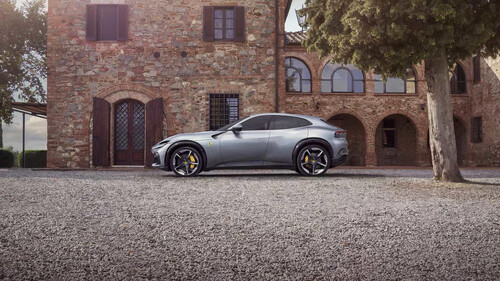
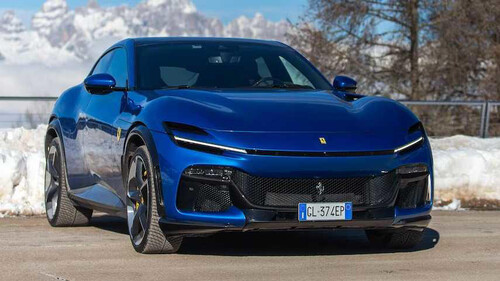
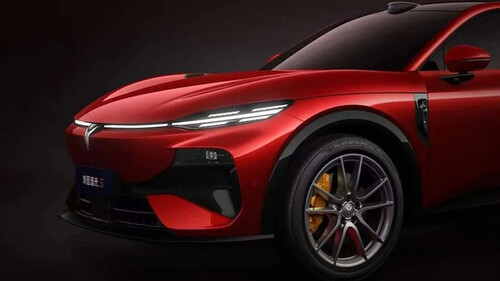
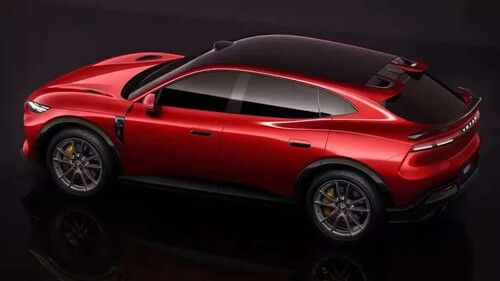
Ferrari has already turned the idea of a family SUV into something wild with the Purosangue, a four-seat crossover built around a naturally aspirated V12. Now it has sharpened that formula with a new factory package that makes the car louder, more focused and more agile without chasing extra power. Rather than a simple horsepower bump, the company has reworked hardware, software and even exhaust tuning to change how the Purosangue feels from behind the wheel. The result is a rare thing in the SUV world: a handling-focused evolution that leans into sound, steering feel and body control rather than straight-line numbers. For buyers who thought the standard Purosangue was already extreme, this new iteration aims to turn Ferrari’s first V12 crossover into something much closer to a tall sports car. What happened Ferrari has introduced a new specification for the Purosangue called Handling Speciale, often shortened to HS, which refines the chassis and character of the 6.5‑liter V12 SUV. The package keeps the engine’s headline figures, with 725 PS from the naturally aspirated twelve-cylinder, but adjusts how that power is delivered and how the car responds when a driver pushes hard. Instead of changing the core output, engineers have focused on suspension, calibration and sound. The HS treatment starts with the adaptive suspension. Ferrari has revised the settings of the active dampers to reduce body roll and pitch in fast corners, so the tall body of the Purosangue stays flatter and reacts more quickly to steering inputs. Spring and damper tuning has been altered to give the car a firmer, more tied-down feel in its sportier drive modes while still preserving some compliance for everyday use. The goal is to bring the handling closer to that of Ferrari’s two-door models, even though the Purosangue sits higher and carries four adults. Steering and stability systems also receive attention. The electronic power steering has been recalibrated to feel more direct around the straight-ahead position and to build weight more naturally as cornering forces increase. At the same time, the electronic stability and traction systems have been retuned so the car allows a little more slip on corner exit before intervening, provided the driver has selected a more aggressive setting on the manettino switch. These tweaks are designed to give experienced drivers a more engaging, less filtered connection to the car. The most obvious change from the outside is the exhaust. Ferrari has fitted a less restrictive system that frees up more of the V12’s natural voice, especially at higher revs. The brand has leaned into the Purosangue’s status as one of the last big-capacity, naturally aspirated engines by letting more induction and exhaust noise into the cabin. In Handling Speciale form, the SUV is meant to sound racier at start-up and more intense as the tachometer sweeps toward the redline. According to Ferrari’s HS details, the changes are aimed at making the soundtrack match the chassis upgrades. Visual changes are subtle but deliberate. The Purosangue HS gains specific wheels, minor trim tweaks and, in some configurations, contrasting details that signal its more focused role without turning it into a full aero kit. The cabin remains a four-seat layout with separate rear chairs, but software changes to the digital interfaces reflect the new driving modes and settings tied to the Handling Speciale package. Why it matters The Purosangue already stands apart in a market crowded with high-performance SUVs that rely on turbocharging and hybrid assistance. By keeping a 6.5‑liter naturally aspirated V12 at its core, Ferrari has built a crossover that appeals to buyers who care as much about sound and throttle response as they do about numbers. The Handling Speciale package doubles down on that identity. Rather than chasing a higher top speed, Ferrari has invested in how the car steers, rides and sings. That decision says a lot about where the brand sees value in a segment dominated by brute-force figures. Rivals like the Lamborghini Urus, Aston Martin DBX707 and Porsche Cayenne Turbo GT all use turbocharged V8s that produce enormous torque from low revs. The Purosangue, even in HS form, sticks with a high-revving V12 that asks to be worked harder. The new exhaust and calibration changes make that experience more rewarding, which helps justify the car’s positioning as a Ferrari first and an SUV second. There is also a timing element. As regulations tighten and electrification spreads across performance brands, naturally aspirated twelve-cylinder engines are becoming rare. By giving the Purosangue a more vocal, more focused derivative rather than an electrified variant, Ferrari is effectively extending the life and appeal of this engine architecture. For collectors and enthusiasts, a factory-sanctioned handling package on a V12 SUV is likely to look attractive in the long term, especially if future models move toward hybrid or fully electric powertrains. From a dynamics standpoint, the HS upgrades suggest that Ferrari has been listening to early feedback from owners and testers who praised the Purosangue’s breadth of ability but wanted even sharper responses when driven hard. A stiffer, more communicative setup helps close the gap between the Purosangue and Ferrari’s lower, lighter models on a twisty road or a track day. That kind of consistency across the range matters for a brand that trades heavily on driving feel. The move also reinforces Ferrari’s approach to personalization. Rather than creating a separate, limited-run model, the company has structured Handling Speciale as a package that can be specified by buyers who prioritize dynamics over comfort. It sits alongside other customization options, from paint and trim to carbon fiber components, and gives Ferrari another lever to pull when tailoring cars to individual tastes. In a segment where customers often expect to configure every detail, a factory handling kit with clear mechanical benefits is a powerful addition. Economically, a sharper Purosangue can help Ferrari defend and potentially expand margins on its SUV platform. High-performance crossovers already command premium pricing, and a branded handling package lets the company charge more for hardware and software changes that deepen the driving experience. Given the Purosangue’s role as a major revenue source, any variant that keeps demand strong without diluting exclusivity is strategically significant. What to watch next The Handling Speciale package raises several questions about where Ferrari intends to take the Purosangue line and its broader strategy for performance SUVs. One key area is how far the brand is willing to push a tall, four-door body toward genuine track use. If customers respond positively to the HS setup, it could open the door to even more extreme derivatives, perhaps with lighter materials, more aggressive aerodynamics or track-oriented tires that move the car closer to a lifted sports car than a traditional SUV. Another factor is how the HS specification influences the balance between comfort and performance in future updates. The standard Purosangue was designed to deliver everyday usability, with adaptive suspension that could soften for rough roads and a cabin that felt genuinely luxurious for four adults. The HS version tilts that balance toward control and feedback. Ferrari will need to watch how many buyers choose the more focused setup and whether that shifts expectations for the core model’s ride and refinement. Regulation and emissions policy will also shape what comes next. A naturally aspirated 6.5‑liter V12 is a bold statement in an era of downsizing and electrification. The HS package, with its louder exhaust and performance-oriented calibration, leans into the emotional appeal of that engine. Over time, pressure to reduce fleet emissions may force Ferrari to integrate hybrid systems or alternative powertrains into its SUV offerings. The Purosangue HS could therefore represent a high point in pure-combustion character before the range evolves toward partial or full electrification. There is a competitive angle to watch as well. If the market responds strongly to a handling-focused, sound-enhanced V12 SUV, other brands may feel encouraged to create similar packages that emphasize feel over raw output. Lamborghini, Aston Martin and even more mainstream performance brands could look at how Ferrari has packaged the HS upgrades and consider their own chassis-led evolutions rather than simply escalating horsepower wars. More From Fast Lane Only: Unboxing the WWII Jeep in a Crate 15 rare Chevys collectors are quietly buying 10 underrated V8s still worth hunting down Police notice this before you even roll window down The post Ferrari just made its V12 SUV louder and sharper with a change no one expected appeared first on FAST LANE ONLY.