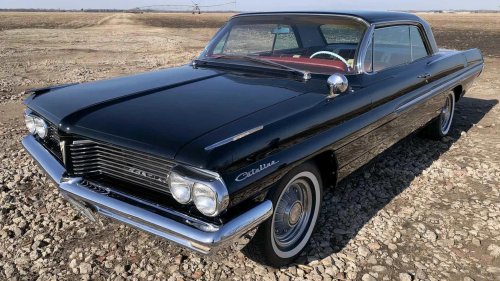
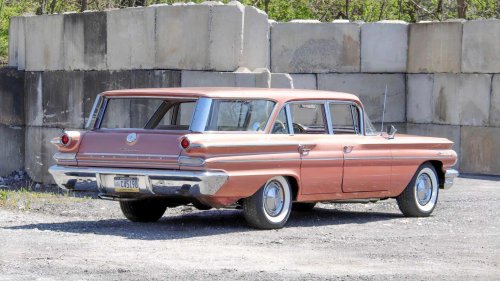
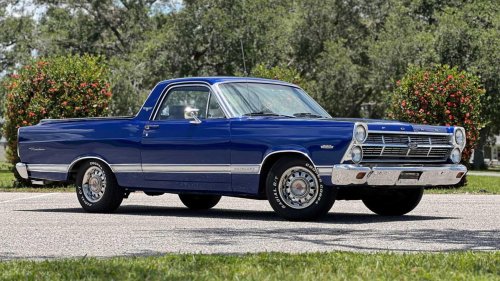
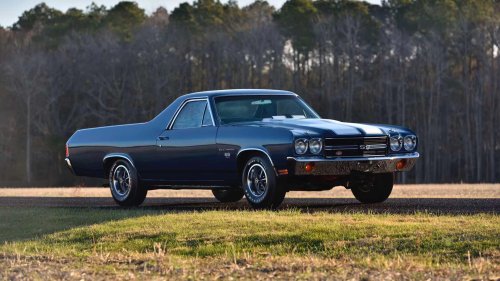
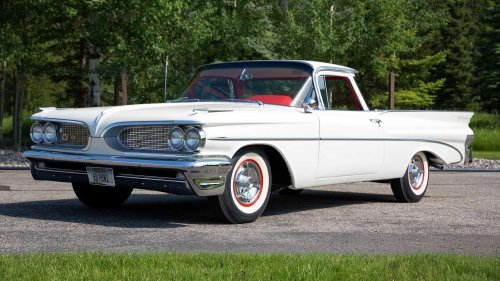
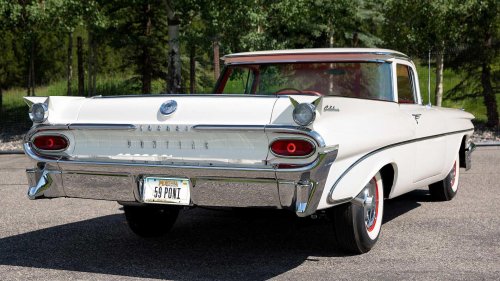
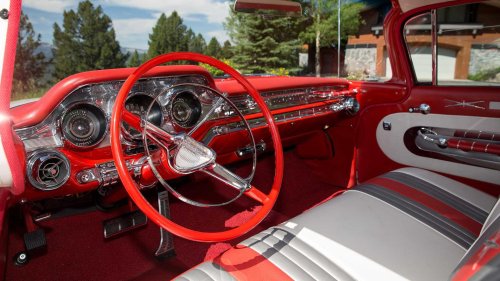
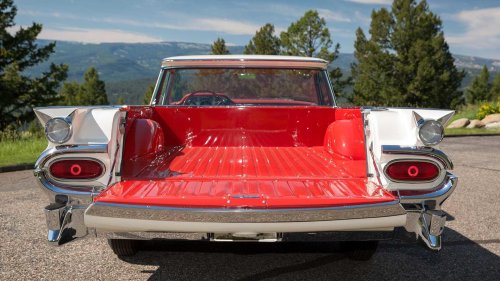
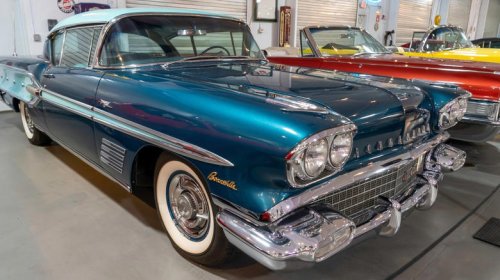
Pontiac had muscle, style, and the kind of loyal following that made owners speak about their cars like family members with better exhaust notes. By the late 1950s, the division had started to shed its old sleepy image and lean into wide stance, V8 punch, and showroom drama. Still, almost nobody then, or now, thinks of Pontiac as a pickup-truck brand.That makes one almost-forgotten GM idea so strange. America had begun warming up to car-based pickups, machines that promised sedan comfort with a bed out back for light-duty work, weekend toys, or one heroic run to the hardware store. Ford had already jumped in. Chevrolet followed. Pontiac looked at the same trend and wondered whether its own buyers might want cargo space with their chrome, fins, and horsepower. Pontiac Had The Image, But Not The Truck Bring A Trailer In 1959, Pontiac stood in a sweet but tricky spot inside General Motors. Chevrolet owned the broad, budget-friendly lane. Buick and Oldsmobile aimed higher, with more formal manners and older-money energy. Pontiac, in turn, lived between those worlds—it offered more flash and power than Chevrolet, but it did not carry the same country-club weight as Buick or Oldsmobile. The company could sell aspiration without looking stuffy. It could also give a buyer a bigger step up than a Chevy, yet keep the price and attitude close enough for regular drivers who wanted more swagger than their neighbors. The Catalina sat at the low end of Pontiac’s full-size family, but it still carried more presence than an everyday Chevy.Via Bring A Trailer Pontiac also had fresh momentum. Semon “Bunkie” Knudsen and his team pushed the division toward performance, racing, and sharper engineering. The 1959 cars helped sell that change with Pontiac’s famous Wide-Track stance. The wider tread made the big cars look planted and helped give them a more confident road feel. The brand needed that credibility, because it had spent years looking safe and a little sleepy. By 1959, it wanted to look like it had finally found the gas pedal and knew what to do with it.That image made a pickup both tempting and dangerous. On paper, a Pontiac car-truck had a lot going for it. The brand already had long bodies, strong V8s, and enough brightwork to signal passing aircraft. A stylish hauler could offer Pontiac buyers a practical toy with real power. It could turn a run to the lumberyard into an event. Granted, one board in that bed and every collector today would faint, but new-car buyers in 1959 did not think that way. They wanted something fresh, useful, and just showy enough to make the neighbors peek through the curtains. The Car-Truck Craze Mecum Ford kicked the door open with the Ranchero for 1957. It took the feel of a passenger car and added a pickup box, creating a machine that could haul light loads without asking its owner to live with a farm-truck ride. The Ranchero did not invent the idea of a coupe utility, but it made Detroit look at the format with fresh interest. It also proved that some buyers wanted a vehicle that could carry mulch and still look decent outside a diner.Chevrolet answered in 1959 with the El Camino. Chevy based it on its full-size wagon family and wrapped it in the year’s wild styling, including those wide rear fins that looked ready to slice cake at a wedding reception. The El Camino gave Chevrolet a direct Ranchero rival and let GM test a new type of customer. The formula had an easy pitch – a pickup for people who did not really want a pickup.via: Mecum Auctions That pressure made Pontiac’s temptation easy to understand. A Pontiac version could go beyond Chevrolet's formula and wear grander sheet metal, richer trim, and a more upscale cabin. It could offer a stronger premium feel without stepping all the way into Buick territory. Most important to enthusiasts, it could pack Pontiac power under the hood instead of simply borrowing the Chevrolet personality wholesale.The market still looked small at the time. Early El Camino sales reached 22,246 units in 1959 and then dropped to 14,163 in 1960, which pushed Chevrolet to pause the nameplate until 1964. Those numbers help explain why GM may have hesitated to give every division its own car-truck. For Pontiac, the question became simple—could a prettier, stronger, more expensive version pull enough buyers to justify the trouble? The answer probably looked softer once accountants started sharpening pencils. The Pontiac El Catalina Was A Weird Hand-Built Prototype Pontiac's answer finally had a name—the 1959 Pontiac Safari El Catalina, often called simply the El Catalina. Pontiac built it as a hand-made prototype while the division studied whether it should enter the light-truck market for 1960. In simple terms, GM created a Pontiac-flavored cousin to the El Camino, then let the idea stop at one completed example.The build started with a 1959 Catalina Safari wagon and parts from Chevrolet’s new 1959 El Camino. The automaker first considered building three prototypes, completed only one, and saw a second nearly finished example destroyed.Mecum The vehicle blended two GM worlds that normally stayed in their own lanes. The El Camino supplied the cab pieces and pickup bed, while the Catalina Safari gave the project its Pontiac base, face, and character. That mix made sense from an engineering standpoint because GM already had the raw ingredients nearby. It also created a headache, because “nearby” does not mean “fits.” Anyone who has tried to bolt on the wrong trim clip knows that Detroit sheet metal loves comedy. A prototype like this needed more than parts-bin confidence.The result looked far more polished than a quick mashup. It sat low and long, like other 1959 GM full-size cars, but the Pontiac nose gave it a stronger identity. It had the bright, broad, wide-eyed look of the brand’s late-1950s cars. The pickup bed made it useful in theory, yet the whole thing looked too special to toss bricks into. Calling it a truck feels a little unfair. Calling it a car feels incomplete. Calling it strange feels just right. More Than Just A Pontiac El Camino Mecum The builders joined an El Camino cabin and pickup bed to a Catalina wagon structure, then worked in Catalina doors, Catalina rear quarters, a Pontiac nose, and Safari tailgate elements. They even had to marry El Camino window uppers to Catalina doors. The amount of hand-fitting involved in the process was considerable.The big point is that Pontiac gave the prototype its own body language. A lazy version would have taken a Chevrolet El Camino, added Pontiac emblems, changed the grille, and called it a day before lunch. The El Catalina went further—the Catalina quarters and nose gave it Pontiac's wider, grander stance, and the Safari rear details helped the bed area feel connected to the wagon that donated its bones. It looked like a Pontiac that happened to have a bed, not a Chevy caught wearing a Halloween costume.Mecum The interior also leaned into Pontiac personality. Period Pontiac cabins loved color, pattern, and shine, and this prototype reportedly carried a tri-tone Morrokide-style interior drawn from Catalina themes. Power steering, power brakes, air conditioning, power windows, a power seat, and the neat Sportable radio were part of the equipment. That loadout says Pontiac understood the mission, and treated it as a premium cruiser with a cargo bed, which sounds silly until it sounds brilliant. In a world full of plain work pickups, the El Catalina wore its options like a lounge singer wears cuff links.Then came the part enthusiasts care about most: the engine. The prototype reportedly used Pontiac’s 389-cubic-inch V8 rated at 300 horsepower, backed by a 4-speed Hydramatic transmission. The 389 sat at the center of Pontiac’s rising performance story at the time and gave the El Catalina more than pretty fins and trivia-night value. It gave the concept real Pontiac muscle. Sure, it would never tow like a heavy truck, but it could make a refrigerator delivery feel like qualifying at Daytona. It also hinted at a fun alternate timeline, one where Pontiac beat the muscle-truck idea to the punch by decades. A 300-horse Pontiac pickup in 1959 sounds absurd. That is why it rules. Why It Never Came To Production Mecum Pontiac never put the El Catalina into regular production, and the reasons look pretty clear from the outside. Chevrolet already had the El Camino, Ford had the Ranchero. The combined market did not look huge in the full-size era, and GM had little reason to spend more tooling money so Pontiac could chase a slice of a niche. Knudsen reviewed the 1959 Ranchero and El Camino sales figures before canceling the project, and finally said no.The brand problem also existed. Pontiac had just worked hard to look younger, faster, and more exciting. A pickup could help that image only if buyers saw it as sporty and special. If buyers saw it as a dressed-up parts hauler, it could pull Pontiac back toward the old practical image the division wanted to escape. The El Catalina walked that line well, but production cars need more than one great prototype. They need dealers, buyers, margins, tooling plans, warranty confidence, and a reason to exist beyond “because it looks fantastic.”Mecum After GM shelved the plan, the prototype reportedly served as a delivery vehicle at the Pontiac Retail Store and later as college transportation, which might be the most undignified but useful fate possible for a one-off concept.That irony makes the El Catalina memorable. The El Camino and Ranchero became nameplates people recognize, even if they argue about which one wore the cooler side trim. Pontiac’s version became a one-off collector story, the kind of machine enthusiasts discover and then immediately send to a friend with the subject line, “How did I not know this existed?”Source: Pontiac, Hot Rod, General Motors