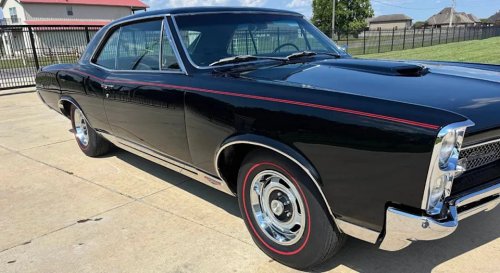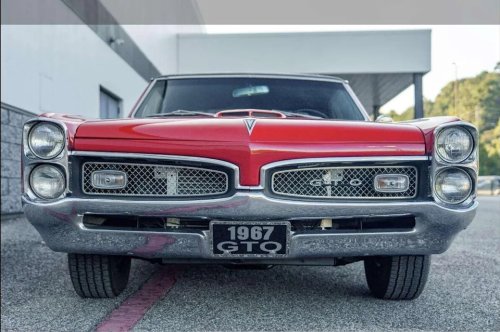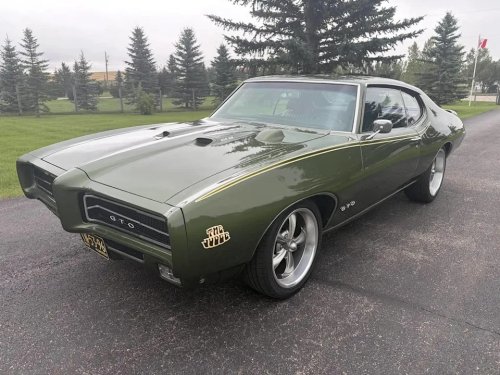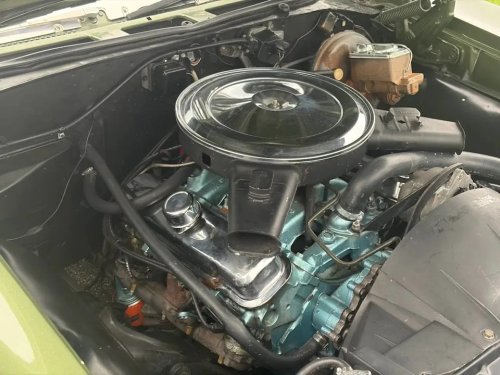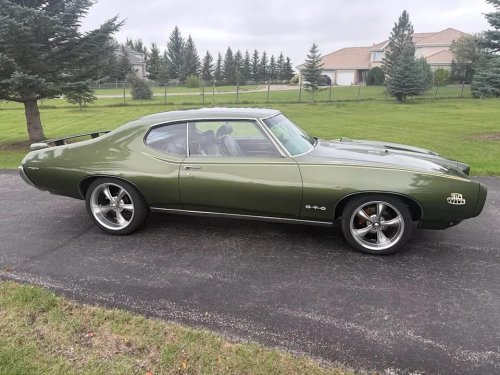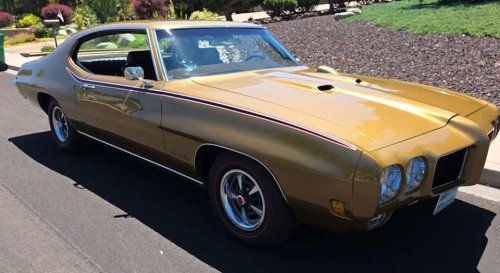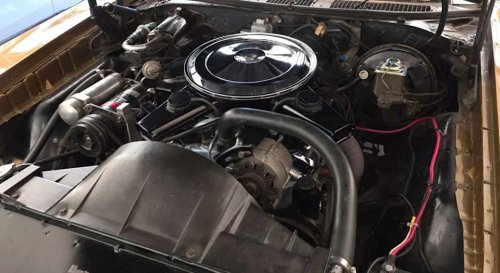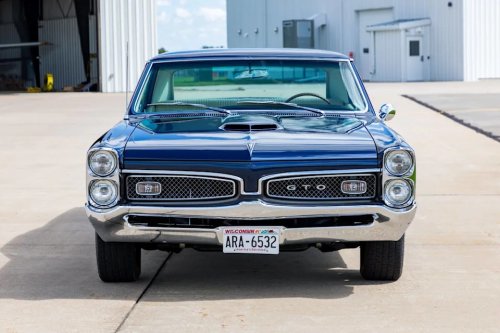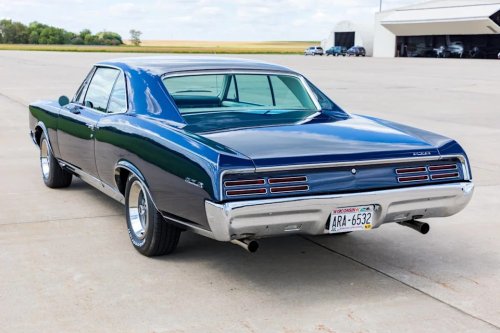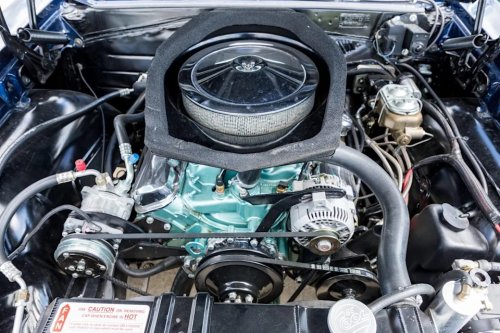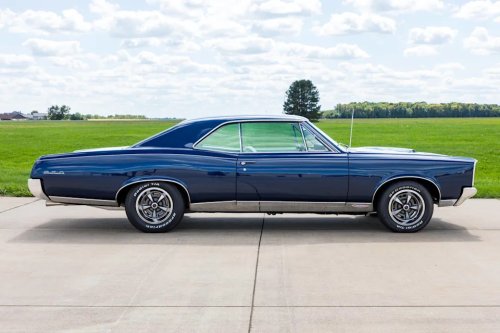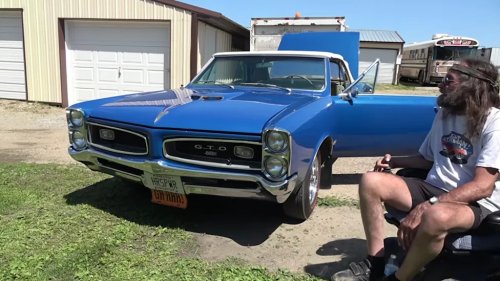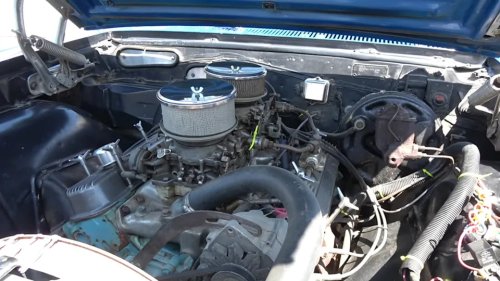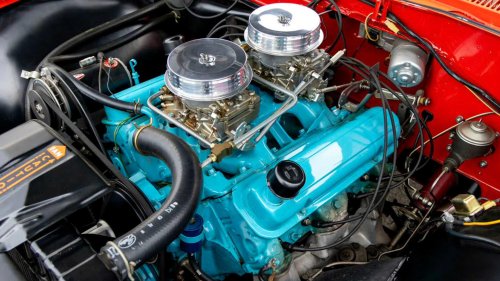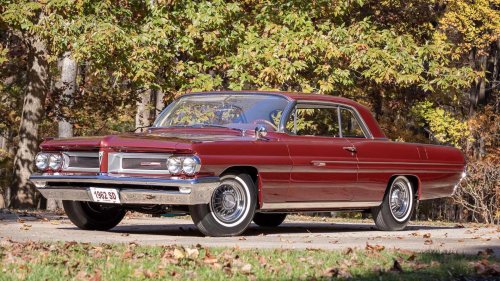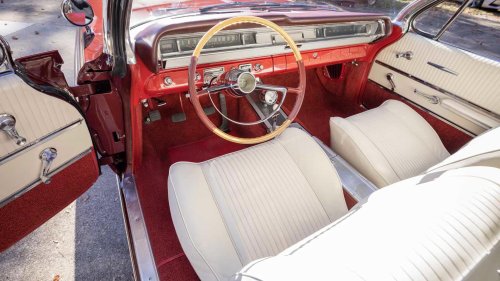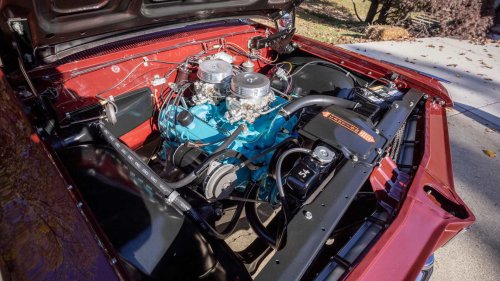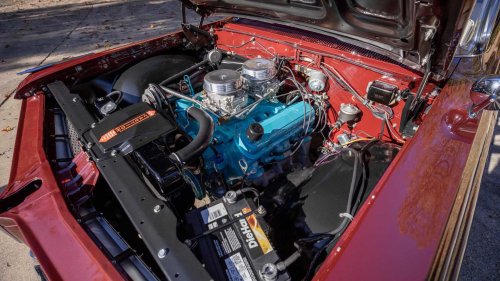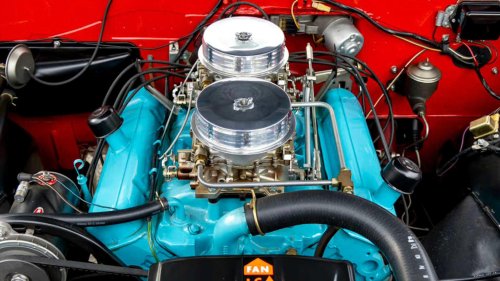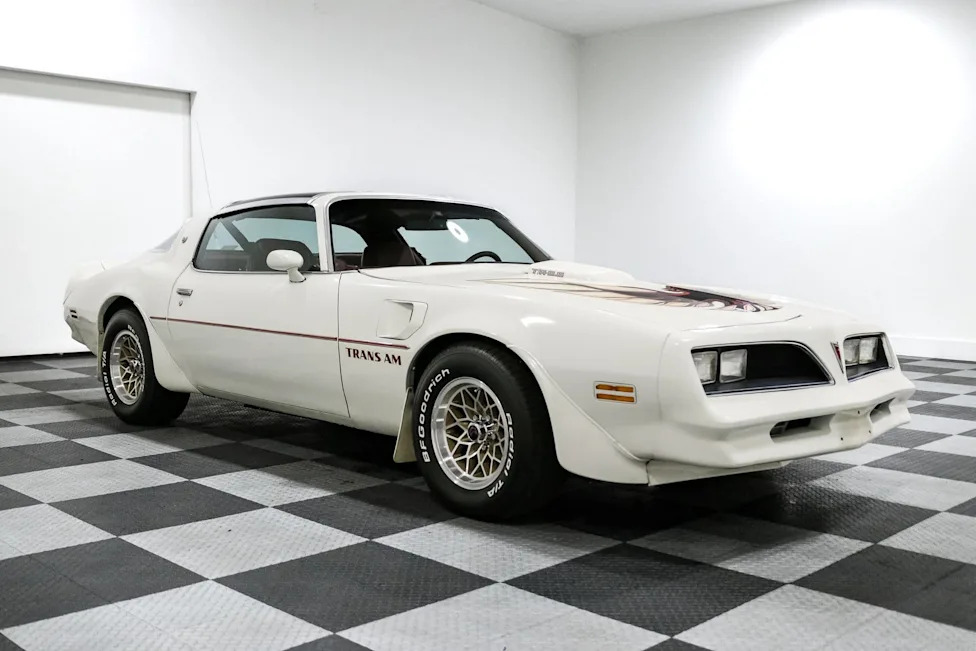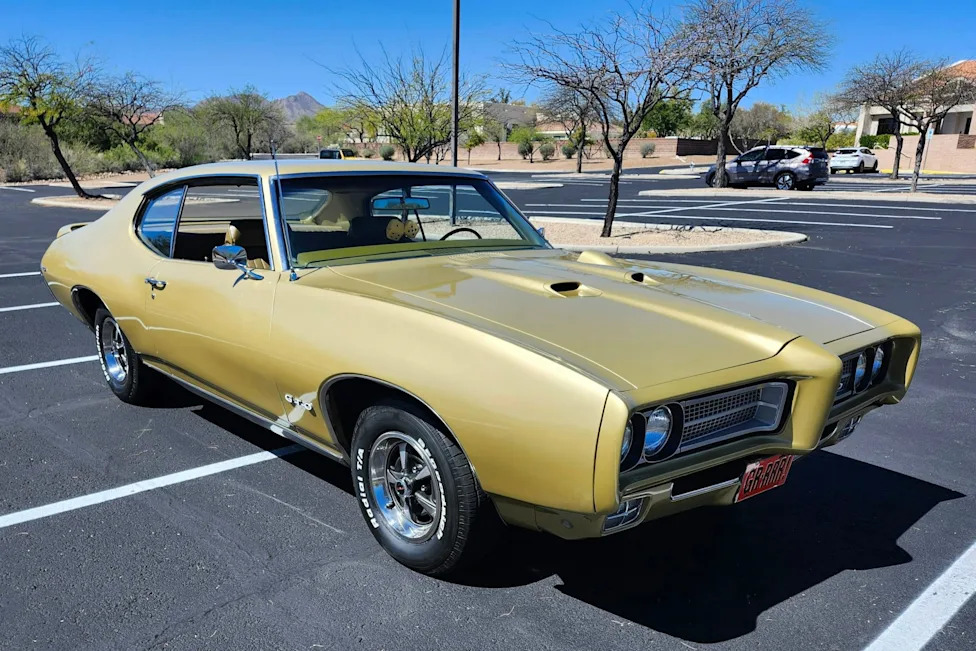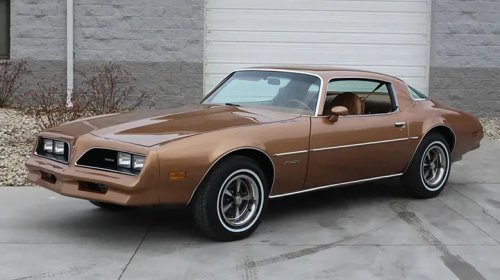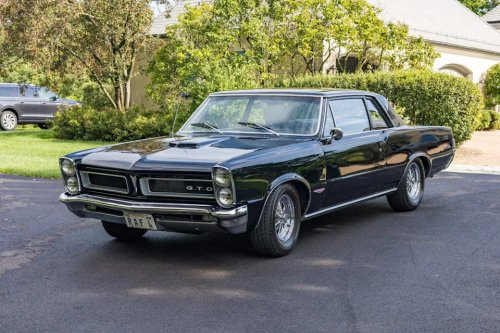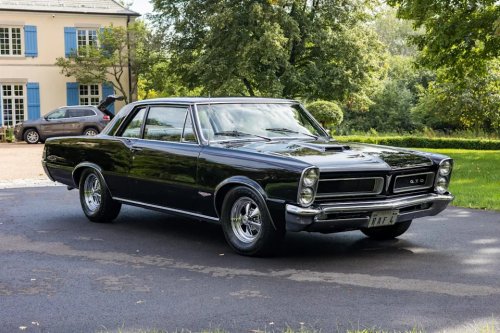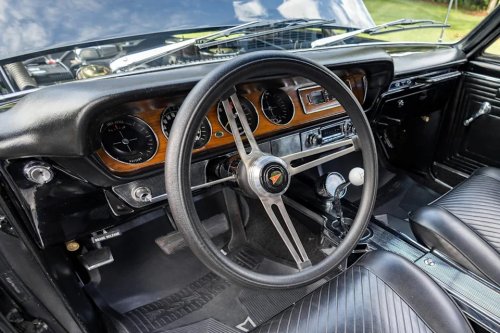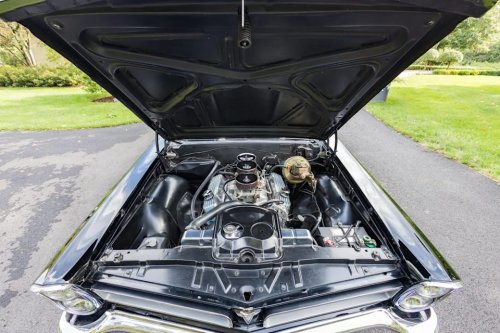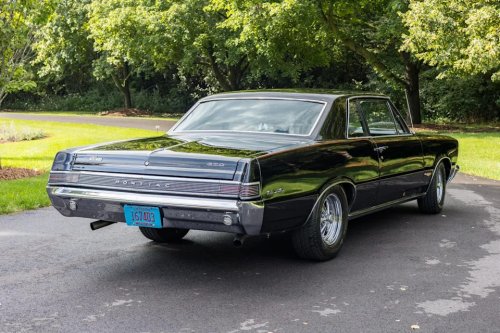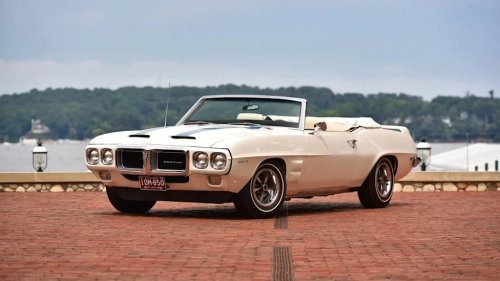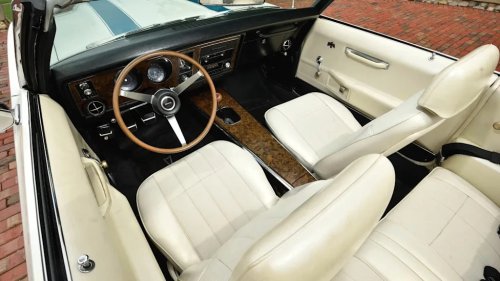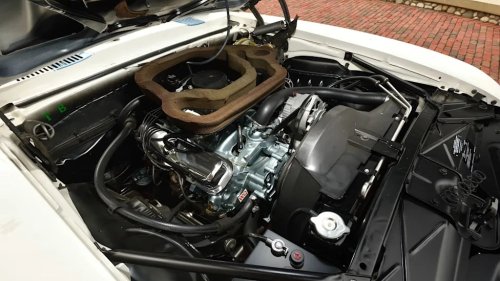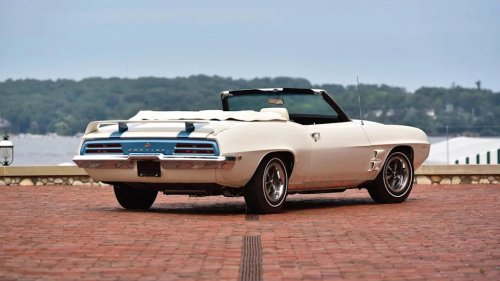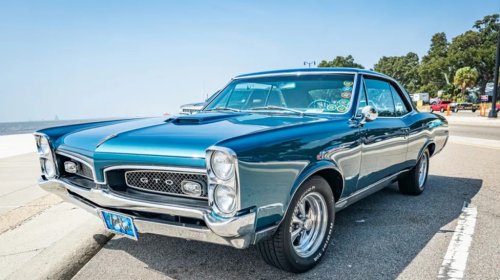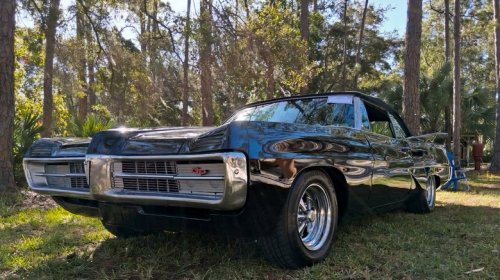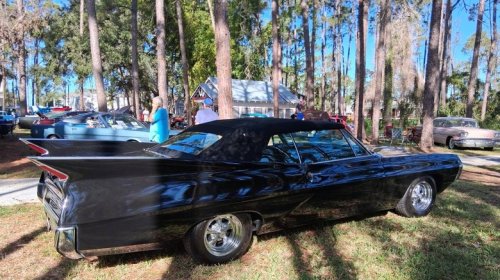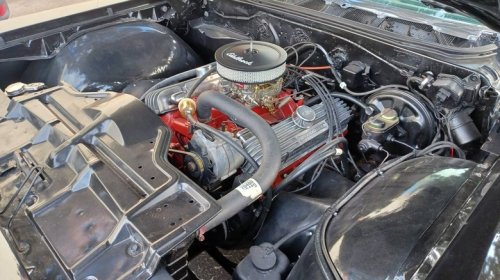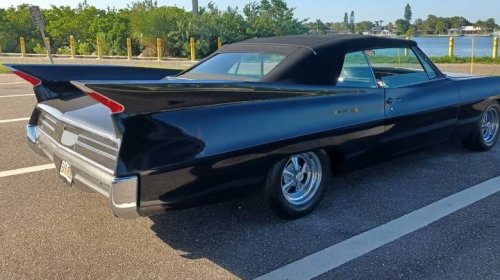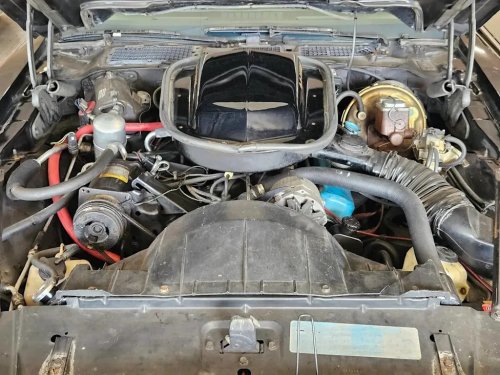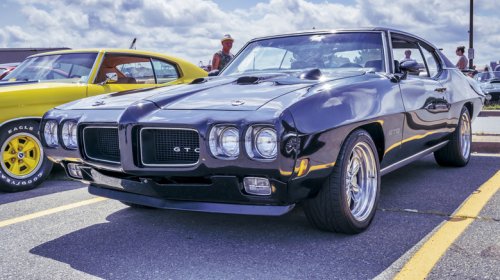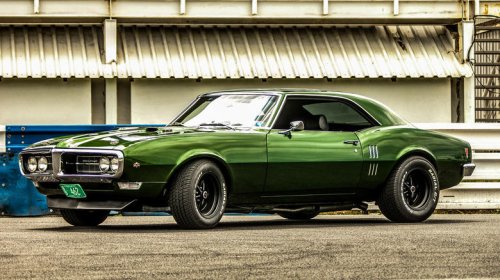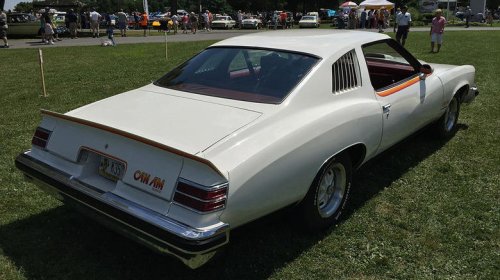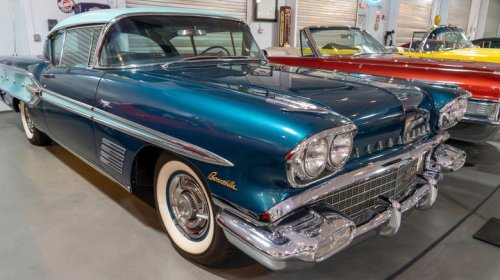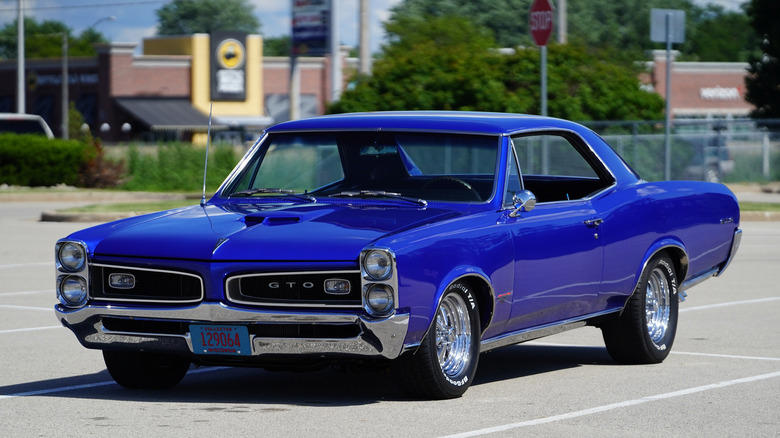
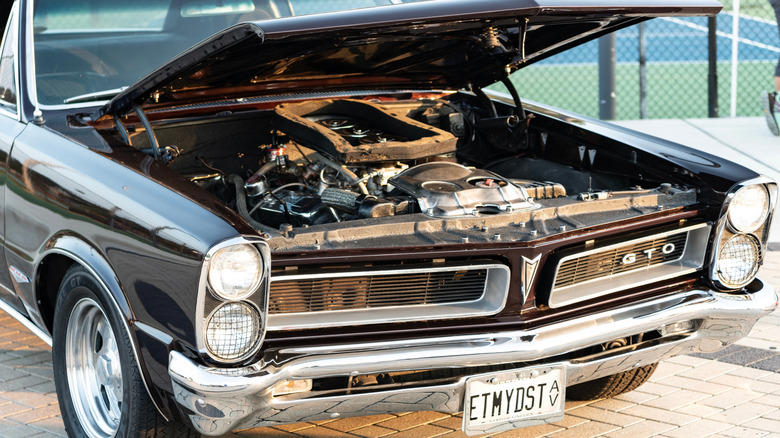
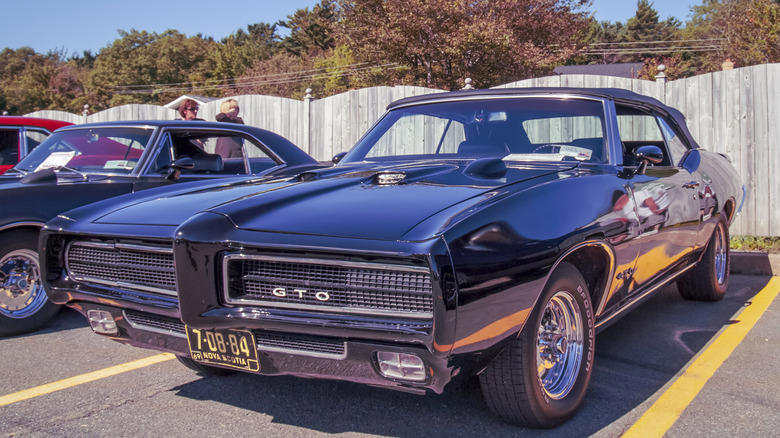



















1966 Pontiac GTO in parking lot, front-left 3/4 viewRewind back to 1961. Pontiac's V8 program was in full swing thanks to pioneering engine builders like Clayton Leach and Mark Frank, filing patents that laid the foundation for high-performance eight-cylinder engines throughout the next two decades. The Pontiac V8 wasn't a new concept by this point, having been introduced in 1955 as the 287 cubic-inch Strato-Streak, producing a humble 180 hp. But this year, Pontiac released a new engine attached to its full-size vehicle line-up: the "Trophy V8," the first 389. Unlike the Strato-Streak, this engine produced a hearty 303 hp in high-compression trim, based on the NASCAR-winning powertrain (hence the name). But the engine was the same physical size as the Strato-Streak, meaning Pontiac could theoretically swap them over into smaller cars.That idea got Pontiac's engineers into gear. In the spirit of hot rodders of the day, imagine taking a car with a smaller engine — let's say the newly redesigned 1963 Tempest, fitted with a 326 (still the same external dimensions as a 389). Why not just put the 389 in it and see what happens at that point? The engineers asked that very question, and we got our answer in 1964 with the birth of the Tempest GTO — and yes, "GTO" stands for something, by the way.In short, Pontiac's identical engine block dimensions provided a level of flexibility in engine development that spurred the dawn of the Muscle Era. It allowed not just the manufacturer but the engine builders themselves to effectively select which displacement (thus, horsepower and torque output) would best suit their needs. Moreover, its simple, modular construction improved reliability and likely service turnover. There's a lot of benefits to break down here, so let's get into it. Anatomy of the classic Pontiac V81965 Pontiac GTO with hood open, front-right viewFirst and foremost, let's discuss what made these engines special. There are several patterns of Pontiac V8, differentiated by era and the size of the main journals on the crankshaft. These are the polished rounded surfaces on the crank that it rotates on within the engine block — in Pontiac's case, you have small and large main journal types. In either case, both engine configurations retain that same exterior dimension, which is accomplished by modifying the engine's bore and stroke.Imagine you have a glass of water with vertical sides, but you want to pour more water in. That means you need a bigger glass, and there are three ways you can do this. You can make the glass wider, taller, or both — the same is true of engines. Making the glass wider is called increasing the engine's bore, whereas increasing its height modifies the engine's stroke.Engineers at Pontiac did both, beginning with the original 1955 287: This had a bore of 3.75 inches and a stroke of 3.25 inches. The largest displacement achieved (from the factory, at least), was the 455, appearing in 1970 with a bore and stroke of approximately 4.15 x 4.21 inches, respectively. In other words, the pistons were almost a half-inch wider and traveled up and down almost an inch farther within the confines of the same engine block. These represented some of the most powerful Pontiacs ever to hit the road, including the SD 455, the various Ram-Air 400s, and the 428 High Output. The influence of the Pontiac V8 goes beyond engine builders1969 Pontiac GTO parked in lot, front-left 3/4 viewIt's difficult to understate the impact the original Pontiac GTO had. This was essentially the car that brought the idea of "cheap, little car with a huge engine" into the wider public consciousness. Sure, such vehicles existed before then, but they were generally pricey sports cars like the Corvette or niche enthusiast machines. The GTO's formula was special because it married this performance to a relatively unassuming body, unintentionally giving rise to the muscle car. And none of this would've been possible had the famous Pontiac 389 not been able to fit under the Tempest's hood.This sort of setup worked wonders in a number of ways: Take logistics, for example. Whether you're an engine builder or a parts shop, Pontiac V8s offer an extensive list of interchangeable parts, with many major components being shared between displacements — something that's not true of small block versus big block designs of other companies. As they all have the same external dimensions, Pontiac's engines effectively have no such distinctions. This also means they're much easier to modify, since you could theoretically take any Pontiac engine and turn it into something producing big block torque with the right parts.Lastly, there's the level of refinement. All initial engine development is almost invariably plagued by teething issues as things like long-term reliability and manufacturing defects come into play. But Pontiac's design was generally regarded as highly reliable by the time the big boys like the 389 and 400 debuted. After all, if you want to build a pioneering muscle car, it has to be durable enough to not just blow the doors off its competition but also get you home. Want the latest in tech and auto trends? Subscribe to our free newsletter for the latest headlines, expert guides, and how-to tips, one email at a time. You can also add us as a preferred search source on Google.