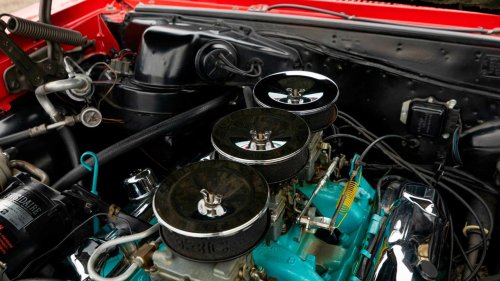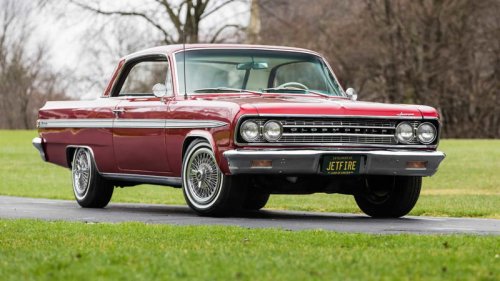
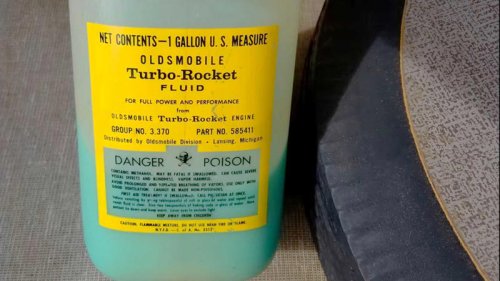
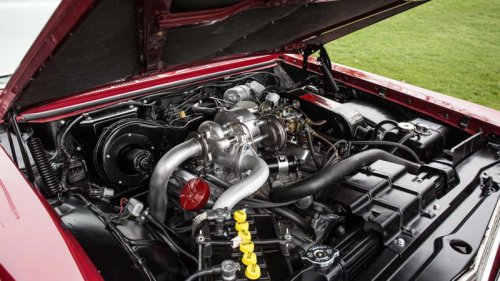
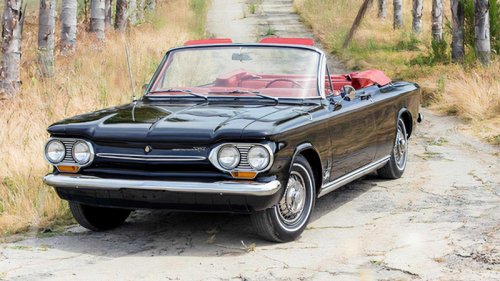
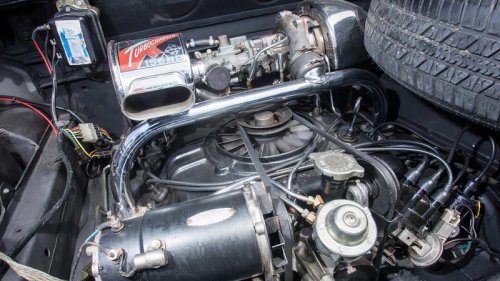
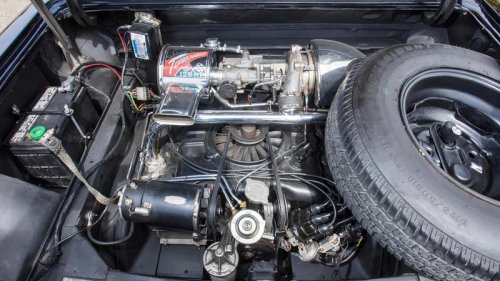
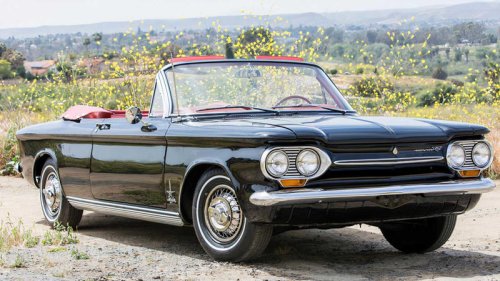
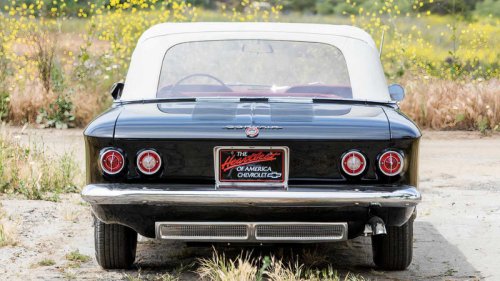
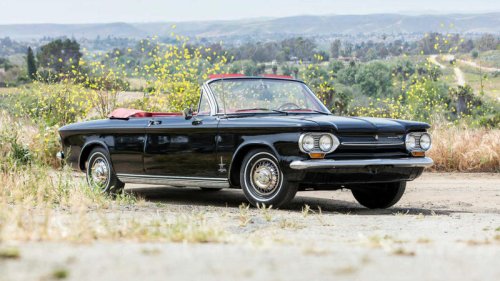



















In 1962, General Motors did the unthinkable by beating the rest of the world to the punch with the first mass-produced turbocharged car. Most enthusiasts assume turbocharging is a European or Japanese innovation, but Detroit actually launched two radically different machines in the same year.While one was a sophisticated aluminum V8-powered classic car that required its own "rocket fuel", the other was an air-cooled underdog that eventually became the most controversial car in American history. This is the story of how the turbo was born in America, why one was famously labeled severely unsafe, and how that legacy affects its market value today. Rocket Science In The Driveway: The V8 That Drank Rocket Fuel Via: Mecum AuctionsThe Oldsmobile F-85 Jetfire was the first ever turbocharged car, a marvel of 1960s engineering that arrived perhaps a decade too early. At its heart was a 3.5-liter Rockette V8, an all-aluminum engine that was remarkably light for the era. By adding a Garrett AiResearch T0-3 turbocharger, Oldsmobile pushed the output to an impressive 215 horsepower and 300 pound-feet of torque. These were massive numbers for a compact car in 1962, giving it a power-to-weight ratio that could shame many full-sized luxury cruisers of its time. However, this high performance came with a very specific and high-maintenance catch.Via: Mecum Auctions To prevent engine knock caused by the high 10.25:1 compression ratio, Oldsmobile engineers developed a complex system that required a special additive. Owners had to keep a tank filled with Turbo-Rocket Fluid, which was a precise mixture of distilled water and methyl alcohol. This fluid was injected into the intake to cool the combustion process. If the tank ran dry, a safety valve would bypass the turbocharger, leaving the driver with a significantly slower car. Most buyers found this process far too tedious for a daily driver, and many simply forgot to maintain the system entirely.Via: Mecum Auctions While the technology was innovative, it was in its infancy and well ahead of its time. Oldsmobile only managed to sell 9,607 units over two model years before pulling the plug. Reliability issues became so widespread that General Motors eventually offered a turbo-delete kit to dealers. This allowed frustrated owners to swap out the entire turbocharging system for a conventional four-barrel carburetor. Because so many cars underwent this conversion, finding a genuine, factory-spec survivor today is nearly impossible. These few remaining original examples have become high-value treasures for collectors who appreciate the sheer ambition of the Turbo-Rocket experiment. Corvair Monza Spyder: America’s First Mass-Produced Turbo Flat-6 Via: Bonhams While Oldsmobile focused on high-tech V8s, Chevrolet took an unconventional approach to turbocharging with the Corvair Monza Spyder. This model featured a turbocharged 2.4-liter flat-6 engine that produced 150 horsepower and 210 pound-feet of torque. While those numbers were lower than its Oldsmobile cousin, the Corvair was significantly lighter and used a simpler draw-through turbocharger design. This setup did not require any special fluids or complex injection systems, making it far more accessible to the average driving enthusiast who wanted Porsche-like performance on a Detroit budget.Via: Bonhams The "air-cooled, rear-engined, turbocharged flat-6" layout is more commonly associated with the 911 Turbo, but the Corvair came over a decade prior to the Porsche. Chevrolet proved that turbocharging could be a mainstream success by dominating the production charts. While the Jetfire struggled to reach five-digit sales, the turbocharged Corvair moved roughly 40,000 units through its production run. This massive production volume proved that the American public was ready for forced induction if the price and maintenance were manageable. The Monza Spyder was the first car to achieve true mass-market automobile with a turbo, moving the technology out of the laboratory and into suburban driveways across the country.Via: Bonhams However, the rudimentary design of the system meant that the turbo only made boost once in third or fourth gear and remains sluggish in stop-and-go traffic even with a perfect tune, it transforms once the turbo spools up and the car is rolling. The power delivery is far from instant, yet it pulls with surprising strength once you reach higher speeds.Beyond the engine, the Spyder package offered a genuine performance edge over the standard Corvair models. To handle the extra power, Chevrolet equipped these cars with a heavy-duty suspension system and a higher-ratio steering box. These upgrades actually made the turbocharged models much better to drive than the base versions. They felt more planted and predictable in corners, offering a sophisticated European driving feel that was rare for an American car at the time. Despite its later reputation, the turbocharged Corvair was a legitimately well-engineered sports car that delivered a level of balance and agility that most contemporary muscle cars simply could not match. Ralph Nader And The Unsafe At Any Speed Stigma Via: Bonhams The Corvair’s technical achievements were eventually overshadowed by one of the most famous legal battles in automotive history. In 1965, lawyer Ralph Nader published his groundbreaking book, Unsafe at Any Speed, which specifically targeted the early Corvair design. Nader argued that the swing-axle rear suspension was inherently dangerous and prone to tucking under during hard cornering, leading to rolls and crashes. Even though the turbocharged Spyder and Corsa models featured upgraded suspension components that largely addressed these issues, the entire Corvair lineup was painted with the same brush.This legal war effectively killed the car’s reputation overnight. The public began to view the Corvair as a rolling hazard rather than an innovative performance machine. The tragedy of this stigma is that it was largely based on the behavior of earlier base models, yet the high-performance turbo variants suffered the most in the court of public opinion. By the time the NHTSA conducted independent tests years later and vindicated the car by proving it was no more dangerous than its peers, the damage was irreversible. The controversy created a PR nightmare that Chevrolet could not escape, and they even had to publicly issue an apology.The impact on sales was swift and brutal. While the arrival of the Ford Mustang in 1964 already provided stiff competition for the youth market, the safety scandal was the final nail in the coffin. Buyers who wanted performance began flocking to traditional V8 pony cars that did not come with a side of legal drama. Chevrolet kept the Corvair in production until 1969, but it was a shadow of its former self, with dwindling sales and almost no marketing support. A car that began as a brilliant engineering exercise ended its life as a legal pariah. Why The World’s Most Controversial Turbo Is Finally Gaining Value Via: Bonhams As we look at the market in 2026, a fascinating discrepancy emerges between these two turbo pioneers. The Oldsmobile Jetfire has evolved into a rare unicorn of the classic car world. Because so few were built and even fewer survived with their original Turbo-Rocket systems intact, prices have climbed significantly. A clean, functioning Jetfire now commands between $40,000 and $55,000 at major auctions. Collectors are finally willing to pay a premium for the sheer complexity and historical significance of the first turbocharged V8, even if it was a headache for the original owners.On the other hand, the turbocharged Corvair Monza Spyder remains the ultimate performance bargain for 1960s enthusiasts. Despite its historical importance and unique air-cooled layout, the old safety stigma kept prices low for decades. Even in 2026, Hagerty values clean and well-maintained examples around the $18,000 to $28,000 range. This makes the Corvair one of the most accessible ways to own a piece of genuine automotive history. You get a turbocharged, rear-engine classic for a fraction of the price of a contemporary Mustang or Camaro.Bonhams The investment outlook for the Corvair is currently stable. As a new generation of collectors begins to value oddities with technical weirdness and historical context over raw horsepower, the Corvair is seeing a slow but steady appreciation. It is no longer viewed just as a dangerous relic, but as a misunderstood masterpiece of American design. For anyone looking for a unique alternative to the standard muscle car scene, the turbocharged Corvair offers a sophisticated driving experience and a legendary story that still sparks conversation at every car show.Sources: General Motors, Hagerty, Auto Safety