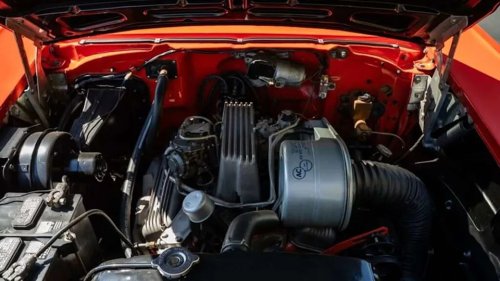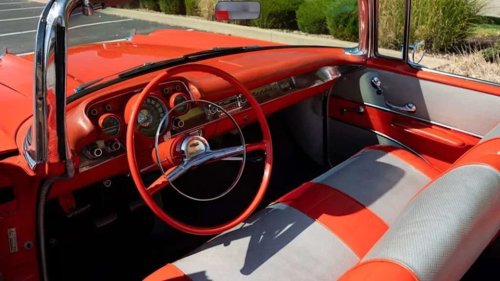
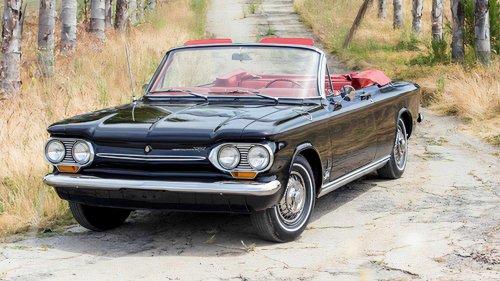


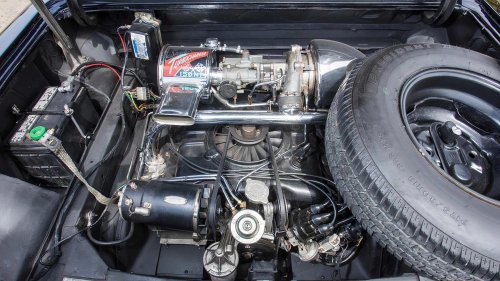
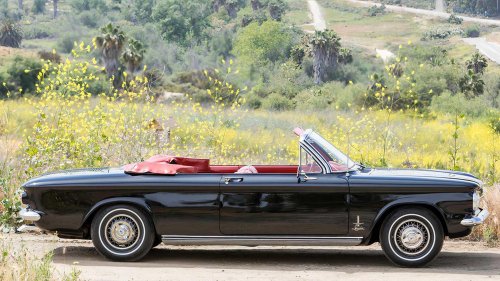


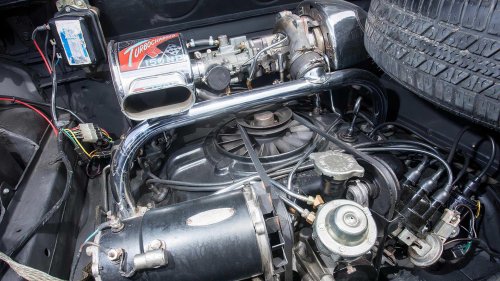

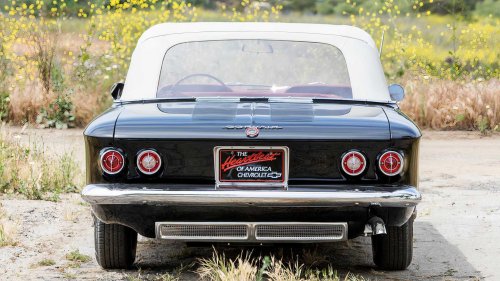

























A long time ago, naturally aspirated engines were the standard for a proper sports car. Today, turbocharged sports cars are everywhere, with models like the new Nissan Z, BMW M4, Toyota Supra, and even Ford’s EcoBoost Mustangs dominating the market in 2025. The formula is simple: take a small, efficient engine and force-feed it air. Turbochargers are no longer exotic; today, they’re a dime a dozen.Porsche debuted the iconic "911 Turbo" in 1975, which has come to define the blend of speed and sophistication since. Powered by a flat-six engine with a turbocharger, the 911 Turbo has become a revered and iconic sports car. But it wasn't the first flat-6 turbo sports car to grace the streets.Porsche Before Stuttgart strapped a turbo to its flat-six, America built a turbocharged, rear-engined sports car over a decade prior. It was radical and severely controversial. No other American car had tried this layout before, and it didn’t even have a front grille. It was closer to a Porsche 356 in spirit than a Mustang or Camaro. This American automobile was the first turbocharged flat-six mass-market production car and was sold to regular buyers.As the model in general was cloaked in controversy, this specific version that pioneered the layout is generally forgotten in the history books and hasn't received its due credit. Chevy Beat Porsche To The Turbocharged Flat-Six By Over A Decade Via: BonhamsIn 1962, Chevrolet did something no other American automaker had attempted. It built a mass-produced, turbocharged flat-six sports car and sold it through regular dealerships. The car was the Corvair Monza Spyder, and it beat Porsche to the turbo flat-six formula by more than a decade since the first Porsche 911 Turbo didn’t arrive until 1975.Via: Bonhams The Monza Spyder packed a 2.7-liter, air-cooled flat-six engine in the truck, equipped with a draw-through turbocharger. It made 150 hp and 210 lb-ft of torque, which was a strong output for a lightweight car that tipped the scales around 2,500 pounds. This was one of the earliest examples of forced induction being used to make up for modest displacement.The engine layout mimicked high-performance European designs, with the motor slung out back and no radiator up front. It used a 4-speed manual transmission, and the turbo was integrated into the engine bay without the need for complex intercooling or electronics. For the time, it was advanced and crucially affordable.Via: Bonhams Chevrolet marketed the Monza Spyder toward enthusiasts, even before the term “sports compact” existed. It offered something different from the muscle cars that would soon dominate the era. The rear-engine layout, low weight, and responsive torque delivery gave it handling and performance character unlike anything else in the American market.Via: Bonhams The 911 Turbo would go on to perfect the turbocharged flat-six formula. But it wasn’t the first, as that title belongs to Chevrolet’s oddball, forward-thinking Corvair. It anticipated a layout and powertrain configuration that modern automakers would later refine into icons. The fact that it came from GM in the early 1960s makes it all the more remarkable.This wasn’t just a quirky footnote in automotive history. The Chevrolet Corvair Monza Turbo was the first production car to feature a turbocharged flat-six engine, and it deserves recognition. The Corvair Monza Spyder Didn't Belong In A GM Showroom Via: Bonhams The Chevrolet Corvair Monza Spyder didn’t look, sound, or drive like anything else in a GM showroom in the early 1960s. While the rest of Detroit continued with the traditional front-engine, water-cooled layouts, the Corvair went its own way. It had a rear-mounted, air-cooled flat-six, a design that felt more Porsche than Pontiac. It had no radiator, no grille, but with a massive turbo; Instead, it offered a clean nose and a usable front trunk.Via: Bonhams This radical engine placement provided the car with an unusual weight distribution. It also changed how it handled. The Corvair featured fully independent suspension, a rarity among American cars at the time. But its rear swing-axle design had quirks, including abrupt oversteer when pushed hard, especially with uneven tire pressures. Still, compared to Detroit sedans sold at the time, the Corvair was sharp, light, and responsive.The car weighed about 2,500 pounds – light for the era – and that helped its modest 150 hp and 210 lb-ft from the turbocharged 2.4-liter (later increased to 2.7 liters) flat-six feel quick enough. The turbo setup was simple: a compact draw-through system with a single carburetor, no intercooler, and limited boost. It was designed for reliability and packaging, not peak output. But it worked.Via: Bonhams Inside, the Spyder had a sportier cabin than its siblings. It came with bucket seats, extra gauges, and a dashboard designed to appeal to drivers, not just commuters. Later models like the Corsa Turbo in the Gen II Corvair improved performance and styling but kept the same unorthodox philosophy.Via: Bonhams The Corvair platform wasn’t just a different drivetrain. It was an engineering experiment hidden in plain sight, wrapped in a compact coupe body and sold at Chevrolet dealerships. It broke every GM convention at the time, and that’s exactly what makes it matter.If you’re looking for one of the earliest classic American turbo cars, or the first turbocharged flat-six sold to the public, the Chevrolet Corvair Monza Spyder is the answer. It was decades ahead of its time, but the Corvair was controversially labeled as unsafe at any speed. Ralph Nader Labeled The Corvair Unsafe At Any Speed Via hagerty.co.ukIn 1965, Ralph Nader published Unsafe at Any Speed, a book that changed the way America looked at car safety and put the Chevrolet Corvair in the crosshairs. Nader’s central claim was that the Corvair’s swing-axle rear suspension made it unstable, especially during emergency maneuvers. Early models lacked a front anti-roll bar, which made oversteer more pronounced. Drivers unfamiliar with rear-engine dynamics could find the car unpredictable at the limit. Instead of addressing the issue head-on, General Motors tried to discredit Nader personally, even hiring investigators to dig into his private life. The strategy backfired badly, and GM was forced to apologize during a Senate hearing, and Nader emerged as a national figure for consumer advocacy.The damage to the Corvair’s reputation stuck. While GM improved the suspension in later models, including the Corsa Turbo, which had a fully revised rear setup, the public had already lost confidence. Sales dropped, and Chevrolet discontinued the turbocharged Corvair after 1966, with the entire model line phased out by 1969.Ironically, a 1972 NHTSA report cleared the Corvair, stating that it was no more dangerous than other cars from the same era. But by then, it was too late. The Corvair had become a symbol of corporate negligence, fair or not.What’s often lost in that narrative is how technically ambitious the car was. The Corvair Monza Turbo offered a layout and engine design that foreshadowed the modern turbocharged sports car. A rear-engine, air-cooled flat-six with forced induction sounds more like a Porsche build sheet than anything from Detroit.Via: Bonhams While Chevrolet pioneered the layout, Porsche would go on to perfect the formula with the 911 Turbo. The Corvair became a casualty of a larger conversation, but its legacy as one of the most innovative classic American turbo sports cars will live on.Sources: Chevrolet, General Motors, National Technical Reports Library, New York Times, Auto Safety, Hagerty.