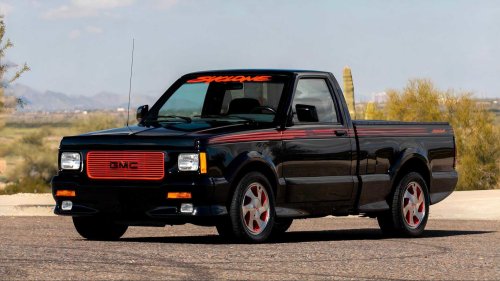
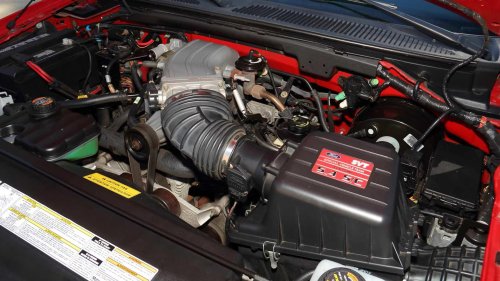
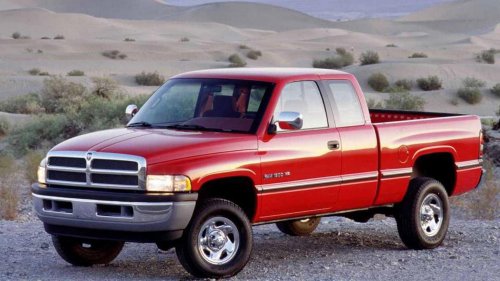
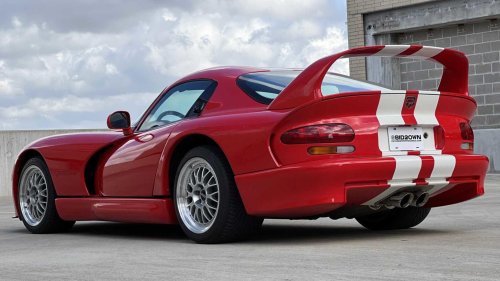
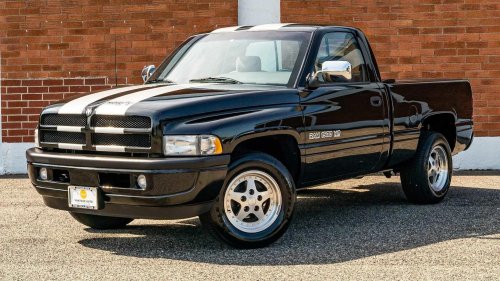
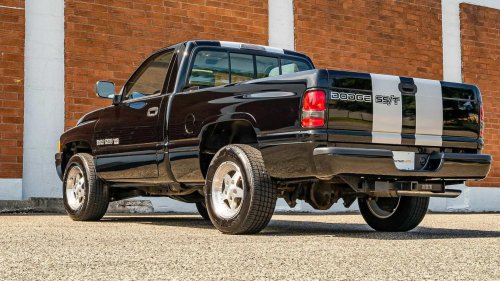
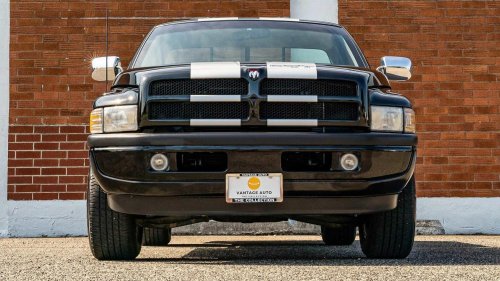
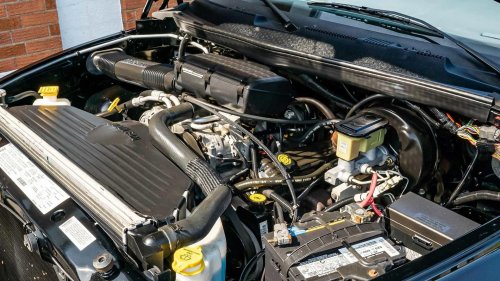
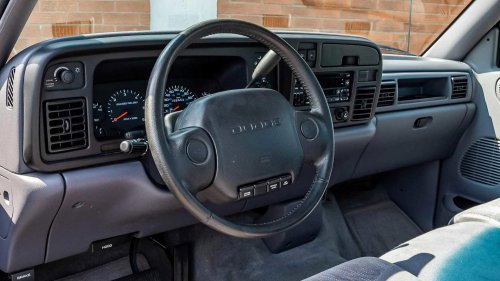
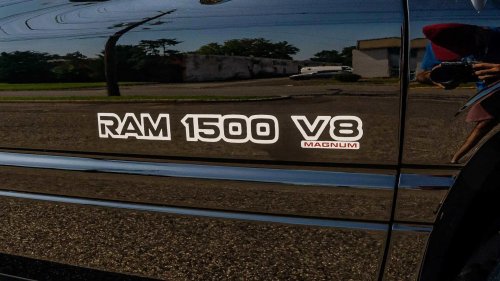
The 1990s gave buyers loud pony cars, turbo oddballs, and factory performance machines with real personality. Pickups started to join the fun, too. Chevrolet had the 454 SS, GMC built the wild Syclone, and Ford answered with the F-150 Lightning. By the middle of the decade, a truck no longer had to live only at the jobsite.That shift opened the door for something strange. Dodge had just launched a bold new Ram, truck buyers were warming to factory attitude, and that brand quietly built a V8 pickup that looked ready for a street fight. On paper, it had everything it needed. In memory, it barely exists. The 1990s Created The Perfect Moment For A Street Truck Mecum By the early and mid-1990s, factory performance had started to loosen its belt and have some fun again. Chevrolet had already shown that a full-size pickup could carry muscle car attitude with the 454 SS. GMC took things even further with the 280-horsepower Syclone, a compact truck so quick that Car and Driver famously lined it up against a Ferrari. Ford then gave buyers the SVT F-150 Lightning, which brought a 240-horsepower V8 and a more polished factory performance story to the full-size side of the market.At the same time, pickups were changing jobs. More buyers wanted them for daily life, family duty, image, and personal taste, not just towing and work. Around the 1990s, buyers increasingly sought pickups for passengers and for lifestyle reasons beyond labor-heavy use. That change made appearance packages more important, but it also made factory attitude easier to sell.Mecum Dodge saw the opening because it had already changed the tone of the truck market. The redesigned 1994 Ram hit the segment with big rig styling that looked nothing like the safer, flatter trucks around it. It was a radical truck built around a radical strategy, a truck that changed full-size pickups forever. Motor Trend named it Truck of the Year almost immediately after launch, and the styling gamble paid off in the showroom. Dodge finally had a pickup that people noticed before they knew anything about the spec sheet. It Had The Look, The Timing, And The Brand To Matter Dodge Dodge had become nearly irrelevant in full-size pickups before the 1994 redesign, with fewer than 80,000 trucks a year and only a small slice of the market. The new Ram changed that trajectory in a hurry with a stronger U.S. truck share. That gave Dodge something it had lacked for years. Real momentum in trucks and a reason to push harder.The brand also had a presence. The redesigned Ram had a face people remembered, and it started showing up in pop culture while it was still new. In 1996’s Twister, the bright red Ram 2500 became one of the movie’s hero vehicles, which only added to the truck’s visibility and swagger. Dodge trucks suddenly looked current, loud, and larger than life.Bring a Trailer Then came the branding opportunity that made the next move feel almost obvious. Dodge was already flexing with the Viper, and in 1996, the Viper GTS served as the official pace car for the Indianapolis 500. The brand also positioned a special Ram as the official truck of that event. The company was using one of the biggest stages in American motorsport and tying its truck to the same blue-and-white visual energy that made the Viper GTS impossible to ignore. That gave the truck instant credibility and a very neat little family resemblance. The 1996 Ram SS/T Is A Forgotten Street Truck Bring a TrailerStrictly speaking, the truck that kicked off this whole bloodline arrived in 1996 as the Dodge Ram Indy Special, not under the SS/T badge itself. The official SS/T name followed in 1997 and ran through 1998. Still, when enthusiasts talk about the Ram SS/T story, the 1996 truck sits right at the start of it, because Dodge had already built the core idea by then. The blueprint was there one year before the badge became official, and that detail is easy to miss if someone only remembers the stripes and the attitude.Underneath the special treatment sat a Ram 1500 regular-cab short-bed 4x2 with the 5.9-liter Magnum V8 and a four-speed automatic. In ordinary 1996 Ram trim, that 5.9 made 230 horsepower and 330 lb-ft of torque, but the Indy package pushed output to 245 hp, paired it with a sport-tuned exhaust, and wrapped the whole thing in a much more aggressive visual identity. It was not a full mechanical reinvention, but Dodge did more than slap on stickers and call it a day. The official brochure page for the 1996 Indy Special listed a special Brilliant Blue paint treatment with dual wide stripes, 17-inch machined cast aluminum wheels, dual-tip sport-tuned exhaust, fog lamps, a body-color grille, and an analog gauge cluster with a tach.Bring a Trailer The look did a lot of heavy lifting because it worked. The second-generation Ram already had broad shoulders and that semi-truck nose. Add Viper-style stripes, clean street-truck colors, larger wheels, and a lower visual stance, and the result looked mean in a very direct way. It had the kind of shape that made teenagers stop and stare and made neighbors assume the owner had at least one loud opinion about motor oil.Dodge built just 2,802 Indy trucks in 1996, and the demand for that limited run helped convince the company it had something worth continuing. That led directly to the 1997 and 1998 Ram SS/T, which kept the regular-cab short-bed layout, the stripes, the sportier trim, and the stronger street-truck image. The 1997 brochure pegged the SS/T’s 5.9-liter Magnum at 245 hp, and package descriptions added the color-keyed bumpers, grille, lower fascia, rear valance, fog lights, dual-note horn, and tachometer to the mix. Why It Never Became A Legend Bring a Trailer The first problem was simple. The Ram street truck looked tougher than it really was. The extra power mattered, but not by much. The 1996 special moved from the standard 230 hp to 245, and even the later SS/T used that same number. That gave the truck more credibility than a normal 5.9 Ram, but it did not turn it into a class-bending monster. Next to the 280-hp Syclone, which had already built a reputation as a fast-production oddball, the Ram felt more like a strong image package with a mild tune than a full mechanical revolution.Then, there was timing. Dodge landed on the idea before the muscle-truck formula had fully hardened into something buyers instantly recognized. In 1996 and 1997, the market still had room for weirdness. While some sport trucks leaned hard on horsepower, and others leaned on styling, the Ram sat somewhere in the middle. It had enough hardware to matter, but its public identity still centered on the way it looked. That made it harder to file away in history.Bring a Trailer Then, there was the competition for attention. Ford had SVT backing the Lightning, which gave that truck a clean performance story right out of the gate. GMC had already gone almost cartoonishly hard with the Syclone. A few years later, Dodge itself would build the Ram SRT-10 and stuff a 500-hp Viper V10 into it, which tends to make earlier, calmer efforts look like the opening act. Against trucks like those, the SS/T and its 1996 precursor became easy to overlook.Bring a Trailer Last but not least, at the time, Ram still carried a work-truck image first. The 1994 redesign made the trucks stylish, but Dodge still sold plenty of Rams on diesel torque, V10 novelty, towing ability, and sheer truckness. Sales improved dramatically with the new generation model, but that success did not suddenly turn Ram into a performance halo brand. And memory saved room for the fastest, the rarest, and the most disruptive. The Ram was none of those. A Street Truck That Deserves To Be Remembered Bring a Trailer As weird as it may sound, that is exactly why the SS/T story matters now. That truck was not the fastest pickup of its era, but it showed where factory performance trucks were heading. Dodge took a mainstream half-ton, picked the right body style, sharpened the image, added a little more engine, and sold the whole thing as attitude with a warranty. That sounds normal today, but in the mid-1990s, it still felt fresh.It also pointed toward the later Ram performance playbook. The 1996 Indy Special and the 1997-1998 SS/T proved that a regular-cab short-bed Ram could carry real enthusiast appeal. Dodge would later push that idea to a ridiculous conclusion with the Ram SRT-10, but the basic shape of the argument had already been made.There is also a nice little lesson in how the truck came to exist. Dodge started with an event truck tied to the 1996 Indy 500, discovered that demand ran ahead of supply, and then turned that interest into the SS/T package. That is a very real signal from the market. Buyers told Dodge they wanted a factory street truck, and Dodge listened.


















 +31 others