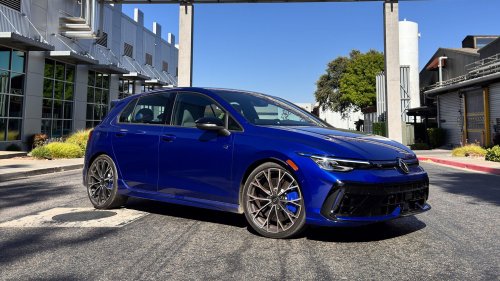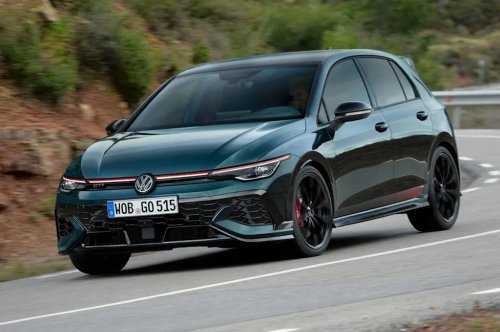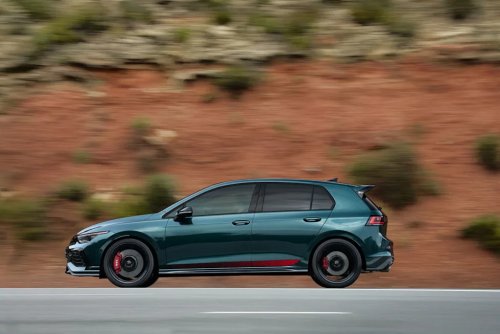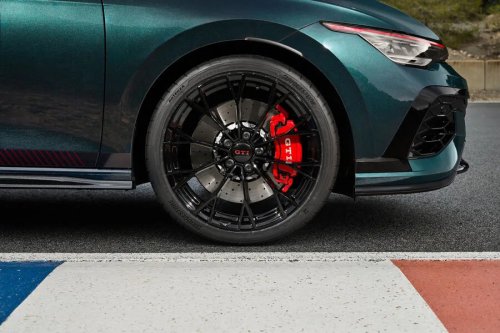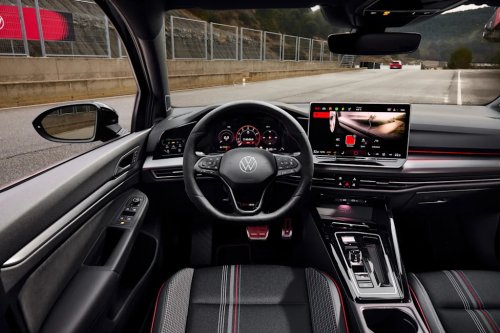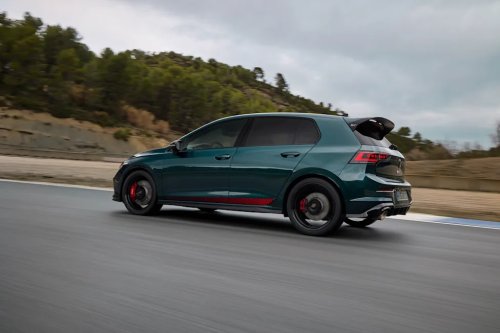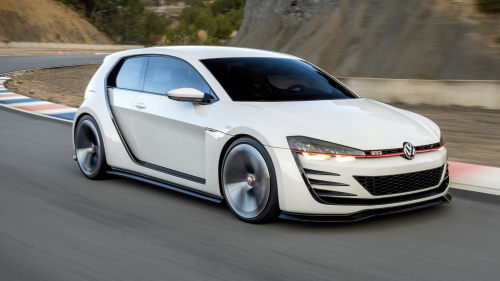
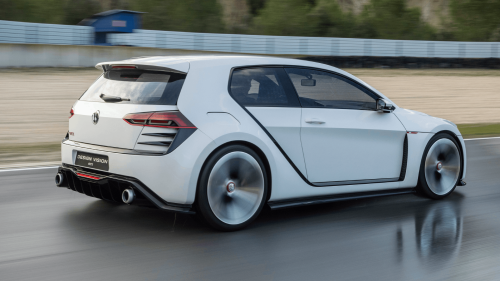
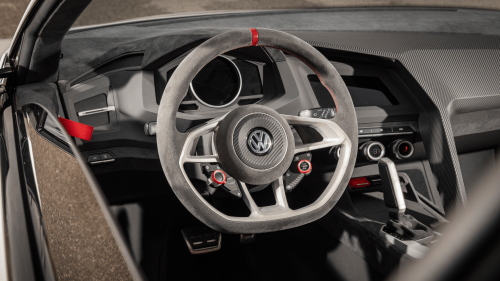
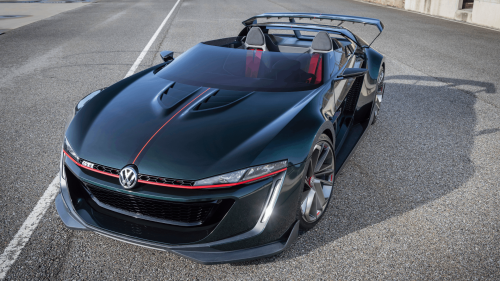
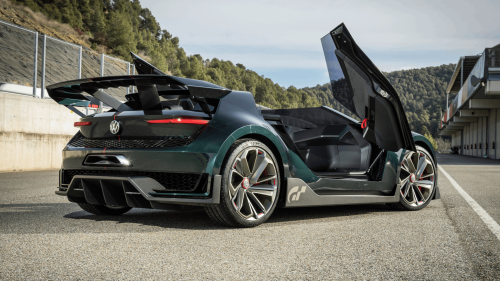
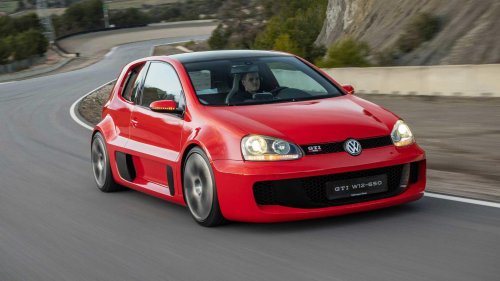
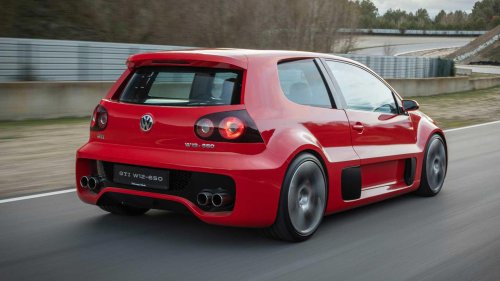



















This year, the Volkswagen Golf GTI is celebrating its 50th birthday. This is the car that brought the hot hatch to the consciousness of gearheads worldwide, setting a new standard for performance and practicality in an affordable package.Although it hasn’t diverged far from that agenda over its eight generations, the GTI has spawned some pretty special variants and concept cars in the last five decades. Some of the coolest came early in the 2010s, and yet, absolutely nobody talks about them. It's time to bring them to the spotlight. Volkswagen Design Vision Golf GTI VolkswagenBefore local politics brought it to an end in 2023, the Wörthersee GTI Treffen was the place to be for VW GTI fans. The small Austrian town of Reifnitz became host to the annual festival, which brought GTIs from far and wide for one gigantic car meet.The meet was so popular that the Volkswagen brand began taking part in the annual tradition, bringing a new concept car to the festival as a nod to those in attendance above all else. In 2013, the striking VW Design Vision Golf GTI concept debuted there.Earlier that year, the Mk7 VW Golf GTI was released. It served as the foundation for this new Vision Golf concept, intended to be the ultimate form of the GTI available at the time. The result was a design that, while echoing the new GTI, had a lower roofline, a shorter overall length, and a comically aggressive aerodynamic rework. Although official press materials described the concept as a race car, which at least explained the large front splitter, the machine looked more like a more muscular road car with its huge 20-inch wheels and gigantic exhausts.Volkswagen The interior was a far cry from the road-going GTI. For a start, the Design Vision dropped the rear seats in favor of a carbon strut brace. The front occupants sat in a pair of bucket seats with brightly branded GTI harnesses. Instrumentation was limited to the bare essentials, and Alcantara graced nearly every conceivable surface.Under the skin was where the Design Vision GTI really strayed away from the core recipe, though. The stock turbocharged 2.0-liter four-cylinder engine was gone, and in its place, there was a twin-turbo 3.0-liter VR6 crammed under the hood. The new engine produced a mighty 496 horsepower and 413 pound-feet of torque. If you think that sounds overwhelming in a front-wheel-drive GTI, you'd be right. However, the Design Vision had all-wheel drive, making the machine a little closer to a Golf R in nature.VolkswagenThe concept also dropped the road-going model's manual gearbox in favor of a DSG automatic. The result was a 0-60 mph time of just 3.9 seconds, with a 186 mph top speed. Carbon ceramic brakes were also part of the package to help slow the thing down.Naturally, the Design Vision GTI never even came close to making production, simply existing as a case of "just because." It was a rad thing, nonetheless. Plus, the car wasn’t the end of the story for the Design Vision. Volkswagen GTI Roadster Vision Gran Turismo VolkswagenA year later, Volkswagen returned to Wörthersee with a fresh take on the Design Vision, but the new one strayed even further from being a traditional hot hatch than the original. The GTI Roadster Vision Gran Turismo was an open-roof two-seater built in collaboration with game developer Polyphony Digital as part of its Vision Gran Turismo program, which would see the car make an appearance in the PlayStation 3 title Gran Turismo 6.Using the same mechanical components as the first Design Vision, the Roadster ended up dramatically different from the original car in pretty much every other regard. Its bodywork had a complete redesign, with narrower headlights, smoother lines, and a gigantic rear wing.The biggest difference came in the chopped-off roof, with a new windscreen barely tall enough to clear the driver's eye line. Things got even crazier for the interior. It was somehow even more spartan than the car that came before it. The switch gear was practically removed, with only the display in front of the driver serving as the sole source of information. The original round steering wheel was gone, with its place taken by a GT race car-style square unit.vw-gti-roadster-4With its sleeker aerodynamics and lighter weight, the Roadster was said to be capable of 192 mph and a 0-60 mph time of 3.5 seconds despite retaining the power of the first Design Vision concept. The Coolest Volkswagen Golf GTI Never Made VolkswagenAs cool as both those concepts were, neither claimed to be the coolest Volkswagen Golf GTI that was ultimately never made. That title goes to the Golf GTI W12-650. Yeah, you guessed it, a W12-powered Golf.This was another Wörthersee special, this time for the 2007 event, years before the pair of Vision concepts. Using the Mk5 GTI as its base, Volkswagen’s engineers put nearly every element of the original car in the trash, except for the hood and headlights. They then raided the wider VW Group parts bin to see what it could pull together to create the ultimate Golf GTI. Above all else, the following spec sheet shows how versatile that brand of umbrellas was, and still is.The engine came from the Bentley Continental GT, a 6.0-liter twin-turbocharged W12 making 641 hp and 553 lb-ft of torque. As there was no space under the hood for that big of an engine, the engineering team mounted it on an aluminum subframe in the middle of the car.The gearbox was a Volkswagen unit, a Tiptronic torque converter from the Phaeton sedan rather than a DSG, as no dual clutch at the time could handle that amount of power. Oh, and that grunt was sent exclusively to the rear axle, itself taken from a Lamborghini Gallardo. The Lamborghini's rear brakes were used here too, while the front axle had a set taken from an Audi RS4. To house its extra tracks and wider tires, the W12-650 measured six inches wider than the car it was based on.VolkswagenIncredibly, this concept was functional rather than a mere exercise in bolting parts together, and Volkswagen even let a few journalists loose in it. You’ll likely best remember the W12 from an appearance on Top Gear with Jeremy Clarkson at the helm. A sub-four-second 0-60mph time was claimed, despite being exclusively rear-wheel drive.A production was under consideration, unlike the other two concepts we’ve talked about, but it seems those plans never progressed beyond a pipe dream for VW’s engineers. We’ll always be sad about that fact.Sources: Volkswagen