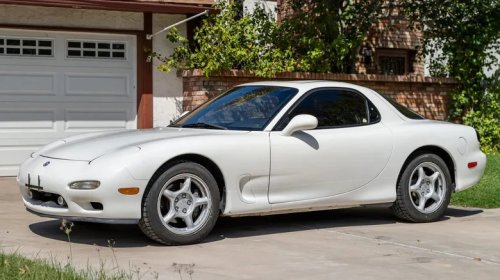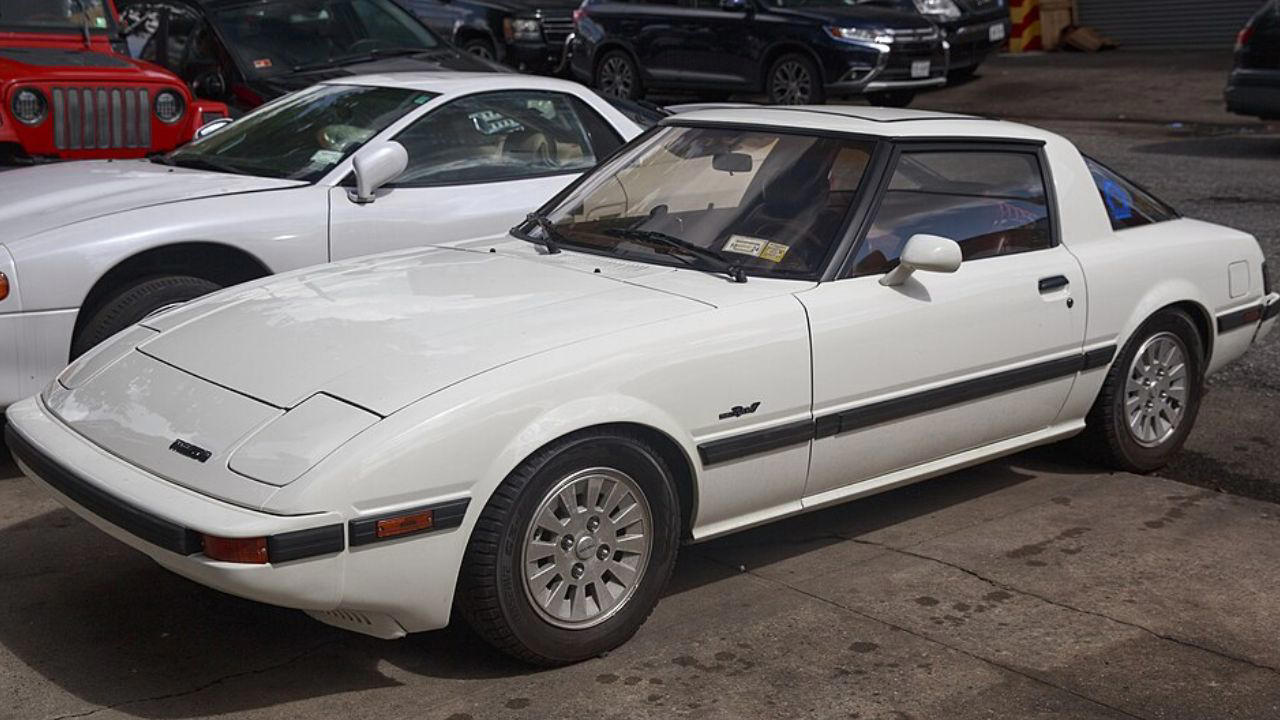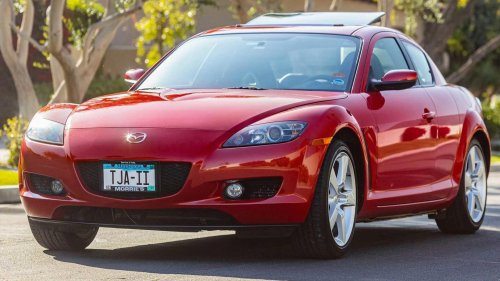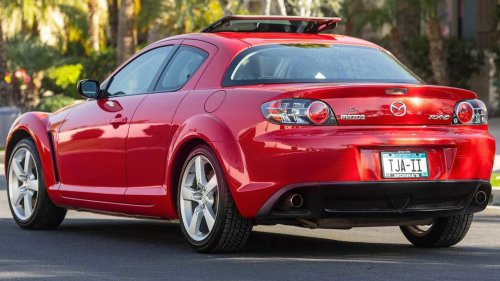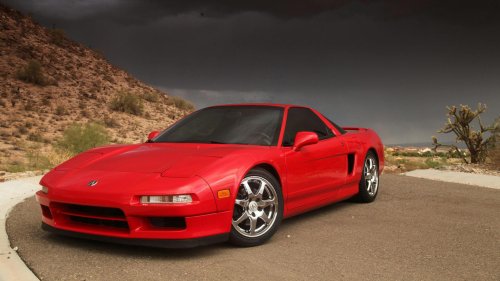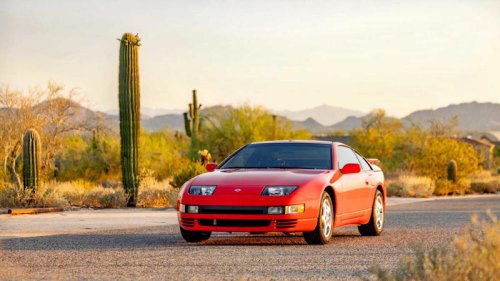
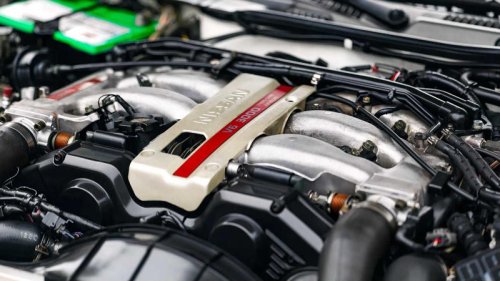
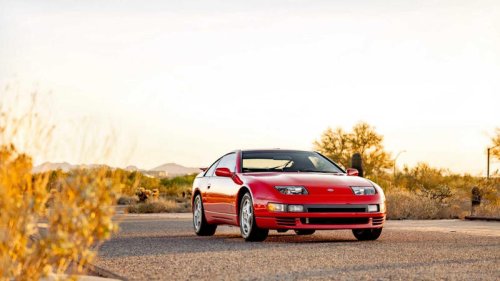
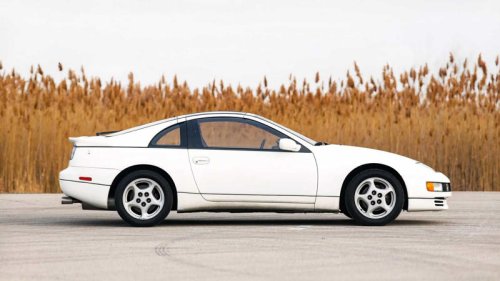
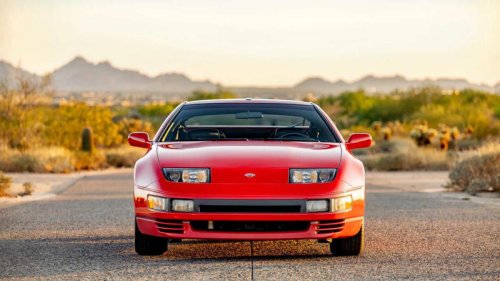
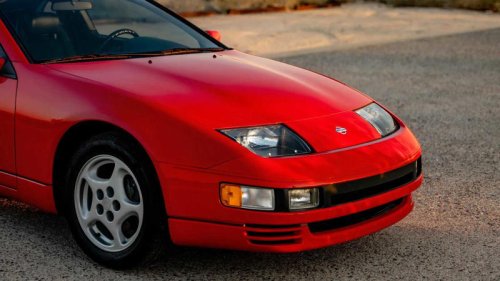
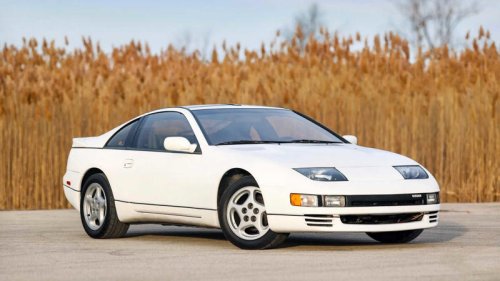
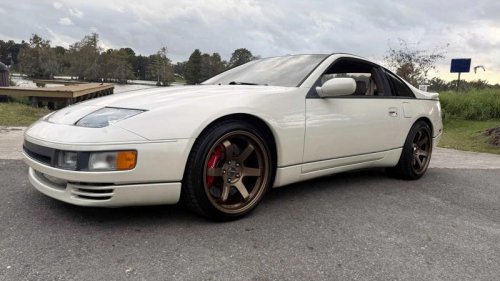


















Japanese sports cars from the late 1980s to the early 1990s are always the most celebrated generation in the American market. Models like the A80 Supra, the FD RX-7, and the R32 Skyline GT-R are constant conversation starters among enthusiasts. The bubble economy in Japan at the time was flooding money into research and development, and manufacturers responded with some of the most ambitious automotive programs in history. Nissan's Project 901, Toyota's Supra program, and Mazda's rotary-driven engineering obsession all came to fruition during this era, producing cars like the A80 Supra, the FD RX-7, the R32 Skyline GT-R, and the Mitsubishi 3000GT VR-4 that challenged European exotics at a fraction of the price. No wonder these cars dominate every conversation about JDM today, kept alive by the Fast and Furious franchise, the Gran Turismo series, and the anime Initial D. But not every car from this golden era got its moment in the spotlight, and one of them deserved it more than most, because it was arguably better engineered than all of them.The car in question was a technological tour de force. It took a class win at Le Mans, starred in a Ridley Scott-directed Super Bowl commercial, and was the machine that effectively forced Japan's automakers to rewrite their own rules on power limits. Its production run stretched from 1989 to 2000, and it was a ground-up redesign that Nissan built with the explicit goal of creating the world's best sports car. It came equipped with twin turbochargers, four-wheel steering, and a chassis developed with the help of a Cray supercomputer. The Z-car nameplate hit a cumulative one million US sales during the 1990 model year, and the Z32 moved more than 80,000 units in North America across its entire production run. Many of you have probably guessed it by now. For those who haven't, the car is the Nissan 300ZX Z32. Here is a closer look at what made it special, why it was forgotten, and what it actually deserves. The 300ZX Z32 Was Built to Be the World's Best Sports Car Via Bring a Trailer When it was time to replace the Z31, Nissan did not update the old car. It wiped the board clean and started from scratch, and the ambition behind the project bordered on obsession. The Z32 was developed as part of Nissan's broader Project 901, an initiative with one clearly stated goal: to make every model in the lineup the best in its class by the turn of the decade. To get there, Nissan purchased a Cray-II supercomputer, one of the most powerful machines in the world at the time, making the Z32 one of the first production cars to be entirely designed using CAD software.Engineers also drew heavily from the technology developed for Nissan's Mid4 concept, a twin-turbo all-wheel-drive testbed that served as the proving ground for hardware that would eventually find its way into both the Z32 and the R32 GT-R. The suspension geometry, the chassis architecture, and the engine itself were all refined on that concept before being committed to production. This was not a car developed by a committee making cautious decisions. This was Nissan swinging for the fences, and it showed in every single part of the finished product. A Twin-Turbo V6 That Rewrote the Rules in Japan Via Bring a Trailer The Z32 came fitted with a 3.0-liter DOHC V6, code-named the VG30DETT, fed by a pair of Garrett parallel twin turbochargers and dual intercoolers producing 300 horsepower and 283 lb-ft of torque. That engine had its roots in the Mid4 concept program, where an early version of the unit reportedly made 322 horsepower before being dialed back for production use. Power went to the rear wheels through a five-speed manual gearbox. The twin-turbo model could reach 60 mph in around five seconds flat, which was genuinely supercar-quick for 1990, when numbers like those put you in the same conversation as the Ferrari 348 and the Porsche 911 Turbo.Even the naturally aspirated variant, the VG30DE, made 222 horsepower with variable valve timing, which was enough to out-power the outgoing turbocharged Z31 in several markets. Most significantly, the Z32 was among the first cars to push up against the 276 PS threshold that Japan's automobile manufacturers subsequently agreed to cap themselves at through the now-legendary Gentleman's Agreement. In other words, the 300ZX was so fast that the industry had to change its own rules for every sports car that followed. A Chassis and Design That Took On Porsche Via Bring a Trailer Raw power was only half the story. The Z32's chassis was arguably even more impressive than its engine. Up front, Nissan replaced the old struts with double wishbones, and the rear got a sophisticated multi-link setup evolved directly from the Mid4 concept. Turbo models came with Super HICAS four-wheel steering and adjustable two-mode dampers. The drag coefficient was a slippery 0.31, a number achieved through CAD-optimized aerodynamics at a time when most manufacturers were still relying on wind tunnel trial and error. Contemporary road tests placed the Z32 among the best-handling cars in the world at launch. It won multiple comparison tests against the Porsche 944 and 968 on driving dynamics while undercutting them significantly on price. Car and Driver put the Z32 on its Ten Best list every single year it was sold in the United States, seven consecutive years in total. This was a machine that could carve through canyon roads like a pure sports car and cruise across states like a grand tourer, a combination that very few cars of any era have pulled off this convincingly.The exterior design came from the pen of Toshio Yamashita, and the story behind it is as bold as the car itself. Yamashita reportedly poured everything he had into the Z design at the expense of his other assignments, and his insistence on the steep 60-degree headlamp rake, which engineers initially wanted to soften for practical reasons, produced the Z32's signature slim projector headlights. That single design decision turned out to be so far ahead of its time that Lamborghini later licensed those same headlights for use on the Diablo. Inside, the cockpit wrapped around the driver with angled controls and twin instrument pods flanking the steering wheel, looking more like a fighter jet than a Japanese coupe. Motor Trend named it the 1990 Import Car of the Year, and nearly 35 years later, the Z32 remains one of the most beautiful Japanese cars ever produced. The 300ZX Backed Up Its Engineering When It Mattered Most Via Bring a Trailer Most Japanese sports cars from the 1990s looked great on a spec sheet. The 300ZX proved itself where it actually counted. Steve Millen drove the twin-turbo 300ZX for Clayton Cunningham Racing, dominating IMSA's GTO and later GTS categories throughout the early 1990s. He was recognized as Nissan's number one factory driver for seven consecutive years and earned two IMSA GTS Drivers' Championships along with two Manufacturers' Championships. The car's biggest triumph came in 1994, when it won the 24 Hours of Daytona outright and then claimed the GTS-1 class victory at the 24 Hours of Le Mans. The 300ZX was so dominant in IMSA competition that the series effectively banned the VG30DETT engine configuration for the 1995 season to level the playing field. There is no greater compliment for a race car than having the rulebook changed specifically to slow it down.The Z32 did not limit itself to circuit racing, either. The JUN-BLITZ partnership built a modified Z32 that set the E/BMS class land speed record at Bonneville in 1995, hitting 250.87 mph. Even before that, JUN's first Z32 had broken 210 mph at Japan's Yatabe test course back in 1990. On the street side, a 300ZX Twin Turbo prepared by Revolve S.A. was reportedly one of the cars that ran with the notorious Mid Night Club on the Wangan Expressway, said to be producing 680 horsepower and exceeding 200 mph. From Le Mans to Bonneville to the expressways of Tokyo, the Z32 had a motorsport footprint that most of its JDM rivals simply could not match. A Super Bowl Ad Directed by Ridley Scott That Aired Exactly Once Via Bring a Trailer The Z32 even had a Hollywood-level marketing moment, and it backfired in the most frustrating way possible. For the car's US launch, Nissan hired Ridley Scott, the director fresh off Blade Runner and Alien, to shoot a 60-second spot for Super Bowl XXIV in January 1990. The ad depicted a Z32 owner dreaming of outrunning motorcycles, an F1 car, and a fighter jet. It was cinematic, genuinely exciting, and it aired exactly once before being pulled after safety advocacy groups protested that it glorified speeding. Nissan yanked the commercial before it could make any lasting cultural impact. Despite losing its biggest marketing swing before it could land, the Z32 still put up strong sales in its early years. But unlike the Supra, which would eventually find a permanent pop culture home in the Fast and Furious franchise, the Z32 never got another moment to replace the one it lost. Why the 300ZX Was Forgotten Despite Being This Good Via Bring a Trailer Despite a debut that should have made it a legend, the Z32's decline was swift, driven by economics, bad timing, and the absence of a cultural lifeline. The Plaza Accord of 1985 had set off a gradual appreciation of the Japanese yen against the US dollar, and by the mid-1990s, the effect on pricing was severe. The Z32's US sticker climbed from around $30,000 at launch to nearly $50,000 by its final model year in 1996. Meanwhile, the American market was pivoting hard toward SUVs, and Nissan itself was hemorrhaging money, reportedly losing $480 million in 1993 alone due to unfavorable exchange rates. US sales of the Z32 collapsed to below 2,700 units per year, and Nissan pulled the car from the American market after 1996 with no successor waiting in the pipeline. The Z nameplate went completely dark until the 350Z arrived nearly seven years later, leaving an entire generation of enthusiasts without a Z car to rally around. Priced Out In Its Own Market Via Bring a Trailer The Z32's biggest enemy was not a rival car. It was its own price tag. The twin-turbo model launched at around $33,000, which put it in direct competition with the C4 Corvette and made it substantially more affordable than European alternatives like the Porsche 944. By 1996, that number had ballooned to nearly $50,000, which in today's money is well over $100,000. For context, a naturally aspirated 911 Carrera was priced around $63,000 in 1995, meaning the Z32 was creeping into territory where buyers expected a European badge on the hood. Nissan's financial crisis, triggered by the collapse of Japan's bubble economy, made the situation worse through cost-cutting measures that reportedly affected build quality in the car's final production years. That is how a car designed to democratize high performance ended up priced like the exotics it was originally built to challenge. No Movies, No Games, No Lasting Legacy Via Bring a Trailer Perhaps the simplest reason the Z32 was forgotten is also the most frustrating one: it never made it into pop culture. The Fast and Furious franchise turned the Supra into a legend. The Skyline GT-R became a video game icon through Gran Turismo and found a new audience through the same films. The RX-7 had Initial D. Each of those cars got a sustained cultural touchstone that kept them relevant through the 2000s and 2010s, long after they left production. The Z32, by comparison, had one commercial that was pulled before most people could see it, and nothing else. The cramped twin-turbo engine bay made routine maintenance genuinely difficult, which scared off the tuner community that had embraced the Supra and the GT-R and built entire ecosystems around them. Without a viral movie moment, a thriving tuner scene, or a video game franchise to carry its name forward, the Z32 quietly faded from the mainstream conversation while cars with less engineering ambition became legends. The Z32 Is Finally Getting the Recognition It Always Deserved Via Bring a Trailer After decades in the shadows, the Z32 is finally getting the spotlight it always deserved. Auction values have been climbing steadily, with clean Twin Turbo examples now routinely crossing $30,000, and the most exceptional low-mileage cars pushing well beyond that. As the R32 GT-R and the Mk4 Supra have crossed firmly into six-figure territory and become out of reach for most enthusiasts, buyers are turning to the Z32 as the golden-era JDM car they slept on the first time around. It offers the same generation of engineering, the same era of Japanese performance ambition, and arguably more technical sophistication than either of its more famous rivals. The market is catching up fast. But for now, the 300ZX remains more attainable than its more hyped peers, and that window will not stay open forever. Nissan's Own Tribute Tells You Everything Via Bring a Trailer If there is any remaining doubt about the Z32's significance, Nissan itself settled the debate with the 2026 Z Heritage Edition. Revealed at the 38th annual ZCON convention in Nashville, Tennessee, the package pays direct homage to the Z32 with bronze 19-inch RAYS forged wheels, a carbon-fiber ducktail rear spoiler wearing a retro Twin Turbo badge, matching Twin Turbo body-side graphics, and Midnight Purple paint, a color that traces its roots to the Z32's most evocative late-production hues. The Heritage Edition is limited to 500 units and is offered exclusively on the Z Performance grade, priced at $55,910. Meanwhile, the current Z's elongated oval tail light shapes, front grille design, and overall proportions all drew directly from Z32 design language. It is the brand's own acknowledgment that the fourth-generation Z was the design benchmark for the entire nameplate. The 300ZX was great all along. The rest of the world just needed three decades to figure that out.Sources: Nissan, Classic, Bring a Trailer