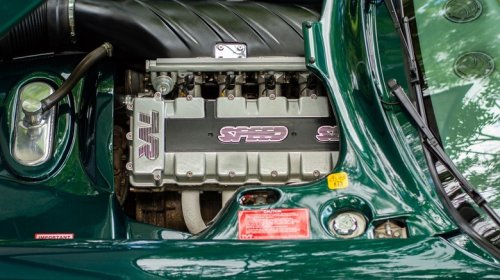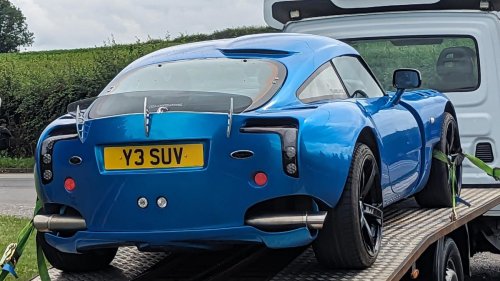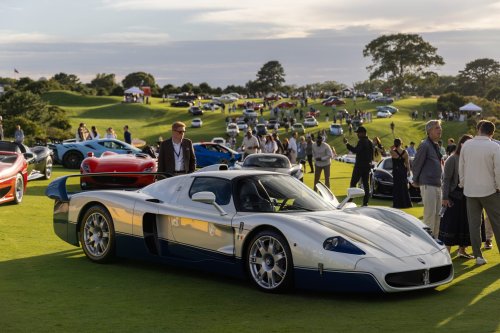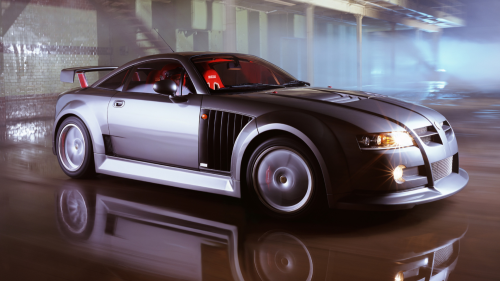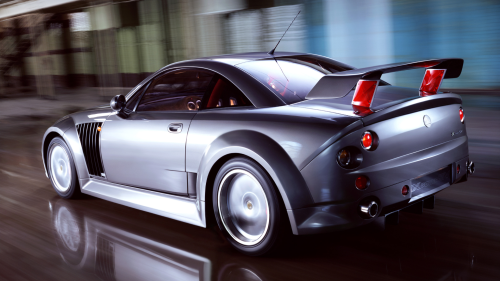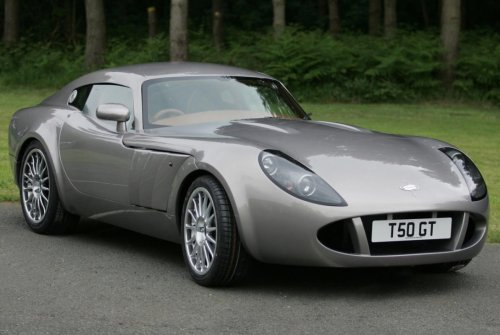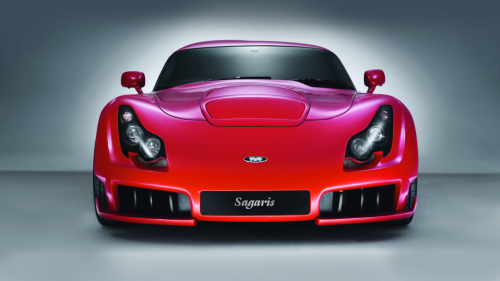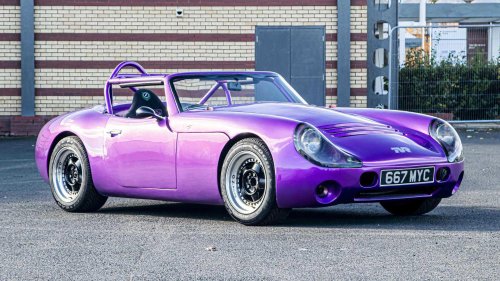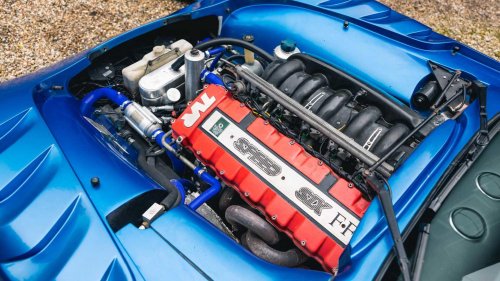
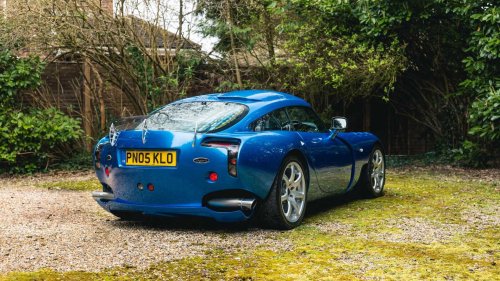
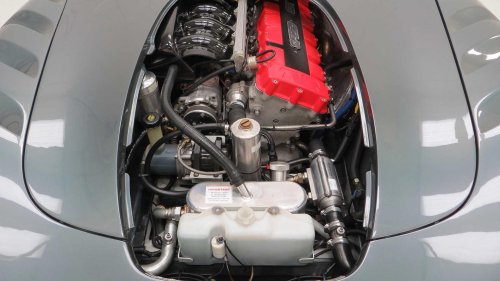
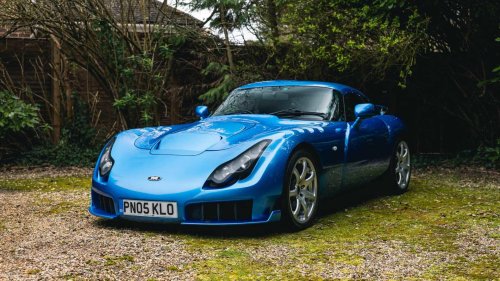
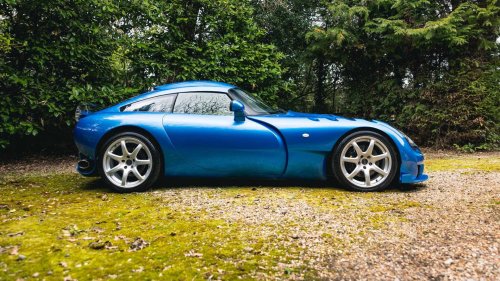
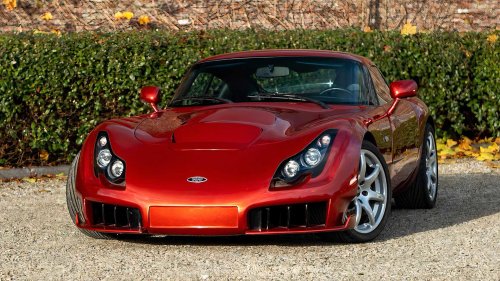


















The mid-2000s were the moment when the sports car industry quietly decided that drivers could no longer be trusted. Porsche had fitted stability control to the 911 in 1998. Ferrari added F1-Trac to the 599 in 2006. BMW wrapped the M3 in a safety net of ABS, traction control, and electronic stability control that could not be fully disabled without a service-tool override. Every sports car coming out of Europe was wrapped in a growing cocoon of electronic assistance. And then one British manufacturer, based in a rain-soaked corner of Lancashire and run by a man who thought airbags encouraged bad driving, launched a 400-hp sports car with none of it. No ABS. No traction control. No stability control. No airbags. No apologies. The Decade That Put Electronic Nannies in Every Sports Car Collecting Cars By 2005, electronic driver aids had become the dominant engineering story in performance cars. Traction control was no longer an optional extra on the Porsche 911 or the BMW M3, and stability control was legally mandated across much of the European market. Anti-lock brakes had become standard equipment on almost every new car sold in the Western world. Ferrari was in the middle of its shift from hydraulic handling purity to electronic damping and F1-style gearbox software. The logic was sound from a safety perspective. Modern tire compounds, modern power outputs, and modern road speeds meant the average driver simply could not catch a slide or manage a panic stop the way a professional could.The downside was that sports cars were starting to feel processed. Journalists who had grown up on Lotus Elans and unassisted Caterhams complained that the new generation of performance cars felt filtered, as though the driver were reading a book about driving rather than actually doing it. One British manufacturer heard these complaints and interpreted them as marketing guidance. While the rest of Europe was wrapping its sports cars in electronic safety nets, this company was about to launch what would become the most uncompromising driver's car of the decade. The Last British Sports Car That Trusted Its Driver Hilton Group The TVR philosophy of selling unassisted sports cars was not new in 2005. The Cerbera had launched in 1996 with the same approach: no ABS, no traction control, no airbags, just an in-house 4.2-liter Speed Eight V8 and a chassis tuned for drivers who knew what they were doing. The Tuscan followed in 1999 with the new Speed Six engine and the same uncompromising brief. The Tamora and T350 continued the formula through the early 2000s. What set those earlier cars apart was the era they arrived in. In 1996, no-aid sports cars were still normal. The Lotus Elise had just launched without ABS. Caterham was still building Sevens that came as kit cars. Even the Porsche 911 of that period offered ABS as standard but left the rest of the chassis behavior in the driver's hands.By 2005, that world was gone. Stability control had become legally mandatory across most of the European market. The Lotus Exige had picked up traction control. The Porsche 911 carried PSM as standard. Even Caterham was offering optional electronic aids on its higher-output cars. The analog sports car was rapidly becoming an artifact of an earlier decade. One manufacturer in Blackpool, England, refused to acknowledge the shift, and was finalizing what would become its most extreme model yet, an in-house naturally aspirated inline-six car weighing less than 2,400 pounds with none of the electronic safety equipment that every rival considered standard. The TVR Sagaris Was 400 Horsepower And A Middle Finger To Driver Aids Collecting CarsThe TVR Sagaris entered production in 2005 at the Blackpool factory run by the late Peter Wheeler and his engineering team. Designed by Graham Browne and conceived as an endurance racing platform before being reimagined for the road, the Sagaris carried TVR's in-house 4.0-liter naturally aspirated inline-six, rated at 400 hp and 349 pound-feet of torque. Curb weight sat at roughly 2,376 pounds, which gave the car a power-to-weight ratio that put it comfortably ahead of the Porsche 911 Carrera S and BMW M3 it was priced against. The factory-quoted 0-60 time was 3.7 seconds, with top speed at 185 mph. The launch price was £49,995, which converted to roughly $95,000 at the time and was less than half what an American buyer would have paid for a comparable 911 Turbo.Those numbers were the headline act. The real story was what the Sagaris did not have. TVR explicitly refused to fit anti-lock brakes, traction control, electronic stability control, or airbags. The company's position was that these systems promoted overconfidence and increased the likelihood of a serious accident by masking the car's true behavior until it was too late. The Sagaris was sold on the understanding that the driver was fully responsible for everything the car did. The Speed Six Engine That Defied Every Trend KGF Classic Cars The Sagaris was powered by the TVR Speed Six, an all-aluminum naturally aspirated inline-six designed by independent engineer Al Melling as the AJP-6 prototype before TVR refined it for production. The engine displaced 3,996cc, used double overhead camshafts and 24 valves, and featured dry sump lubrication that allowed it to be mounted lower in the chassis than a conventional oil-pan setup. TVR claimed a peak output of 406 hp in the Sagaris application, making it the most powerful naturally aspirated straight-six in any production road car at the time.The decision to build an engine in-house was driven by BMW's 1994 acquisition of Rover, which put TVR's previous V8 supply at risk. Peter Wheeler decided the only solution was to design a new engine from scratch, hire a race engineer to lead the program, and accept the development costs in exchange for full control of the drivetrain. The Speed Six arrived in the Cerbera first and was refined through the Tuscan and Tamora before landing in the Sagaris in its most developed form. Peter Wheeler's Anti-Driver-Aid Philosophy Explained Collecting Cars Peter Wheeler's refusal to fit driver aids was not a marketing gimmick. He genuinely believed that anti-lock brakes, traction control, and airbags made cars less safe by encouraging inattention and promoting an artificial sense of invulnerability. His position was that a driver who knew the car would punish mistakes would drive more carefully, which would reduce accident rates in aggregate regardless of what a computer model suggested. He also argued that airbags in a lightweight fiberglass sports car would deploy unpredictably in a rollover and could injure occupants rather than protect them.The engineering compensation for the missing electronics came in two forms. The Sagaris used an unusually long throttle travel, roughly eight inches from idle to full, which gave drivers fine-grained control over power delivery without the on-off character of a short pedal. The steering was quick at around two turns lock-to-lock, which allowed experienced drivers to catch slides before they developed. The combination was deliberately old-school and placed the entire responsibility for chassis management on the driver. Jeremy Clarkson, who had spent the previous decade describing TVRs as lethal, drove the Sagaris and called it the best TVR ever made. What The TVR Sagaris Costs In 2026 Collecting CarsThe Sagaris occupies an unusual position in the US collector market because, as of April 2026, it cannot be legally imported. The car is not yet 25 years old, the threshold at which the Imported Vehicle Safety Compliance Act allows nonconforming vehicles to enter the country without meeting Federal Motor Vehicle Safety Standards. The earliest 2005 production Sagaris models become eligible in 2030, with later cars following through 2031. American buyers who want one before then have only one route: the Show and Display exemption, which requires the National Highway Traffic Safety Administration to recognize the car as a vehicle of historical or technological significance and limits driving to roughly 2,500 miles per year.The pricing reference points come from the UK auction market, where strong examples have traded between the equivalent of roughly $80,000 and $120,000 throughout 2024 and 2025. American collectors should expect a meaningful premium over UK pricing once the 25-year window opens. Tucson, Arizona-based TVR Garage has built a small US business importing 25-year-eligible TVRs and sold a Cerbera 4.5 for $84,950 in 2024, the closest available reference point for what a properly imported Sagaris will cost when the time comes. Why the Sagaris Became The TVR That Journalists Actually Liked Collecting Cars TVRs had a well-earned reputation for being dangerous, unreliable, and occasionally homicidal. The Cerbera Speed Six was plagued by early engine failures that damaged the car's reputation badly enough that used values took a decade to recover. The Tuscan was famous for sudden oversteer that caught out even professional drivers. The Sagaris changed the script because chief engineer Daniel Boardman was determined to fix the quality problems that had dogged every previous Peter Wheeler-era TVR. Boardman reworked the suspension to eliminate bump-steer, brought in Bilstein and Multimatic for damper tuning, redesigned the bonnet to eliminate the water ingress that had plagued the Tuscan, and checked the door seals with the obsessive attention of someone who knew the car had to prove TVR could build something properly.The result was a Sagaris that retained all of the character of earlier TVRs without the accompanying reliability problems. Motoring journalists who had previously warned readers away from TVRs were suddenly writing positive reviews, and Jeremy Clarkson's verdict that the Sagaris was the best TVR ever made was echoed across the British car press. The car still had no driver aids, but it no longer actively tried to kill its owner, and that combination of raw performance and engineering maturity made the Sagaris the model the revived TVR brand has been trying to replicate ever since.Sources: evo, Top Gear, Collecting Cars, Iconic Auctioneers, TVR Garage, KGF Classic Cars.