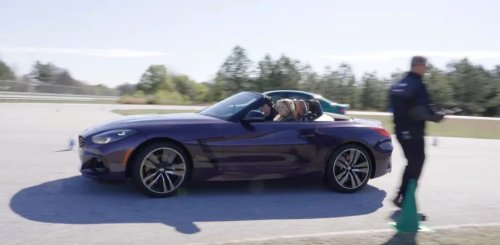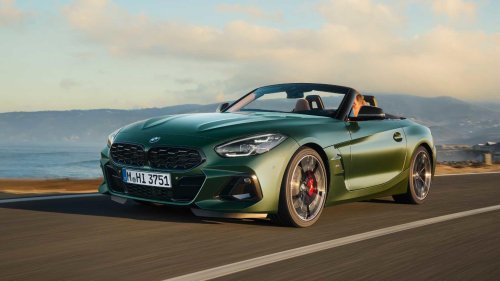
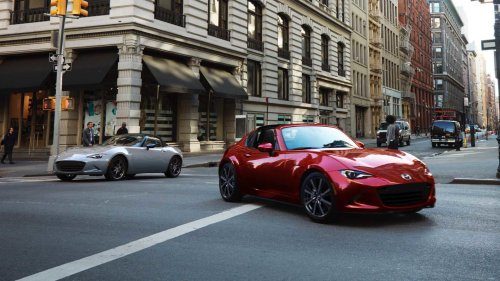
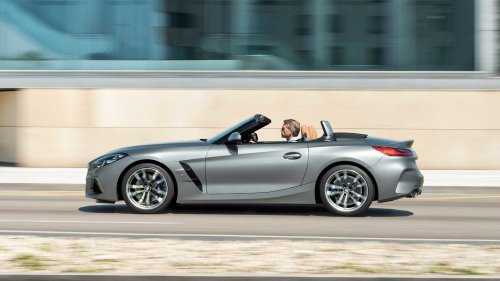
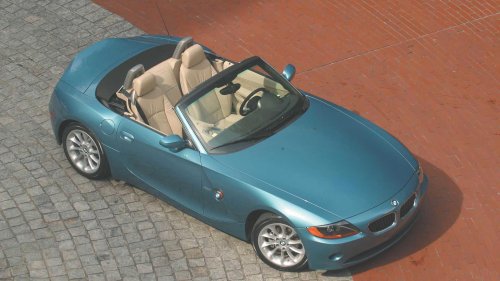
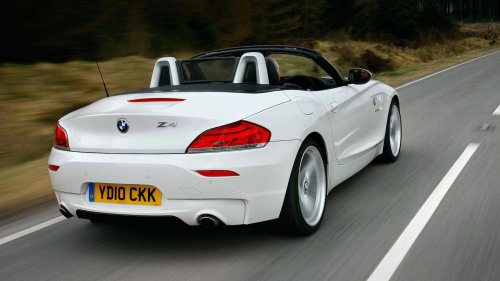
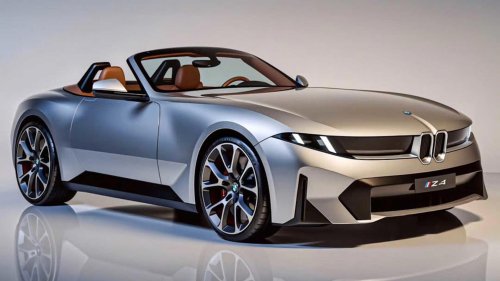



















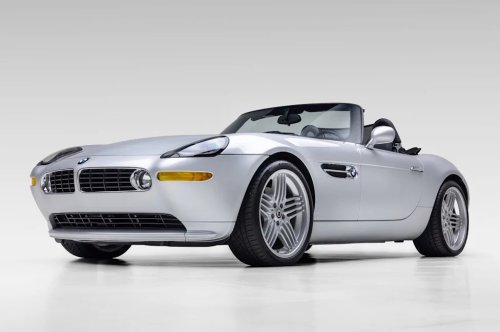
BMW has forged a reputation as being the byword for driving pleasure and engagement over its decades in business. It has worked hard to develop a range of engines and other performance-enhancing technology, usually through its M Division, that ensure that its offerings not only provide an enthralling drive, but can also be used on a daily basis. This is opposed to weekend heroes, which spend most of their time locked away in the garage.The brand has achieved this by keeping the recipe for its performance cars simple; a powerful engine placed out front to provide accessible handling, with power being sent to the rear to allow a better balance, and a slick manual gearbox to provide more involvement for the driver. Its Z4 sports car is a perfect illustration of this approach, but its time has recently come to an end. As a result, we could be about to see the end of the traditional BMW sports car for good.For this piece, it's important to understand the definition of a sports car. At its absolute heart, a true sports car is a vehicle engineered with a single, uncompromising priority: to maximize the emotional and physical thrill of driving at the expense of everything else. Unlike vehicles built for commuting, hauling cargo, or raw straight-line speed, a true sports car prioritizes agility, driver feedback, and mechanical synergy over utility and comfort. It is not just a tool to get from point A to point B; it is an instrument designed to make you love the journey between them. Historically, a true sports car is a strict two-seater, which is why cars like the M4 don't count. BMW Has Finally Allowed The Z4 To Saunter Off To Retirement BMWSo, it has happened, the Z4 is finally officially dead. BMW's drop-top sports car was meant to meet its maker at the end of the 2025 model year, though the introduction of a manual gearbox option for the 2024 MY led to an increase in sales for the model, which likely encouraged BMW enough to keep the car alive for a little longer to profit from the renewed interest before the plug was finally pulled for good. The return of the manual led to the manufacturer selling 13.1% more examples in 2024 versus the year before, so the increase was pretty considerable.Unfortunately, BMW doesn't currently have plans to treat the world to any kind of successor. Even with the added numbers brought by the return of the manual transmission, which evidently tempted purists back into the fold, BMW couldn't justify keeping the aging machine in production any longer. When a good year sees 2,000 cars find owners, you can't really blame it. BMW would have needed to develop a new version before too long to keep it fresh, and with the future of the automotive sector still very much up in the air, BMW felt it better to kill off the Z4 rather than keep the old one going any longer. The Sports Car Sector Is Struggling To Make An Impact MazdaThe issue doesn't attack the Z4 in isolation either, as even more popular models are struggling to make an impact on the sales charts. Take the affordable and reliable Mazda MX-5 as an illustration of this, as Mazda has shifted 10% fewer examples so far in 2026 than it did in 2025. With it becoming ever more challenging to own more than a single car due to rising living costs, many are opting for a vehicle that can do it all, rather than a less versatile offering.Take the more practical Ford Mustang as evidence, of which Ford has shifted an impressive 40% more in 2026 versus 2025. Seeing the writing on the wall for the two-seater sports car, BMW felt the time was right to wave goodbye to the venerable Z4. The Loss Of The Z4 Signifies The End Of The Focused BMW Sports Car BMW The end of the Z4 is impactful, primarily because this is the end of the focused, two-seater BMW sports car as we know it. Models like the M2 and M4 remain on sale, but they're considerably heavier than the Z4, and also lack the simple roadster recipe that makes the Z4 so appealing to enthusiasts.BMW has been at the forefront of the affordable sports car market since the early 1990s, when the now modern-classic Z3 first debuted. Its legacy of being for those who wanted to enjoy a razor-sharp weekend drive with the roof down was continued by the Z4, but the end of the latter means you can no longer go out and buy a brand-new BMW that can deliver this particular experience. After all, the only roofless affordable machine offered by the Bavarian marque in the US from now on is the BMW 4 Series convertible. There are few cars that can provide the level of handling, poise and balance the Z4 can, while also treating you to a quintessential BMW six-pot engine and a manual transmission. In addition, the Z4 managed to escape getting lumped with some form of hybrid powertrain alongside the standard engine, which increases weight and rids the car of critical agility. It also takes away the simplicity that characterizes such vehicles.The beauty of the Z4 was that it embodied a purity that modern performance cars are losing, thanks to the popularity of high-tech automatic transmissions and various forms of electrification. The days of the drop-top BMW sports car that prioritized purity over anything else look to have died with the Z4. The Z4 Was Tuned To Provide A True BMW Experience BMWAside from featuring the technical layout that makes a true BMW, the Z4 dressed it all up in a body that celebrated the beautiful and purposeful styling of sports cars from the mid-20th century. This mainly showed itself as a long hood with a short tail, to give the vision of the car having a huge engine out front. The original E85 Z4 was offered with either a naturally aspirated inline four or six powerplant, which powered the rear wheels through either a manual or automatic transmission. The philosophy behind the Z4 was that its NA engine options would provide strong grunt, but also a crisp throttle response that meant you could feed the power in without having to worry about the rear tires being overcome with the added instant torque provided by a turbocharger when it finally kicked in.The front-mounted engine also provided excellent weight distribution that allowed for an agile but manageable handling balance that didn't snap the moment you went a smidge over the limit. This afforded even the most ham-fisted drivers the chance to feel like they were taming the curves of the Nürburgring, even if they were navigating the back road 10 minutes away from their home in Minnesota. The Z4 Has Remained True To Its Image BMW BMW didn't tweak this successful recipe much over the Z4's life, with the car retaining the same long hood-short tail styling across the subsequent E89 and G29 generations of the car, as well as the choice of a more efficient four-cylinder engine alongside the more powerful I6 option. Turbocharged engines did make their debut within the Z4 family with the introduction of the second-gen car, though BMW managed to tune them to provide the gradual throttle response expected of the model.BMW did go off script for a while with the third-gen car, as initially it only provided a manual gearbox with the four-cylinder version, whereas the six-pot car had to be ordered with an eight-speed auto unit. Upon the resurrection of the purebred version in 2024 though, buyers once more could have a range-topping Z4 with a proper sports car stick shift. BMW's New Era Beckons, And A Sports Car Could Return Luca Serafini/InstagramWhile the Z4 may be retired, that doesn't mean we'll never get a drop-top, two-seater BMW sports car again. The German brand has been busy developing a new platform for its future offerings, namely the Neue Klasse foundations. This only caters to cars using full electric powertrains though, and won't house anything with an ICE attached to it. As a result, while BMW hasn't ruled out building a sports car on the platform, it would have to be fully electric. Unless gasoline somehow becomes the fuel of the future once more, it's tough to see how BMW could make much of a case in building two versions of such a model alongside one another. It's not as if sports cars are big sellers, so there's little incentive for BMW to offer this level of variety.Performance cars will continue, though models like the M4 will likely be neutered slightly with BMW's xDrive AWD setup. It will be heavily biased to the rear, but the added weight and the car's ability to straighten things out if it decides you're not in control detracts from the purity aspect somewhat. As far as the Z4 goes, it seems at the moment that it will act as the swansong for the classic BMW two-seater sports car.Sources: BMW.