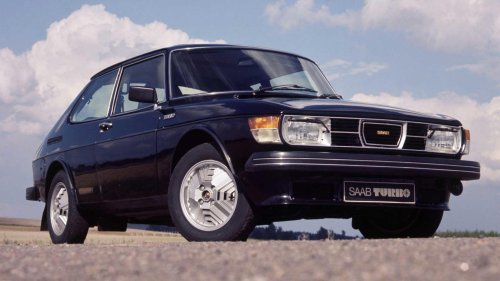
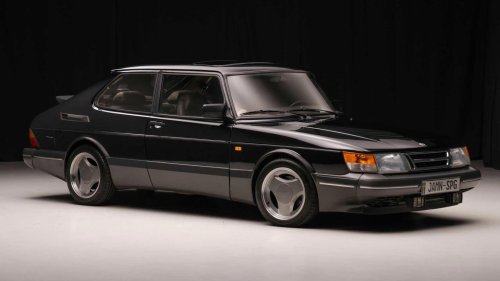
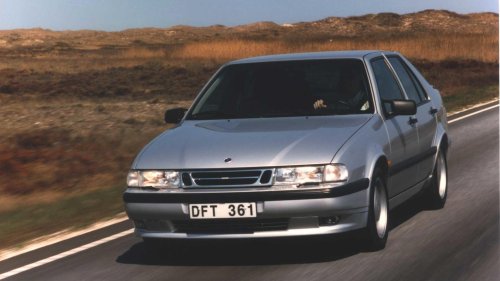
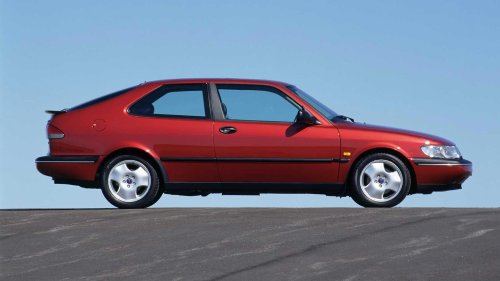
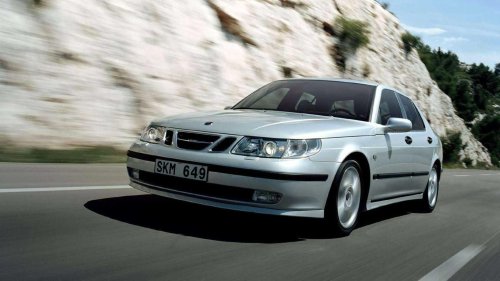
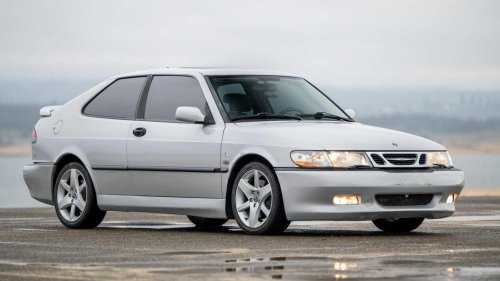
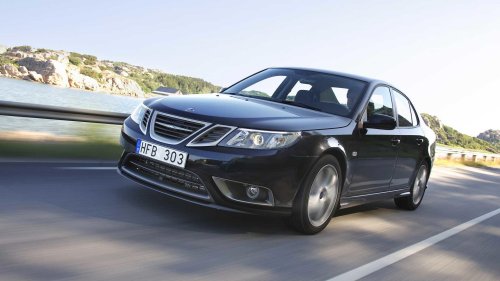
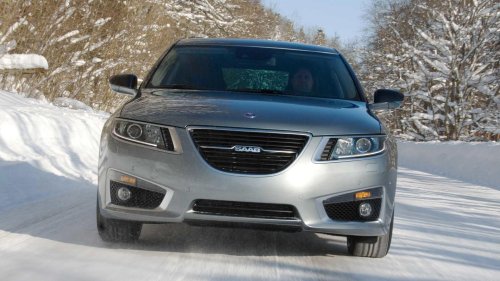



















Saab wasn’t a performance brand per se. In fact, you’re more likely to remember a high school teacher or university professor scooting around in one than any hardcore performance enthusiast. However, the Swedish brand born from jets did produce some genuinely fast cars over the years.We’ve rounded up eight fast Saabs that showcase how the defunct brand quietly carved out its own distinct performance story. With an engineering-first philosophy, understated pace, and genuine everyday usability, Saab prioritized real-world performance over flashy specs. The result was a compelling alternative to traditional German performance cars, whose headline horsepower and lofty top speeds are rarely usable unless you’re regularly on a track or the autobahn.The list is intended to cover Saab models spanning a wide time period, and the models are presented in chronological order to reflect their development over time. Saab 99 Turbo Saab's First Turbocharged Car Saab 99 TurboThe Saab 99 Turbo was built from 1977 through the early 1980s, arriving in the US for the 1978 model year, which ended up being its only year on sale stateside. It landed in the crosshairs of cars like the BMW 2002, but offered a very different take on performance – one focused less on revs and badge prestige, and more on midrange torque and usable speed.Relatively affordable compared with other sporty European models of the era, it felt like serious performance without the usual entry fee. It was Saab’s first use of turbocharging in a mass-produced car and the beginning of its long turbo legacy. Just over 10,600 were built over the car’s relatively short run, a product of the fact that the 99 itself was already nearly a decade old by the time the Turbo arrived. In fact, when the 99 Turbo arrived, Saab was already preparing the roll-out of the 99's successor, the 900. Saab 900 SPG A Hot Hatch Before Hot Hatches Were A Thing 1988 Saab 900 Turbo SPG 5-Speed front 3/4The Saab 900 was the brand’s core model throughout the 1980s and early 1990s, blending aviation-inspired engineering with everyday usability. Evolved from the earlier 99, it became Saab’s defining car: quirky, solid, turbocharged, and quietly quick in a way that didn’t rely on big horsepower figures or flashy performance theatrics.The SPG (Special Performance Group) version, known as the Aero in most markets, was sold in the US in the mid-to-late ’80s. Building on the standard 900 Turbo, it added sharper suspension, an aero kit, and extra boost pressure. It effectively went up against cars like the BMW 3 Series of the era, particularly the 325i. In hindsight, it reads like an early hot hatch formula applied to a practical, grown-up five-door shape. Saab 9000 Aero Strong Mid-Range Performance For Easy Highway Passing Saab 9000 Aero Front 3/4 ViewThe Saab 9000 Aero was what happened when Saab decided it could build a legitimate autobahn bruiser without abandoning its quirky roots. Sold in the US through much of the 1990s, the Aero took the already solid 9000 midsizer and turned it into a torque-heavy missile aimed squarely at cars like the BMW 540i. It didn’t have the rear-drive balance or powerful V8 engine of its German rival, but it made up for it with devastating midrange punch and long-distance comfort that bordered on addictive.The 9000 itself was a hugely important car for Saab. Launched in the mid-1980s, it marked a move into a more premium world for the brand. Developed on the Type Four platform shared with Fiat, Lancia, and Alfa Romeo, Saab heavily reworked the structure to meet its own safety and engineering standards, much like it would do in the future with GM platforms. The Aero flagship benefited from bigger turbo hardware, sportier bodywork, and deeply bolstered seats, making it one of the fastest and most distinctive front-wheel-drive cars on the road at the time. Saab 900 SE Turbo First Saab Based On A GM Platform Saab 900 SE Turbo Coupe Side ViewThe second-generation Saab 900 in SE Turbo guise may not have been a specially tuned halo model like some of the other cars on this list, but it was still exactly the kind of quick, torque-rich machine that made Saab fans swear off German defaults. Sold in the mid-1990s, the turbocharged hatch delivered strong real-world pace and effortless highway passing power, putting it in the orbit of cars like the BMW 325i while offering a far more unconventional personality.This generation of the 900, known as the NG (New Generation), was also a hugely significant car for Saab. It was the first model developed after GM bought into Saab in 1990, and the first to ride on a GM-derived platform, sharing architecture with the Opel Vectra and the Saturn L-Series. Purists complained that it diluted Saab’s engineering independence, but the NG still retained much of the brand’s oddball charm, such as a wraparound cockpit, turbo thrust, and front-wheel-drive layout. In many ways, it marked the point where Saab began balancing its quirky identity with the realities of surviving inside a global automaker. Saab 9-5 Aero Official Torque Figures Notoriously Underrated 2003 Saab-95 Aero Sedan Front The first-generation Saab 9-5 arrived for the 1999 model year as the replacement for the long-serving 9000. Just a year later, the 9-5 Aero joined the lineup. It still packed a turbocharged inline-four while competing against BMW 5 Series models with V8 engines, but like previous Saabs, the new 9-5 Aero proved highly competitive in real-world driving thanks to its strong midrange torque.The 9-5 itself marked Saab’s move further upscale, shifting to a more conservative sedan body style in place of the previous hatchback. A wagon was also offered. Aero models added hotter turbo tuning, firmer suspension, sportier bodywork, and what many considered some of the best seats fitted to any sport sedan of the era. The result was a car that was fast, understated, and just different enough to attract buyers who liked going against the crowd. Saab 9-3 Viggen Named After A Fighter Jet 2002 Saab 9-3 Viggen Coupe Silver Front Angled View 3/4The Saab 9-3 Viggen arrived in the US for the 1999 model year as the hardest-hitting version of Saab’s compact hatch. Based on the first-generation 9-3, which itself replaced the Saab 900 in 1998, the Viggen turned the brand’s turbocharged formula into something genuinely wild. Built in limited numbers and developed with input from Tom Walkinshaw Racing, it went after cars like the BMW M3 with massive turbo shove and a personality that felt completely unfiltered compared with the polished German norm.The regular 9-3 already leaned sportier than the old 900, but the Viggen pushed things into borderline absurd territory. Huge torque, aggressive aero styling, and famously violent torque steer gave it a reputation as one of the most entertainingly flawed performance cars of its era. It wasn’t as balanced as an M3, but that almost missed the point. The Viggen was all about drama, boost, and brute-force speed delivered with unmistakable Saab quirkiness. Saab 9-3 Turbo X Built To Celebrate 30 Years Of Turbocharged Saabs Saab 9-3 Turbo X Front 3/4 ViewThe Saab 9-3 Turbo X was built for the 2008 model year only, and it was a limited-run performance version of the second-generation 9-3 designed to celebrate Saab’s 30 years of turbocharging heritage, which started with the 99 Turbo. It officially went on sale in the US in early 2008, with only a few hundred units allocated for the American market, making it a highly sought-after model today.Its V6 engine was relatively new to Saab, and it was paired with an all-wheel-drive system to help eradicate memories of torque steering in older high-performance Saabs. XWD is normally front-biased for efficiency, but it can rapidly transfer torque rearward and use an electronic rear limited-slip differential to distribute power between the rear wheels, significantly improving traction and cornering stability. Saab 9-5 Aero Saab's Final Car 2011 Saab 9-5 Front ViewThe second-generation Saab 9-5 Aero, sold from 2010 and a bit into 2012 in the US, was the last new car launched by Saab before its 2011 bankruptcy. Riding on a heavily updated GM Epsilon II platform, it represented the brand’s final attempt at a modern flagship sedan. In Aero trim, the 300-hp turbocharged V6 put it squarely in the crosshairs of the BMW 5 Series, particularly the 535i, offering a different take on executive performance.After Saab’s bankruptcy in 2011, the 9-5 effectively became the brand’s swan song, with production winding down just as the company’s future collapsed into uncertainty. There were several attempts in the years that followed to restart Saab production under new ownership, but none managed to gain traction or reach meaningful volume. In hindsight, the 9-5 Aero stands as a final statement. It was an impressive sedan that arrived just as the company itself was running out of road.Sources: Saab