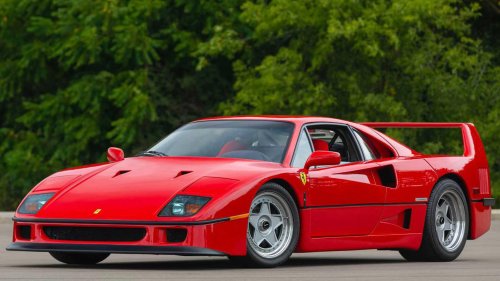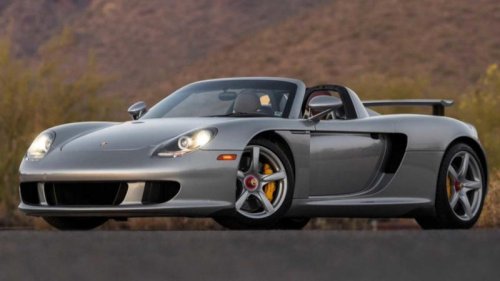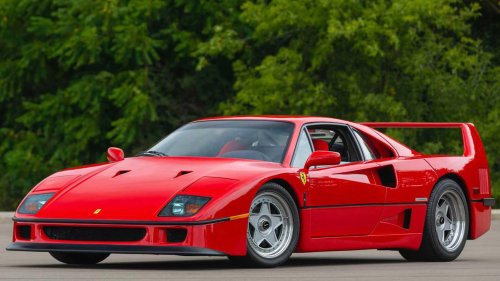
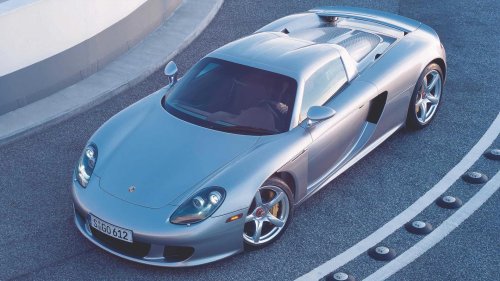
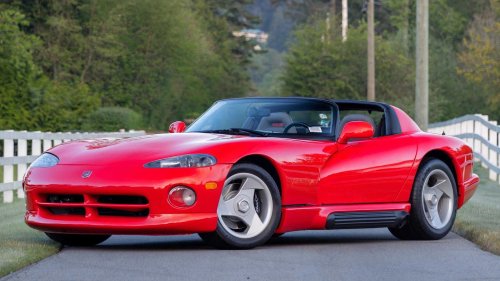
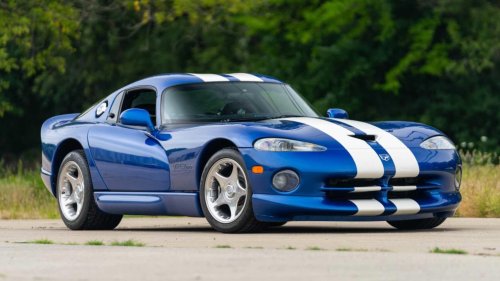
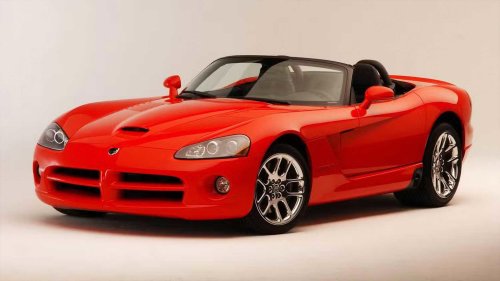
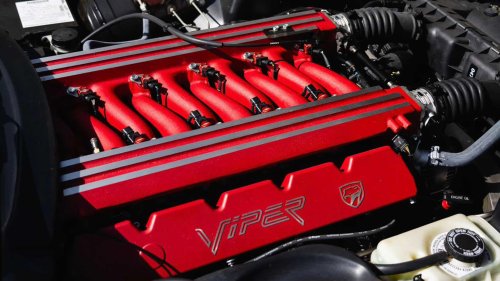
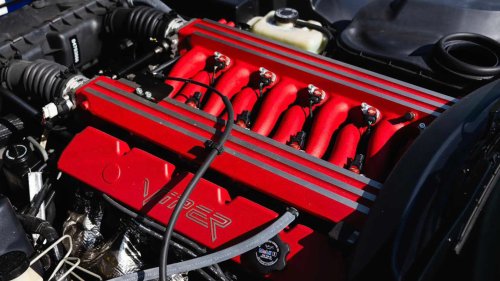
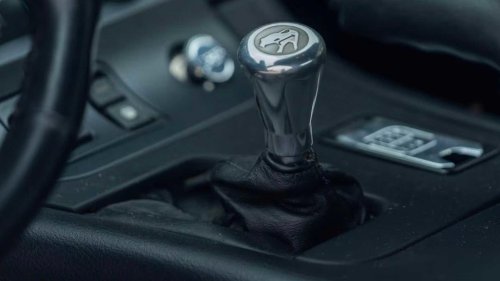
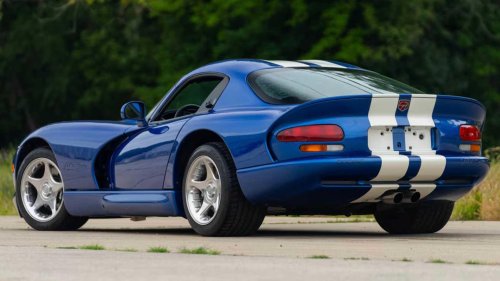



















In the world of driving performance cars, the term analog represents the ultimate bond between man and machine. The Japanese call it Jinba Ittai. A pure experience is defined by heavy mechanical feedback, three pedals, and a total lack of digital intervention. Today, modern supercars rely on complex electronic aids, torque vectoring, and lightning-fast dual-clutch gearboxes to save the driver from their own mistakes.While these systems make cars faster, they often water down the thrill. True enthusiasts crave the raw challenge of a car with no safety net, where every corner is a test of genuine skill rather than a computer calculation. Sadly, this legendary American icon was the last of its kind. The Widowmaker Club: Why The 90s Were Speed’s Most Dangerous Decade Via: Mecum Auctions The 1990s represented a peak for raw, unfiltered performance, led by the legendary Ferrari F40. This car is often cited as the ultimate driver’s machine because it lacked almost every modern convenience. There was no power steering, no power brakes, and absolutely zero electronic assistance.It was essentially a street-legal race car that demanded total focus from the driver. If you made a mistake at high speed, there was no computer to step in and straighten the car out. This uncompromising nature earned it a reputation as a widowmaker, a car that offered incredible rewards but carried heavy consequences for those who lacked the skill to tame it. It was, in essence, a 450 hp go-kart.PorscheMoving into the mid-2000s, the Porsche Carrera GT took over the mantle of the last great analog supercar. However, the Carrera GT presents a bit of a paradox. By the time it was released, safety laws had changed, meaning it actually possessed an anti-lock braking system and basic traction control. While these features provided a small safety net, the car famously lacked stability control. Without a system to manage sideways slides, the mid-mounted V10 engine and its sensitive ceramic clutch made the car notoriously unforgiving on the limit. Even with some digital help, it remained a mechanical beast that could catch out even professional drivers.Despite the fame of these high-priced European exotics, they weren't actually the last cars to hold the line against electronic aids. While Ferrari and Porsche were forced to adapt to changing regulations, an American brute was quietly breaking all the rules. This car was even more basic than the F40 and remained that way for much longer than the Carrera GT. It offered one of the largest engines in a production car, a simple chassis, and not a single electronic nanny in sight, surviving deep into an era where every other manufacturer had already embraced the age of electronic safety assistance in cars. Ten Years Of Terror: How The Viper Outlasted The Digital Revolution Bring a Trailer From its debut in 1992 through the end of the second-generation in 2000, the Dodge Viper was essentially an engine with four wheels. It was built with a single-minded focus on speed, completely ignoring the industry trend toward safety electronics. During these years, the Viper lacked ABS, traction control, and stability control. It was a purely mechanical experience where the driver’s right foot was the only thing managing the power sent to the rear wheels. This lack of intervention made it one of the most honest, and intimidating, performance cars ever sold to the general public.Mecum The early models were so basic they bordered on the absurd. The first-generation RT/10 roadsters didn't even have exterior door handles or real glass windows. Owners had to reach inside the cabin to open the door and rely on plastic side curtains if it started to rain. There weren't even traditional door locks. This minimalism wasn't just about saving weight. Chrysler wanted to build a car that was as close to a 1960s Shelby Cobra as possible, stripping away everything that didn't help the car go faster or sound louder.Dodge A fundamental shift in the Viper’s DNA occurred with the third-generation ZB I, but the transition started slightly earlier. In 2001, Dodge finally added ABS to the Viper’s toolkit. While it remained a manual-only, powerful beast without traction or stability control for several more years, the addition of computerized braking ended the era of total purity. This makes the 2000 model year the final model for enthusiasts. The 2000 Dodge Viper RT/10 and GTS Coupe stand as the last true no-aid performance cars produced at a significant scale, marking the official end of the analog era. 10-Cylinder Truck Engine With The Soul Of A Lamborghini Via: Mecum AuctionsThe heart of the Viper’s legendary performance was its massive 8.0-liter V10 engine. This displacement giant was originally based on a heavy-duty Chrysler truck block, but it was transformed into a high-performance V10 engine with help from Lamborghini, which was owned by Chrysler at the time. The Italian engineers replaced the cast iron with aluminum to save weight and redesigned the cooling and intake systems. The result was a 488-cubic-inch monster that prioritized low-end grunt and reliable power over high-revving nature. Via: Mecum AuctionsFocusing on the second-generation models, the technical specifications were staggering for the time. The 8.0-liter V10 produced 450 hp and a massive 490 lb-ft of torque. Because there were no electronic systems to manage this output, Dodge utilized the BorgWarner T56 six-speed manual transmission exclusively for the Viper, and no automatic transmission was available.This heavy-duty gearbox was the only unit capable of handling the engine's brutal torque while providing the driver with total control over the power delivery. Driving a Viper required a strong left leg and a precise hand, as the mechanical linkage provided direct feedback from the drivetrain. By the third-generation, the V10 was bored out to 8.3 liters, making 510 hp with no turbos in sight.Via: Mecum Auctions The performance figures allowed the Viper to trade blows with the most expensive supercars in the world. It could sprint from 0 to 60 mph in roughly 4.0 seconds and clear the quarter mile in about 12.2 seconds at 118 mph. On a long enough stretch of pavement, the Viper would keep pulling until it hit a top speed between 185 and 190 mph. These numbers were achieved without launch control or electronic shifting. Every millisecond of that performance was earned by the driver's reaction time and skill behind the wheel, making the Viper one of the most rewarding cars to drive fast. No-ABS Viper Is The Ultimate Blue-Chip Investment Via: Mecum Auctions The market for the Dodge Viper has shifted significantly as collectors realize these were the last of the truly analog machines. The first-generation models from 1992 to 1995 are currently considered the collector’s choice. These early cars are increasingly reaching survivor status, especially those that haven't been modified or crashed. Because they are the most primitive and represent the original vision for the car, they hold a special place in automotive history. Currently, clean examples with reasonable mileage typically trade between $45,000 and $65,000, depending on their condition and color.The second-generation cars, produced between 1996 and 2002, are widely viewed as the blue-chip investment of the Viper world. Specifically, the 1996 to 2000 GTS Coupes finished in the iconic Viper Blue with white racing stripes are the most coveted by enthusiasts. These cars offer the classic silhouette with slightly more power than the early roadsters. Because the 2000 model was the final year without ABS, it often commands a premium over the 2001 and 2002 versions. You can expect to pay anywhere from $65,000 to $95,000 for a well-maintained Gen 2 GTS.For those looking for the best performance-per-dollar, the third-generation SRT-10 models from 2003 to 2006 are the bargain entry into the Viper family. These cars were a complete ground-up redesign and offered even more power and better handling than their predecessors. However, because they lost the iconic curves of the earlier cars and added ABS, they are often overlooked by the purists who want the most raw experience possible. This keeps their prices relatively accessible, with many good examples selling in the $50,000 to $65,000 range.Source: Stellantis, Car and Driver, Hagerty