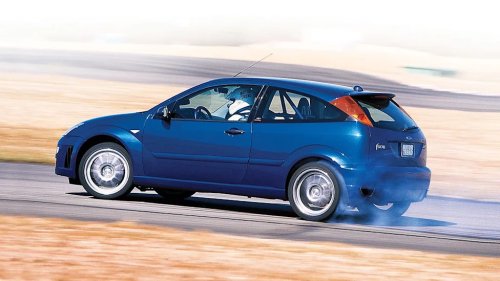
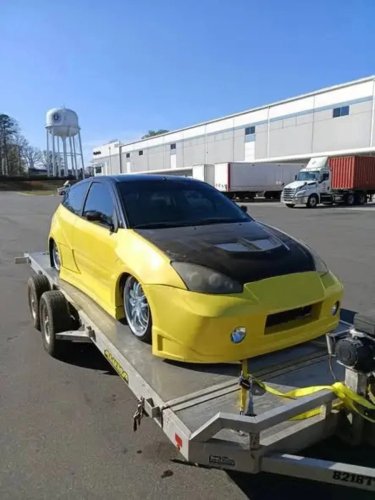
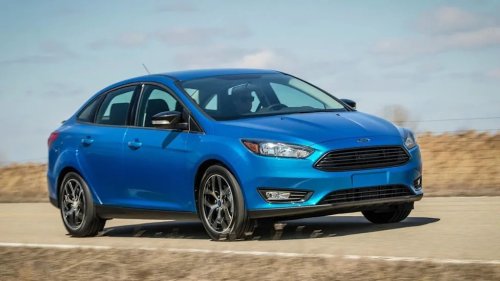
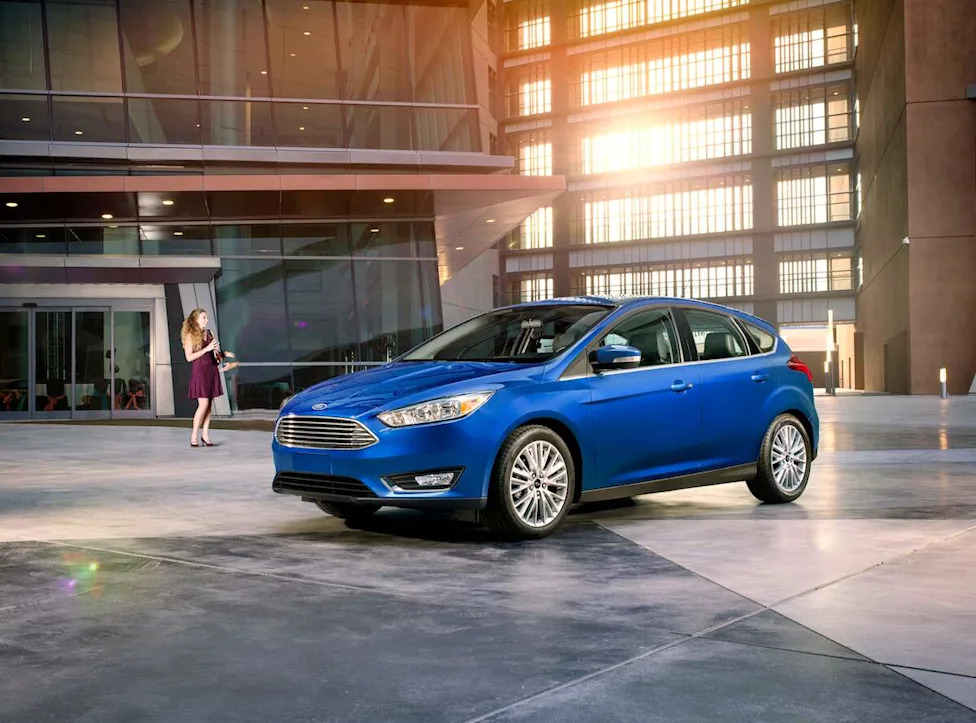
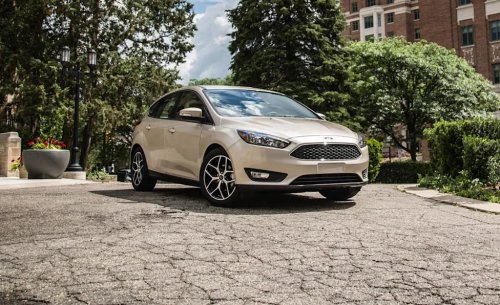
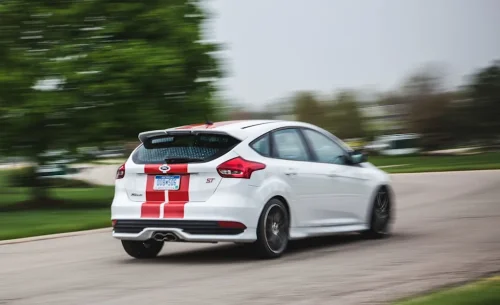
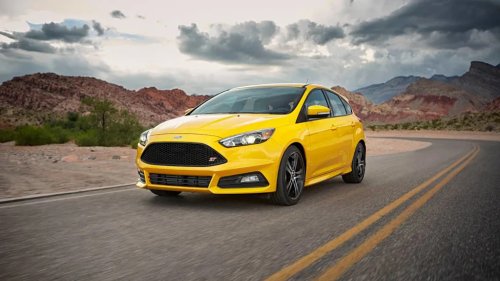
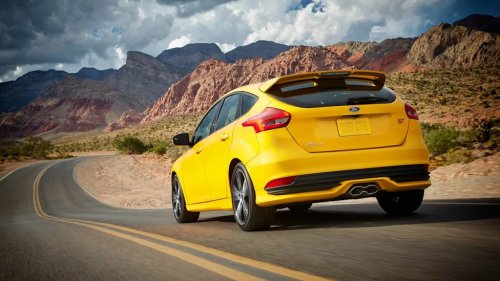
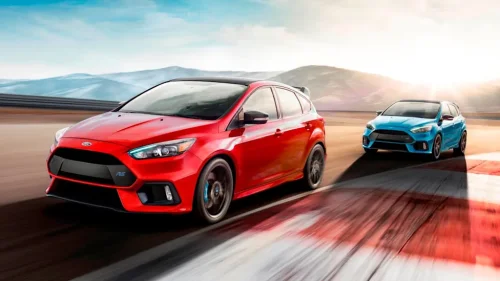
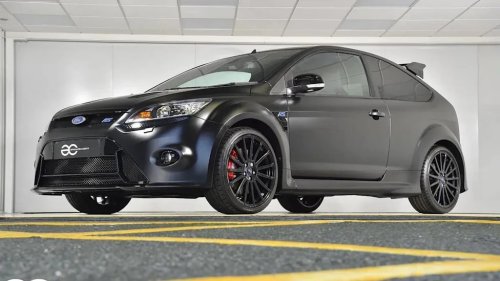
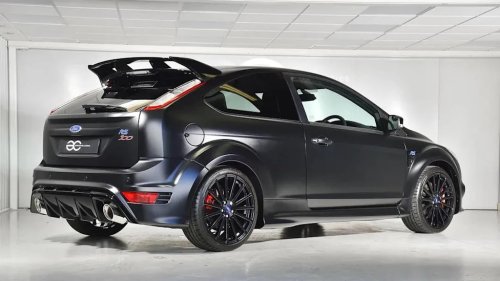
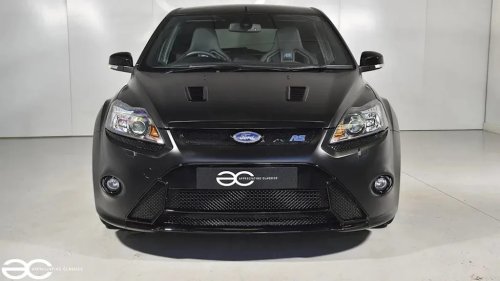
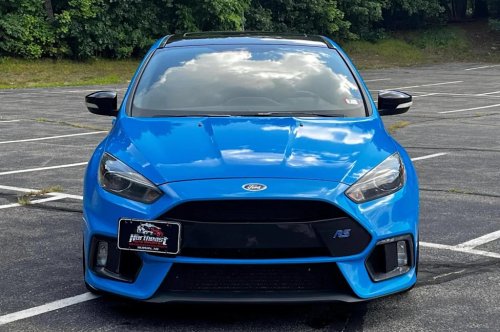
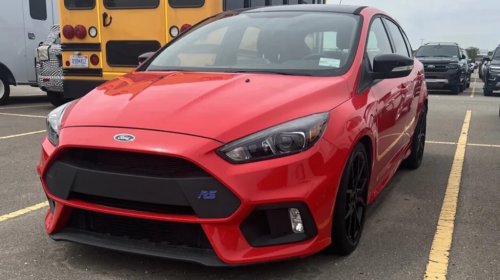
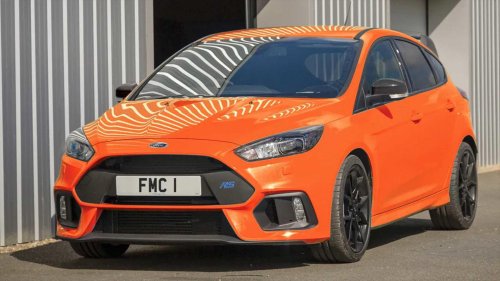
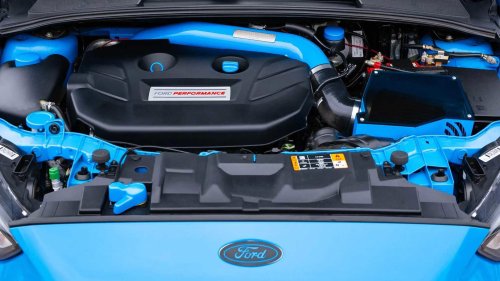
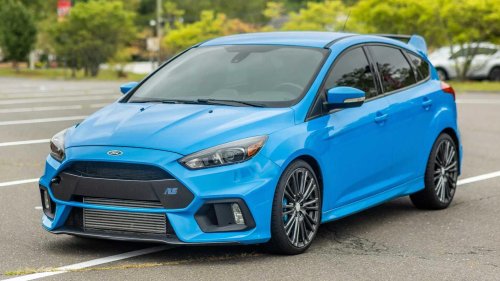
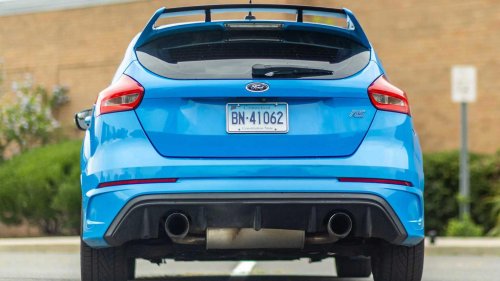
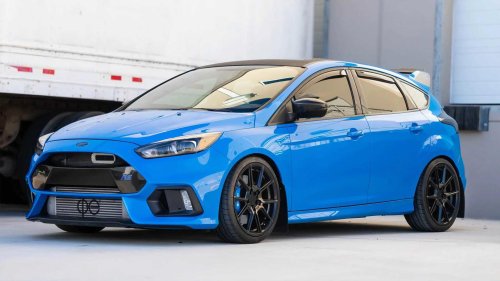
Ford launched the third-gen Ford Focus RS in the US in 2016 with a 350-horsepower engine, all-wheel drive, and a six-speed manual transmission that proved hardcore and uncompromising—everything driving enthusiasts were dreaming of—then poof, it was gone almost as soon as it landed. The RS didn’t last in the United States for more than three years.Ford decided to quit producing sedans and hatchbacks in the United States and Canada, killing the Focus RS almost as quickly as it was born. This didn’t stop in the United States; by early 2020, plans to continue producing the Focus in global markets beyond the third generation were shelved completely, with Ford moving their focus completely to SUVs and pickup trucks. But while the romance with the Ford Focus RS lasted, what did Ford offer North America with its fascinating hot hatch, a car that enthusiasts will never get again? History And Evolution HotCars Photo © 2023 Valnet From 2002 to 2020, Ford offered the Ford Focus RS for sale all over the world across three generations, but the United States never got the hot hatch until the third and last generation. The reasons varied from Ford trying to keep costs lower for U.S. customers with the first generation, to the second generation Focus RS not being able to meet U.S. crash standards without a massive, unprofitable redesign, or "fit" onto the U.S. production lines. Whichever way, Americans never got the first or second generation options. In Europe, the 2002-2003 Mk1 Focus RS sold 4,501 units with the front-wheel drive configuration, producing a 0-60 mph time of 6.4 seconds from its 212-horsepower engine.By the time Ford launched the Mk2 in 2008, Europe had access to its Volvo-sourced, 2.5-liter turbocharged five-cylinder engine, which produced 301 horsepower and allowed the car to sprint from 0 to 60 mph in just 5.9 seconds, rocketing it all the way to a top speed of 163 mph. Americans watched on while a special RS500 variant followed; Ford boosted this version’s output to 345 horsepower and limited production to just 500 units, offering it only in matte black paint. Eventually, in 2012, Ford’s CEO, Alan Mulally, launched the "One Ford" plan, which allowed Ford to build all Ford vehicles globally from the ground up on the same platforms. That’s what brought the third-generation Ford Focus RS to the United States. This generation was the 30th RS performance car from Ford since 1968. By 2018, Ford was done with the RS in the U.S. Performance And Specifications Via: Ford UKThe Ford Focus RS was fitted with a 2.3-liter EcoBoost turbocharged inline-4 engine, which produced 350 horsepower at 6,000 rpm and 350 pound-feet of torque at 3,200 rpm with a 15-second “transient overboost.” In the standard configuration, it produced 324 pound-feet of torque. Ford modified the Mustang's EcoBoost engine to get this engine, introducing a larger intercooler, a new low-inertia turbocharger, and a high-performance exhaust. Offered only with a 6-speed manual transmission, this Ford Focus hatchback is capable of doing a 0-60 mph time of 4.6 seconds with launch control (4.7 seconds without), making it 0.3 seconds faster than Ford’s previous RS record-holder, the legendary RS200, an all-wheel-drive Group B rally car produced in the 1980s, and hitting a 0-60 mph time of 6.1 seconds.Via: Bring A Trailer This Ford Focus hatchback used Ford's Performance All-Wheel Drive system with dynamic torque vectoring, a system that could send up to 70% of drive torque to the rear axle, with the ability to switch drive from one side to the other in as little as 0.06 seconds by sending up to 100% of that torque to either the rear-right wheel or the rear-left. It produced up to 1g of lateral force through bends. In Normal and Sport drive modes, the Focus RS could handle the road with confidence, producing exciting performance on track circuits when Track mode was engaged. With Drift Mode, which was the industry's first, this Ford Focus could perform eye-catching slides. The Focus RS was fitted with Brembo brakes and adaptive suspension, the setup being designed to perform at optimum capacity on the track and everyday road use. Trim Levels And Variants Via: Bring A Trailer In the three years that the Ford Focus RS was offered in the U.S., it was essentially a single-trim vehicle, but it came with meaningful packages and special editions. In the base trim, it included an RS leather-wrapped steering wheel and shift knob, RS-specific RECARO full-leather Miko-Dinamica seats, and a 10-speaker Sony sound system with SYNC 3. With the RS1 Package, which was the entry option, Ford skipped navigation and heated features, primarily for buyers who preferred to keep weight down. With the RS2 Package, navigation was added with Ford's SYNC 2 system, a heated steering wheel, heated front seats, a rear-view camera, and cruise control.However, in the UK and other parts of Europe, the Red Edition was offered with unique Race Red paint. Ford also offered the Heritage Edition, a limited-production option with only 50 examples made, which came with an FPM375 Mountune kit that increased power to 370 horsepower, and the option of a bespoke Deep Orange paint. At the point of release, Ford offered it with a starting MSRP of $36,120, with the 2018 model starting at $41,120. Buying Guide — What To Look For Via: Bring A Trailer The 2018 Focus RS is considered the best and safest option. By then, Ford had fitted the revised head gasket to cars built after July 2017. This head gasket issue was the hatchback’s major concern. This problem resulted from the Ford Focus RS using the Mustang EcoBoost engine. The head gasket originally designed for the Mustang would block certain coolant passages in the RS engine, which would cause the coolant to get stuck, boil, and eventually ruin the gasket. In a technical service bulletin issued by Ford, which covered vehicles built between August 3, 2015, and July 6, 2017, Ford offered free inspection and repair regardless of warranty or mileage status. This problem affected approximately 3% of all Focus RS models made.So, when buying a Ford Focus RS produced within that 2016–2017 period, it's important to verify that its service records show the head gasket FSA (Field Service Action 17B32) has been completed. Next, watch out for wear on the rear differential on high-mileage options, or those that frequently visited the track. Also, check for evidence of tuning or modifications that may have voided warranty repairs. As always, vehicles with low mileage, or approximately under 10,000 miles, as well as impeccable service histories and original factory parts, are the best options to opt for if you can afford them. Market Values And Investment Potential Via: Bring A TrailerAn average Mk3 Ford Focus RS for sale currently costs over $32,500. A few listings currently have it priced in a range of $22,000 for higher-mileage examples to over $35,590 for clean, single-owner cars. A Heritage Edition sold for $62,300, making it the highest recorded sale for a 2018 Heritage Edition in May 2023. Those owners who resisted the urge to resell their Focus RS could be smiling to the bank on a sound investment that has held its value quite well. The Ford Focus hatchback is currently a collector's item and has been so right out of the gate, and as a result, it would always be worth spending a bit more for a quality example.Since 2020, when production was halted worldwide, prices began exhibiting a relatively stable upward trajectory, with rising collector interest and diminishing supply the major driving factors. Owners whose models have original parts, documented provenance, and minimal modifications can sell at close to the original MSRP or even enjoy an increase in value. With the Focus RS having no successor to take over from it and Ford shifting focus to electric vehicles, the Mk3 being the definitive final chapter of the RS hot hatch story in America will keep shooting the price upward as time passes. 2018, being the final model year, commands the strongest long-term collector premium.Source: Road & Track, Classic.com, Edmunds, CarGurusFAQQ: Why was it discontinued?The Focus RS was discontinued primarily due to strict European emissions standards and the prohibitively high cost of developing a new, electrified powertrain to meet those rules. Ford engineers could not find a cost-effective way to hybridize the platform while maintaining its high performance for a relatively low-volume vehicle. Q: Is it AWD?Yes, the third-generation Focus RS features an advanced Ford Performance All-Wheel Drive system with dynamic torque vectoring. It can send up to 70% of torque to the rear axle. The system can then distribute up to 100% of that rear torque to either individual rear wheel to help the car rotate through corners. Note: Mk1 and Mk2 generations were front-wheel drive only. Q: HorsepowerThe standard Ford Focus RS Mk3 produces 350 horsepower and 350 pound-feet of torque from its 2.3-liter turbocharged EcoBoost engine. Independent tuners like Mountune offer warrantied upgrades that can increase this to 375 horsepower. Q: Current Market Value (March 2026)Standard Mk3 generally trades between $25,900 and $45,000 in the US. Special editions, like the RS Heritage Edition, with only 50 built, can command prices exceeding approximately $80,000. High-mileage or modified units often sit at the lower end, starting around $16,750 to $20,000. Q: Best Year to BuyThe 2018 model year featured final mechanical revisions, most notably ensuring the correct head gasket was installed from the factory—an issue that plagued some 2016 and 2017 models. Late 2017 and 2018 "RS Edition" models gained a Quaife limited-slip differential on the front axle, significantly improving front-end grip and agility. As the final production year, 2018 units are usually the newest and often the most well-optioned examples available.



















 +55 others