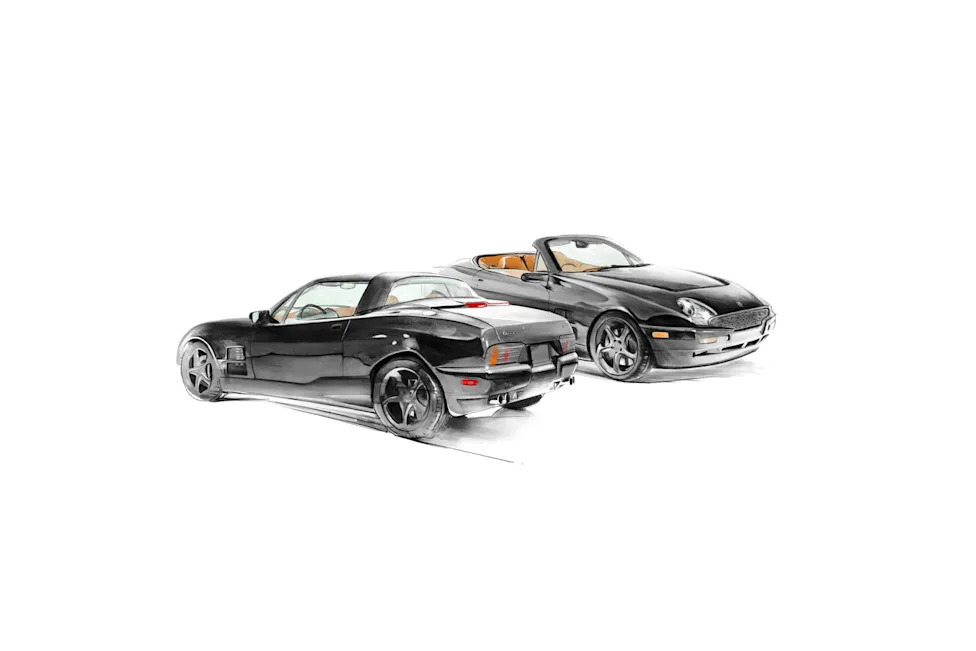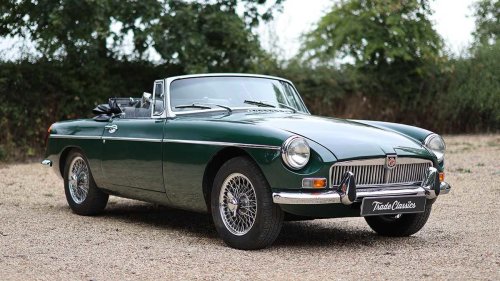
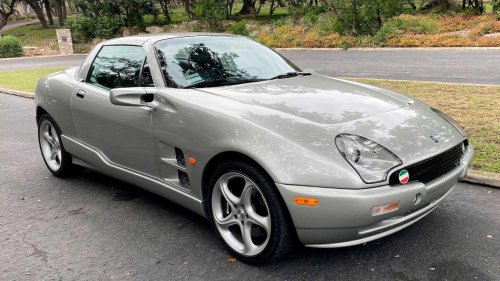
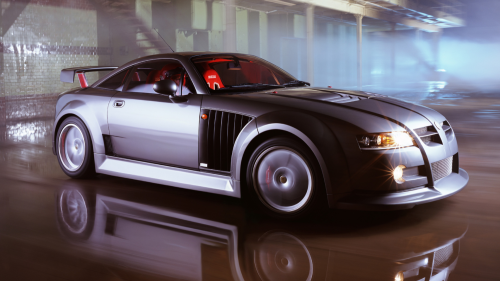
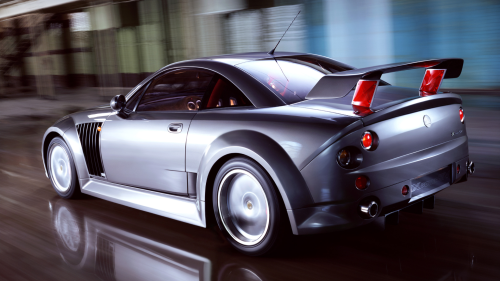
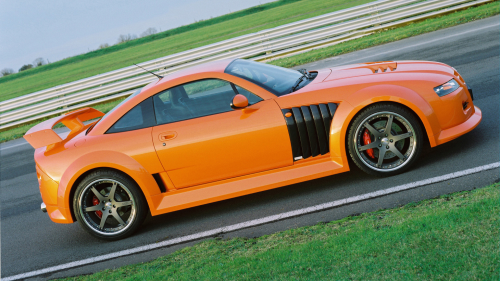
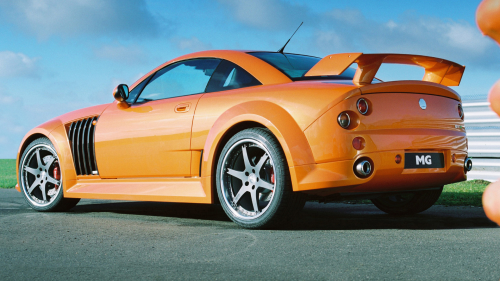
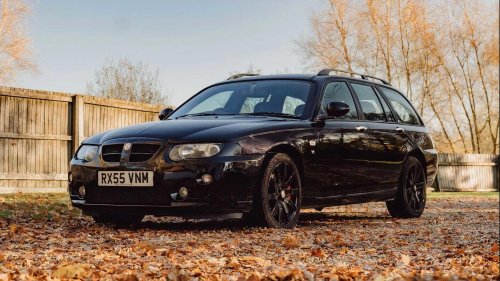




















American muscle under the hood of a British-built sports car is a recipe that has led to some of the best cars in automotive history. The Shelby Cobra 427 stands out as the most famous of them all, with other examples including the Sunbeam Tiger and, of course, the Le Mans-winning Ford GT40.In the modern era, it’s been a less common combination, but it’s not totally unheard of. One of the craziest cars of the 2000s used this formula, and it’s one you can soon legally import to the US. There’s More To MG Than You Think Trade Classics On American soil, British manufacturer MG is best-known for its classic sports cars like the MGB. Oh, and electrical failures, but let’s put those thoughts aside for today.Although it left the US market in 1980 when production of the MGB finished, the manufacturer would live on in its home market in the UK. It would build a few more sports cars of its own, but its main business pivoted towards making sportier versions of Rover models, another brand under the British Leyland umbrella.That would continue under the newly-formed Rover Group in 1986, briefly under BMW ownership in the ‘90s and then with the independent MG Rover Group until its collapse in 2005. In those later years, just one mass-produced sports car came from the manufacturer, the Mazda MX-5-rivalling MG F (later rebranded as the TF). However, right towards the end of its life as an independent, it tried its hand at making something that could compete with the very best European sports cars. How Its Bonkers Sports Car Started Life In Italy Mecum Qvale Mangusta Specs The story doesn’t start in MG Rover Group’s home in Birmingham, England, but rather, in Modena, Italy. A little over 10 miles north of Ferrari’s home in Maranello, for a bonus bit of trivia.A very small Italian-based car manufacturer called Qvale was building a sports car of its own from 1999 through to 2002, the Qvale Mangusta. Originally developed from the De Tomaso Biguá concept and with the intention of using De Tomaso branding until a complicated fall-out between businesses, the Qvale Mangusta was a front-engined, rear-driven sports car with a 4.6-liter Ford Modular V8 under the hood.That was a deliberate decision to appeal to the US market, allowing the low-volume sports car to be easily maintained by customers in North America. It would prove to be its main market, although the Qvale Mangusta turned out to be an incredibly rare vehicle with just 284 produced. How The MG XPower SV Came To Be MG MG XPower SV Specs It’s the US homologation of the Qvale Mangusta that played a pivotal role in MG’s new sports car plans. According to designer Peter Stevens, “The Italians wanted shot” of the design and tooling for the Qvale Mangusta, leaving a door open for MG, which wanted to expand its horizons further beyond building UK-market hotted up versions of Rover products.At first, the model took on the codename X80 and a concept version was revealed in 2001. This was little more than a Mangusta wearing MG front and rear styling, something that would be changed dramatically for the production model, as it was seen as too sedate.The result was the absolutely bonkers-looking MG XPower SV. Its aggressive aerodynamics, haunched fenders and peak 2000s alloy wheels all hinted at something with serious performance. Better still, it swapped out fiberglass for carbon fiber and aluminum, making it as exotic as it looked.MG Yet it still carried over much of the Mangusta under the skin. The Mustang-sourced, 4.6-liter Ford Modular V8 remained under the hood with 320 horsepower and 301 lb-ft of torque, sent to the rear wheels through a 5-speed manual transmission.It utilized double wishbone suspension on both axles and with a limited-slip differential helping to manage power across the rear. It wasn’t lightweight, tipping the scales at 3395 pounds, lending more towards a muscle car character than a dainty sports car. A Roush-Tuned Version Was Available, And One With Nitrous (Apparently) MGMG XPower SV-R SpecsIn 2004, a year after the MG X-Power SV had launched, the manufacturer decided to take it to another level with the X-Power SV-R. A Roush-tuned 5.0-liter Modular V8 was dropped under the hood taking power up to a quoted 385 hp and 376 lb-ft of torque, although the car otherwise remained the same mechanically.More versions were planned for the MG X-Power SV, but never came to fruition. A track-focused, more powerful Club Sport version was touted around its launch but was never put into production, while industry rumors at the time suggested MG added a nitrous kit to the options list. There is no record of that ever being fitted to a production model, however. It Wasn’t A Success, But You Can Almost Import One MG Ultimately, the MG X-Power SV was less successful than the Qvale Mangusta it was based on. Production ended with just 82 built in total across the entry model and SV-R, with planned North American sales never getting off the ground. Wider financial issues plagued the business, and MG Rover went into administration in April 2005.It won’t be much longer until you can look to legally import one to the States, though. 2028 will see early versions of the MG XPower cross the 25-year threshold for legal imports, and we’d expect at least a handful to fall into the hands of American collectors. Especially given the relative ease of maintaining its Ford engine.If you can’t wait, there’s at least one in the US already imported under ‘show and display’ rules, a rare left-hand-drive SV-R model selling on Bring a Trailer in 2024 in Illinois for $85,000. Given that so few examples exist, they don’t come up for sale too often. Prices haven’t hit a stratospheric figure, however, with an SV selling in the UK earlier in 2026 for a touch under $50,000. It Wasn’t The Only Mustang-Powered MG Collecting Cars MG ZT 260 Specs While undoubtedly the most bonkers MG ever put into production, the X-Power SV wasn’t the only car the manufacturer had crammed a Ford V8 under the hood of. For that, we can look to the MG ZT 260.Based on the Rover 75, the ZT 260 was the equivalent of adding some Tabasco sauce to beans on toast. Introduced in 2003, it used the 4.6-liter Ford Modular V8, but here producing 260 hp and 302 lb-ft of torque. A fair bit down from the X-Power SV, but enough to add a kick to the executive car. It wasn’t a dramatic leap over already-existing V6 models and added an extra 441lbs which only served to counter the extra performance, but UK reviewers commended its impressive performance and tendency to oversteer playfully.Importing one may be a lot less desirable than the X-Power, but it will be a lot cheaper when legality comes around in 2028. Hagerty UK values the model from the equivalent of $7300 for well-used models through to $21,500. Most available examples will be UK right-hand drive models, but small numbers do exist in left-hand-drive European markets. You could have it as a wagon, too, adding extra weird appeal.