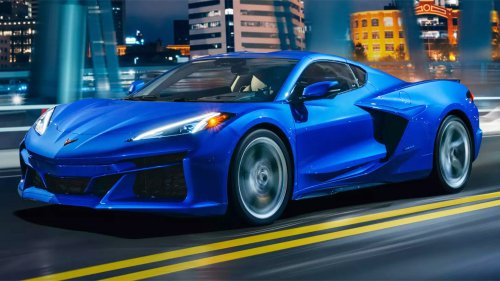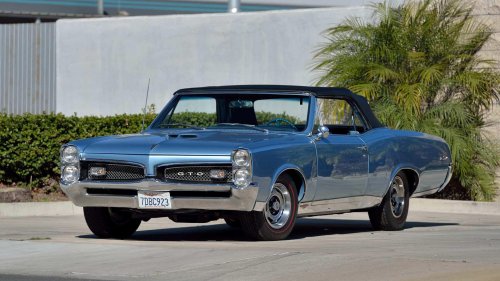
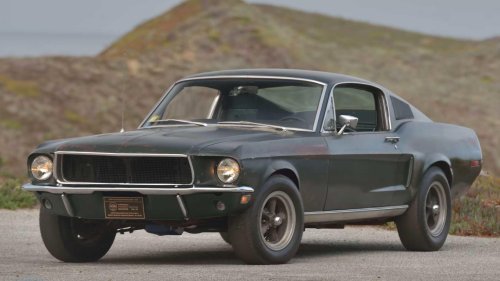
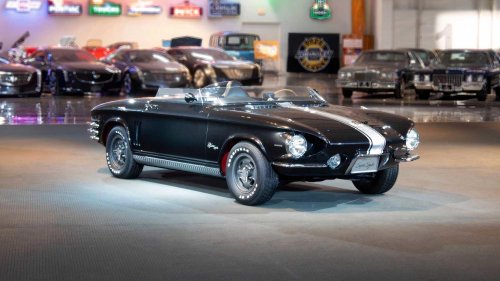
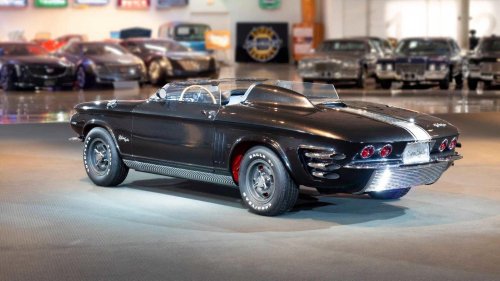
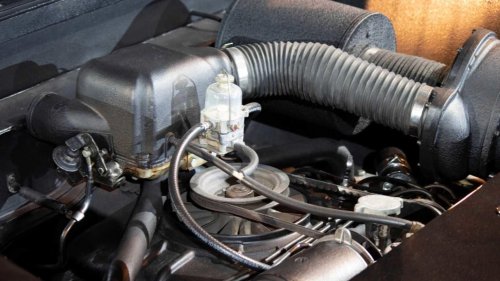
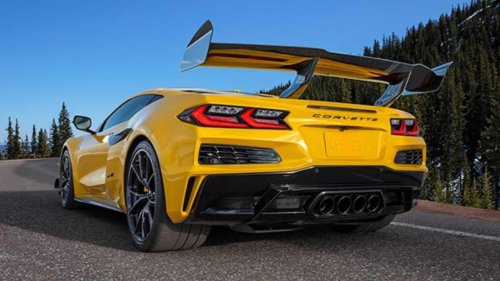



















In the '60s, America had carved out its own way of going fast on four wheels — they were called muscle cars. Ever since the Pontiac GTO arrived as an option package for the Le Mans in 1964, the muscle car scene had exploded. Every dealership in America wanted to have a powerful V8 coupe sitting out front, with muscle cars selling in their hundreds of thousands. These new machines not only suited the rebellious, youthful America of the '60s, the straight-line speed and easy-going comfort suited the country's highways that stretched to the horizon. They were a smash hit.But certain corners of the American car industry couldn't stop noticing what the Europeans were doing. In Europe, sports cars were light and lithe, better suited to the winding asphalt of the Eifel Mountains or Snake Pass between Manchester and Sheffield. If America could dominate the V8 two-door section, could it also take on the Europeans at their own game? GM dared to find out... Muscle Cars Were Taking Over The Streets In The '60s Mecum Cars were big business in America in the '60s, with more than 80% of families owning at least one automobile by 1969 (Ebsco.com). When the Ford Mustang launched in 1964, the Blue Oval shifted more than 400,000 units in a year. The Pontiac GTO, credited as being the first muscle car, wasn't quite so popular, but sales were significant for a high-performance car. American youth were finding stable employment in the boom times, meaning that a dream V8 was no longer just a dream. But while the muscle car seemed to be universally adored, there were certain members of society who were looking elsewhere. In Europe Things Were A Little Different MecumSteve McQueen is famously associated with the Mustang GT 390 from Bullitt, but the film star had a love for European sports cars. McQueen's first new car was a black 1958 Porsche Speedster 1600 Super, which he sold to buy a Lotus XI. He also had cars like a Jaguar XKSS in his collection. What these models have in common is that they are minimalist, with comfort making way for a more focused nature.Even Pontiac chief engineer John DeLorean had a fascination for European cars. The Ferrari 250 GTO was famously the namesake for the GTO muscle car, and the DMC DeLorean also borrowed heavily from European designs. So around the same time as the Pontiac GTO was being developed, GM had another project that imagined the American performance car more as a pared-back road racer like the Porsche Speedster. But was it too good to actually make it to production? GM Wanted A Model That Could Bridge The Gap Between Europe And America GM In the early '60s, GM was wondering how it could take on the influx of European cars, most importantly the VW Beetle. GM top brass Ed Cole wanted an American version of the Bug and went as far as to implement a similar rear engine air-cooled concept. To be fair to the 1960 Corvair, which came in sedan, convertible, coupe, wagon, and van body styles, it had more in common with later Porsches. The engine in the Chevy is a flat-six and even brought forced induction to the masses with the Turbo Air 6 of 1962. The Super Spyder Was America's Porsche Speedster GM But while all this seemed like a logical (if slightly over-the-top) reaction to the German cars, GM perhaps really wanted to take a chunk out of Porsche's sporting intentions. The 1961 Sebring Spyder Concept used a 1961 Corvair floor pan shortened by some 15 inches, with race car-like split windshields and a fiberglass tonneau section. The XP-737 concept was deemed worthy enough to grace the cover of Car and Driver magazine. On a roll, Chevy then introduced another concept, the 1962 Chevrolet Corvair Super Spyder (XP-785). Chevy looked ready to take on the best of Porsche and Jaguar. The Corvair Spider Looked Ready To Take On Porsche GM Chevrolet Corvair Super Spyder Specs Source: ManufacturerThe 1962 Chevrolet Corvair Super Spyder (XP-785) was a design exercise created by Bill Mitchell, the "czar" of GM styling. It featured a shortened 1961 Corvair chassis, with a 15-inch section of the body removed between the doors and rear wheel arches. At the rear was a horizontally-opposed 6-cylinder engine and transaxle. The car featured a four-wheel independent suspension system, just like the Porsche 356.Then there was the racing-inspired windshield, extended rear tonneau cover, tapered headrests, and crazy-looking half-dozen exhaust pipes protruding from the rear. If GM wanted to build a Porsche Speedster, then this was it. While there isn't a huge amount of detail on the specifications, it seems that the engine in the Super Spyder was the 150-horsepower turbocharged unit from the production Monza Spyder. Considering that car could hit 60 mph in 10 seconds, the stripped-down Super Spyder would likely have been quicker than that. The Corvair Spyder Wasn't To Be GMThe Super Spyder wasn't to be. The concept was shown at various sports car events and racing venues, but in the end it didn't make production. The Corvair itself was heading for troubled waters, with Ralph Nader releasing a damning book titled "Unsafe at Any Speed" in 1965, which focused on safety issues allegedly relating to the Corvair. But Corvair sales had already peaked in 1961 and 1962, says Hagerty, and began dropping between 1963 and 1965. While the post-war Beetle was buoyed by its connection to the hippie movement and later the Herbie films, the Corvair didn't really capture the imagination as a futuristic concept. The Super Spyder Was Too Specialist For GM Showrooms GM GM never indicated that the Super Spyder would make production, with its specialist, limited-appeal nature likely making it too expensive to put into small-scale production. Using Porsche thinking to make a GM product also probably made it too niche for its own good, with customers preferring V8 drop-top muscle cars that had significantly more power, greater luxury, and better handling predictability. The Super Spyder is now part of the GM Design Staff collection of historical GM vehicles held at the GM Heritage Center. GM Didn't Give Up On Taking On Europe Chevrolet General Motors never lost the idea that it could take on the Euro models at their own game, it just took a while longer. Tired of its fuddy-duddy reputation, Cadillac launched the V-Series of high-performance cars in 2003, aimed squarely at the likes of BMW's M-Division and Mercedes-AMG. They did a great job of it too, with the CT4-V Blackwing being a true rival to the best German competitors. Then there is Chevy's flagship product, the Corvette, which got serious with the C5 of the late '90s, bringing supercar performance to the masses.The C8 Corvette, which went mid-engine for the first time to take on the likes of Ferrari, is a cut-price exotic that can mix it with the best. No wonder Hotcars named it the Best American Sports Car of 2021. Then there are the Mustang GTD and Dark Horse, obviously from Ford—the list goes on. The Europeans need to check what's happening in America these days, not the other way around.Sources: Corvaircorsa.com; Hagerty.com; Macsmotorcitygarage.com; Hemmings.com; Ebsco.com