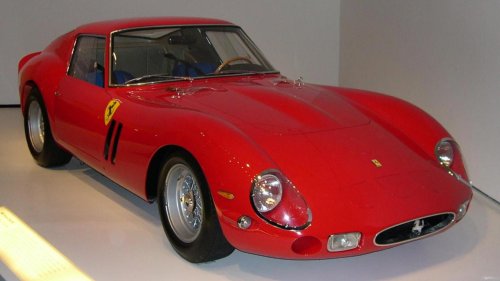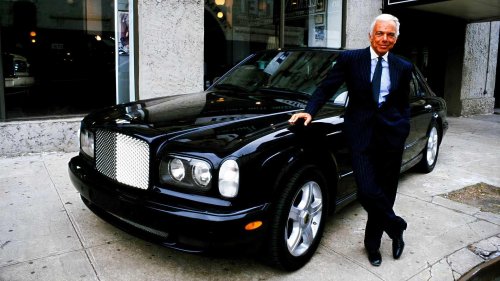
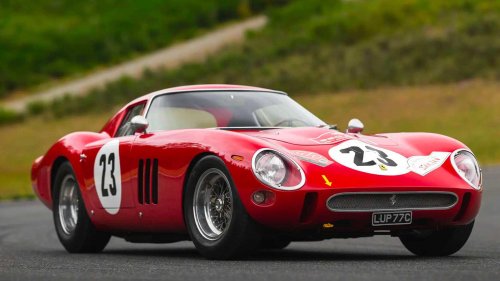
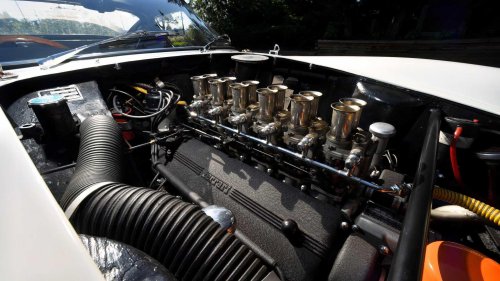
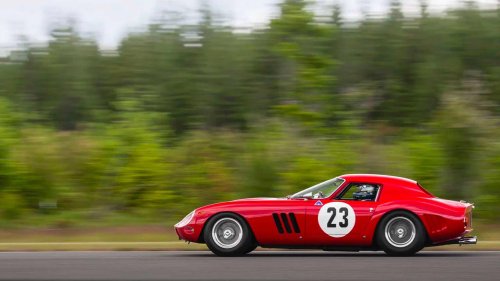
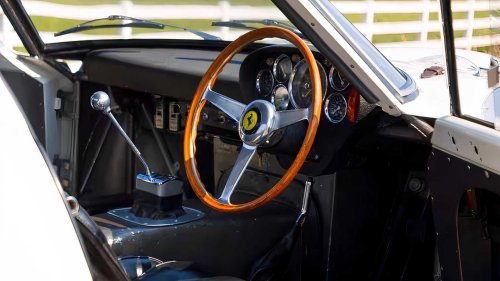
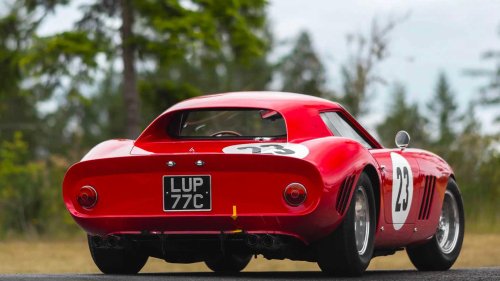



















In a world where almost anything can be bought for the right price, rare are the exceptions that defy the market. In the automotive world, rare classics and hypercars are often seen as smart investments, with certain models skyrocketing in value thanks to their exclusivity and historical significance. Yet unlike assets such as art or stocks, cars offer a utilitarian value to collectors. Because owners can drive them and showcase them at events, cars create an emotional attachment through the experiences they help provide, turning them into something beyond simple collectibles.Among collectors, there is a car so invaluable and so meaningful to their owners that even eight-figure offers get easily turned down. It rarely appears at auction, changes hands only under exceptional circumstances, and whenever it does, it reshapes the market around it. Occupying a unique place in automotive history, there is one Ferrari that remains too significant for car collectors to ever let go. Why Collector See Certain Cars As More Than Simple Assets Getty Even at the highest levels of collecting, certain cars transcend their role as machines and become deeply personal artifacts. No matter how affordable or expensive, cars can mark milestones, such as a lifelong dream realized or a connection to a specific era of motorsport. The emotions and significance attached to vehicles often outweighs financial offers.Well-known enthusiasts like Nick Mason have held onto their most prized cars for decades, continuing to drive and enjoy them despite skyrocketing values. Others, like Ralph Lauren, see cars as expressions of taste and identity. In these collections, there is no such thing as timing the market. Cars become part of a collector’s story, and selling it can feel like losing a piece of identity. The Origins Of The Ferrari 250 GTO RM Sotheby's From the Porsche 904 to the Jaguar E-Type, Group 3 racing in the 1960s gave us some of the most iconic race cars ever built. Yet even among the prestige these cars command, none quite match the status of the Ferrari 250 GTO. Developed under the direction of Enzo Ferrari, the 250 GTO was designed to compete in the FIA’s Group 3 Grand Touring category. The 250 GTO met the FIA’s homologation requirements and embodied the ultimate evolution of Ferrari’s 250 series. The acronym “GTO,” short for Gran Turismo Omologato (or Grand Touring Homologated in English), showcased the car’s racing nature.Powered by a 3-liter V12 engine producing an estimated 300 horsepower, the 250 GTO borrowed the 250 Testa Rossa’s four-time-Le Mans-winning “Tipo 168/62” engine. The lightweight chassis was derived from the 250 GT SWB, and was further developed for the GTO by using smaller section tubing and additional bracing to improve torsional rigidity. Its aluminum bodywork was stylish and functional.Mecum Ferrari 250 GTO SpecsInstantly recognizable by its long and low nose, the hood featured three removable 'D'-shaped panels on its nose to increase radiator airflow. The 250 GTO brought back to Maranello three consecutive FIA International Championship for GT Manufacturers from 1962 to 1964, and secured several victories from prestigious races including the Targa Florio, the 24 Hours of Le Mans, and the Nurburgring 1000 km. What Makes The Ferrari 250 GTO So Special RM Sotheby'sEarly 1960s FIA regulations required a minimum production of 100 examples for a car to comply with Group 3 homologation. Although Ferrari only built 36 units of the 250 GTOs, numbers for the GTO were covered by the earlier 250 GT Berlinetta SWB model, as homologation rules allowed for extensions and modifications that were not covered under the original specification.Despite the GTO’s very limited production, no two of the 36 GTOs were identical, owed to the constant evolution of the car. The rear spoiler on the first 18 models was supplied separately and had to be bolted to the body. Following variations came with a fully integrated spoiler. Other variations included radiator size, ducts, and various mechanical alterations. Out of the 36 units, three prototypes were fitted with a 4.0-liter V12. Additionally, some of the earlier GTOs were rebodied and updated to match the latest mechanical enhancements of some of the Series 2 GTOs built in 1964.Just as important as the GTO’s performance was its exclusivity. Originally priced at $18,000 (roughly equivalent to $200,000 today), ownership was not guaranteed by wealth alone. Reserved for trusted privateers and accomplished drivers, each buyer was personally approved by Enzo Ferrari. As a result, each 250 GTO chassis possesses a well-documented, traceable history, from their early racing careers to their subsequent ownerships. Extreme rarity, glorious racing victories and timeless design have cemented the 250 GTO’s status as one of the most sought-after and iconic Ferraris of all time. Understanding The 250 GTO Legacy MecumThe legacy of the Ferrari 250 GTO is best understood through the individual stories carried by each chassis. While the GTO’s Group 3 racing days are long over, each of the 36 cars keep unique racing histories. The chassis 3223GT, for example, is known to have served as a testing and press car, before going on to compete on American racetracks such as Nassau, Sebring and Daytona. Chassis 3987GT, currently owned by Ralph Lauren, stands as the winning car in the 1962 Paris 1000 KM race. The stunning pastel green chassis 3505GT was originally built for Sir Stirling Moss to use in the 1962 24 Hours of Le Mans. And chassis 3647GT is, to this day, still unrestored from its racing days.Each GTO’s story has been meticulously documented, and each chassis can be viewed as an “archive-on-wheels” of motorsport history.Over time, the detailed provenance and unique racing stories of each model has elevated the 250 GTO to a “holy grail” status among collectors, well beyond some of the rarest classics. Despite its rarity and priceless status, the Ferrari icon is more than just a simple collectible, as it holds a racing pedigree and a history deeply tied to Enzo Ferrari. Many owners still drive and showcase their cars both in private rallies and public events, ensuring the 250 GTO's legacy with each exclusive appearance. The Ferrari 250 GTO Is The Car No One Wants To Let Go RM Sotheby'sThe enduring prestige of the Ferrari 250 GTO has inspired a certain devotion to the car among owners. Auction appearances are extremely rare, and in some cases, owners have even refused to sell their GTOs for staggering offers. Nick Mason, known as one of the Pink Floyd band members, has owned his GTO since 1977. According to a 2011 interview with ESPN, Mason turned down a $35 million offer in 2010, saying that he “did not agonize over [not selling his 250 GTO] at all,” adding that he was “still very fond of that car,” which he still drives in rallies and showcases in events such as Goodwood Revival.During the interview, Mason added that he saw his cars as “a bit like my children,” hinting at the deep emotional connection to each of his cars including the 250 GTO. Such stories highlight a broader truth about GTO ownership, where passion, history and identity transcends a car’s investment value.More recently, a "Bianco Speciale" 250 GTO made headlines, when Ferrari collector David Lee purchased it for $38.5 million at the Mecum Auctions' Kissimmee 2025 earlier this year in February. Chassis 3729GT is known for being the sole 250 GTO to have been delivered in factory white. In a video posted to YouTube, Lee explained how special a car the 250 GTO was, and something that belonged "beyond the dream car category.” Lee also shared the appeal of this Bianco Speciale, which even despite the repairs and maintenance, the car has never gone through a full restoration, allowing it to keep its racing history genuine and alive. With his full intent of driving the car to various events, this new acquisition further reinforces how once a 250 GTO enters someone’s collection, it rarely ever leaves.