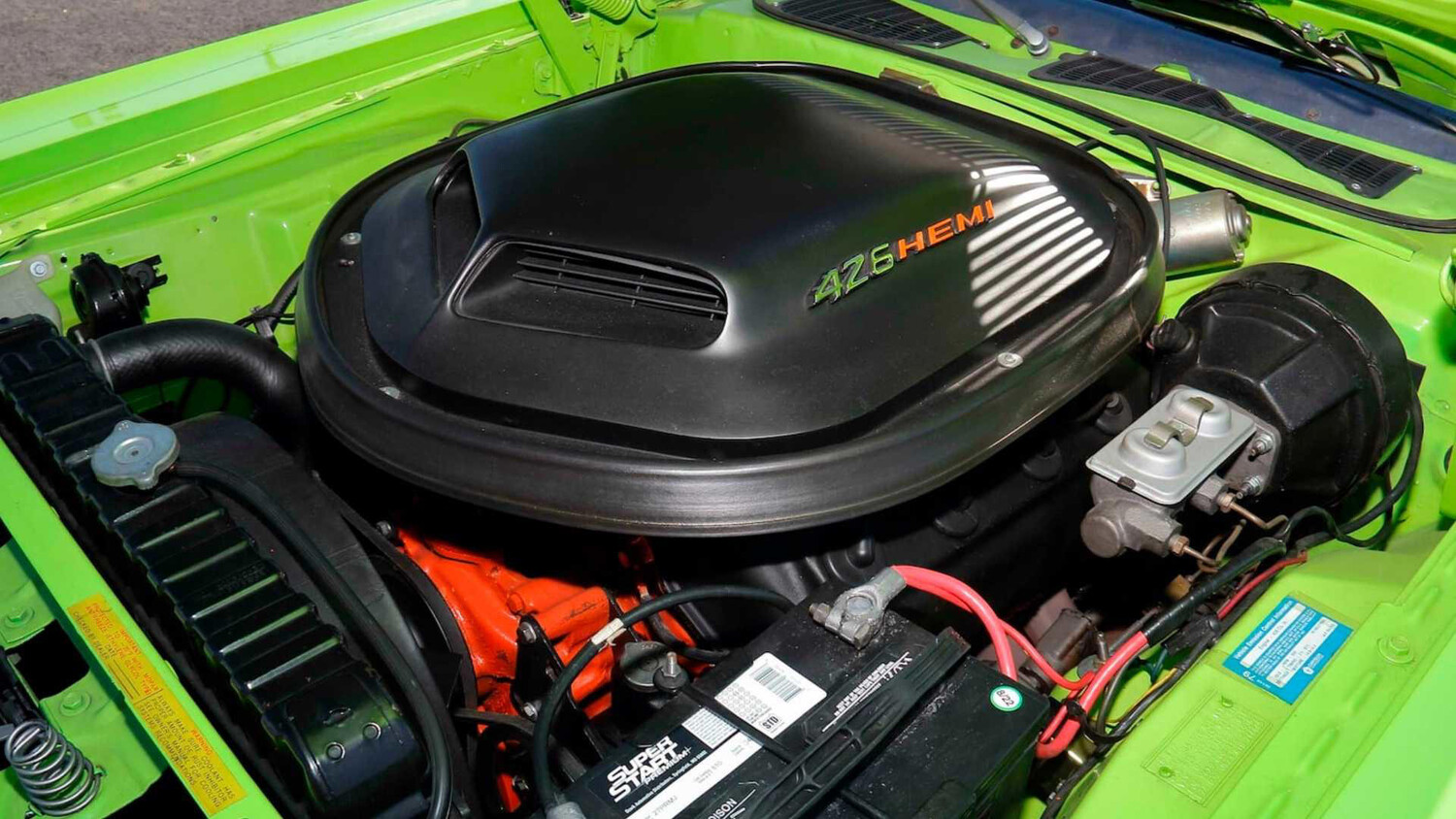
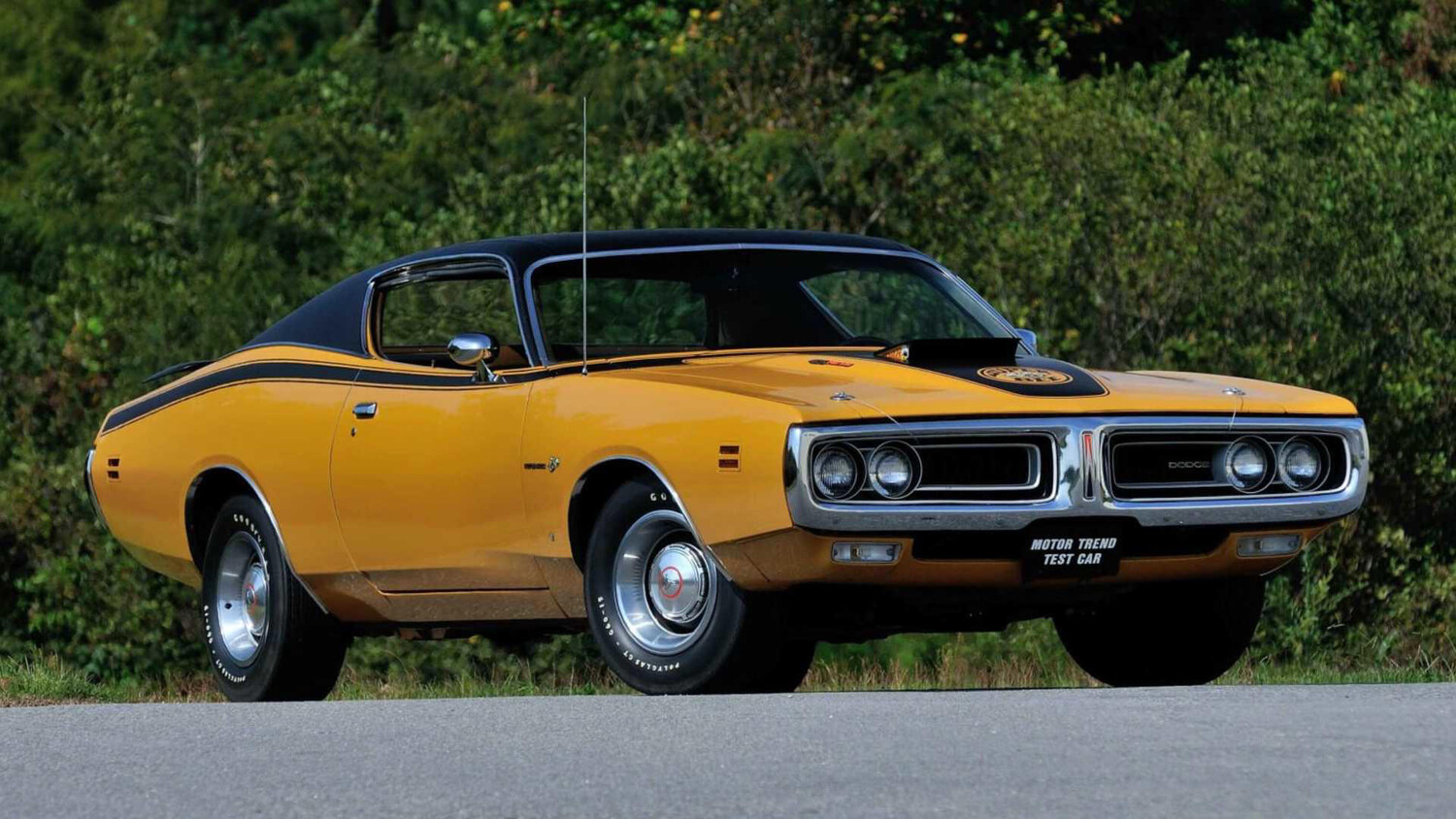
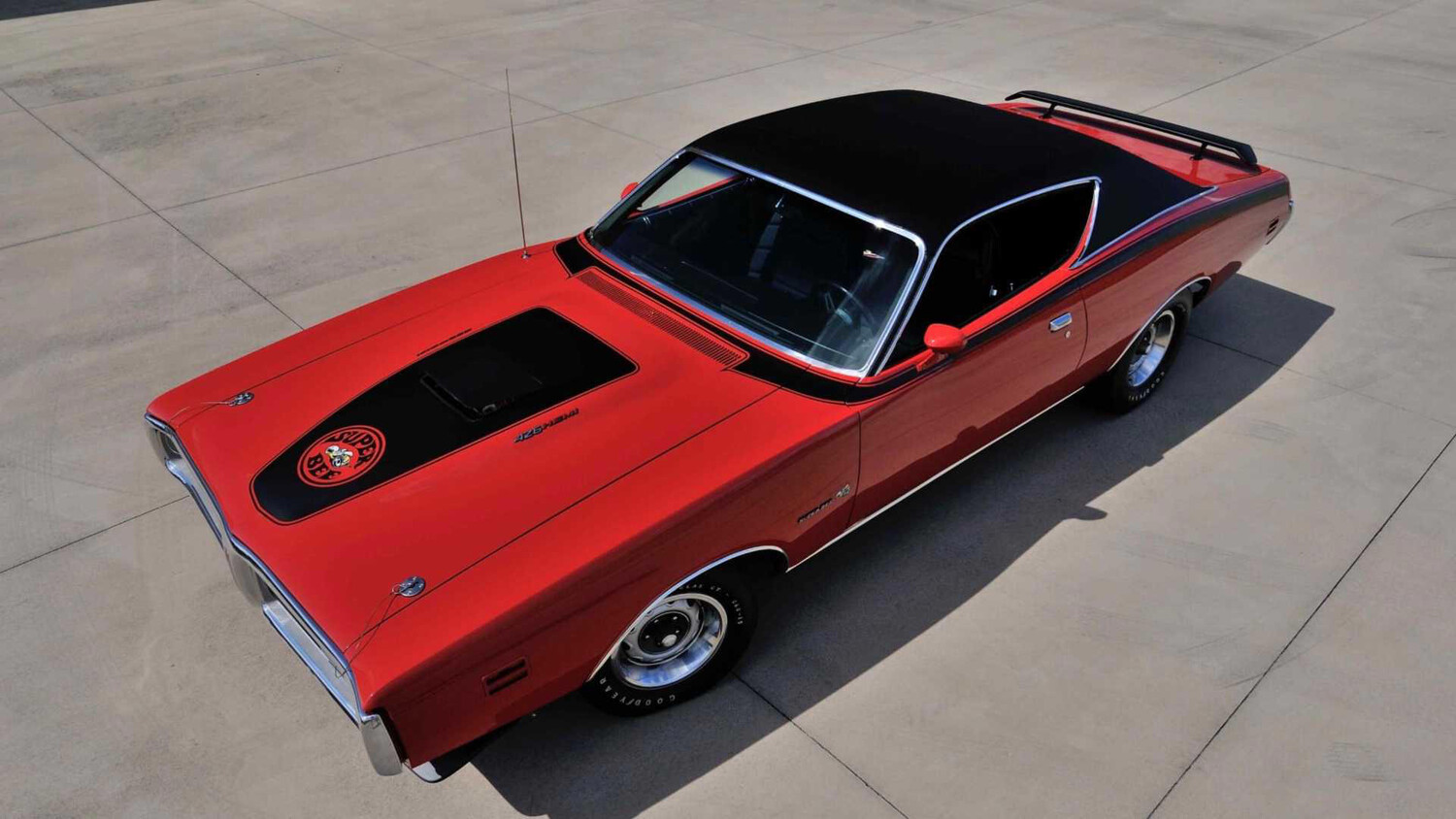
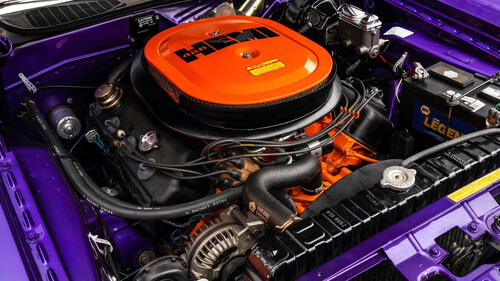
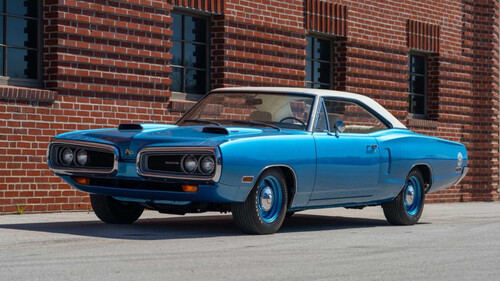
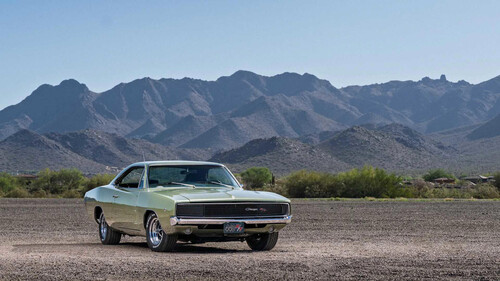
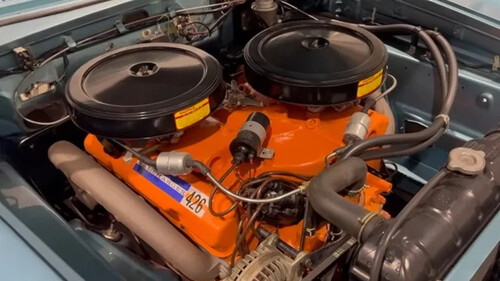
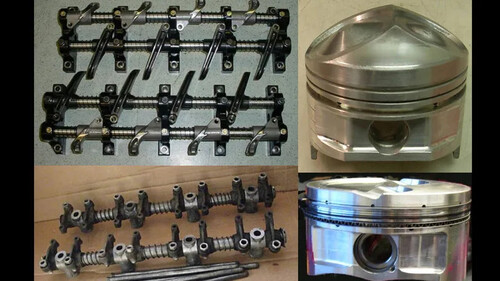
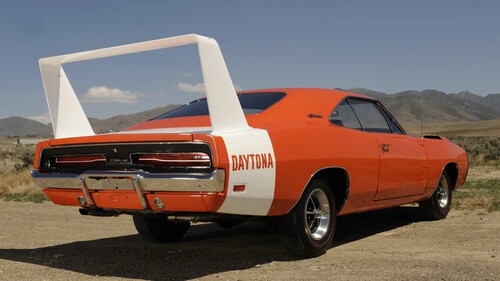
The most awesomely insane thing about Golden Age muscle cars is that, back in the day, a person could walk on to any dealer lot in the country, plunk down $3,000 or $4,000 and drive off in something that is now worth hundreds of thousands or even millions. Someone could have hit up Baldwin Chevrolet in 1970 looking for a Chevelle SS 454 LS6 convertible. If they didn't have one in stock, they'd arrange for a dealer swap, order one from the factory, or even build one on the spot. That car, which anyone could have purchased if they so desired, cost around $4,500 new and now goes for $770,000, which is a killer return on an investment. UPDATE: 2026/04/01 07:41 EST BY JARED SOLOMON This article has been updated with additional insights into the collector value and market positioning of this muscle car.Another crazy quirk from the classic era is that many of those classics anyone could have bought, which we view today as unicorn cars, weren't particularly popular and were ordered in extremely small numbers. High-performance big-blocks and exotic options were expensive and most buyers simply took a pass. Also, 50 or 60 years ago, folks weren't looking at cars as money-makers, but rather as basic transport, image enhancer, or street ass-kicker. Some of these rare rides were recognized as keepers and have a decent presence on the collector scene. But there is one killer Dodge that is next to impossible to find, no matter how fat the stacks of cash are. Third-Gen Charger Finally Deemed Collectible MecumIn 1971, the Chrysler B-Body cars were treated to an extreme makeover. The Dodge Charger got what was known as the "fuselage" body style, which was an aerodynamic shape supposedly reminiscent of an aircraft design. While the second-gen Charger, arguably one of the most beautiful cars ever conceived, had a Coke bottle design, the third-gen was kind of like one of those stretched out Pepsi bottles from the county fair. Many collectors are not big fans of the third-gen Charger, but it was way more popular back in the day, with 82,681 units moving in '71 versus just 46,576 second-gens the year before.For the longest time, third-gen Chargers weren't even considered collectible, regardless of rarity or engine option. That insanity has recently come to an end. It used to be that the best deal on a 426-equipped Mopar was a '71 Charger R/T, but a heavily-optioned Hemi Orange Hemi Charger (pictured above) sold for $550,000 at Mecum Kissimmee 2023. The second-gen Charger is the bad guy car from Bullitt and Dominic Toretto's ride of choice from the Fast & Furious movies. However, when it comes to auctions, the most one has sold for is $357,000 for a '69 500. The third-gen is now the bankable superstar. Last Great Year For Mopar Muscle Cars Mecum1972 marked the beginning of the Malaise Era, or Dead Horsepower Age, in which the once mighty American V-8s were radically detuned to meet stringent government emissions mandates as well as shifting consumer demands for better fuel economy. As such, 1971 was the last great year of the Golden Age, not just for Mopar, but all muscle cars.While the 383 lost 30 horsepower and the 440 Six-Pack was down five ponies, both were still street ass-kickers in '71. Challengers, Chargers, 'Cudas, and GTXs had their greatest appearance packages, with the most attention-getting decals as well as High Impact colors that would be discontinued the following year. Most importantly, Mopar Muscle still meant something on the street with a full line-up of 13-second cars. 426 Street Hemi’s Final Farewell Mecum1971 also marked the sad eulogy of the 426 Street Hemi's last time on this planet, closing out a legendary chapter in American performance. The 425 horsepower, 490 pound-feet of torque 426 V8 wondermill was introduced in 1964 as a race-only engine, mostly for Richard Petty to crush everyone in NASCAR.After Ford pitched a hissy fit that it was too fast, it was banned until it could be homologated, meaning it had to be sold in a certain number to the public. In 1966, Chrysler unleashed it on all Dodge and Plymouth intermediate cars, where it literally dominated the Golden Age. In its last year, 368 Hemi cars were built, including 97 for the Charger, with just 22 going to the Super Bee. 1971 Hemi Super Bee Is A Unicorn With A Stinger Mecum The Coronet-based bargain bruiser Super Bee was discontinued as a nameplate in 1971. It continued on as a trim level for the 1971 Dodge Charger, and picked up its mission statement to provide cheap thrills. The 300-horsepower 383 V8 was the entry-level engine, which is a pretty good place to start. From there, 440, 440 Six-Pack, and 426 Hemi upgrades were available, which were all in play because the Super Bee had a reasonable $3,271 ($26,392 adjusted for inflation) sticker price. There was plenty left in the budget to go big on the engine options.Buyers could save even more money with a bench front seat, radio delete, and manual steering as well as brakes, which made the $883 Hemi upgrade totally doable. Weirdly, not a lot of folks exercised this option. Just 22 Hemi Super Bees were ordered in '71.Another counter-intuitive fact about this car is that just 26 440 single four-barrels were sold, making it almost as rare as the Hemi, but not nearly as valuable. When it comes to transmissions on the Hemi Super Bee, 13 had the TorqueFlite automatic, while the more desirable four-speed was limited to only nine units. Killer Ride if You Can Find One MecumThe '71 Super Bee has some serious unicorn credentials as a rarity, and borders on Holy Grail status as we've only been able to identify six of them that have ever been up for auction. At Mecum Kissimmee 2015, three Hemi Super Bees were offered from the same collection, all of which sold between $170,500-$209,000.The next time one would sell was in 2023, which brought the gavel down at $190,000 and another one would go for $245,000 in 2024. Bring a Trailer listed a '71 Hemi Super Bee back in 2021, but it didn't hit the reserve after bidding only hit $155,426. Most super-rare classics have a larger presence because they were recognized as keepers. But, '71 wasn't always considered collectible, so this is one that even hardcore muscle car hunters have a hard time dropping a bead on. Still the King Bee on the Streets Mecum Again, 1971 was the last year in which American muscle truly kicked ass, but some automakers had already started scaling back the oomph on their rides. Chevy discontinued the massive 450-horsepower 454 LS6 that finally made the Chevelle a contender against the Hemi Charger. In '71 with a much less powerful LS5, the SS was relegated to a 14-second car.The 455s in the Pontiac Trans Am, Buick GS, and Olds 442 were also in the beginning stages of detuning. They too were no longer members of the 13-second club. A 1971 Charger Hemi Super Bee, however, was as potent as ever, with a 5.5-second 0-60 time and a blistering 13.5-second quarter-mile. The only thing that could run with a Hemi Super Bee was another Hemi-powered car. Mopar closed out the classic era ruling the streets. A Brief History Of The Super Bee MecumWhen Plymouth introduced its working-class workhorse Road Runner in 1968, the budget muscle car was such a hit that Dodge demanded its own version. Hitting the streets mid-model year in '68, the Coronet-based Super Bee got its name from its B-body platform and the fact that it was pretty damn super.The Bee started with a standard 335-horsepower 383 V8, and then it was complete Armageddon because the only option was the 425-horsepower 426 Hemi. Like the Road Runner, the Super Bee eschewed luxuries for raw power in exchange for the nice price of around $3,000. The Super Bee really came into its own in 1968 when it was paired with the new 440 Six-Pack V8 that had a trio of two-barrel carburetors and offered Hemi-like performance at deep discount.Designated the Super Bee A12, this Dollar Tree Dodge pumped out 390 ponies and 490 pound-feet of toque that could rocket it from 0-60 in 5.5 seconds and down the quarter-mile in 13.5 seconds, which is about what a Hemi car could do. In 1971, the Coronet R/T and Super Bee were discontinued, with B-body muscle shifting to the third-gen Charger, where the Bee buzzed for another year as the coolest trim of the coolest car. A little known fact is that the Super Bee didn't actually get exterminated in 1972, but continued on in Mexico as a trim for the Valiant and then the Aspen until 1980. Then, of course, it had several reappearances with the modern Charger reboot. Dodge Scat Pack Attack The Super Bee got its awesome mechanized bumblebee logo from the Scat Pack, which was a marketing push to promote Dodge's muscle car lineup. Basically, a Scat Pack car was guaranteed to run a quarter-mile in the 14s, and came with a 383 V8 or better. The Charger R/T, Coronet R/T, Dart GTS, and Super Bee were the initial Scat Pack Cars, that were identifiable by bumblebee stripes across the rear with plenty of matching decals and badges.Interestingly enough, a buyer could request that the dealer remove the bumblebee stripes. But that's kind of like picking up the Mona Lisa and asking that her smile be erased. The Scat Pack was such a cool designation that Dodge brought it back for their modern muscle cars, to let everyone know which ones were the baddest. Auction Buzz: ’71 Hemi Super Bee Prices And Values Mecum Only 5,054 1971 Dodge Charger Super Bees were produced, meaning it is already an elusive classic. With just 22 Hemis, it's a unicorn with a Holy Grail in its mouth. Hagerty tells us that a beater is worth $114,000, while a Concours condition show car has a value of $265,000, which is $20,000 more than the highest recorded auction price. Either way, the '71 Hemi Super Bee seems undervalued because it's rocking that sweet spot of rarity and awesomeness.Just the infrequency at which they show up for auction alone hints that far fewer than 22 of them still exist, with many estimates saying it's more like 10-15. We'd like to believe that there is a four-speed out there with just crazy options, waiting to emerge and establish the '71 Hemi Super Bee as the most expensive Mopar muscle car. You know, except for million-dollar drop tops and Daytonas. Why The ’71 Hemi Super Bee Remains Undervalued Compared To Other Mopar Legends Despite its extreme rarity, the 1971 Hemi Super Bee still lags behind icons like the Hemi ’Cuda convertible or Charger Daytona when it comes to headline-grabbing auction prices. A big reason comes down to perception and timing. For decades, third-gen Chargers simply didn’t carry the same cultural weight as earlier models, which delayed serious collector interest.Another factor is lack of documentation and visibility. Unlike more famous Mopars that have been thoroughly tracked, registry data for Hemi Super Bees is still incomplete. That uncertainty can make high-end collectors hesitant to push values into the stratosphere, even though the car’s production numbers justify it.There’s also the matter of body style hierarchy in the collector world: Convertibles typically command the highest premiums Winged cars like Daytonas and Superbirds have built-in desirability due to NASCAR heritage More subtle models like the Super Bee often fly under the radar However, that dynamic may be shifting. As top-tier Mopars become increasingly unattainable, collectors are beginning to recognize the Super Bee as a “next wave” investment-grade muscle car.Sources: Bring a Trailer, Hagerty, Mecum