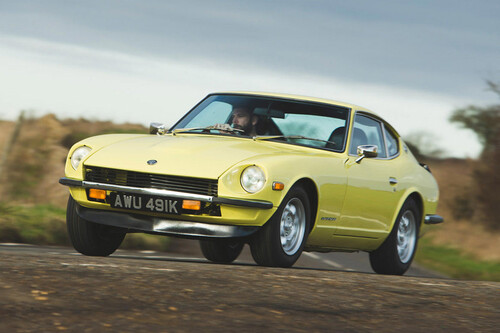
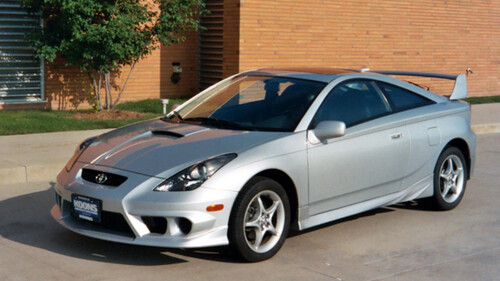
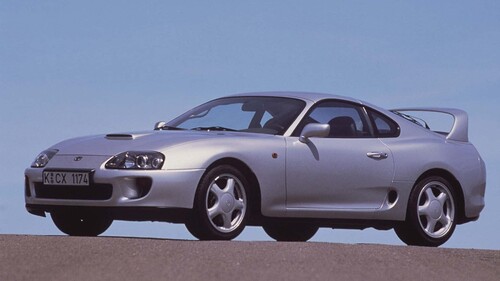
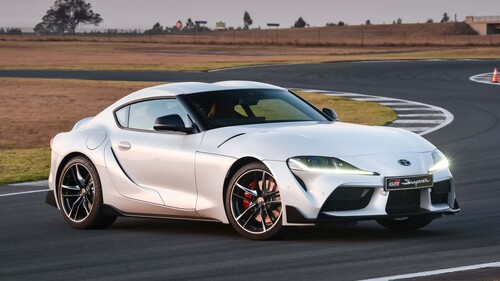
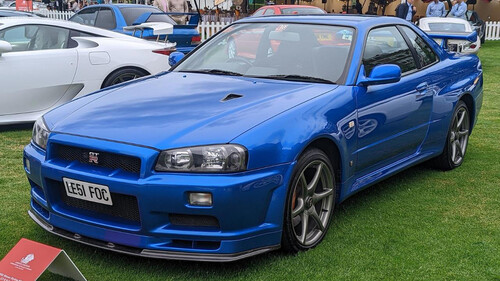
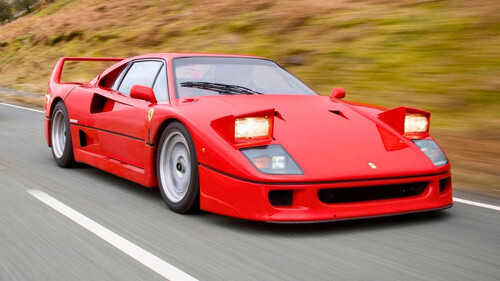
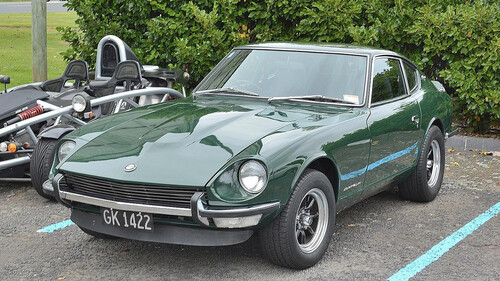
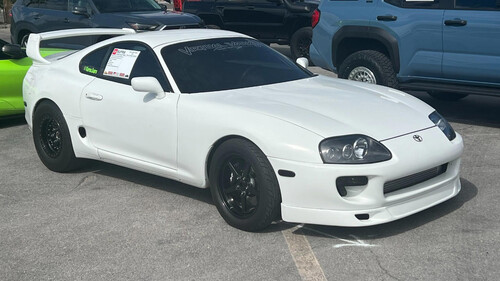
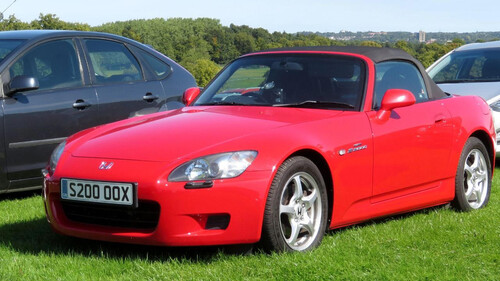
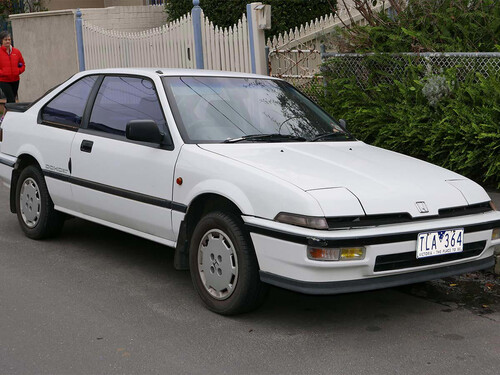
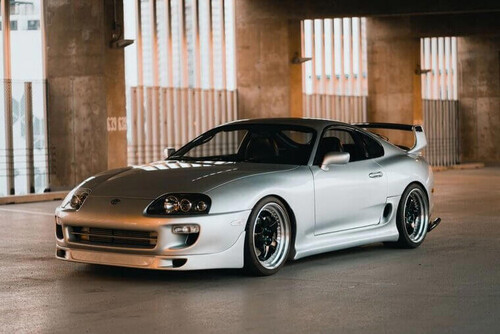
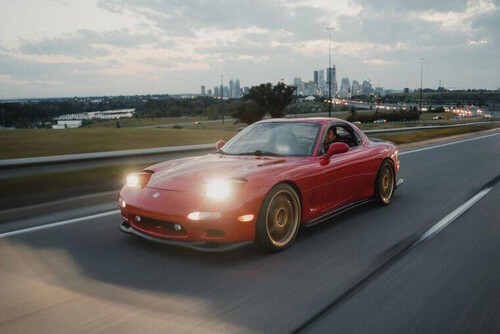
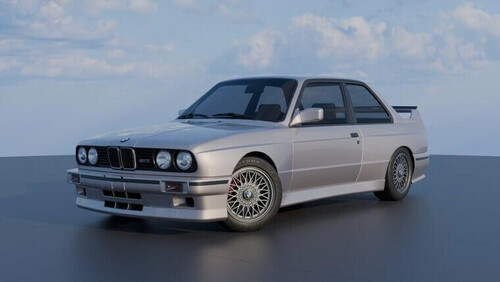
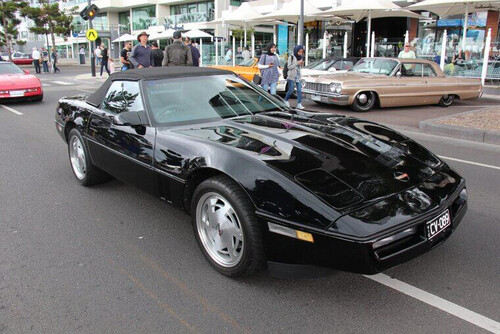
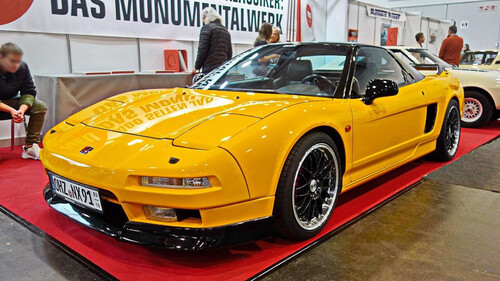
Every car enthusiast I've ever met, and it's been thousands of you from all over the world, had a vision of what the perfect performance car should be. Very seldom does your vision match anyone else's. If you're under the age of 65 the view you hold onto, even if it's more Italian than commuting by gondola or more German than Haribo, has been influenced by Japanese car manufacturers. It took driving some of the best examples from Nissan, Honda, and Mazda to figure out just how much all of us car enthusiasts owe to these companies. The Datsun(Nissan) 240Z Proved That Sports Cars Could Be Approachable Nissan The 1970 240Z wasn't Japan's first sports car, it wasn't even Datsun's first. It was however, the first to see production numbers in the tens-of-thousands per year instead of dozens-per-year. When it launched, the 240Z was just $3,500 compared to $5,200 for a C3 Corvette or about $6,000 for a 911. More importantly, it was easy to drive and could be serviced at any Datsun dealership or corner garage. I've driven a small handful of vintage Zs throughout the years. My brother owned a fantastic 1978 280Z that he likely regrets selling; I don't have the heart to bring it up. The earlier cars are better for collectors, but any year will turn a trip to the store into feeling like Paul Newman racing at Lime Rock compared to any sports car from the last 25 years. Yes, by modern standards, a 240Z is going to feel archaic, but at the time, the clutch was easy to operate, shifting in traffic didn't make it feel like you had just done back and bis at the gym, and even the manual steering and brakes were easy to manage. If you happen to be around one of these cars that is at least mostly stock and well-maintained, you don't smell gas and oil from 50 feet away. The 240Z certainly took inspiration from several European sports cars of the era, but it still looked unique. There have been seven generations of Z Cars since 1970, but none of them have been as groundbreaking as the original. The 1988 Toyota Celica All-Trac Turbo Was The Rally Dream Before The WRX Toyota pressroom As a kid growing up in the 1980s, there were a few discoveries that rocked your world and shaped the adult you became. You read The Hitchhiker's Guide To The Galaxy, you heard The Cure's Just Like Heaven, and you saw World Rally Championship cars. Long before the WRX STI and Lancer Evolution, Japanese manufacturers were making limited-run cars that would be eligible for rallying. Toyota hit the market first with a turbocharged all-wheel drive version of the Celica, although the Mazda 323 GTX, Mitsubishi Galant VR-4, and the Golf Rallye (which almost made it to the US, but that's a story for another time) followed closely on its heals. I've only driven the Celica and the Golf Rallye, but both made a permanent mark. Toyota went surprisingly upscale with the All-Trac Turbo. I drove one years past its prime, but the leather interior, power windows, and sunroof were a bit of a surprise in a rally homologation car. It was easily as luxurious as a Porsche 944 or BMW e30 of the day. The 2.0L 16-valve turbocharged four-cylinder made 190 hp, so it feels as fast as either. Driving it was eye-opening as it was probably the first time I drove a Japanese car that wasn't built for the purpose of selling huge volumes, but instead, built to a very specific purpose. There were three generations of all-wheel drive, turbocharged Celicas and I will go to my grave knowing they're better and more significant than any Supra. Mazda Built The Miata To Be Exciting Without Catching Fire Mazda A famous car comedian once told me that when his brother bought a Miata he said, "Why would you buy one of those when you could have had an old British car that has soul, gets you excited, and might catch fire at any moment?" After driving the car a couple of times, he apparently changed his mind. My story with the Miata is similar. I never liked them growing up. At my height, I look over the windshield instead of through it. My legs don't fit between the steering wheel and the console, and even if I do manage to cram myself inside, I look like I got separated from the parade while looking for my fez. At one point, we had one in for testing and, for whatever reason, I had to take it home for the night and get it to the track the next day. It was the scene where the two main characters who can't stand each other get thrown into a dire situation and end up saving the day while becoming friends—but my dire situation was commuting home on the 405 in rush hour traffic. It wasn't so much the commute that made me like the car, however, that was awful. It was leaving the house at 5:00am the next morning and driving all the way to the track without traffic, and then getting some laps in. It's a gloriously communicative car that can't be beat for simple driving enjoyment, regardless of price. Mr. Bean Gave Up His Mini For The Acura NSX bringatrailer I grew up as a European car enthusiast. I've only owned European cars, more specifically, German cars as personal vehicles, and even my long-term and project cars have largely favored cars from the old country. I vividly remember when the NSX launched in 1990 and seeing one in person for the first time when my Dad was looking to buy an Acura Legend. I didn't like it. They were Japanese and not as iconic as the Porsches and BMWs I lusted after. I thought the windshield was too upright, and it looked like a Ferrari with a fivehead. Luckily, I've grown out of childish biases, although my first couple of times driving NSXes didn't completely win me over. Behind the wheel, that upright windshield suddenly makes more sense. The visibility out of Acura's(Honda's) supercar is as good as a 911. Which is to say, better than any Lamborghini and most Ferraris. Honda was also way ahead of the curve on light, but communicative controls. I drove an NSX when I was driving a 911SC as my daily and I had convinced myself that needing a breaker bar to turn the unassisted steering at low speeds was somehow a sign of being a hardcore enthusiast. I also had removed the AC and heat from my 911 as proof of my hardcoredom. Even my first time driving an NSX as a professional journalist didn't do much for me. It turns out, it was from Honda's collection and was a worn-out old press car, but the museum was determined to keep it as original as possible. I later drove a perfectly preserved, if not slightly upgraded version, and what a difference. There isn't a car for sale today that matches the litheness and grace of an NSX. Even other cars of the period can't match the delicate balance of raw communication and quiet refinement. We can blame crash regulations or ever-increasing emissions standards, but those aren't the culprit. The NSX didn't need big power. The goal wasn't winning races on YouTube, it was maximizing driving enjoyment; the NSX delivered. The Japanese Cars That Didn't Quite Live Up To Their Legendary Status - In My Opinion I've tested hundreds of cars during my career. Some are even better than I could have imagined, some should have been kept a 2-dimensional framed fantasy on my childhood bedroom wall. Much like In-n-Out Burger, they may be good, but they will never live up to the god-tier status they've built over the years. The Honda S2000 is a car that's, fine. Honda My perception of the S2000 starts much like the Miata—I don't really fit. At one tire testing event, we were doing a wet road course at the company's proving grounds with huge industrial sprinklers delivering gallons of gray water per second. I literally couldn't get in the S2000 wearing a helmet. I said it was fine, there were enough other cars to get a feel for the new tire. They insisted, so there I was, getting drenched, driving an S2000 around a wet track with the top down. Even that didn't make me fall in love with car. The steering is dead. The tiny shifter is lifted straight from a Power Wheels. The engine revs to a bazillion, but after driving all the cars with astronomical redlines, my feeling is that it's just another number on a gauge. I've driven them on canyon roads, racetracks, and on the street. I've never connected with them. The S2000 is a fine car and if you enjoy it, I'm ecstatic for you. I'll never buy one, so more for you to enjoy. Does every MK4 Supra really need 1,000 hp? Barrett-Jackson This is a prime example of a car that will never live up to the hype the pop-culture created. When someone asks me how the MK4 Supra drives, I already know their brain will reject anything short of hero-worship. Paul Walker, tuna sandwiches, overnight parts, racing a Ferrari, I get it, but hang on. First, in the year 2025, you're more likely to ride a great white shark like a jetski than you are to drive a completely unmolested Toyota MK4 Supra. Those 2Js take boost so well, that every owner has to install a turbo with a compressor inlet big enough to stick your head in. It's also a universal law of physics with tuner cars that as horsepower increases, ride height decreases. By the time you hit 700 hp, the car can't drive over 30 cents in dimes. Again, the Supra is a great car. Inline six cylinders are fantastic. They were a top 10 car in the 90s and I happily accept that childhood nostalgia plays a big part in peoples' fast and furious fanaticism.