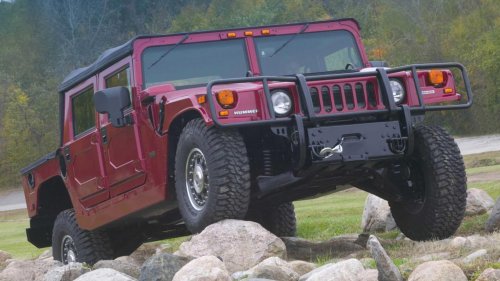
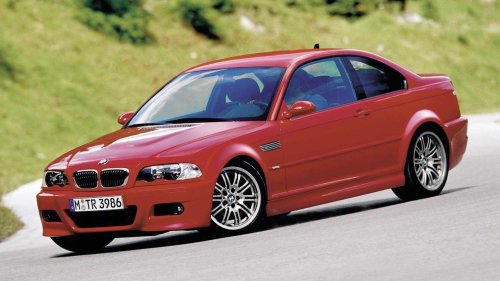
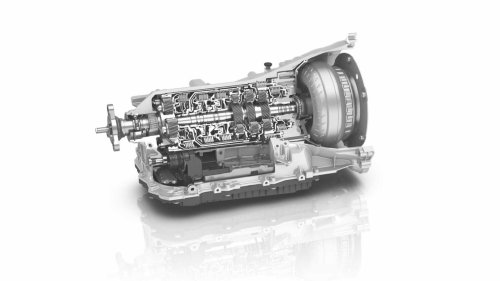
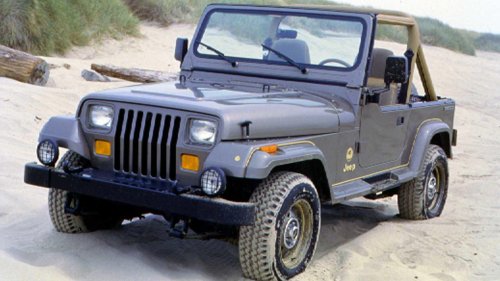
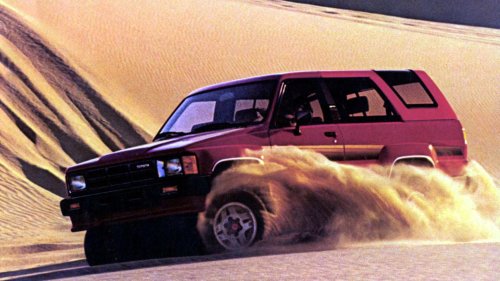
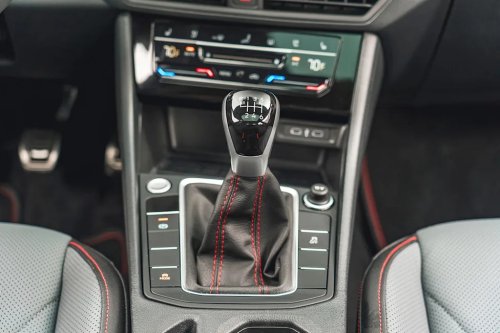
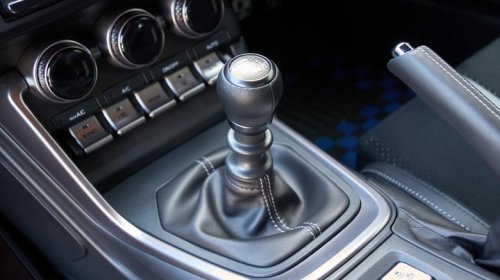
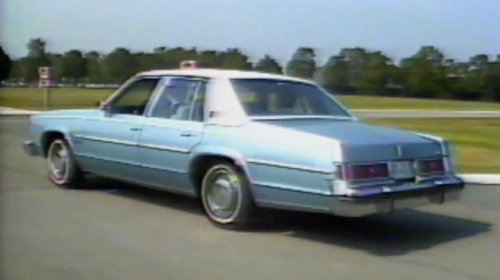
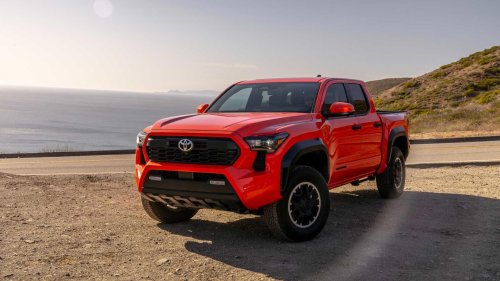
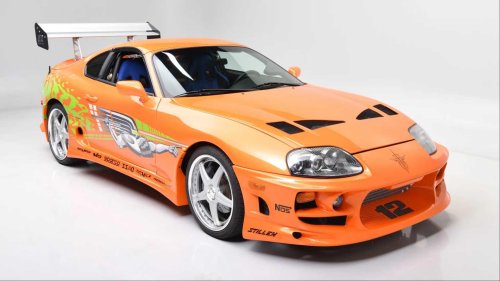
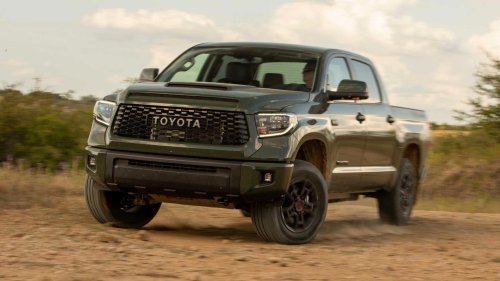
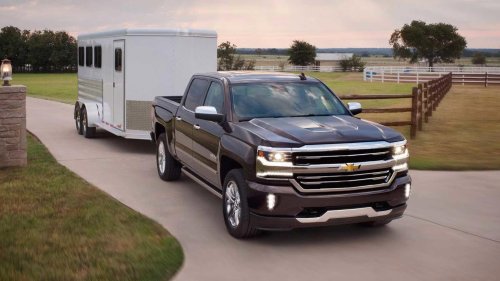
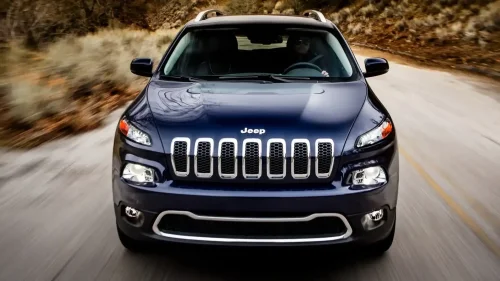
While we all love a good dose of horsepower, transmissions are the unsung heroes of the automotive world. Without them, horsepower and torque mean nothing. Some gearboxes stand as paragons of durability. It’s what you’d call a “bulletproof” transmission, just because they are able to handle the toughest challenges. Our list of transmissions spans both automatic and manual options, showcasing the rugged simplicity of Japanese engineering, the precision of Germany, and the endearing legacy of American manufacturing.Our article dives into the origins and bulletproof reliability of five iconic transmissions. We examine why they stand on the podium for reliability and engineering excellence. GM 4L60E And 4L80E Transmissions Overview A Cornerstone Of GM’s Legacy HummerGeneral Motors’ 4L60E and 4L80E automatic transmissions are legacy gearboxes. The 4L80E was introduced in 1991 as an evolution of the Turbo-Hydramatic 400 (TH400) that dated back to 1963. The gearbox was an electronically controlled evolution of this earlier unit that handled various heavy-duty applications. It debuted in GM’s C/K truck lineup, followed by expansion to commercial vehicles in later years.The 4L60E arrived in 1993 with applications in trucks, vans, and SUVs, but it didn’t take long for GM to expand this gearbox's use in rear-wheel-drive passenger cars in 1994. This transmission finds its roots in the 1982 TH700R4. GM renamed the 4L60 in 1990, with the "E" added in 1994, representing the addition of electronic controls. Both the 4L60E and 4L80E transmissions were produced until the early 2010s, but the 4L60E continued production until the end of 2013. GM phased out the gearbox for six-speed units.The 4L60E quickly became a staple in GM’s lineup. It did duty in the Chevrolet Silverado and GMC Sierra pickups, SUVs such as the Tahoe and Suburban, and performance cars, including the Camaro, Corvette, and Pontiac Firebird. The bigger 4L80E was for heavy-duty trucks from the Chevrolet/GMC stable. The unit was also in the Hummer H1, and a modified version appeared in some Rolls-Royce and Bentley models.What made the 4L60E and 4L80E “bulletproof” is that their designs are rooted in proven units, base transmissions that withstood the test of time but improved through electronic enhancements. If maintained properly through scheduled servicing and regular fluid changes, it’s not uncommon for these transmissions to exceed 300,000 miles. Because there are millions of units built, parts availability is very good. Getrag 6MT Transmission Overview German Engineering At Its Finest BMWGetrag is a German manufacturer with roots in transmission manufacturing. The Getrag 6MT is a family of six-speed manual gearboxes that emerged in the late 1980s and early 1990s. Initial uptake was slow, but widespread adoption occurred by the early 2000s. The 6MT was predominantly used in the BMW E36 M3, but it gained immense fame in the E46 M3. But it wasn’t just the M3 that was on the receiving end. Different variants of this transmission appeared in vehicles such as the Ford Mustang, Dodge Viper, and certain Porsche models.Over the years, the Getrag 6MT became synonymous with rear- and all-wheel drive performance cars. The ability to handle 600+ horsepower made it a favorite among enthusiasts. The unit could handle the power provided by the different BMW M3s, as well as the raw, American-bred horsepower produced by Ford’s Coyote V8.The Getrag 6MT counts among the bulletproof transmissions because of its robust engineering and adaptability. The hardened gearing setup and synchronizers can handle anything the driver throws at it. No matter the driving condition - peak traffic, a mountain pass, track days - the transmission can handle it. The engineering and mechanical simplicity is devoid of complex electronic systems, which reduces the failure points and makes maintenance a straightforward affair. Given that the car community is a hands-on one, the culture alone will ensure that if a workshop or technician can’t be of assistance, someone will know someone who can assist. ZF 6HP/8HP Transmission Overview If It’s Good Enough For BMW, It’s Good Enough For The Market ZFYes, ZF Friedrichshafen AG is a German company that introduced the ZF 6HP automatic gearbox in 2000. The transmission did duty in the BMW 7 Series and was the first six-speed automatic ‘box in a production passenger car. It was primarily designed for longitudinal engine applications and introduced the Lepelletier gearset that combined planetary and Ravigneaux gearsets for improved efficiency.The ZF 8HP launched in 2008 and debuted in the 760 Li V12. The 8HP had a broader torque range and improved efficiency over the 6HP. It became one of the benchmark transmissions in the automotive landscape, and its association with BMW made you nod in approval because you knew it had to be good.The 6HP was in vehicles like the BMW 3/5/7 Series, Jaguar XF/XJ, Range Rover models, and the Audi Q7. But the 8HP was the gold standard. It did duty in the BMW 1/3/5/7 Series, Dodge Charger/Challenger, Ram 1500, Jaguar F-Pace, Audi A4/A6, and Rolls-Royce models. It could be easily adapted to RWD and AWD setups, with gas, diesel, or hybrid powertrains.ZF’s 6HP and 8HP transmissions are praised for their advanced engineering and adaptability to different applications. The 6HP was good, but the 8HP quickly became the preferred choice. Depending on the application, the transmission could handle large amounts of torque and, if well-maintained, can provide years of service. Even under stress, the transmissions can exceed 300,000 miles of service, and the more than 3.5 million units sold (by 2017) ensure that parts are readily available. These transmissions are widely regarded, by both the public and critics, as bulletproof gearboxes. Aisin AW4/AX15 Transmission Overview Japanese Engineering Proves Simplicity Is Key StellantisAisin is a Japanese company that is part of the Toyota Group. In 1987, they introduced the AW4 four-speed automatic transmission, co-designed by Aisin-Warner and BorgWarner. It shared components with Toyota’s A340 series and debuted in the 1987 Jeep Cherokee. The AX15 was a five-speed manual gearbox that launched around mid-1988 for use in the Jeep Wrangler and Cherokee. Both transmissions were used extensively throughout the 1990s, with the AX15 and AW4 bowing out in 1999 and 2001, respectively.The AW4 hooked up to the AMC (American Motors Corporation) 2.5-liter inline-four engine in a few vehicles. The gearbox did extensive duty with the AMC 4.0-liter Inline-six. The AX15 was adaptable to a broader range of models with various engine options, but the AW4 linked more easily with different transfer cases.Given that these gearboxes were primarily designed for Jeep and the American brand’s demanding off-road applications, they were designed and engineered to handle whatever a driver threw at them; hence, they count as members of the "bulletproof" club. The AW4 could handle more than 600 lb-feet of torque if fitted with aftermarket clutch packs, while the AX15 had strong gearing for the toughest conditions. With durability at their core, the transmissions were simple in design and featured minimal electronics, which enhanced the affordability barometer. Toyota A340E/A750E Transmission Overview Sticking To KISS: Keep It Simple, Stupid ToyotaToyota brought the A340E four-speed automatic transmission to market in 1985, debuting it with the 4Runner and Supra. It also marked Aisin’s entry into electronically controlled automatics. The gearbox evolved from the A40 and was adaptable to both RWD and four-wheel drive applications. In 2003, the A750E arrived as the successor to the A340E, driving the 4Runner and Land Cruiser. This time around, the gearbox introduced more advanced electronics and an ability to handle a broader torque range. Interestingly, Toyota produced both transmissions until 2010, but the A750E remained in select markets until 2017.What made these transmissions bulletproof is their overengineered construction and proven reliability in the toughest conditions. The A340E featured a simple hydraulic-electronic design, whereas the A750E had an enhanced clutch pack and adaptive electronics to manage heavier loads better. In essence, their engineering is conservative, spawned from Toyota’s ethos of bringing durable, easy-to-fix products to market.