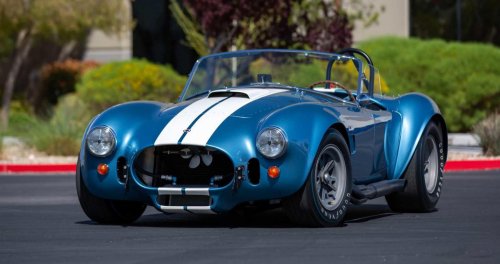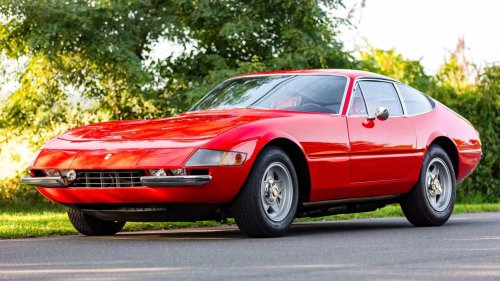
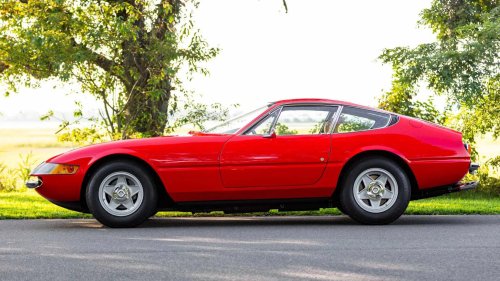
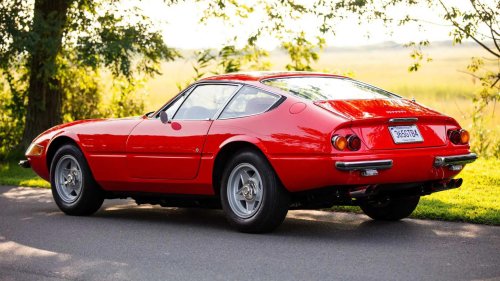
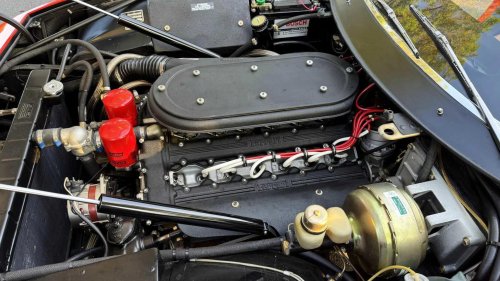
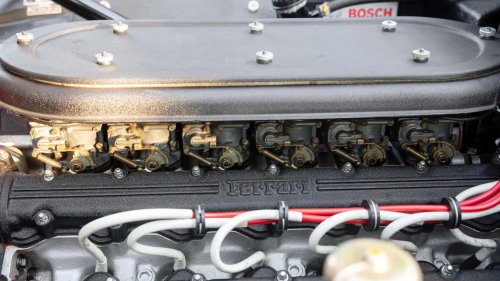
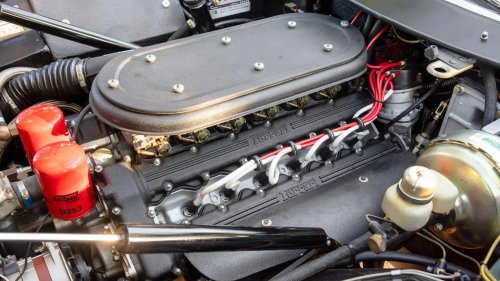
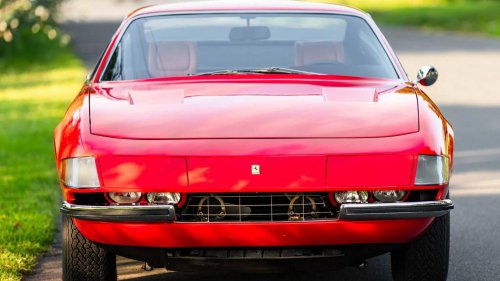
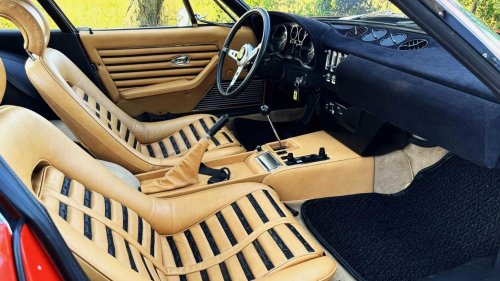
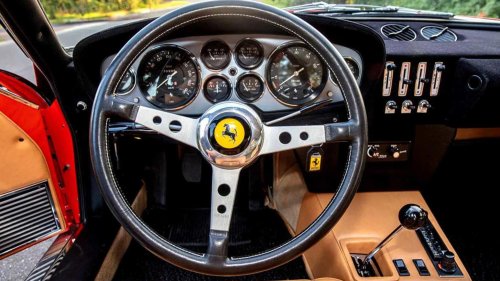
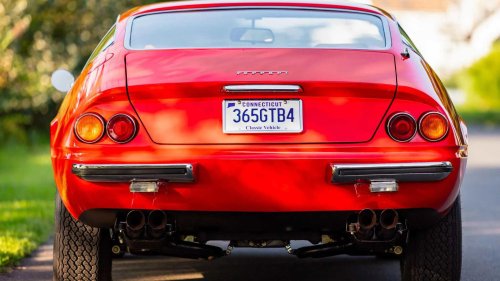


















In the 1960s, the automotive industry witnessed significant advancements in vehicle performance, leading to the development of Sports Cars that set new benchmarks for speed. Manufacturers focused on enhancing engine power, aerodynamics, and overall design to achieve higher speeds.This era marked a pivotal point in automotive history, as the quest for the title of the world’s fastest car intensified among leading carmakers. The innovations of the 1960s laid the foundation for the high-performance vehicles we see today.High-performance cars from 1960s, like the Shelby Cobra 427 Super Snake, Aston Martin DB4 GT Zagato and the Lamborghini Miura are some of the fastest cars of the era. However, naturally, the fastest car from the 1960s had to be a Ferrari. At 174 MPH, The Ferrari 365 Daytona Was The Fastest Car In The '60s Bring A TrailerSome believe that the Lamborghini Miura P400 to be the fastest, but The Motor magazine in the UK tested the P440; It maxed out at 171 mph. Independent test results of a 1968 Ferrari 365 GTB/4 Daytona conducted by Autocar UK revealed its top speed of 174 mph. That makes the Ferrari Daytona the fastest car of the 1960s with the highest top speed.Bring A TrailerAutocar's test report reveals that the Daytona coupe could accelerate from 0-60 mph in 5.4 seconds, and run the standing quarter mile in 13.7 seconds at 104 mph. The Ferrari 365 GTB/4 Daytona achieved this feat by being a fairly lightweight sports car, weighing around 2,645 lbs (dry). The Daytona uses 215/70 VR15 section tires with a 56.7 inches front and 56.1 inches rear track that helps put power onto the ground really well.Bring A TrailerThe dry-sump lubrication system of the V12 engine allowed it to be positioned lower in the oval-tube chassis, and a rear-mounted five-speed transaxle helped achieve a 50/50 weight distribution. The tubular steel frame chassis helped make the Daytona remain lightweight, which was reinforced with sheet steel. The body panels were made of steel, while the doors and hood were built from aluminum. 1968-1973 Ferrari 365 GTB/4 Daytona Performance The Ferrari Daytona Hadd A Transaxle Dog-Leg Manual Bring A TrailerThe 1968 Ferrari 365 GTB/4 was titled the "Daytona" in honor of the sweeping 1, 2, 3 finish by Ferrari at Daytona in 1967. The prototype was built by Pininfarina in Turin, production models were manufactured by Ferrari’s subsidiary, Scaglietti, in Modena. Initially equipped with a full-width Plexiglas panel covering the headlamps; later models featured pop-up headlights to comply with U.S. regulations.Bring A TrailerThe Daytona uses the Tipo 251 4.4-liter V12 engine with a 60-degree V bank. The DOHC engine used 2 valves per cylinder, but interestingly, featured six Weber 40 DCN/20 carburetors. Running a 8.8:1 compression ratio, the Tipo 125 V12 made 352 hp at 7,500 rpm and 317 lb-ft at 5,500 rpm. Using a dry-sump lubrication system allowed it to be mounted low in the chassis and improved handling dynamics.To dial in the handling of the Daytona, Ferrari used double wishbones suspension with coil springs over telescopic shock absorbers, and anti-roll bars for the front and rear. The steering system, however, is a worm-and-roller design with no power steering to maintain a pure sports car feel. Stopping power in the Daytona was accredited to ventilated discs on all four wheels.Bring A TrailerThe engine in the Daytona is mated to a dog-leg 5-speed manual transmission. The gearbox in the 365 GTB/4 is a transaxle, meaning while the engine is mounted in the front, the transmission is integrated into the rear axle, which results in a perfect 50/50 weight distribution. Engine Specs Dog Leg Manual Transmission Explained In a conventional manual gearbox, first gear is engaged by moving the shifter to the left and up. However, in a dog-leg gearbox, first gear is positioned to the left and down. This design, commonly found in race cars with manual transmissions, optimizes gear changes by making the shift from second to third—used frequently on track—smoother and quicker, as first gear is rarely needed during racing. Today, A Ferrari Daytona Is Worth Over $1 Million Bring A TrailerThe Ferrari 365 Daytona was in production from 1968 to 1973. At its 1968 introduction, it was Ferrari’s most expensive production model, while also the fastest. According to Bonhams Auctions, a mere 1,300 Berlinetta (coupe) models were built, and 122 Spyder convertibles were manufactured before production ceased in 1973. Interestingly, just 530 examples of the Daytona left the Maranello factory with the iconic plexiglass nose, making those models even more desirable and collectible.Bring A TrailerA Ferrari Daytona is extremely valuable today and, depending on the condition, some are worth generally over $1 million. According to Hagerty, a 174-mph, V12-powered, Ferrari Daytona Berlinetta in any condition is worth a minimum of around $840,000.Bring A TrailerOn average, a Ferrari 365 GTB/4 Daytona is worth $925,000 in good condition. A well-maintained, Daytona coupe in excellent condition is valued at $1,150,000. While a pristine example that is fit for display at Concours is worth $1.5 million. Highlights Of The Ferrari 365 GTB/4 Daytona In Terms Of Production And Values A total of 1,422 examples of the Ferrari 365 Daytona were manufactured. 1,300 units were the GTB/4 hard top. 122 units of the GTS/4 Spyder were manufactured. Only 530 exampled featured the iconic plexiglass nose. The hard top GTB/4 Daytona is worth $925,000 on average. The convertible GTS/4 Daytona is worth $1,900,000 on average. The Ferrari 365 GTS/4 Daytona Spyder convertibles are worth astronomically even more. While a Berlinetta is worth $840,000 on any given day, Hagerty values a Daytona Spyder in fair condition at $1,700,000, which is more than a Concours condition hard top Daytona.Bring A TrailerGenerally, expect a 365 GTS/4 Daytona Spyder to be worth $1,900,000 on average in good condition. But excellent examples are valued at $2,200,000. For a drop-top 365 GTS/4 Daytona in Concours condition, expect it to be worth $2,650,000. Ferrari 365 GTB/4 Current Values