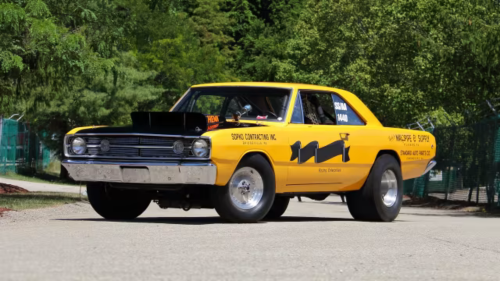
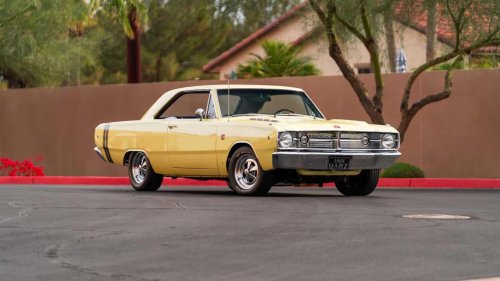
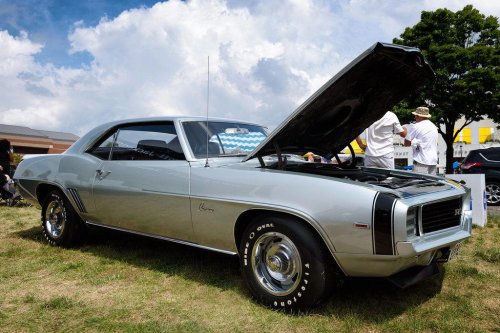
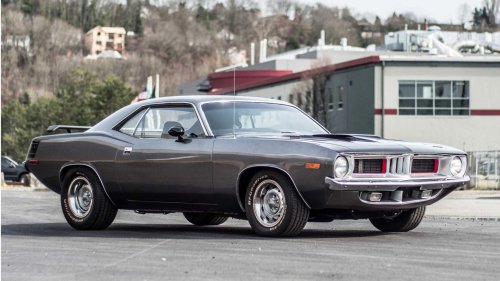
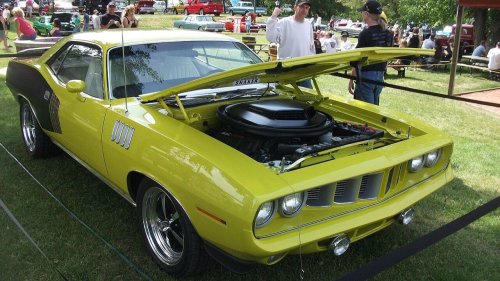
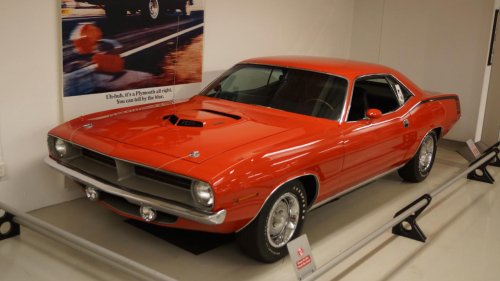
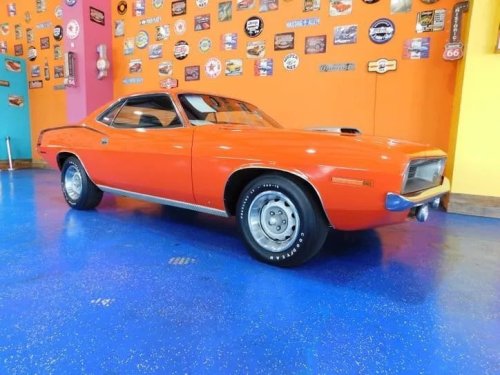
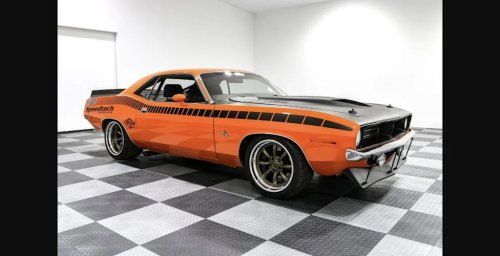
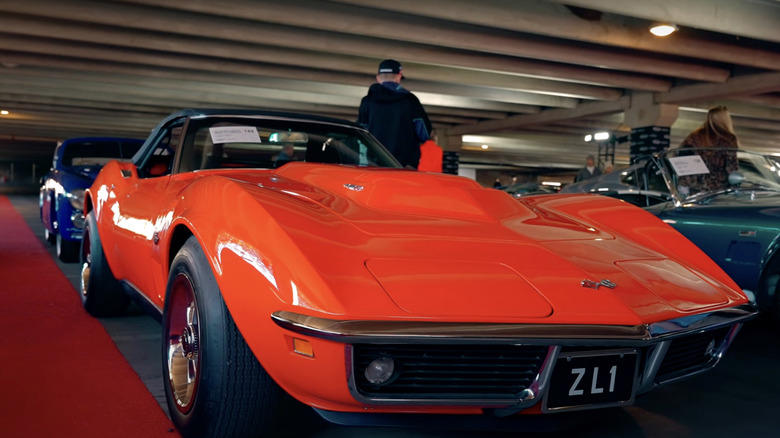
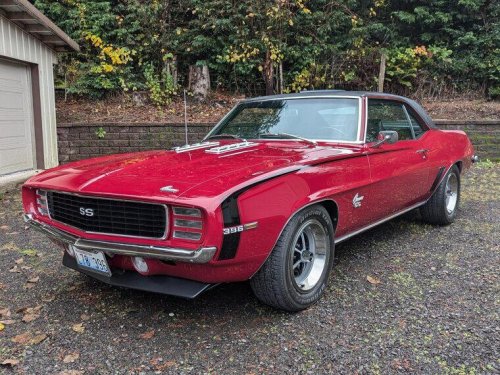
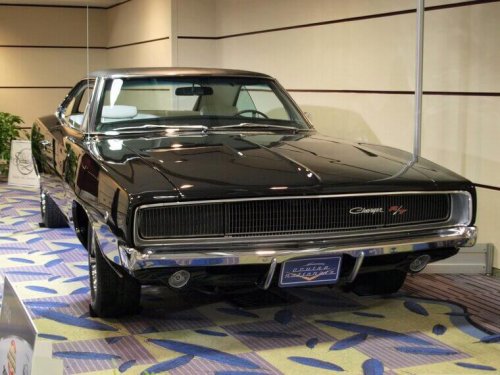
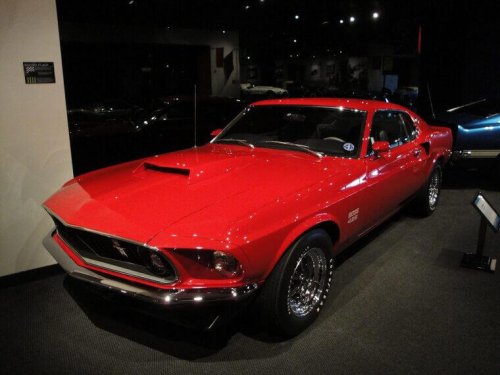
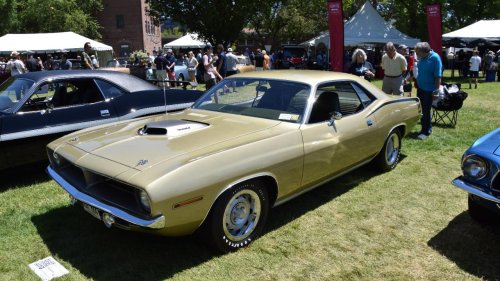
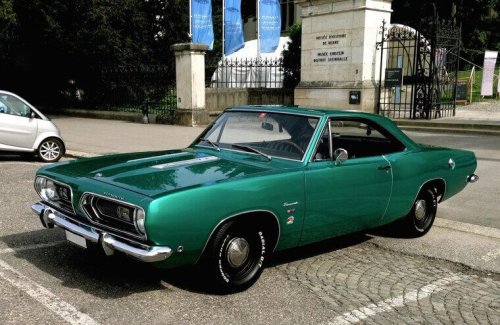
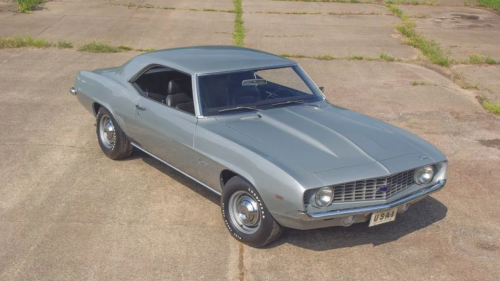
Some muscle cars were built to cruise; others were built to turn heads. But, every now and then, one shows up that was built for something much more serious: winning. By the late 1960s, Detroit’s horsepower war had moved off the boulevard and onto the drag strip. Suddenly, it wasn’t just about raw displacement or badge prestige. No, the competition had moved onto who could get down the quarter-mile the fastest and do it in a car with a VIN.That shift sparked a factory arms race unlike anything we’d seen before. The big guns like GM, Ford, and Chrysler all brought out their heavy hitters. From aluminum big-block Camaros to fiberglass-bodied Corvettes, the battlefield was stacked.But among all those legends, one machine quietly emerged as the fastest production muscle car of the decade. It wasn't the loudest or the one turning the most heads. It didn’t need stripes or headlines to prove itself – it had the numbers to back it up. The Fastest 1960s Muscle Car Over The Quarter Mile: Meet The 1968 HEMI Barracuda B029 via MecumBy 1968, the muscle car wars had officially spilled onto the drag strip. Detroit wasn’t just building fast cars anymore. No, the city had its sights set on building weapons, tailor-made for one purpose: beating the guy in the next lane. And few cars were more unapologetically built for that job than the 1968 Plymouth HEMI Barracuda B029.At first glance, the 1968 Barracuda started life as a pretty humble machine. As the second generation, produced from 1967 to 1969, it wasn’t known to be the flashiest muscle car on the street. The 1968 base-model Barracuda sported a 273-cubic-inch (4.5L) V8 engine that offered 235 hp and 280 lb-ft of torque. The standard 1968 Barracuda could accelerate from 0 to 60 mph in 9.2 seconds and barreled down a quarter-mile in about 16.6 seconds.via Mecum However, Chrysler knew the Barracuda had all the potential to become an absolutely lethal machine. And, thus, always eager to flex its Mopar muscle, Chrysler saw an opportunity to dominate NHRA Super Stock classes with a factory-prepped drag package Barracuda. And that’s where the B029 comes into the story.According to Dodge Garage, under NHRA rules, manufacturers had to produce at least 50 units to qualify for Super Stock. Chrysler hit that mark with the B029 program, teaming up with Hurst to transform the standard Barracuda into a purpose-built monster.via Mecum The B029 variant featured an aluminum hood and front fenders, carried no back seat, and offered no sound deadening. To lighten the chassis even more, even the side windows were replaced with lightweight plexiglass. Thus, the B029 models were never designed to be showroom cruisers. They were built to be factory drag cars with VINs.The B029 Barracuda variant wasn’t about comfort or style. So, no, it certainly wasn’t built for style points or Sunday cruising. It was built for one thing and one thing only: winning. It was a full-blown statement by Chrysler, signaling to the rest of the world that they were ready to play ball and were looking to dominate NHRA Super Stock classes by any means necessary. Chrysler wanted to send a message, and the B029 was that message, loud and clear. What Made The B029 HEMI Barracuda So Quick via MecumPop the hood, and it’s clear the 1968 HEMI Barracuda B029 wasn’t built for show. So, what's at the heart of this record-breaking machine? Well, that'd be none other than the legendary 426 HEMI engine. This race engine was initially listed at a factory rating of 425 horsepower. However, real-world dyno and drag-strip reports show that the output was actually capable of pushing well over 500 hp in reality.In NHRA-sanctioned runs, B029 cars were laying down 10.2-10.8 second quarter-mile times right out of the gate in the late '60s, making them the fastest production muscle cars of the decade. According to Dodge Garage, the fastest official recorded quarter-mile time of a '68 Plymouth HEMI Barracuda B029 was 10.22 seconds at 134.32 mph.via Mecum 1968 HEMI Barracuda B029 Specs So, what exactly gave the B029 models this edge? Well, the advantage came from the sheer weight that was shed during the restructuring of the base Barracuda. You see, the weight shed from the original Barracuda during the creation of the B029 is staggering. The interior was stripped to its bare bones, rear seats were chopped out, and even the carpet and sound deadening were sacrificed on the altar of speed.According to Mopar Insiders, the lightweight build brought the curb weight of the B029 down to around 3,100 lbs, which was about 300 lbs less than a Road Runner with the same drivetrain.An additional factor was the ability to tune these machines. Per Mopar Insiders, one killer example is Bob "Bullet" Reed's legendary '68 Barracuda "The Kid", which ran a Super Stock-tuned suspension, Dana 60 rear axle with 4.88 gears, pinion snubber, and high-stiffness leaf springs that allowed the B029 to launch cleanly off the line.Thus, the B029's superior tuning and lightweight chassis gave it the edge to outrun the competition. At NHRA nationals and Super Stock events coast-to-coast, B029 cars, especially under top names like Sox & Martin, dominated the SS/A class, handing the Dart L023, and even COPO Camaros their worst days on the strip. HEMI Barracuda Vs. HEMI Dart: How The B029 Beat Its Dodge Twin via MecumOn paper, the 1968 Plymouth B029 and the 1968 Dodge Dart L023 are essentially twins, nearly identical in design. According to Dodge Garage, they both sport the same A-body platform, the same 426 Race HEMI V8 engine, the same Dana 60 rear axle with 4.88 gearing, and they were both built under the NHRA Super Stock rule requiring a minimum of 50 units per model code.The 1968 Dodge Dart L023 is a legend in its own right. With approximately 80 built, the L023 was campaigned by racers like Dick Landy and Herb McCandless in the SS/A class. According to Dodge Garage, the fastest officially recorded quarter‑mile time for an L023 is 10.33 seconds at approximately 131 mph. However, the majority of period testing typically clocked in the low-10s range around 130 mph, with documented NHRA competition passes around 10.4–10.5 seconds.via Mecum HEMI Barracuda B029 vs. HEMI Dart L023 Specs So how did the Barracuda edge out its Dodge twin? Well, the answer is quite simple: it all comes down to the nitty-gritty differences in weight and packaging. For one, the B029's body layout allowed for better weight distribution. Plymouth also stripped the B029 down to its bare bones more than the Dodge did for the L023 Dart. Thus, the B029 ended up weighing roughly 100 lbs lighter than the L023.This subtle edge helped push the B029 into lower-10s territory more consistently. The B029's true factory runs, like its 10.22-second run at 134 mph, speak the loudest. So, despite the same bones, the Barracuda's chassis and layout gave it that final edge on the strip. Other Quarter-Mile Beasts From The '60s via MecumThe B029 may have been the quickest of its kind, but it wasn’t alone in the quarter-mile arms race of the 1960s. 1969 Camaro ZL1 The 1969 Chevrolet Camaro ZL1 was GM’s secret weapon. It packed an all-aluminum 427ci V8 rated at a factory-rated 430 hp. With tuning and slicks, ZL1 Camaros were clocking 11.6-second passes at 122 mph, making them the fastest street-legal muscle cars Chevy ever built. Corvette C2 427 via Mecum Then there’s the 1966–67 Corvette C2 427, a fiberglass-bodied bullet with tri-power carb setups and factory ratings as high as 435 hp. Despite its reputation as a sports car, not a drag racer, it still managed quarter-mile times in the low 13s. The C2 427 could routinely run 13.3–13.6 seconds at 106–112 mph, depending on gearing and tires.While these two didn’t come with plexiglass windows or stripped-out interiors, they still proved that when it came to straight-line speed, Detroit had no shortage of firepower.via Mecim In the golden age of Detroit horsepower, there was no shortage of legends lining up at the lights. While every gearhead has their favorite, one thing is for sure: the '60s gave us plenty of quarter-mile bruisers. But none hit harder out of the box than the 1968 HEMI Barracuda B029. It didn't just compete. No, this legend rewrote the rulebook on what a factory muscle car could do altogether.The B029 was built to race, stripped to win, and tuned for total domination in the quarter-mile. So, no, the B029 was never about flash or flair. This muscle car was all about making a statement, one pass at a time. And more than 50 years later, that statement still echoes down every drag strip where muscle car history lives on.Sources: Corvette Forum, Dodge Garage, Mopar Insiders, NHRA.