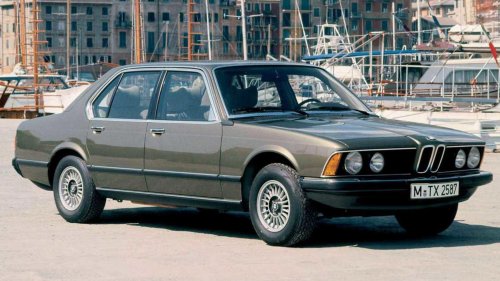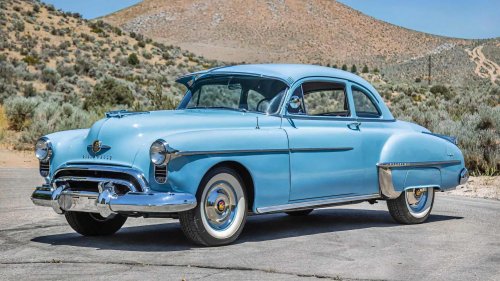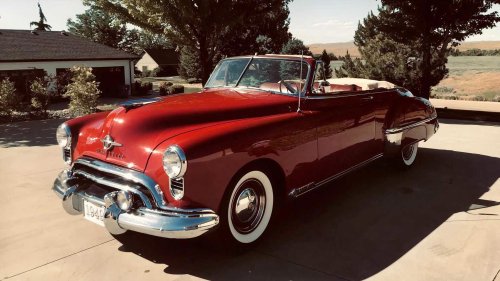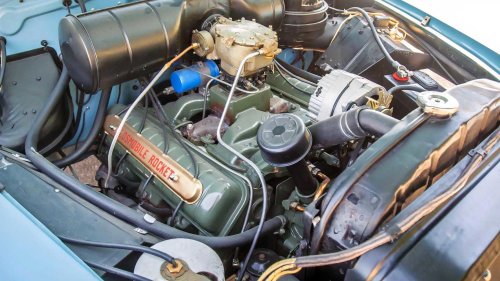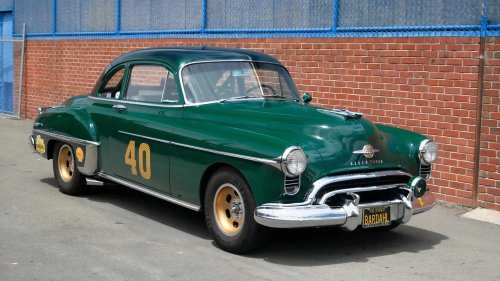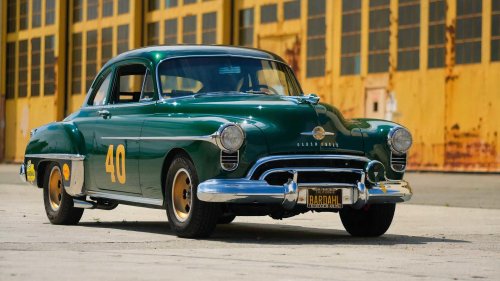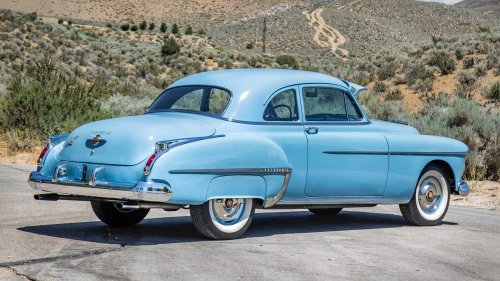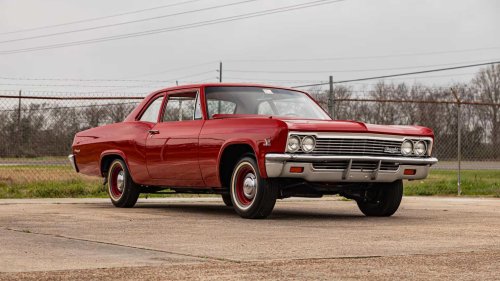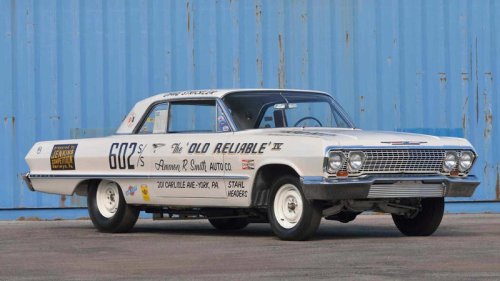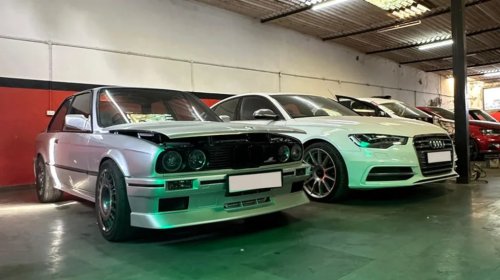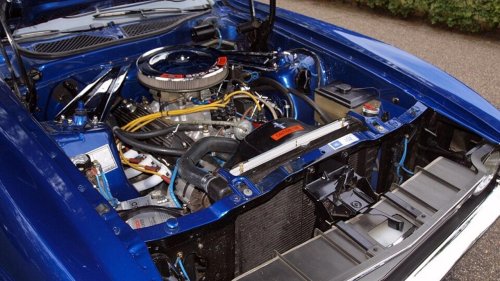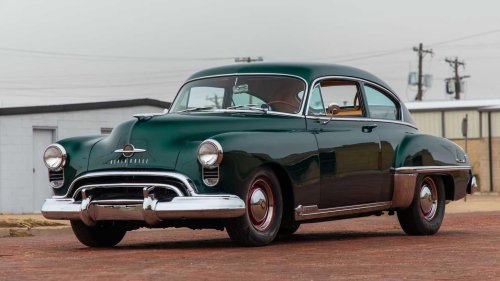
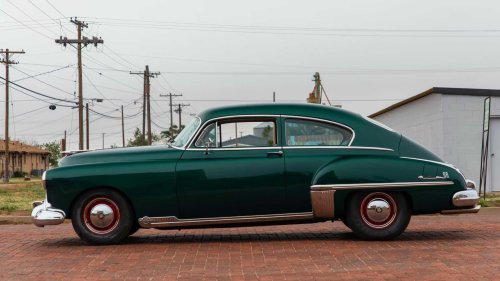
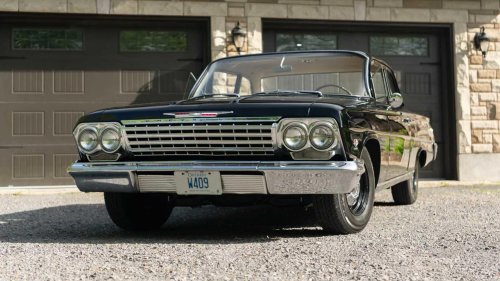
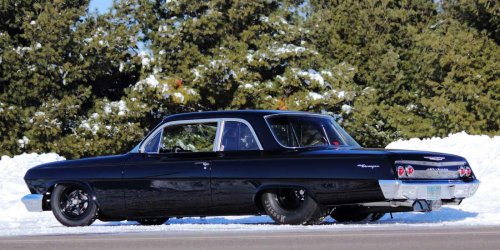
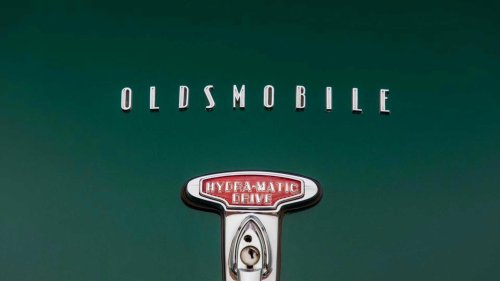
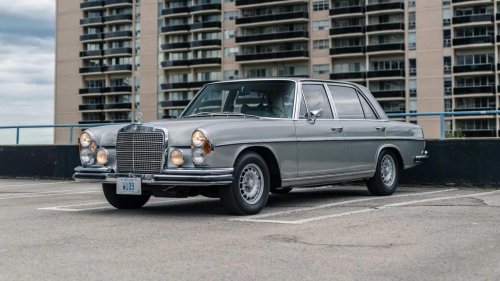



















While many automotive enthusiasts like to advertise their performance credentials, there are others who prefer to fly under the radar. Instead of fitting cars with fancy wings, carbon fiber, and other other mods that would suggest power or handling prowess, they let the driving do the talking. In fact, the best sleeper cars may not even look like performance vehicles at all. That's the beauty of a sleeper – the ability to deceive.But where does the term sleeper car come from, and which vehicle can be considered the first? While it's difficult to say for certain what car served as the genesis of the sleeper concept, we have found a few early examples that embody the ethos. Let's first take a look at the notion of a sleeper itself. What Makes A Sleeper 'A Sleeper'? The reality is that the sleeper car is a sliding concept, as it's one that's bent upon defying expectations. If you're an enthusiast who's familiar with these types of machines, performances that would otherwise impress the public don't really come as a surprise. For the purposes of our search, though, we'll consider the key feature of a sleeper to be its unassuming exterior, as they're usually everyday cars that don't attract attention.Beneath the surface, however, a sleeper car will usually be equipped with a high-performance engine and upgraded suspension that makes it far faster or more capable than it appears. The obvious appeal, then, is the ability to surprise the competition with unexpected displays of speed and handling. As performance and its visual associations are relative, a sleeper car can take all sorts of shapes, and enthusiast-built examples make for a different can of worms altogether. The 1949 Oldsmobile 88 Is The First Sleeper Car Many Also Consider The 88 To Be The First True Muscle Car Mecum1949 Oldsmobile 88 Performance SpecsOldsmobile made waves with the introduction of its 88 Coupe in 1949, as the car was one of the earliest examples of the small body/big engine pairing that later made the most powerful muscle cars so successful. The middle child of the Oldsmobile lineup, the 88 Coupe was more refined than the base 76, but not as luxurious as the larger and heavier 98 – it hit the ideal sweet spot. In fact, it's for this reason that the Oldsmobile is generally considered to be one of the first true American muscle cars. Beneath the curvaceous bodywork, Oldsmobile fitted the 88 with its Rocket 303-cubic-inch V8. Changing The Oldsmobile Image Mecum While the 135-horsepower output isn't much by today's standards, it was enough to make the Oldsmobile one of the fastest automobiles in America during the 1950s. On the street and on the track, the 88 proved itself as a real threat, winning five of eight races in its first NASCAR season for a series championship and securing the Manufacturers' Championship for the next two consecutive years. When the 88 first came onto the scene, it took the public by surprise (Oldsmobile was known for being somewhat conservative) but it established that the automaker was a true competitor. Oldsmobile 88 Sleeper Qualities 303-cubic-inch Rocket V8 Unassuming coupe body style Unexpected Oldsmobile performance The 1962 Chevrolet Biscayne 409 Offered Modern Sleeper Performance The Lowest Rung On The Chevy LadderBring a Trailer1962 Chevrolet Biscayne 409 Performance SpecsChevrolet introduced the Biscayne in 1958 as the least expensive full-size car in its lineup, and the model was intended to offer a simple, affordable option for buyers who prioritized value over luxury. The no-frills design featured a basic interior and minimal trim, but these concessions allowed it to be positioned below more premium offerings like the Chevy Bel Air and the Chevy Impala. Not content with its economy car efforts, though, Chevrolet released an even more stripped-back version known as the Biscayne Fleetmaster. Along with using lower-grade upholstery and painted parts, it did away with everyday conveniences like armrests and cigarette lighters. A Wolf In Sheep's Clothing 1962 Chevrolet Biscayne Mecum 2 Cropped In spite of the Biscayne's budget price point, Chevrolet offered the model with the same choices of engines as the other full-size cars in the lineup. Most were sold with modest inline-sixes, but some examples received the legendary 409 of the Impala SS, which made for quite the pairing. Barren of its trim and creature comforts, the affordable Biscayne was also the lightest option among Chevy's full-size cars; when powered by a 409-horsepower and 420 lb-ft V8, it made for instant credibility on the street and the strip. This unexpected pairing of a budget sedan with a high-performance powerplant turned the Biscayne into classic sleeper, surprising anyone who expected a plain, economical with its raw power and speed. Chevrolet Biscayne Sleeper Qualities Minimal exterior trim or adornment Budget pricing and typically modest performance Optional 409 V8 engine of Impala SS So Where Does The Sleeper Come From? Mecum The sleeper car comes from the term 'sleeper agent' used to describe operatives placed in enemy territory during the Second World War. To the untrained eye, they'd appear just like any other citizen; once activated, however, they'd take action and reveal their specialized skills (think Jason Bourne). The Oxford English Dictionary estimates that the first use of the term 'sleeper agent' was around the 1940s.The British came up with their own analog – the Q car – and it was also based on military parlance. During the First World War, British "Q-ships" were battleships that looked like ordinary merchant or trade vessels on the outside. Of course, beneath their unassuming exterior, they were actually housing heavy artillery and specialized crews.One of the earliest uses of the term comes in a Motor Sport review of the Lotus Cortina published in 1963: "modifications carried out by Lotus have turned it into a 'Q' car par excellence." 30 years later, Hot Rod's 1993"Anatomy of a Sleeper" sums up the concept nicely."Also called Q-ships, sleepers are boulevard beasts that ignore the axiom 'form follows function': They have no form (they don't look fast) but are loaded to the gills with function (they are fast). The innocence of the sleeper lowers an opponent's inhibitions enough to be suckered into a race that, nine times out ten, he has no chance of winning."In our estimation, cars like the Chevrolet Biscayne are the purest expressions of the sleeper ethos, as not even the manufacturer intended for them to boast that kind of performance under the hood. Their unassuming looks and impressive power could truly surprise, making the cheap car/big engine option an early example of today's sleeper car concept. Though vehicles like the Oldsmobile 88 predate the Biscayne, their proven race pedigree makes them less surprising in their performance. On the home-built side of things, moonshine runners make great analogs – outwardly nondescript but secretly potent. Honorable Mention: 1968 Mercedes-Benz 300SEL 6.3 The First German Muscle Car Bring a TrailerWhen Mercedes-Benz started production of the W109 in 1965, the model was available with an inline-six ranging from 2.5 to 3.0 liters in displacement. However, an engineer by the name of Erich Waxenberger felt that the four-door sedan had the potential to be more. Accordingly, he ditched the 300's factory 168-horsepower inline-six and replaced it with a 6.3-liter V8 from the larger Grosser 600 limousine. The experiment supposedly impressed test driver Rudolf Uhlenhaut so thoroughly that he immediately gave it the go-ahead for production. An Early Predecessor To AMG Outwardly, the classic Mercedes-Benz sedan looked like any other 300, and at 3,900 lbs, it weighed as much, too. Under the hood, however, the 247-horsepower V8 engine was a different beast. Even with luxurious standard features like pneumatic suspension, vented disc brakes, power windows, and power steering, the hefty Mercedes could sprint to 60 mph in just 6.3 seconds and hit 142 mph going flat-out. A true sleeper, the 300SEL took Erich Waxenberger to a win at a Macao six-hour race in 1969. His effort then inspired two former Merecdes-Benz engineers – Aufrecht and Melcher – to campaign an even more powerful 6.8-liter example under their newly-created tuning house, AMG. Mercedes-Benz 300SEL 6.3 Sleeper Qualities Standard boxy outward appearance Powerful 6.3-liter V8 engine Adopted performance reputation