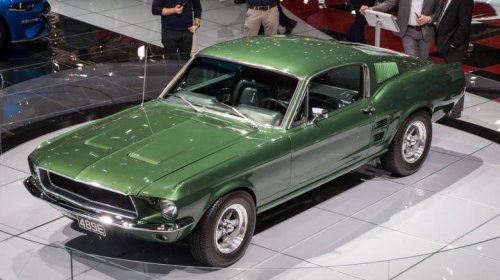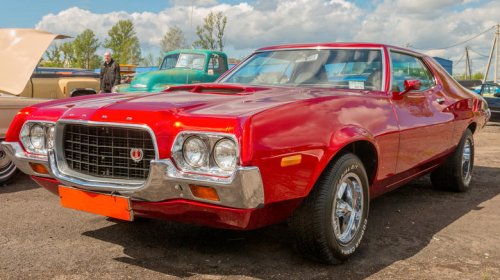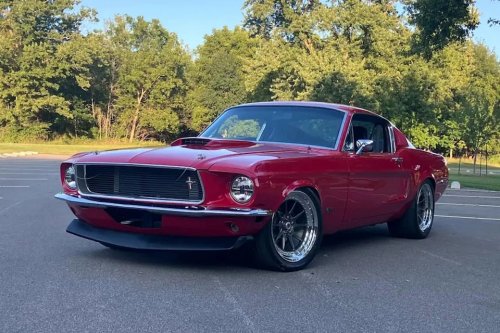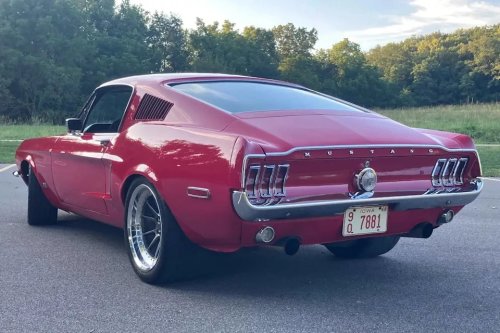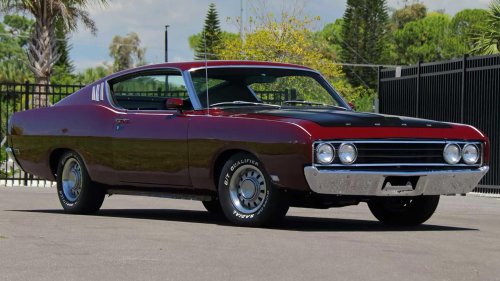
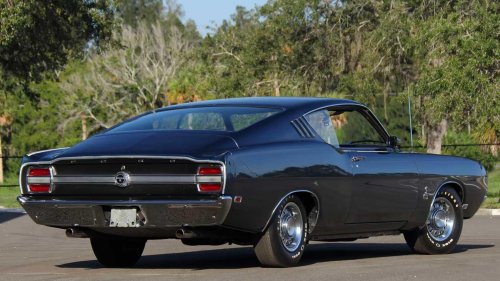
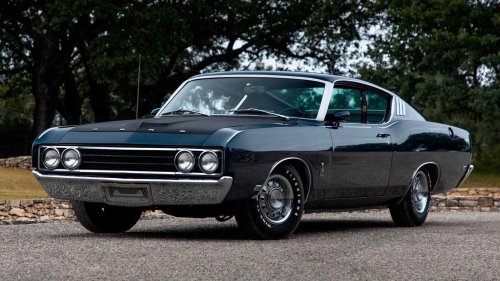
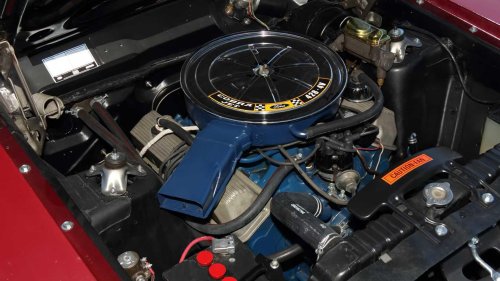
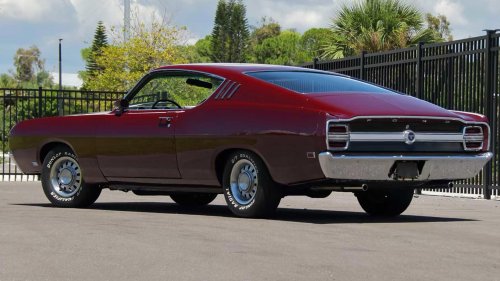
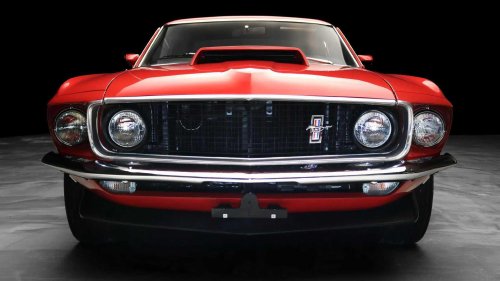



















The 1969–70 Mustang Boss 429 stands tall among Ford’s most iconic and fast muscle cars. Built as a homologation special for NASCAR, the Boss 429 wasn’t just another high-powered street car. Under its bulging hood sat a massive 429 cubic inch V8 engine, originally designed for racing. Detuned for street use, the Boss 429 still made a claimed 375 hp. Each car came hand-assembled by Kar Kraft, a specialty shop contracted by Ford. The total production across both years added up to only 1,358 units, making it one of the rarest Ford Mustangs ever made.Its rarity and mechanical pedigree have made it one of the most collectible Blue Oval cars of the era. But beyond the spec sheet, the Boss 429 reached modern cultural relevance as the menacing machine of choice for John Wick.Most enthusiasts would be hard-pressed to name a ‘60s Ford muscle car rarer than the Boss 429. After all, how often does a factory-built, big-block Mustang get overshadowed? But one Ford did slip through the cracks, built in even fewer numbers, with a singular mission tied not to showroom sales but to claim victory around NASCAR’s fastest ovals.It big-block muscle car wasn’t a Mustang, didn’t wear flashy stripes, or sport a famous nameplate. But what it lacked in attention, it made up for in pure aerodynamic purpose. The 1969 Ford Torino Talladega Is Rarer Than The Mustang Boss 429 Via: Mecum Auctions The Ford Torino Talladega may not enjoy the spotlight like the Boss 429, but when it comes to rarity, it clearly wins. Ford built only 750 units of the Torino Talladega in 1969, as reported by Mecum. In comparison, the Mustang Boss 429 saw a total production of 1,358 units across 1969 and 1970. Even if you consider only the 859 Boss 429s made in 1969, the Talladega still beats it in terms of scarcity.Ford didn’t build the Talladega to win over showroom shoppers. Instead, it built the car to compete in NASCAR, where aerodynamics and engine durability defined the winners. NASCAR rules at the time required manufacturers to produce at least 500 road-legal examples of a race car in order to qualify for competition. Ford met the requirement and went beyond it slightly, creating 750 Talladegas strictly for homologation.Via: Mecum AuctionsThe production car came with a 7.0-liter (428 cubic inch) Cobra Jet V8, but its aerodynamic design defined its distinct identity. Ford reshaped body in several key areas to reduce drag. On the track, the Talladega paid off when Ford secured the 1969 NASCAR Manufacturer’s Championship, with drivers like David Pearson winning races in the modified version of the car.Collectors today recognize the Talladega as a significant piece of Ford’s motorsports history. Its limited production, single-year availability, and clear racing intent give it a special place in muscle car history. The Talladega may not carry the Boss 429’s fame, but it offers more exclusivity and a deeper connection to Ford’s NASCAR legacy. The Torino Talladega Had An Aerodynamic Advantage That Beat Dodge Via: Mecum Ford engineered the Torino Talladega with a singular purpose: to win on the superspeedways. At a time when Dodge had already responded to NASCAR's growing focus on high-speed stability with the Charger 500 and later the Daytona. Ford had to respond with real aerodynamic gains, which resulted in the Talladega.The front fascia was completely reworked from the standard Torino. The Talladega used a flush-mounted grille and a smoothed bumper that actually sat upside down to reduce drag. This sleeker front end eliminated turbulent air gaps and helped the car slice through the wind more efficiently at racing speeds. Engineers also extended the nose by about five inches, creating a more tapered profile that increased top-speed stability.To further drop the car’s ride height, Ford rolled and reshaped the rocker panels, allowing teams to legally lower the body without altering suspension geometry. This gave the Talladega a lower center of gravity while keeping it within NASCAR’s ride height regulations.These enhancements worked on the track, as the Talladega routinely outpaced the Charger 500. While Dodge responded with the Daytona’s radical wing and nosecone later that season, the Talladega had already helped Ford secure critical wins early in the year. The Talladega Was A NASCAR Assassin First Via: Mecum Auctions While the Mustang Boss 429 became a pop culture icon through the John Wick films, the Torino Talladega served a more focused mission. Under the hood sat the 7.0-liter (428 cubic inch) Cobra Jet V8, rated at 335 hp and 440 lb-ft of torque. The engine paired with a C6 3-speed automatic, and all production models used a 3.25:1 rear axle with a 9-inch Ford differential.The Talladega weighed about 3,700 lbs and offered performance that translated directly from racetrack development. Ford’s dominance that year in NASCAR was no accident. It came from engineering choices rooted in aerodynamics, powertrain reliability, and rules-savvy design. Unlike the Boss 429, which was a muscle car with racing roots, the Talladega was a race car made barely street-legal. Mustang Boss 429 Vs Torino Talladega: Used Values Compared Via: Mecum Auctions Despite its rarity and motorsport pedigree, the 1969 Torino Talladega remains a relatively affordable entry into classic Ford performance. According to Hagerty’s valuation tool, a 1969 Ford Talladega in “good” condition averages around $68,300. In contrast, a 1969 Mustang Boss 429 in similar condition carries an average value of $212,000. That’s nearly seven times more, despite the fact that Ford built 1,358 Boss 429s compared to just 750 Talladegas.Bring A Trailer The primary reason is that the Boss 429 benefits from widespread name recognition, its Mustang badge, and Hollywood exposure. Its massive 7.0-liter engine and street-focused design appeal to a broad base of muscle car collectors. On the other hand, the Talladega’s NASCAR roots, lack of visual flash, and one-year-only run have kept it in a more niche segment of the market.Well-preserved Boss 429s regularly cross six-figure thresholds at major auctions. While Classic.com listings reveal Talladegas often sell in the $40,000 to $60,000 range, depending on originality and condition. Just 750 were ever made, and the number of surviving, unrestored examples continues to drop. Barrett Jackson auctioned a Talladega Prototype in 2014 for $132,000, making it the most valuable Ford Torino built in the 60s.For fans who value racing heritage over street cred, the Talladega offers a compelling reminder that sometimes the real legends are the ones that never sought the spotlight.