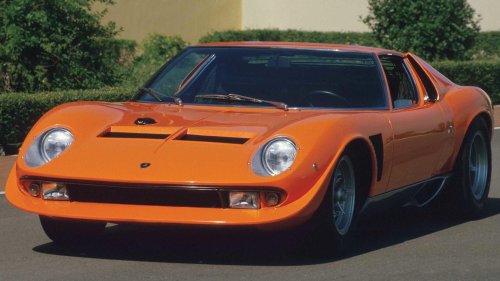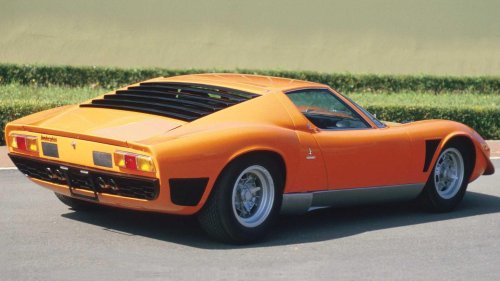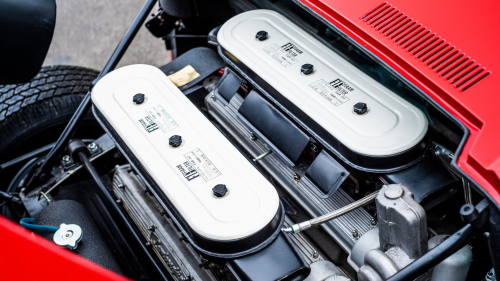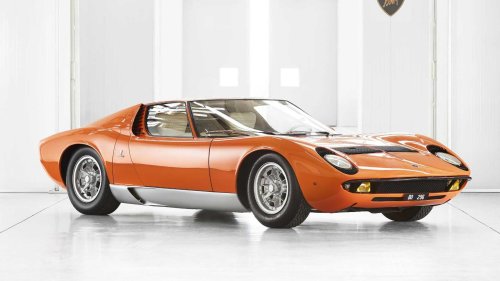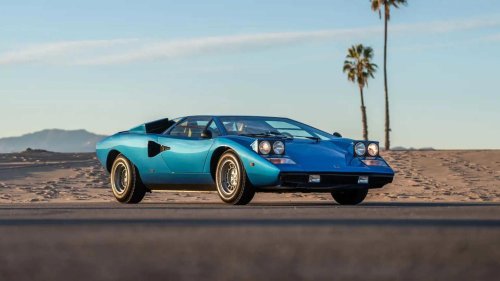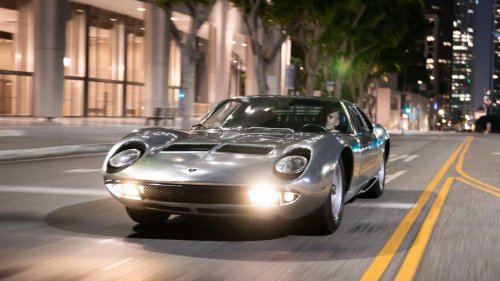
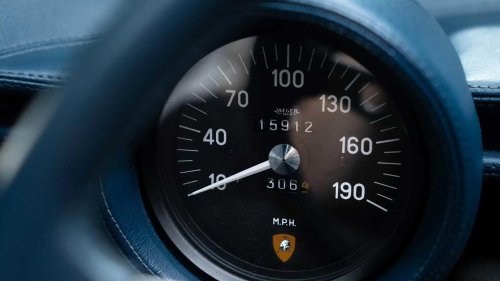
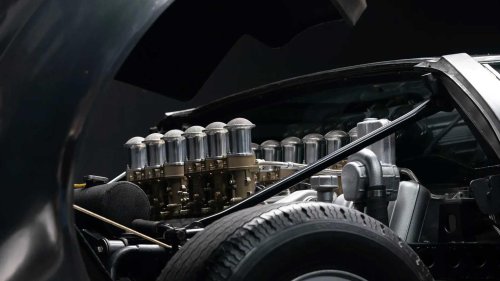
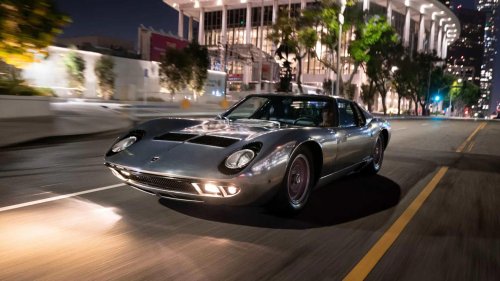
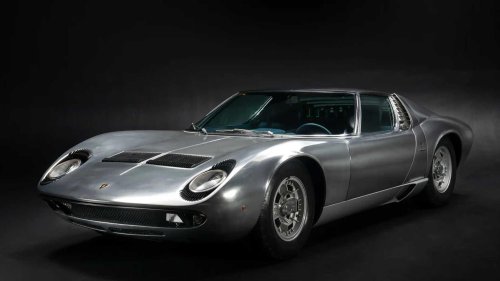
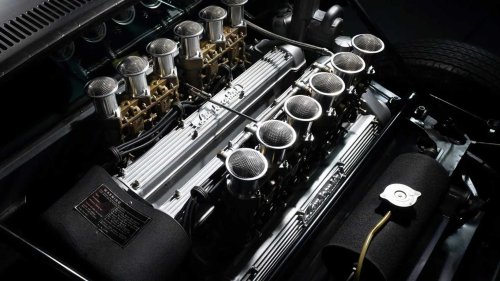






















Back in the 1960s, bragging rights were measured by top speed. Everyone wanted the crown, but numbers like 170 mph sounded like science fiction on public roads, and the battle to be the fastest car of the 1960s became the ultimate flex.Out of that horsepower war came a supercar that not only outran its rivals but held the crown for more than a decade. Today, it’s worth millions not just for speed, but for what it represents in car culture. Meet The Lamborghini Miura That Redefined Speed In The ’60s Fastest Car In 60s, Worth Today - Lamborghini Miura P400S - Front Three Quarter 2The car that stole the spotlight in the horsepower wars was the Lamborghini Miura P400S. When it hit the scene in 1968, it wasn’t just another pretty wedge-shaped automobile from Italy. It had the numbers to back up its looks, and it went out to invent what we now call the first ever "Supercar".Lamborghini officially claimed a top speed of 173 mph and a 0 to 62 mph sprint in 6.7 seconds. That was already outrageous for the late ’60s. But when the journalists got their hands on it, the story got even better. In June 1967, The Motor magazine tested the Miura and clocked 171 mph. Its key rival, the Ferrari 365 GTB/4 Daytona, broke the record in 1968, topping out at 174 mph, when tested by Autocar.Via: RM Sotheby's In 1970, Sport Auto in Germany pushed it harder on track and recorded a staggering 179.3 mph. That made it the fastest car of the 1960s, and more importantly, it showed the world that Lamborghini wasn’t bluffing. The P400S wore the crown comfortably until 1982, when the Lamborghini Countach LP500 S finally managed 182 mph. For almost fifteen years, no production car could beat it.Via: RM Sotheby's The Miura’s mid-mounted 3.9-liter V12 made 370 hp and 286 lb-ft, sending power through a rear-drive layout in a body weighing about 2,850 pounds. A recipe followed by every modern supercar today, but back then, it was revolutionary. That’s why when collectors talk about the fastest car of the 1960s, they don’t just mention numbers.They talk about the Miura as the car that defined the supercar, setting benchmarks in speed and design that still hold weight when you look at classic Lamborghini value in 2025. What The Fastest Car Of The ’60s Is Worth In 2025 Via: RM Sotheby's Half a century after it set records, the Lamborghini Miura P400S has shifted from speed icon to blue-chip collectible. The numbers today are just as wild as its top speed was back in 1970. According to Classic.com, the average Lamborghini Miura P400S value in 2025 sits around $1.6 million. At the top of the market, the highest recorded sale has touched $2.5 million. For a car that originally cost about $20,000 when new, that kind of appreciation tells you everything about its place in car culture.To put that price in context, the Ferrari 365 GTB/4 Daytona, the car that tried to steal the spotlight in 1968, averages closer to $800,000 today. Both are gorgeous Italian grand tourers, both carry serious performance credibility, but the Miura P400S continues to trade at nearly double the Daytona’s value. Hagerty values the Daytona around $925,000.The reasons aren’t hard to trace. Lamborghini only built 475 units of the P400S, while Ferrari produced more than 1,200 Daytonas. Add in the Miura’s design pedigree from Marcello Gandini at Bertone and its reputation as the blueprint for the modern supercar, and collectors know exactly what they’re paying for.Via: RM Sotheby's Market demand also adds fuel as the Miura was a star attraction at Pebble Beach, Villa d’Este, and Amelia Island concours events. Rising trends on the Hagerty and Classic.com indexes show that rare ’60s exotics are among the most stable assets in the collector car world. Add the fact that Lamborghini has been spotlighting its heritage around its 60th anniversary, and the Miura’s profile has never been higher. Hagerty values the Miura P400 S at $2,050,000 in good condition, and examples with the optional ventilated disc brakes pull an additional $50,000, while factory AC models fetch another $150,000.So when enthusiasts ask why the fastest car of the 1960s commands a seven-figure price tag, the answer is simple. The Miura P400S is more than speed. It’s the first true supercar, and the market prices it accordingly. How The Miura P400S Stayed The Fastest Until The ’80s Via: RM Sotheby's The Lamborghini Miura P400S didn’t just take the crown as the fastest car of the 1960s. It held onto that title for nearly fifteen years, a stretch that feels impossible in today’s arms race of hypercars. No production car topped its numbers until 1982, when the Lamborghini Countach LP500 S finally posted a 182 mph run. That meant the Miura’s 179.3 mph record stood unchallenged through the ’70s.The Miura’s 3.9-liter V12 pumped out 370 hp and 286 lb-ft, respectable figures, but the layout changed the game. The Lamborghini V12 was mounted transversely behind the seats, a first for road-going exotics. Combined with a curb weight of about 2,850 pounds, the Miura packed the kind of power-to-weight ratio that left front-engine rivals struggling to keep up.Via: RM Sotheby's Every modern supercar from a Ferrari F40 to a McLaren 720S follows that blueprint, and owes something to the Miura’s configuration. Mid-engine balance, light weight, and high-revving power became the formula that defined the supercar. The Ferrari 365 GTB/4 Daytona, despite a top speed claim of 174 mph, carried more weight and a front-engine layout that felt dated once the Miura hit the road.Collectors recognize this influence when they look at classic Lamborghini value in 2025. The Miura isn’t just remembered for its Lamborghini Miura P400S top speed, but for introducing a brand-new rulebook. The Countach LP500 S may have finally eclipsed it, but without the Miura, the Countach never happens. That’s why enthusiasts place the two side by side, and why the Miura continues to stand tall as the car that kept the title of fastest production car for a generation. Where The Miura P400S Stands In Car Culture In 2025 Via: RM Sotheby'sWhen you put the Lamborghini Miura P400S next to a modern Lamborghini Huracán or Ferrari 296 GTB, the gap in performance numbers is obvious. The Miura’s 0 to 62 mph sprint of 6.7 seconds felt brutal in 1969, but today a base Mustang GT will do it quicker. The Huracán Evo needs just 2.9 seconds, while the 296 GTB does it in 2.8. In terms of raw lap times, the Miura has been left behind.But value in 2025 doesn’t come from winning drag races against cars with launch control and dual-clutch gearboxes. The Miura’s 370 hp V12, sending power through a gated manual, delivered its drama in a way no turbocharged hybrid can match. It was the first production car to prove that a lightweight mid-engine design wasn’t just for racing prototypes but for the street. That blueprint is exactly what the Huracán and 296 GTB still follow.Via: RM Sotheby's Collectors also don’t look at a Miura P400S price with the same mindset as a new-car shopper. The average $1.6 million value reflects heritage, scarcity, and cultural weight. The Miura didn’t just set the Lamborghini Miura P400S top speed record for its era. It essentially defined the supercar, and that legacy carries more weight in the market than a tenth of a second to 62 mph ever could. That’s why, even when compared to the latest generation of Italian exotics, the Miura P400S remains worth millions in 2025.Sources: Classic.com, Hagerty.