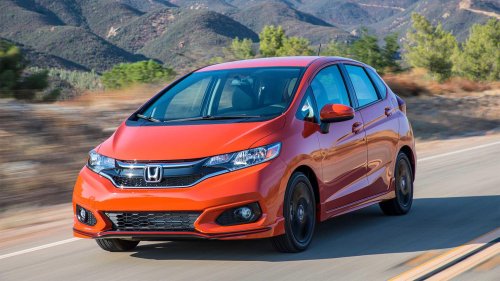
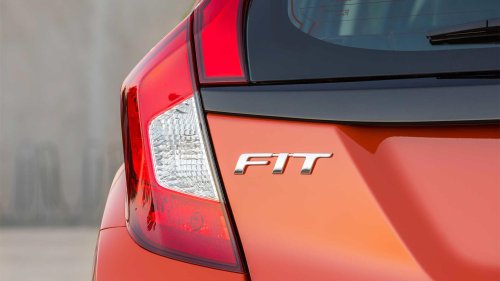
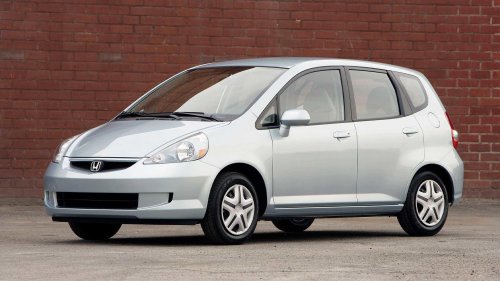
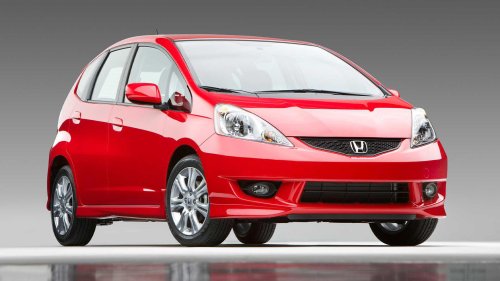
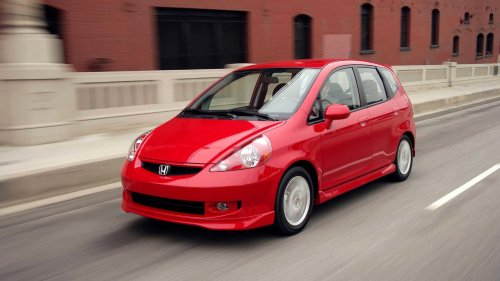
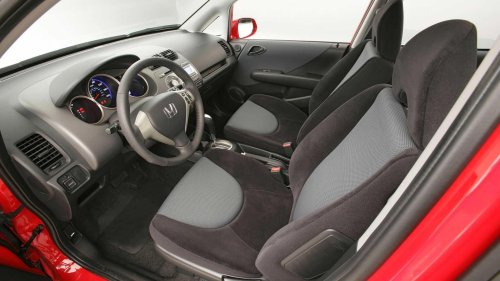
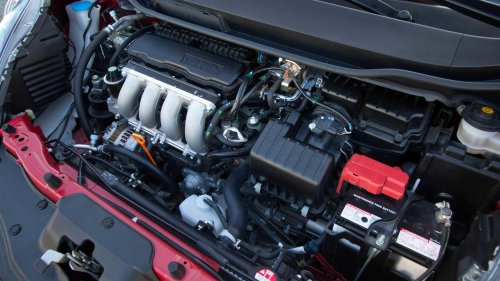
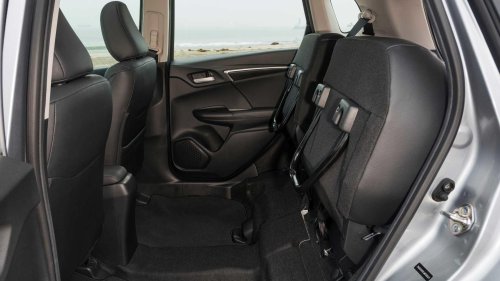
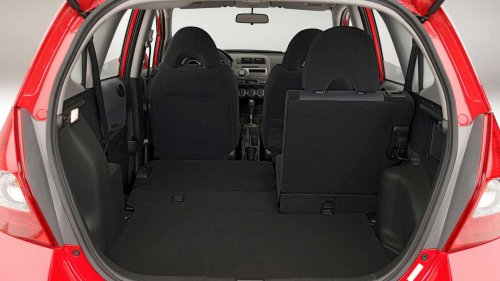
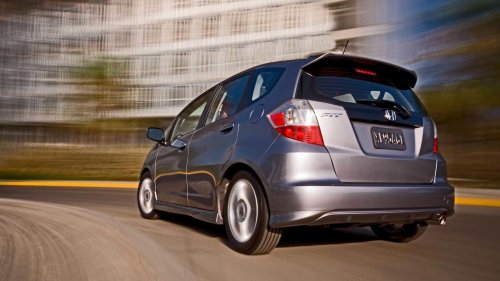
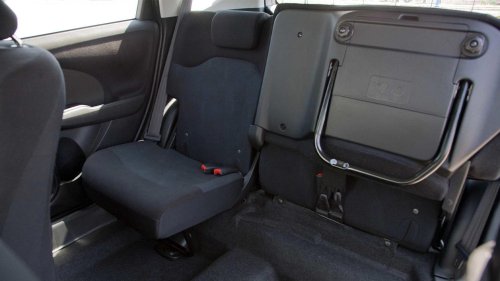





















The Honda Fit was a survivor. When Honda first introduced it to the North American marketplace in 2007, the Honda Civic Hatchback had been out of production for seven years. The Fit filled the gap with an even more flexible alternative, grew to become a segment leader for high-value versatility, and carried on to sell for 14 years across three generations.Also, it did all of this while remaining relevant as shoppers rapidly ditched small, front-drive cars for small, AWD-equipped SUVs. Below, we'll dig into what you'll pay for a used Honda Fit today, and a few important factors worth consideration to make the best purchase decision possible for your dollars. The Fit Should Probably Be On Your Radar In 2026, Here's What You'll Pay HondaThe Fit wasn't glamorous or particularly exciting, but it was flexible, cheap to run, easy on fuel, and extremely versatile thanks to some good old-fashioned Honda design and packaging wizardry, plus a trick seating system. For the shopper after maximum interior volume in a minimal footprint, it was a compelling anti-SUV alternative that sat lower to the ground, was easier to board and exit, easier to maneuver, and easier on your gas bill.The lack of AWD and towing capability may strike the Fit from the lists of some shoppers from the get-go. Still, if you've got those needs covered by a pickup or SUV, a second-hand Fit makes a pretty persuasive choice for a fuel-saving secondary runabout that probably won't give you any headaches. Many owners enjoy their modified Honda Fits on the daily, but the average shopper is likely best to stick to a model that's as stock as possible.Honda If you're after the cheapest used Fit in the whole wide marketplace, setting a budget of about $3,000 should do the trick. At this price point, you're looking at a 2007 or 2008 model year unit (that's the first-generation machine), typically with 160,000 miles or more on the odometer, and commonly with over 200,000 miles. If you've got a budget closer to $5,000, a second-generation machine (2009-2014) is easily accessible, though you'll be lucky to find one with less than 120,000 miles at this price point.Honda With $8,000 to spend, you're in a pretty good place. Here, you can expect to find first-generation Fits with 50,000 miles if you shop patiently, as well as no shortage of selection on second-generation units (2009-2014) with 110,000 miles or less. Around the $10,000 mark, you'll find more, newer Fit models, and many examples with less than 80,000 miles of use. Budget $15,000 to access a good selection of third-generation machines with less than 30,000 miles on their odometer.Honda Interestingly, the priciest used Fits on the market today are offered at or above their original asking prices, often with 10,000 to 20,000 miles of use. A 2020 Fit EX had an original MSRP of $19,990. Multiple used examples today, including one from Colorado with over 92,000 miles, are priced even higher. That's thanks in no small part to the fact that there's nothing quite like the Honda Fit in the market anymore. A Globally-Proven Engine Kept The Improvements Coming For Three Generations HondaRemember, the Fit is no crossover SUV. With no need for AWD or beefed-up parts to handle towing duty, it could be kept relatively lean and light. This enables the use of smaller, lighter brakes, axles, and suspension parts, as well as a smaller, lighter engine to help tame fuel consumption.Honda's L-Series 1.5-liter engine powered the Fit from its North American arrival. This engine range originally rolled out globally in the early 2000s and was specifically designed to be as lightweight and compact as possible. Engineers even used a special intake and exhaust valve configuration that slimmed the cylinder head to save size and weight, and the engine block was strengthened so that it could be downsized and lightened as well. In 2007, the Fit used a simple, compact SOHC VTEC cylinder head on this engine, which produced 109 horsepower. You could order yours with a five-speed transmission in a choice of automatic or manual. By the time the Fit arrived in North America, Honda had been building L-Series engines for seven years.Honda Important Years For U.S. Hatchbacks 2000: Final model year for Honda Civic Hatchback In the USA 2001: Honda Fit debuts globally 2006: Toyota Yaris replaces the Echo 2007: First-generation Honda Fit introduced to the U.S. 2007: Nissan Versa launches in the U.S. 2009: Second-generation Honda Fit introduced 2011: Ford Fiesta returns to the U.S. market 2012: Second-generation Honda Fit facelift 2012: Chevrolet Sonic launches 2013: Mitsubishi announces that the Mirage is returning 2014: Toyota Yaris gets a major overhaul with updated looks and refinement 2015: Third-generation Honda Fit introduced 2016: Latest Kia Rio arrives with notably upgraded interior and tech 2018: Third-generation Honda Fit facelift 2019: Toyota launches the Mazda2-based Yaris 2020: Final model year for the Honda Fit in the United States The second-generation Fit arrived for the 2009 model year, bringing output to 117 horsepower with some revisions to the previous engine. These included larger intake valves, a new intake manifold, and an exhaust manifold cast into the cylinder head, rather than attached externally. By updating an existing engine rather than launching a new one, Honda helped keep prices down and reliability solid.The next major engine update comes with the third and final-generation US Fit in 2015. This time, engineers switched to a dual-cam (DOHC) cylinder head, bumped the engine's compression ratio, added direct fuel injection, and added valve-timing superpowers with the latest i-VTEC and VTC technologies working in sync. Now able to master breathing and valvetrain control in real time, horsepower jumped to 130. The automatic transmission option was a CVT, and you could now order your Fit with a six-speed stick that replaced the former five-speed box.Honda Key takeaways? A first-generation Fit uses the simplest version of the four-cylinder engine, and the second-generation Fit gets meaningful upgrades while retaining the simpler port fuel injection and SOHC cylinder head setup of the previous version. The third-generation Fit bumps output even higher and provides access to that manual six-speed, though the most modern Fit engine is also its most complex.By the way, the used Fit you're considering is at least six years old, meaning its health and reliability are largely dependent on how it was cared for by past owners. Still, J.D. Power shows consistent 'Average' or 'Great' scores for Quality and Reliability across all Honda fit model years for which there's data. Your Dog Needs To Try The Honda Fit Honda The Fit's cargo capacity is impressive on paper and in comparison to most competitors, but its real value tends to show up on a daily basis in real life. Based on the selected metrics below, you can see a big part of that on-paper appeal: next to many competitors, the Fit offers a significant cargo space advantage, as well as leading performance and fuel cost figures. For the shopper, flexibility and space for the purchase dollar (and fuel dollars) is virtually impossible to beat.HondaIf you haven't yet, be sure to give the Fit's rear magic seats a full inspection, and bring your dog along for the ride. Of course, you'll want to try all possible seating configurations of this system on your test drive to confirm that the latches and levers all work as expected. But you'll also want to see just what a game-changer the now-extinct Magic Seat system is for everyday life.Honda Flip the seatbacks down, and you've got a flat rear cargo area that sits around knee height for easy access to groceries and gear, and easy access for even smaller dogs who jump in back for a car ride. The real magic happened when the seat bottoms were flipped up, however. This opened up a straight shot from the flat floor below to the flat ceiling above, an ideal place to carry a flat-screen TV, bicycle, stack of camping coolers, or some flat-pack furniture. Both seats are a split-fold ordeal, so each can be folded up or down to devise the ideal setup for the currently-required mix of gear and humans.Honda If you're a dog lover, then the deal gets much, much sweeter. As a two-time Fit owner from a multi-dog family who's had a Golden Retriever for more than half his life, I'll leave you with the following: with the FIt's rear seats flipped up, most dogs can walk into one rear door, lay down to lounge on the floor, and walk straight out the other door with no turning around or jumping required. This can make life easier on both pet and human when it comes to transporting one (or multiple) canines at all life stages, and especially if mobility decreases with age.