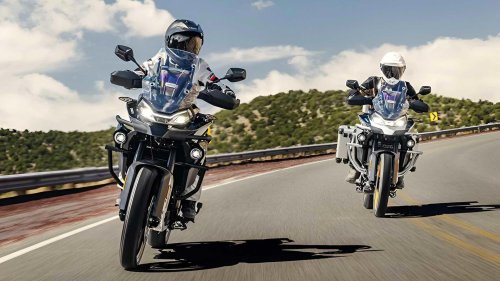
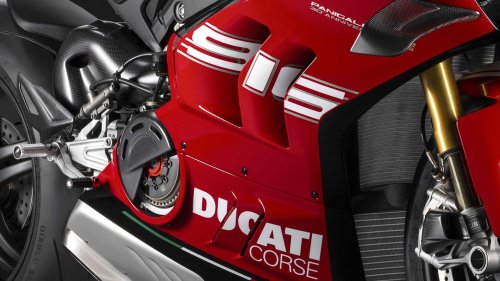
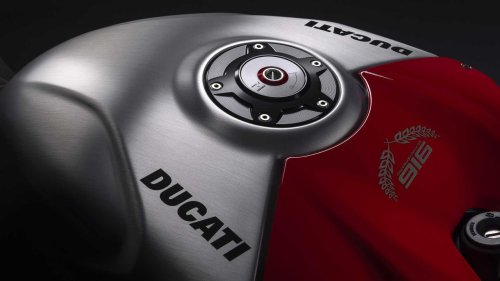
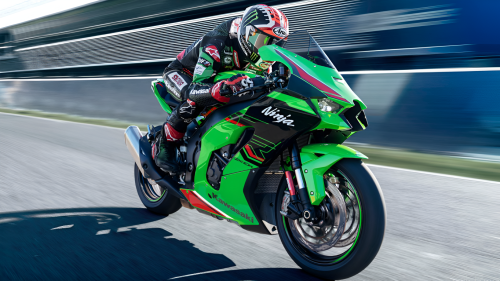
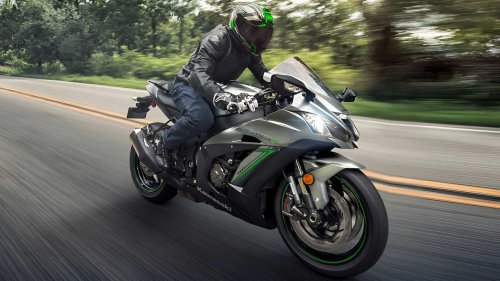
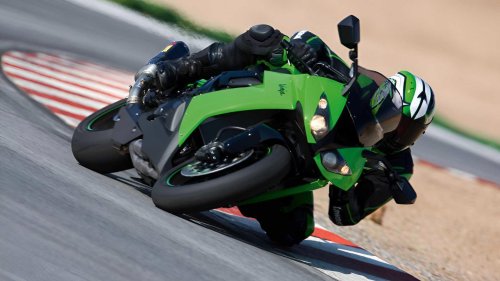
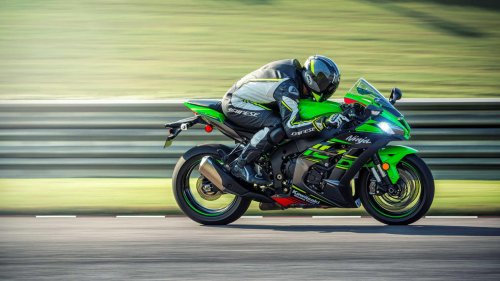


















Ducati superbikes do something strange to otherwise sensible riders. The red fairings light up the same part of the brain that likes race posters, loud exhausts, and pretending a freeway on-ramp is Mugello. A Panigale has that sharp, dry bark, that angry V4 rush, and the look of a bike that should come with tire warmers and an Italian espresso machine. Even riders who swear they are “not Ducati people” usually glance twice. Maybe three times. Nobody is judging.Then reality walks into the garage carrying a calculator. Ducati desire is easy, but Ducati money is harder. For many riders, the question is not whether the dream has pull – it does – the better question is whether someone has to spend premium Italian superbike cash to get the same kind of pulse, track-day bite, and driveway flex. One Japanese answer makes that question uncomfortable in a hurry. Ducati Speed Is Easy To Want, But Expensive To Justify Lamborghini The bike setting the bar here is not just any Ducati. It is the Ducati Panigale V4 S, the kind of superbike that turns a normal coffee stop into a small parking-lot car show. Ducati lists the Panigale V4 S with 209 horsepower, 89.5 lb-ft of torque, and a starting price of $35,595 in the U.S. That is serious power, serious theater, and very serious checking-account damage.The “S” in the name is important, and it’s not just a sticker that costs more because someone in Bologna found a fancy font. Ducati gives the V4 S electronically controlled Öhlins suspension, forged aluminum wheels, and a lithium battery over the standard Panigale V4. In other words, this is the version that makes the Ducati argument strongest. It is lighter, sharper, and more special where track riders actually care.Ducati That is why the Panigale V4 S works as the premium target. It has the numbers, the parts, the badge, and the emotional charge. It feels like the thing every other liter-class superbike has to explain itself against. Even riders who prefer Japanese fours, crossplane engines, or old-school analog bikes understand what the Ducati represents. It is the poster bike. It is the “one day” bike. It is the bike that makes adults say, “I am just looking,” then accidentally open a finance calculator.The problem comes after the goosebumps. A $35,595 starting price lands deep in lightly used car money, nice garage remodel money, or explain this to your spouse with a PowerPoint money. Add insurance, tires, track fees, riding gear, and the small emotional tax of owning something that pretty, and the dream gets heavier. Sure, Ducati gives riders a lot, but proving they need to spend that much to get most of the thrill is the difficult part. The Real Rival Has To Be More Than Cheap Ducati A cheaper bike alone does not win this fight. Plenty of motorcycles cost less than a Panigale V4 S, but that does not mean they belong in the same sentence. A true rival needs liter-class power, a chassis built for serious speed, brakes that can survive repeated abuse, and electronics that help a rider stay calm when the front tire starts whispering, “Are we really doing this?”The right candidate also needs around 190 hp or more. A bargain-bin sportbike cannot fake its way into that neighborhood, and needs to pull hard at the top, carry speed with confidence, and feel like a machine built with track days in mind, not a comfortable street bike wearing a pointy Halloween costume.The reliability angle obviously points toward Japan. Consumer Reports’ motorcycle reliability survey found that Yamaha, Suzuki, Honda, and Kawasaki ranked among the more reliable brands, while Ducati appeared among the more trouble-prone brands. The survey covered more than 12,300 motorcycles from model years 2008 through 2014, so it does not prove every modern bike will behave the same way. Still, it gives one machine a useful brand-history advantage. The 2026 Kawasaki Ninja ZX-10R Is A Reliable And Cheap Ducati Alternative Kawasaki The answer is the 2026 Kawasaki Ninja ZX-10R. Kawasaki’s U.S. listing shows the non-ABS ZX-10R at $16,999 and the ABS model at $17,999. Put that beside the Ducati Panigale V4 S at $35,595, and the math gets loud. The non-ABS Kawasaki costs less than half as much as the Ducati, and the ABS version lands just over the halfway mark, which still leaves enough money for gear, track days, tires, and possibly a few apology dinners.Performance-wise, things get even more interesting. Kawasaki lists the 2026 ZX-10R at 190 hp and 82.5 lb-ft of torque from its 998cc inline-four. Ducati lists the Panigale V4 S at 209 hp and 89.5 lb-ft. Yes, the Ducati wins the spec-sheet drag race, no question, but the Kawasaki sits close enough that the rider, tires, setup, and track layout can matter more than the badge on the tank. A Real Track-Focused Supersport Kawasaki The ZX-10R also avoids the worst kind of value trap. It is not a softened streetbike with race paint and a tough name. Kawasaki builds it as a real track-focused supersport, with an aluminum twin-spar frame, revised chassis geometry for 2026, a raised swingarm pivot, and setup changes meant to work with its new aero package. That raised pivot helps rear-wheel traction and helps the rider steer from the rear under hard track use.The 2026 aero update brings one of the bike’s more interesting details. Kawasaki says the larger winglets increase downforce by 25 percent while adding only 0.3 percent more drag compared with the previous design. More front-end feel while cornering can help a rider trust the bike when speed rises, and bravery starts writing checks the body may not cash.The hardware backs up the intent. The ZX-10R uses a 43mm Showa Balance Free Front Fork, a Showa Balance Free Rear Cushion shock, dual 330mm Brembo front discs, Brembo M50 monobloc calipers, and Bridgestone Battlax RS12 tires. Kawasaki also gives it a deep electronics package with launch control, traction control, power modes, cornering management, engine brake control, a quickshifter, and an IMU-backed chassis brain. It even offers race-kit parts for closed-course riders who want to chase lap times more seriously. The Smarter Superbike Flex Is Not Always Italian KawasakiNo argument here, Ducati still owns the more exotic story. The Panigale V4 S has more power, more torque, a richer badge, and a level of drama that Kawasaki cannot copy because, frankly, nobody does Italian superbike drama like Italy. The Ducati feels like an event before the engine even fires. It has that rolling sculpture thing going on. It is the bike equivalent of showing up to dinner in a tailored suit and ordering in perfect Italian.The Kawasaki wins a different argument. It gives riders a full liter-class superbike experience with 190 hp, serious chassis parts, real racing roots, modern electronics, and a price that makes far more sense for people who actually ride instead of just polishing carbon fiber with a microfiber towel. Kawasaki also comes from one of the Japanese brands that Consumer Reports placed among the more reliable motorcycle makers, while Ducati landed among the more trouble-prone brands in that survey.Kawasaki All this makes the 2026 Ninja ZX-10R clever. It gives riders the speed, the hardware, the track-day credibility, and the garage presence without asking them to spend Panigale V4 S money. The Ducati may still win the dream-bike poster contest, but the Kawasaki makes the rider feel smart every time the throttle opens, and the bank account does not scream back. For half the price, that is not settling. That is getting away with something.Source: Kawasaki, Ducati, Consumer Reports