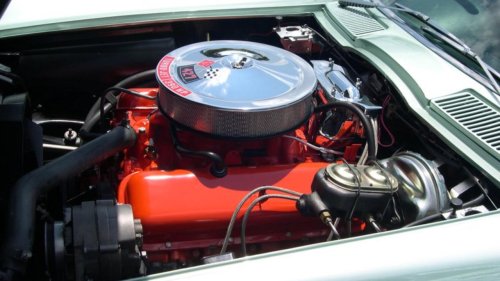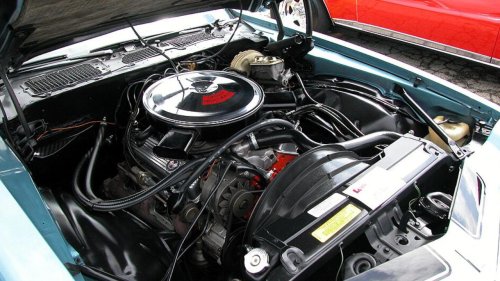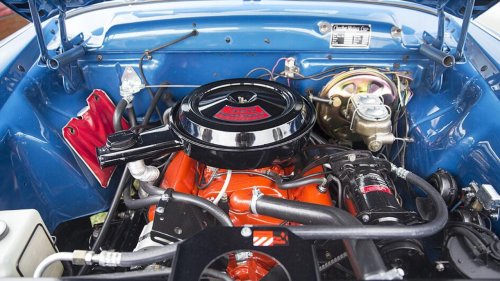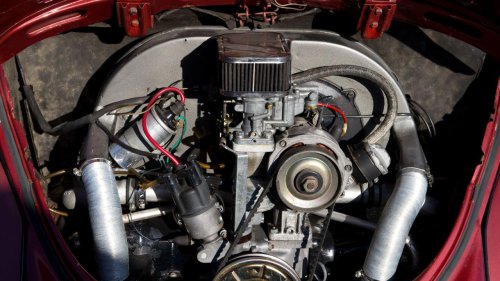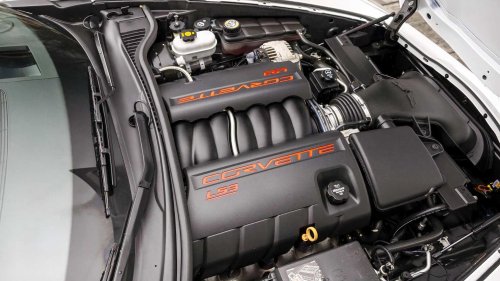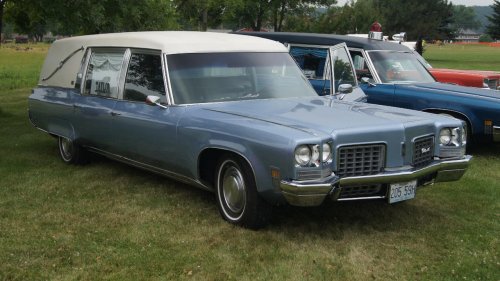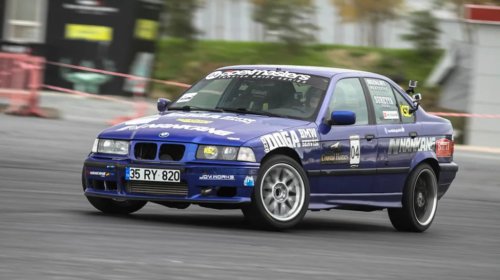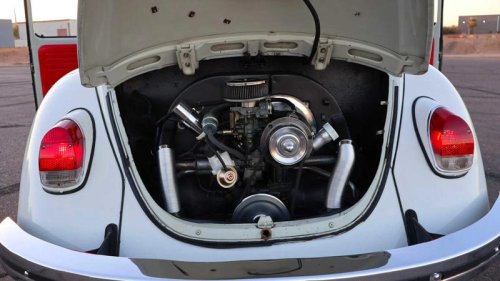
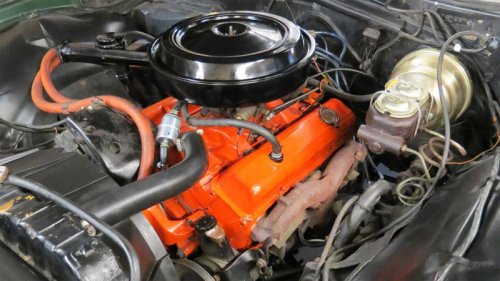
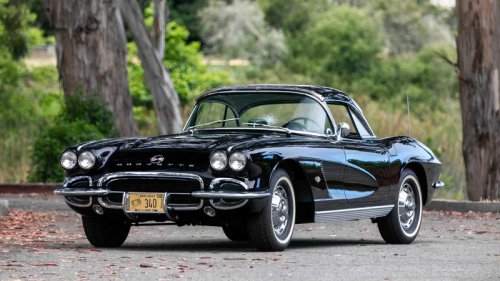
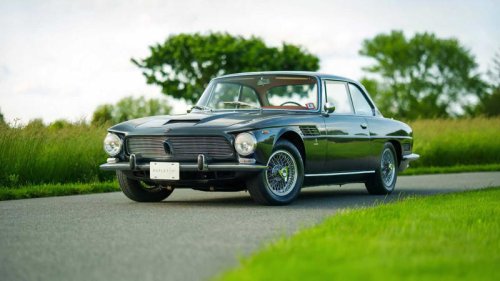



















Every so often, an engine design will come along that's so good that it stays around for ages. They perfectly embody the philosophy of "if it ain't broke, don't fix it," steadily chugging along excelling at what they were designed for. These long-lasting engines have been found in everything from sports cars to luxury cruisers, as well as various types of commercial vehicles. Though, one Chevrolet mill takes the cake as being the most adaptable V8 ever created. Many Engines Have Stayed In Production For Decades Bring A TrailerWhen you have a look at the engines that have stayed in production for the longest, you might be amazed at just how long they've been around for. There are quite a few that have been in production for multiple generations of consumers. That's certainly the case for engines like the Volkswagen flat-4 or the Bentley L-Series V8. These were both in production for over 60 years.The engine we're about to discuss is one of those incredibly long-lived units. Introduced in the mid-1950s, it's still being produced in some form to the present day. That's despite it being replaced in many regular production vehicles over 25 years ago. This mill has become as iconic as the cars it powered, and for very good reason. The Chevrolet Small-Block V8 Is An Iconic Engine That Refuses To Die Bring a TrailerThe Chevrolet small-block V8 has to be one of the most iconic V8s ever made. It first appeared in 1954, and first made its way into production cars in 1955. The initial versions of the small-block were 265 cubic inches in size, and had either a single 2-barrel, a single 4-barrel or twin 4-barrel carburetors. These variants produced between 162-195 horsepower and 240-260 lb-ft of torque. Compared to the output of today's engines, that's not impressive at all. But, for the mid-'50s, this was fantastic for a mass-produced car. It Had A Vast Number Of Variants If you look at the history of the Chevy small-block V8, one thing that might stand out to you is how many different versions it had. It came in a huge range of sizes, ranging from 4.3 to 6.6 liters. These variants also had a vast spread of power outputs between them. Some variants produced as little as 110 hp, while others produced as much as 375. It's Powered A Huge Number Of Iconic Vehicles MecumWith such a long production run, the Chevy small-block V8 ended up powering a huge number of vehicles. This included plenty that have now become iconic classics that collectors will pay over the odds for. The first proper sports car to get the small-block V8 was the C1 Chevrolet Corvette. It received the engine as an option in 1957, and it became so popular that the old inline-6 unit was phased out. It then became a staple of the C2 and C3 generations, even through its power becoming neutered as a result of the oil crisis and tightening emissions regulations. The first and second-generations of the Chevrolet Camaro also used the small-block as its main V8 option.It wasn't just cars that were powered by the small-block V8, either. This engine was so versatile that it also showed up in commercial vehicles that became backbones of America. Chevrolet's step vans often used the small-block, as did the regular Chevy van and earlier models of the Chevrolet Express. It appeared in trucks as far back as 1955 via the Chevrolet Task Force, and then became a staple of the lauded C/K Series of pickups.As you'd expect from powering so many iconic vehicles, the cultural impact of the small-block V8 was huge. It was one of the engines that helped to properly bring about muscle car culture. That was especially the case when people realized how much they could be tuned. It wasn't that long after the small-block's introduction before people started making crazy builds that used it as the go-to mill. Some Of Those Cars Weren't Built In America via Bring A TrailerThe Chevrolet small-block V8 may be associated with American cars. But, there were quite a few iconic non-American models that used it. A couple of the most famous have to be the Iso Rivolta IR300 and the Iso Grifo. These Italian-built cars combined classic Italian styling with American V8 power.This is a combination that's worked surprisingly well over the years. In fact, it worked so well for Iso that other European manufacturers started doing it as well. The British Gordon-Keeble GT also used the Chevy small-block. The Bizzarini 5300 GT, another Italian sports car, used it as well. The Germans put one into the Opel Diplomat too, to make a V8 verson of it. Travel down to the southern hemisphere, and it showed up in the Holden Monaro GTS in Australia and the Vauxhall Firenza Can-Am in South Africa.The Chevrolet small-block may have been designed for the American market. But, when you look at how many cars it found its way into outside of the US, it really seems like it was actually an engine for the entire world. Considering how ubiquitous it was in its home market, maybe that shouldn't be so surprising. These were standard engines that were straightforward to work on, after all. That had a knock-on effect of making parts easy to get. You Can Still Buy It Today, As A Crate Engine The Chevy small-block may have been replaced in most production cars by the LS V8 by the '90s, which is actually a direct descendant of the wondermill. But, due to popular demand, this iconic engine has managed to survive all the way to the present day. Chevrolet still makes crate versions of the 350 and 383 Cubic Inch (5.7 and 6.3-liter) variants, and it's beefed up the original design with modern touches to produce north of 400hp in some cases. Chevrolet can also match these engines with the appropriate modern transmissions. It's Still Used A Lot In Marine Applications Part of the reason why the small-block has survived so well, even though it hasn't been offered in any production vehicles for decades, is that it's incredibly useful for marine applications. These water-going versions have additional corrosion protection, and their output is profiled more for maximum torque than maximum performance. They're also adapted for raw-water or closed-loop cooling systems, and have spark arrestors instead of standard air cleaners. These are both musts for marine engine as they are actually a requirement from the US Coast Guard for marine-spec engines.Marine small-blocks are typically found in pleasure craft. That includes jet boats, cruisers and ski/wake boats. Much like how things were in high-performance cars that used the small-block, it's not that uncommon for the units in high-performance jet boats to be modified.Sources: Bentley, Bizzarini, Chevrolet, GM Powered Solutions, Gordon-Keeble, Holden, Iso, Opel, Vauxhall, Volkswagen