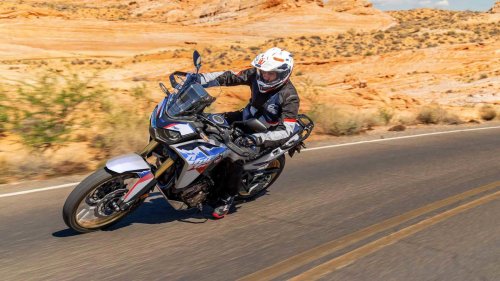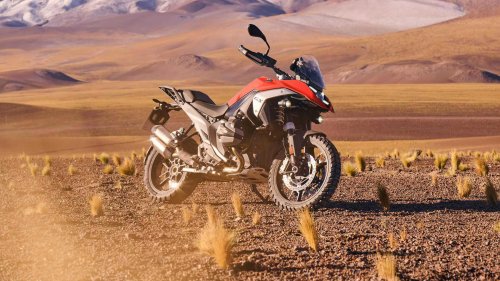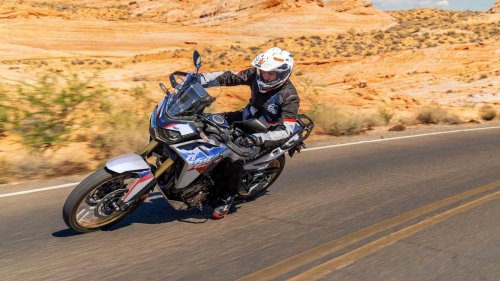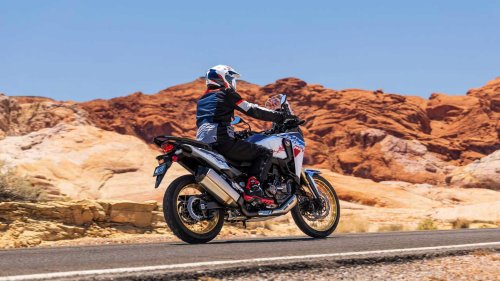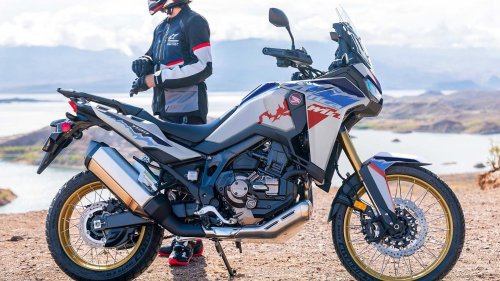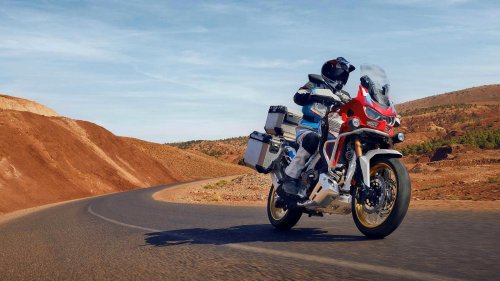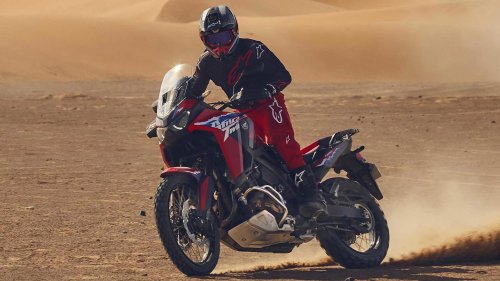
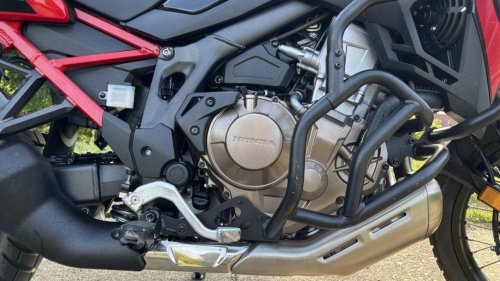
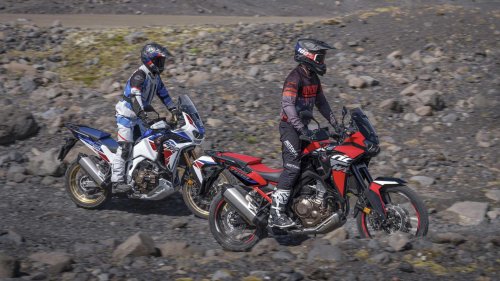
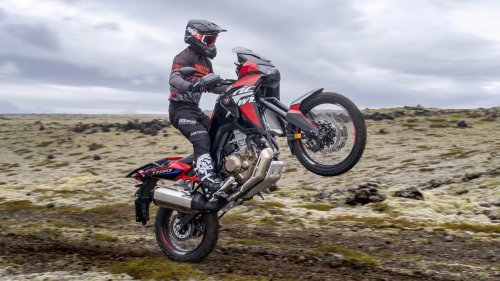
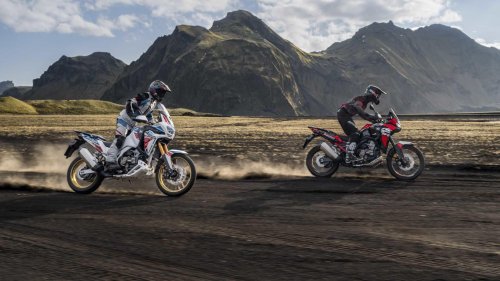



















Imagine being 600 miles into the Mongolian steppe, with no traffic, no cell signal, no dealership within 200 miles, and the temperature is nearly 100 degrees between dawn and dusk. In a situation like this, a rider needs a machine that delivers bullet-proof reliability.It has to be engineered specifically to outlast everything around it and endure whatever obstacles you face. Made by a manufacturer that consistently ranks among the most dependable in industry studies, with a philosophy of building their machines for distance, abuse, and unpredictability. There is one bike that fits such a mold and actually makes an excellent commuter, too. The Mileage Numbers That Make Other Manufacturers Nervous Honda A bike meant for a round-the-world trip with no fixed return date and the rider who commutes 60 miles a day, rain or shine, can't be a garage queen; it has to be a machine intended for living a hard life. That's what Honda's Africa Twin is.The Africa Twin is full of updated electronic aids from 3-level Wheelie Control to Rear Lift Control and DCT cornering detection, including Apple CarPlay and Bluetooth connectivity. These rider comforts shouldn't suggest it's a plushy push-over, though. There has been long-term testing on Cycle World where the latest iteration was flogged past 20,000 miles while sticking strictly to routine maintenance like oil changes at Honda’s recommended 8,000-mile intervals, with zero drivetrain failures discovered. Bennetts BikeSocial in the UK did something similar and reported no unscheduled mechanical issues across 15,000 miles of mixed-use riding.Every day, consumer/owner reviews even further strengthen the story. ADVrider has documented reviews from multiple riders who've ridden their Africa Twins across approximately 62,000 miles with the original engine internals remaining intact. On Horizons Unlimited, it is listed as the most among journey bikes to have completed Round-the-World trips, regardless of the rider's diversity or continent.The Africa Twin has a 16,000-mile valve inspection interval, a quiet spec that explains everything. Given that this inspection interval is significantly beyond what many competitors demand, it shows how much stress the engine is designed to handle, how much tolerance it's built with, and how stable its components are. That explains why reliable brands like J.D. Power consistently rank Honda among the four most dependable motorcycle brands. Why This Parallel-Twin Engine Quietly Outclasses the Competition Bring a TrailerThe durability of the Africa Twin wasn't achieved overnight. After the 15-year production run of the original V-Twin engine setup and a 13-year hiatus, Honda switched to a parallel-twin engine system.Introduced in 2020, the CRF1100L is the second generation since the hiatus, featuring a 1,084cc parallel-twin at its heart, a layout chosen for durability, packaging, and balance. It has an oversquare design created by its 92mm x 81.4mm bore and stroke, which ensures internal components aren't overworked for the engine to breathe efficiently. This is highly important because it means there's less heat buildup when conditions get brutal and less strain at cruising speeds. It also has a liquid-cooled setup for thermal management, which keeps temperatures stable during long, punishing rides, paired with an integrated oil cooler. CRF1100L Engine Specs One highly overlooked piece of the Africa Twin's puzzle is Honda using the Uni-Cam system that employs a single camshaft to operate both intake and exhaust valves instead of the overhead camshafts many rivals rely on. As a result, the engine is more compact with less friction from the fewer moving parts. As quiet an engineering choice as it is, it removes the complexity that other motorcycles built for spec-sheet bragging rights come with.Compared to rivals like the BMW R 1300 GS with flashier engineering, its 101 horsepower at 7,500 rpm doesn't seem scary, but the Africa Twin's secret is in its 82.6 pound-feet of torque, up from the pre-2024 77 pound-feet of torque, which because it arrives lower in the rev range, delivers a broad, usable powerband that's both responsive at altitude without constant gear changes and keeps the bike composed off-road. In short, this engine is still working for you when everyone else's starts to give up. The One Feature Riders Dismiss Until It Saves Their Trip Honda It's common to see most dirt-road/round-the-world riders spec the Honda Africa Twin with the manual gearbox instead of the dual-clutch transmission (DCT) because it feels unnatural. Well, as the miles start stacking up, the need for more assistance from the engine along a rough stretch of terrain begins to grow.That's what the Honda Africa Twin’s six-speed DCT offers: instead of removing control as most riders fear, it refines it. Its two separate clutch packs offer riders the freedom to take full control with paddle shifters when the terrain demands precision, or leave it in automatic Drive or Sport modes. It's designed for one clutch to handle the odd gears, while the other handles even gears by preloading the next gear and swapping ratios in about 0.2 seconds. There are no missed shifts, no interruption in power, and no fatigue-induced mistakes.The most important aspect of this system is that it keeps the bike reliable. It takes away the heat, slip, and rider error that come with a traditional clutch, especially when riding across sand, rocks, and long technical climbs. With the electronic engagement of the DCT, you also remove the kind of clutch abuse that quietly shortens drivetrain life. It relies on fluid service intervals every 16,000 miles to keep things working as predictably as originally designed. Real-world reviews show that riders who specced their Africa Twins with the DCT enjoyed consistent performance across the kind of terrain where rider fatigue would normally creep in. A lot of veteran long-distance riders claim it as the reason they can sustain eight- to ten-hour days without burning out. What 30 Years of Rally DNA Actually Does for a Street Rider Honda The Africa Twin's story doesn’t start in a showroom; it started approximately 40 years ago in the desert. By the late 1980s, companies were using the Dakar Rally as a mechanical filter for what to sell on the streets. If they could build a machine that could handle endless heat, deep sand, and brutal distances, they'd enjoy sales windfalls.In 1986, Honda created the NXR750, its HRC prototype that won four straight Dakars from 1986 to 1989. This design inspired the first Africa Twin in 1988, which was the Honda XRV650. Honda brought the NXR750’s engineering DNA from the desert with a few XRV650s built to celebrate its Dakar Rally dominance.However, the Honda XRV750 Africa Twin was the true "Queen of the Desert.” From 1990 to 2003, Honda designed, produced, and sold a 742cc V-twin engine that could easily exceed 100,000 miles with basic care. After the XRV750 came a 13-year hiatus before the first parallel-twin was released: the 2016 CRF1000L. The engine style changed, but the mindset remained the same. By 2020, the bike evolved again into the CRF1100L, with major technological and mechanical upgrades. Built to survive distance, the CRF1100L utilizes wide-ratio gearing to keep it adaptable across terrain. Its low center of gravity also helps keep the bike stable when fully loaded. Who the Africa Twin Is Really Built For — And Why Most Riders Get It Wrong HondaIn the average showroom, the Honda Africa Twin typically competes with offerings like the BMW R 1300 GS, meaning many buyers who typically chase bigger numbers, more tech, or stronger brand prestige would walk right past it. But if you have a conversation with someone in the Iron Butt Association, you know, those people with 1,000-mile-in-24-hour rides, you'd hear a different story. For these riders, their choice of machine is based on which would still be running when the trip gets hard. That's why the Africa Twin keeps showing up repeatedly among people who complete these daring challenges. It's the comfortable, predictable, and mechanically consistent choice over distance.The Africa Twin also has great fuel economy and real-world range. The Adventure Sports trim has a 24.8-liter fuel tank, which means it can realistically cover over 300 miles between stops, much better than any of the competition except the BMW R1300GS Adventure. This is part of what makes it good to live with. Add to it the fact that its $15,199 MSRP for the base model is less than most of the rest of the competition. So, if you plan to actually finish that round-the-world ride, the Honda Africa Twin should be your weapon of choice.