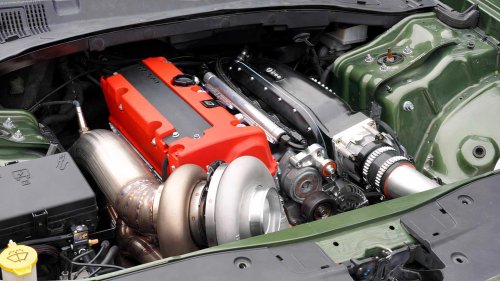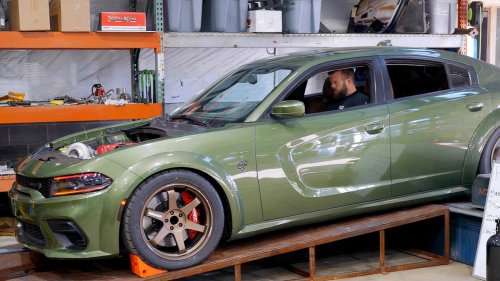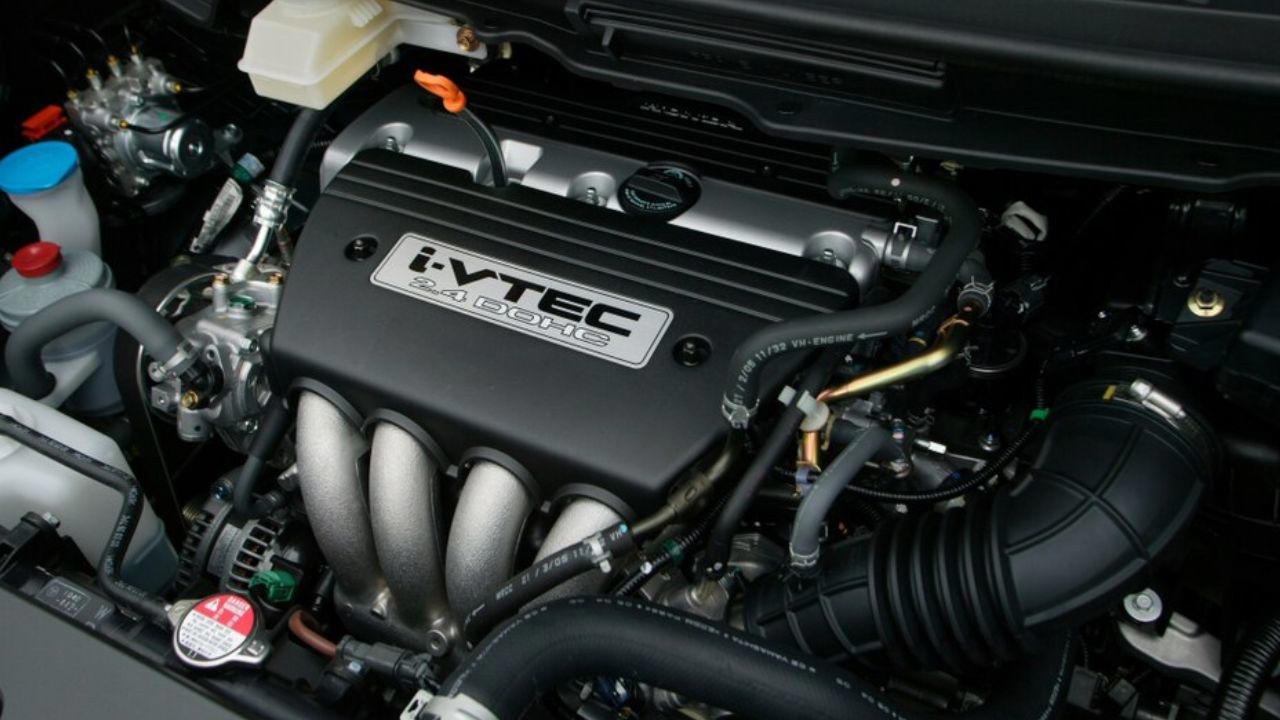



















The K24 Engine Tuners Trusted When Reliability Mattered MostThe Honda K24 earned its reputation the hard way: thrashed on track, abused in daily traffic, and pushed deep into boost without letting go. When reliability mattered more than dyno glory, a small group of tuners, builders, and calibration specialists kept these engines alive while others were picking up rods from the tarmac. Their work quietly defined what “reliable power” means for the K-series today. From grassroots time-attack cars to 600‑horsepower street builds, the tuners who got it right treated the K24 not as a disposable powerplant but as a precision tool. Over time, they learned where the factory engineering could be trusted, where it needed help, and how far the combination could be stretched before the safety margin disappeared. What happened The K24 did not become a cult engine by accident. Honda designed the K-family with a stiff aluminum block, a deep skirt, and a forged crankshaft, giving the platform surprising durability long before anyone added a turbo. The same engineering that made the K-series one of Honda’s most reliable engines also made it a favorite for tuners who wanted big power without sacrificing longevity. As the swap movement matured, builders began dropping K24A2 and K24A3 long-blocks into lightweight chassis such as the DC5 Integra, EP3 Civic, and older EG and EK Civics. Many of the early cars ran basic bolt-ons and off‑the‑shelf tunes. The real shift came when specialist shops started treating the K24 as a blank canvas for repeatable, high-mileage power rather than a one-off science project. Engine builders focused on three consistent themes. First, they standardized bottom-end recipes: factory crankshaft, forged I‑beam rods, and forged pistons with compression tailored to the intended boost level. Next, they emphasized oil control with baffled sumps, improved pickup designs, and, in track applications, upgraded pumps to prevent pressure loss in long corners. Finally, they insisted on meticulous machining, especially for main bearing clearances and cylinder wall finish, to keep the engines stable at high rpm. On the tuning side, specialists moved away from aggressive, knock‑borderline timing maps that might win a dyno day but cost an engine a year later. They instead built calibrations with wide safety margins, richer fuel targets, and careful management of intake air temperature. Many of the most trusted K24 tuners became known not for peak numbers but for customers who drove to the track, ran a full weekend, and drove home again with the same oil still inside the block. Turbocharging accelerated this evolution. As BorgWarner EFR and Garrett GTX turbos became common, tuners learned that the K24 would tolerate 450 to 500 wheel horsepower on a stock crank and block if the tune stayed conservative and the fuel system was sized correctly. The focus shifted from “How much can it make?” to “How many seasons can it survive?” That question separated the reliable calibrators from the keyboard tuners. Electronics played a crucial role as well. Calibrators who insisted on quality engine management, wideband feedback, and real knock monitoring avoided the failures that plagued budget builds. They logged data, watched coolant and oil temperature trends, and adjusted maps for seasonal changes. Over time, their approach turned into a playbook that other shops and DIY tuners started to copy. Why it matters The K24’s status as a tuning darling has real-world consequences for owners, shops, and even motorsport series that rely on these engines. When a builder or tuner treats reliability as the main goal, the entire ecosystem becomes more sustainable. Cars finish events, customers stay loyal, and the platform’s reputation improves instead of collapsing under the weight of social‑media horror stories. For privateers, the difference between a careful K24 build and a reckless one is often measured in broken parts and missed events. A time‑attack driver who budgets for one engine per season cannot afford a failure every other weekend. Trusted tuners earn that trust by proving, over and over, that their calibrations survive repeated abuse: high rpm on long straights, heat‑soaked restarts in paddocks, and sudden weather swings that change air density and knock sensitivity. Those same habits translate directly to street cars. Enthusiasts who daily‑drive K‑swapped Civics, Accords, or even rear‑wheel‑drive conversions built around S2000 gearboxes need engines that start every morning and stay cool in traffic. Tuners who prioritize part‑throttle smoothness, cold‑start behavior, and fan control logic often deliver cars that feel factory‑engineered even with double the original power. That level of refinement only comes from treating reliability as a design requirement, not a side effect. The K24’s reliability record also shapes resale value. Chassis with documented builds from respected tuners command higher prices because buyers believe the engine will last. Build sheets that list known combinations of rods, pistons, bearings, and head studs, matched with recognizable calibration names, function almost like a warranty in a market where there is none. In that environment, the reputation of the tuner becomes a form of currency. On the industry side, the K24 has become a testbed for parts manufacturers. Companies that design cams, valve springs, intake manifolds, and turbo kits often validate their hardware on engines tuned by a short list of trusted calibrators. If those engines survive thousands of hard miles, the parts gain credibility. When they fail, the feedback loop between builder, tuner, and manufacturer helps refine the next iteration. Reliability-focused tuning also affects how regulators and sanctioning bodies view modified K24s. Track-day organizers and grassroots series care about oil spills, red flags, and safety. Engines that routinely scatter parts across the racing line create downtime and risk. Shops with a track record of trouble‑free K builds make it easier for organizers to welcome modified Hondas instead of treating them as liabilities. There is a cultural impact as well. The K24 has become a gateway engine for younger enthusiasts who might otherwise be priced out of performance cars. A reliable, 300‑horsepower K‑swapped Civic or Accord can deliver modern performance on a modest budget. When those builds are tuned by people who care about longevity, the next generation learns that power and reliability are not mutually exclusive. That lesson shapes how they approach future platforms, from turbo three‑cylinders to hybrid drivetrains. The K24 story also highlights a broader shift in tuning philosophy. As engines become more complex and replacement costs climb, the market rewards tuners who can deliver OEM‑like durability with aftermarket performance. The K24 community, guided by its most trusted builders, has been living that reality for years. Their methods now influence how tuners handle newer Honda turbo engines and even powertrains from other brands. What to watch next The K24’s tuning future will be defined by how well builders adapt old lessons to new constraints. Several trends are already reshaping what “reliable” means for this engine. Fuel quality is changing first. In many regions, E85 and other high‑ethanol blends have become more accessible, dramatically increasing knock resistance and cooling. Tuners who understand flex‑fuel strategies can extract safer power levels from K24 builds, but only if they calibrate for the full range of ethanol content. Engines tuned for perfect E85 that occasionally see pump 91 with lower ethanol percentages are at risk unless the calibration and sensor strategy account for that variability. The supporting hardware is evolving as well. Modern standalone ECUs and advanced plug‑in solutions give tuners finer control over ignition timing, cam phasing, and boost. Features such as closed‑loop knock control, individual cylinder trims, and advanced traction logic allow safer operation at the limit. The tuners who will be trusted in the next phase are the ones who treat these tools as safety systems, not just ways to chase peak numbers. At the same time, the K24 is increasingly used in unconventional platforms. Builders are installing these engines into lightweight rear‑wheel‑drive chassis, kit cars, and even off‑road machines. Each new environment introduces fresh reliability questions: cooling in confined bays, oil control in long‑travel suspension, and drivetrain stress in applications the factory never imagined. Tuners who take the time to understand these contexts, log data, and adjust strategies will set the standard for reliability in nontraditional K swaps. There is also a growing emphasis on long‑term ownership. Many early K‑swap pioneers are now on their second or third build, and they are less interested in chasing record dyno pulls. Instead, they want engines that can run 100,000 kilometers with regular maintenance. That shift encourages conservative compression ratios, moderate boost levels, and an almost obsessive focus on cooling and lubrication. Tuners who embrace that mindset will likely dominate the market for mature enthusiasts who have outgrown disposable engines. Regulation will play a role too. Emissions compliance and inspection regimes are tightening in several markets. Reliable K24 tuners will need to balance power with clean operation, stable idle, and functional onboard diagnostics. Those who can keep catalysts alive, prevent misfires, and maintain fuel trims within acceptable ranges will become the go‑to names for street‑legal builds that still perform at the track. Another area to watch is data sharing. As more K24 builds run with advanced logging, the community’s understanding of safe limits continues to sharpen. Shared datasets on coolant temperature trends, oil pressure behavior, and knock thresholds under different fuels help separate myths from reality. Tuners who contribute to and learn from this shared knowledge will refine their reliability strategies faster than those who work in isolation. The parts market will continue to filter out weak links. Rod and piston combinations that consistently survive 500‑horsepower abuse will become the de facto standard, while lesser components fade from serious builds. The same process will play out with head gaskets, head studs, and valvetrain parts. Tuners who track these patterns and update their recommended parts lists accordingly will maintain their reputation for engines that simply do not quit. Finally, the K24’s legacy will influence how future Honda engines are tuned. As newer turbocharged units replace naturally aspirated K‑series in factory cars, the habits formed on K24 builds carry over: conservative timing, careful boost control, and a refusal to sacrifice safety margins for internet clout. The tuners who earned their reputations keeping K24s alive at high power are already applying those principles to newer platforms, shaping how reliable performance looks for the next decade. The K24 may have started as a workhorse four‑cylinder in family sedans and crossovers, but its story in the tuning world is defined by the people who refused to treat it as disposable. By prioritizing smart parts selection, meticulous assembly, and conservative, data‑driven calibration, a core group of tuners turned a solid factory engine into a benchmark for reliable performance. As power levels climb and platforms change, the lessons they learned under the hood of the K24 will continue to define what enthusiasts expect when reliability matters most. More from Fast Lane Only Unboxing the WWII Jeep in a Crate 15 rare Chevys collectors are quietly buying 10 underrated V8s still worth hunting down Police notice this before you even roll window down