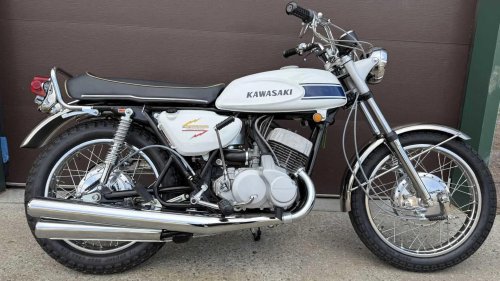
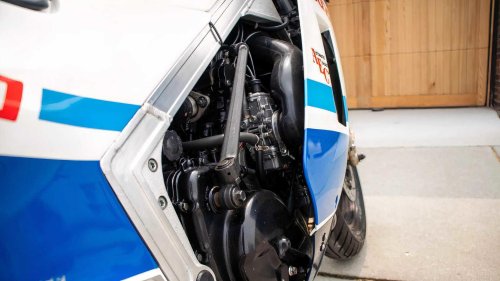
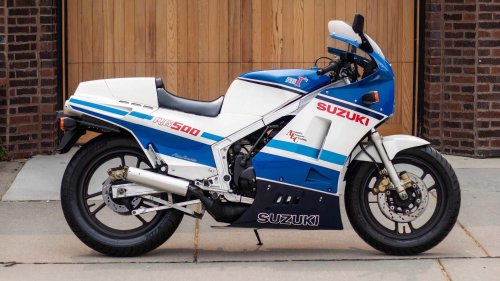
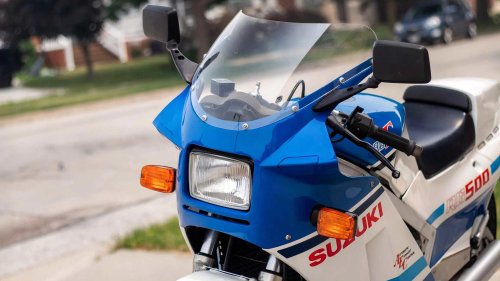
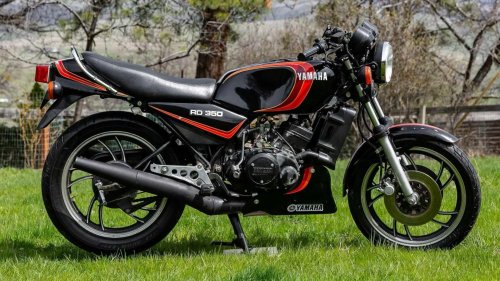
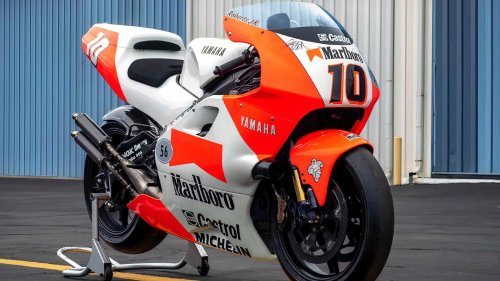
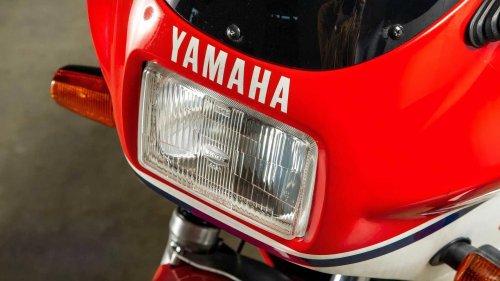
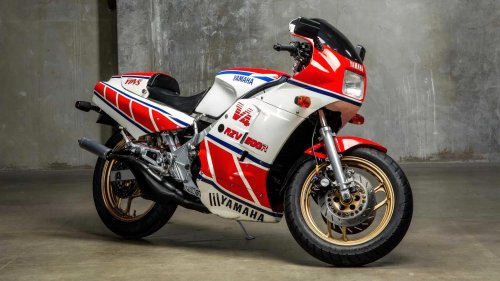
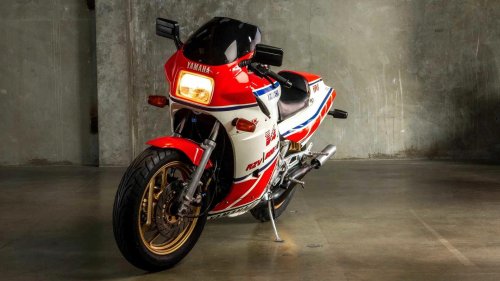
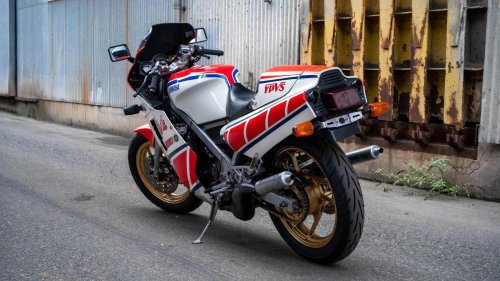
Classic two-strokes have a certain allure and character you simply cannot get from their four-stroke counterparts. Many riders obsess over them, and it's not hard to understand why, as their mechanical simplicity, outstanding power-to-weight ratios, and raw personalities are genuinely irresistible. Every motorcycle aficionado out there ought to experience that authentic two-stroke goodness at least once in their lifetime, and they’re almost guaranteed to fall in love with it right away. Going back in time to an era when these machines were at the height of their popularity, you'll find cult classic icons such as the Yamaha RD350LC, Kawasaki's H2 Mach IV, and the three-cylinder GT750 from Suzuki. The Two-Stroke Race Replica That Flew Under The Radar Bring a TrailerAside from Honda, Japanese manufacturers made extensive use of the two-stroke formula in their lineups, but not every model became as popular as those we’ve just mentioned. Some are almost forgotten despite how great they were, and one such specimen is what we’ll be focusing on today. Sadly, it came at a time when two-strokes were already on their way out, driven close to extinction by tightening emissions standards. Because, as great as they might have been, those smoky powerplants were far from environmentally friendly and inevitably found themselves in regulatory bodies' crosshairs. The two-stroke genre went out with a bang, though, and the bike we’re about to look at was a sort of last hurrah. Timing Is Important, And Yamaha Learned This The Hard Way Bring a TrailerIt doesn’t come up in discussions nearly as much as it should nowadays, despite being a fantastic machine and fairly desirable among collectors. The model was overshadowed during its production run, too, as Suzuki stole the show with the RG500 Gamma back in the eighties and four-strokes were becoming increasingly popular at the same time. Truth be told, the RG500 was indeed superior in several ways, but its rival from Yamaha could definitely hold its own with heaps of GP racing pedigree. Even so, it never gained the same level of popularity as Yamaha's earlier RD350 and RD400, which is a real shame given its uniqueness. Let’s dive in for a closer look at this old-school gem without further ado. Meet The RD500LC, A YZR500 For The Street Bring a TrailerThe model in question is the RD500LC, also known as RZV500R on Japan’s domestic market. It was essentially a road-going replica of the fierce YZR500 race bike, ridden by legends such as Kenny Roberts and Eddie Lawson. Development got underway around 1982, and Yamaha was determined to push the technological envelope as far as possible. This seems like the right time to mention a few key distinctions between the RZV and its sibling destined for export, because the models differed in several ways worth looking into. For starters, the Japanese variant made considerably less power than the RD, detuned to just 64 horsepower compared to the latter's 88 hp. But interestingly enough, the RZV compensated with a lighter construction made possible by its aluminum frame and swingarm, as well as magnesium engine covers and other components.These bits and pieces didn’t make an astronomical difference, with the RZV weighing 381 pounds dry while the RD tipped the scales at 397. Now that we’ve clarified the differences between the two, let us focus on what made these machines so enticing. It all starts in the powertrain department, which is where the racing influence becomes as obvious as it can get. The bike was put in motion by a liquid-cooled 499cc V4 motor, complete with two crankshafts and Yamaha’s Power Valve System (YPVS). In essence, it operated like two V-twins glued together, sending power to the rear wheel by way of a six-speed transmission. Technical Specifications (RD500LC) On the RD500LC with its 88 hp, the engine's force could result in speeds of up to 148 mph and a quarter-mile time in the high 11-second territory. Another interesting trait was the motorcycle’s rear suspension, which employed intricate linkages to have the monoshock mounted horizontally below the engine. This kind of arrangement remains fairly uncommon to this very day, but it does have some noteworthy benefits including mass centralization and a lower center of gravity. At the front end, things were pretty standard with a pair of adjustable anti-dive forks handling suspension duties. Stopping power comes from ventilated discs paired with two-piston calipers at the front and back. The bike's anatomy featured a perimeter frame, made of either steel or aluminum as we mentioned earlier. The Bike Had All The Right Ingredients, So Why Did It Fail? Bring a TrailerWith the engine benefiting from YPVS, its power band was broadened to make it less peaky and more usable than that of conventional two-strokes. All things considered, the race-derived Yammie seems to deserve the same level of fame as any revered cult classic in its class, so what made it fall short despite its intriguing traits? There are a few different sides to that answer, and the first of them has to do with the Suzuki RG500 Gamma taking the spotlight. The RG was a more convincing package overall, weighing significantly less than an RZV while producing more power than its export-ready counterpart. Better handling and more convincing race credentials helped it gain the upper hand as well, cementing its reputation as the holy grail of road-going two-strokes.With four-stroke legends like the Suzuki GSX-R750 taking the world by storm around the same time, the public had little attention to spare for Yamaha's pricey race replica. That drove it even further from commercial success, and only around 10,000 copies of the RD500LC were made by the time production ended in 1986. The RZV was even rarer, with approximately 1,600 units sold to Japanese buyers before the model was unceremoniously axed. But despite it being a commercial flop largely forgotten by riders today, you will still find yourself spending a pretty penny to snatch one in good condition. Woefully Underrated, But Still Worth A Small Fortune Bring a TrailerExpect to pay a good $20,000 for well-kept RD variants on the secondhand market, while the RZV500R will likely command a premium due to its rarity. Those who know their motorcycle lore aren’t ignoring Yamaha’s two-stroke GP replica, because it’s still a great collector’s item despite its downsides and underrated nature. That racing heritage, a V4 engine layout uncommon in the two-stroke world, and its unique personality make for a very desirable classic that should really be getting more attention than it does. By the looks of it, though, the bike will remain one of those lesser-known gems for the foreseeable future.

















 +59 others