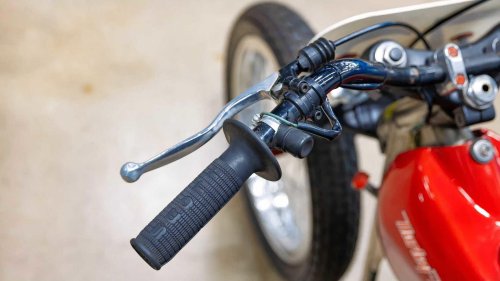
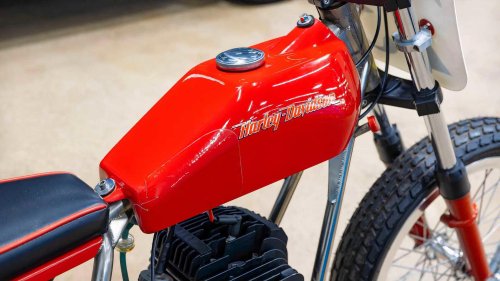
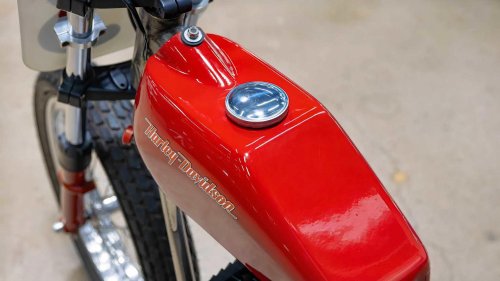
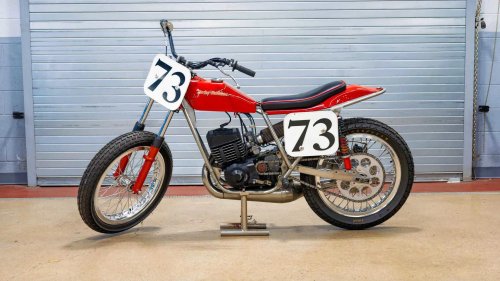
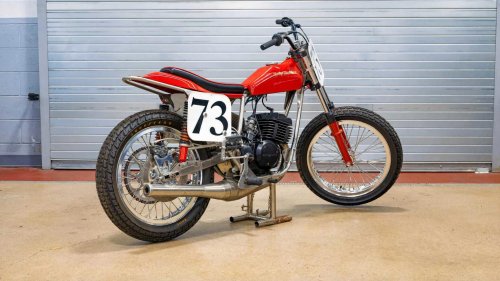
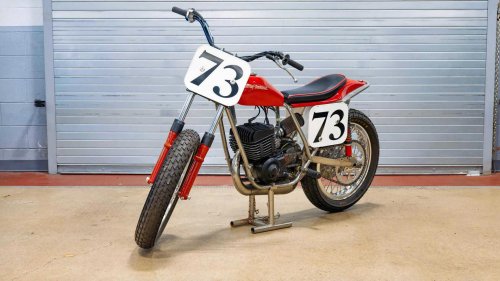
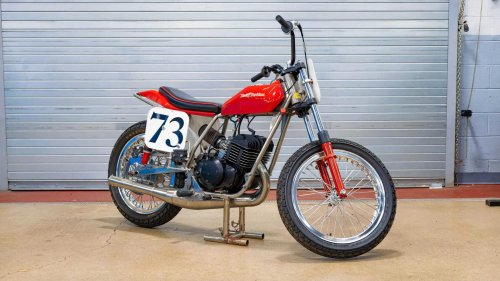
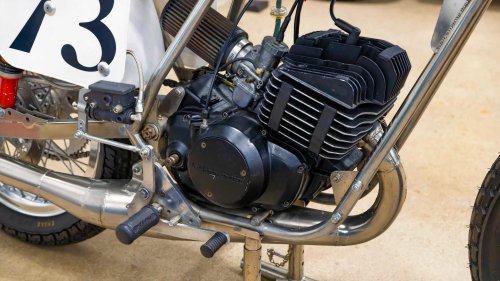
Harley-Davidson spent decades building its name around thunder, chrome, and pavement. Then, for one strange moment in the '70s, it went chasing flying dirt, teenage cool points, and motocross relevance with a machine that barely made sense next to an Electra Glide. The weird part is that it was more than a footnote. It was a serious attempt to grab a place in one of motorcycling’s hottest corners.The thing to note is that Harley did it right. It wasn't fooling around with a styling exercise or some back-room prototype nobody outside the factory ever saw. It spent years developing a real off-road racer, gave it real engineering effort, stocked it at dealers, and asked buyers to believe the bar-and-shield belonged in the dirt. For one glorious minute, Harley tried to become the cool kid at the motocross track. Harley Wanted A Future It Didn’t Fully Understand Bring a TrailerBy the '70s, motocross had turned into the kind of thing every manufacturer wanted a piece of. It had youth appeal, racing credibility, and that all-important sense of momentum. Harley, meanwhile, was deep in its AMF years and trying to figure out how to respond to a market that was changing fast. Big Japanese competition was reshaping expectations, and Harley needed something that felt younger, lighter, and less tied to tradition. Motocross looked like an opening.On paper, Harley actually had a route in. It already owned Aermacchi, the Italian manufacturer behind several small-displacement bikes sold under Harley branding, and by 1973 it had full control of the company while keeping the factory in Varese. That gave Harley access to engineering talent, manufacturing capability, and some genuine experience with smaller machines. If you were sitting in a boardroom and trying to convince yourself this would work, that was probably the part of the presentation where everyone nodded.The hard part came after the PowerPoint logic, except it was the '70s. So it was probably a stack of folders and a cigarette tray. Selling a motocross bike is one thing, but selling a Harley motocross bike to Harley dealers and Harley customers is...tough. This was a company whose image was already solidifying around big road machines and American excess. Asking that audience to get excited about premix, jumps, and mud was always going to be a tough sell, even before the bike itself entered the chat. The Idea Got Stranger The Closer It Came To Production Bring a TrailerHarley didn't stumble into this half-asleep. The MX project was developed over roughly four years, with factory riders feeding information back into the process. Early bikes were bizarre enough to sound like somebody had built them after losing a bet, including prototypes that used shortened front forks at the rear in search of more suspension travel. That setup didn't survive, which is probably for the best, because even back then it sounded like a sketch that should have stayed on a workshop napkin.By late 1977, Harley had something that looked much closer to a proper production racer, but impressions at the time still treated it like a machine caught between prototype thinking and showroom reality. That's part of what makes the bike in question such a compelling oddball today. Harley was clearly serious, spending money, and sourcing quality pieces, yet the motorcycle still carried an air of being unfinished around the edges. It had all the energy of a final draft that somebody submitted five minutes before deadline. Not All There Yet Bring a TrailerThat unfinished feeling showed up in the details. Reviews at the time praised the quality of many parts and the amount of hand work in the bike, but also pointed to awkward gearing, fragile side plates, and packaging choices that complicated maintenance. The bones were serious, though, even if the refinement wasn't always there yet. Keep in mind that Harley was trying to enter a category where the best bikes already felt sharp, sorted, and ready to race. The Two-Stroke Harley MX250 That Time Forgot Bring a TrailerIf you hadn't pieced it together yet, the bike was the 1978 Harley-Davidson MX250, a Varese-built dirt bike powered by a 242.6cc two-stroke single. It came with a 5-speed gearbox, a 2.2-gallon fuel tank, drum brakes, a 57.3-inch wheelbase, and a $1,695 sticker price. In other words, Harley really did build a proper little motocross machine, and it really did put it into production.Its component mix made the whole thing even stranger and cooler. Aermacchi built the bike and the engine in Italy, the carb came from Dell'Orto, the ignition came from Dansi, and Tommaselli supplied the forged levers, while Akront provided the rims. Kayaba handled the suspension, and Harley supplied the bodywork. It was an international all-star team assembled for a bike wearing one of the most American badges in motorcycling. Honestly, the passport stamps alone should have come with the owner’s manual.In period form, the MX250 was also no featherweight miracle. It carried a 220-pound dry weight, 30 degrees of rake, and 5.5 inches of trail, which helps explain why it earned a reputation for stability at speed. It looked sharp in orange and black and had enough visual appeal to draw a crowd, but it wasn't some tiny buzzing toy. There was substance here, and that substance made the bike appealing in some settings while working against it in others.It also barely lasted. Fewer than 1,000 were ever made, and Harley reportedly built around 900 examples for the 1978 model year before the whole experiment fizzled. No wonder, then, that the MX250 feels almost fictional today. Plenty of Harley people have never seen one in the metal, and plenty more probably hear “two-stroke Harley dirt bike” and assume someone’s winding them up. It Was Better Than Its Reputation And Tougher Than Its Sales Bring a TrailerAll said and done, though, the MX250 had real ability. Reviews at the time found excellent high-speed stability, strong straight-line composure through sand washes and rough terrain, and suspension that worked very well in desert and cross-country use. The bike could soak up bumps, stay planted, and keep charging without overheating or pinging during a hard day of riding. That's not the profile of a complete disaster, honestly. Frustratingly Unrealized Potential Bring a TrailerThe trouble was that it could be a handful. The engine was famously pipey, with useful thrust concentrated in a narrow band and tall gearing that made the bike demanding in technical sections. Testers at the time described it as something that had to be ridden hard if it was going to be ridden well. Off the pipe, much of the punch faded. Add in a stiff-shifting transmission and a hard-pull clutch, and the MX250 started to sound less like a broad-market breakthrough and more like a motorcycle with very loud opinions.It could also reportedly fight back in annoying little ways. The pipe could burn a rider’s leg in left-hand turns, while the front brake cable routing needed improvement. One test bike suffered a loosened primary-drive gear nut, though it ran without further failure after repair. Testers basically landed in the same place: the engine was serious, the suspension was good, many parts were first-rate, but the package still needed refinement. So the potential was clearly there, just frustratingly unrealized. Its Failure May Be Why It Still Matters Bring a TrailerCommercially, the MX250 had the lifespan of a mayfly. Dealers reportedly didn't want it, and customers didn't rush in to buy it. Harley effectively forced it into showrooms anyway, which was about as graceful as tossing a motocross helmet onto a bar counter and calling it product strategy. A one-year run followed, and then the program was gone. For a company already dealing with broader AMF-era turbulence, this was one experiment it couldn't justify keeping alive. Flash In The Pan Bring a TrailerBut, the story doesn't end there. Jay Springsteen rode a factory, Bill Werner-prepared Champion-framed MX250 to major short-track wins, and Scott Parker also used the machine to score his first short-track GNC win. Versions of the bike continued racing for years after the motocross experiment itself had already flamed out.So it wasn't a total write-off, then. Harley built a dirt bike that never really found its audience, but it proved Harley was willing, if only briefly, to do something genuinely weird. In a corporate history full of heavyweight legends, that odd little two-stroke feels like the scrappy cousin nobody talks about at family dinners.Sources: Cycle World, National Motorcycle Museum, Ride Apart.