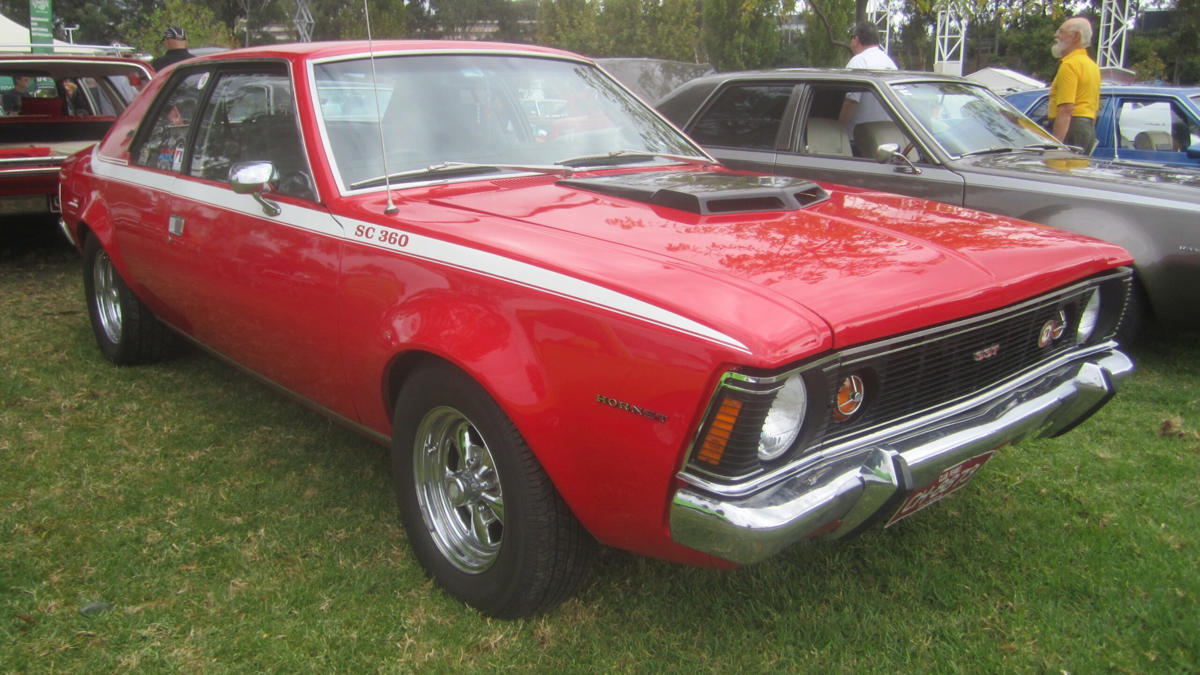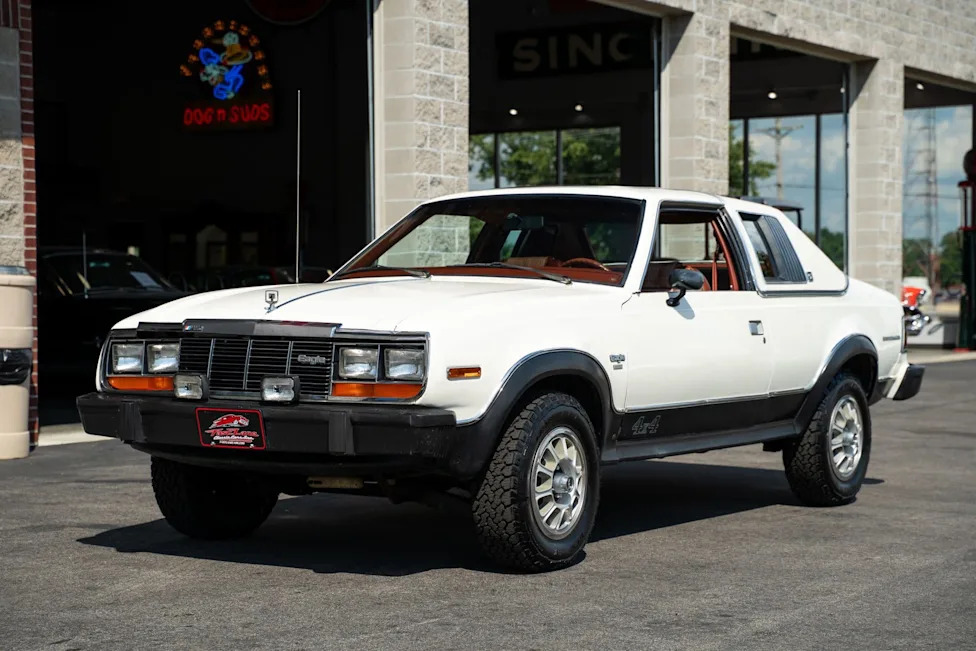
























The golden age of American muscle cars is full of icons with big names, big engines, and even bigger personalities. But not every performance hero came with stripes on the fenders or a name that echoed through drag strips. Some of the coolest builds from that era flew under the radar, hiding their horsepower behind wagons, roof racks, and tailgates.These were the cars that didn’t follow the script. They weren’t barking through open headers or plastered across dealership ads bragging about quarter-mile times. Instead, they played it cool by blending practicality with just enough punch to surprise anyone who underestimated them.This story isn’t about the cars you’ve already heard of. It’s about a forgotten oddball that dared to do things differently. So, if you’re into underdog charm and sleeper muscle cars, then buckle up. This one’s for you. AMC's Oddball Formula: Meet The 1971 Hornet Sportabout 360-Powered 1973 AMC Hornet X Gucci SportaboutWhen it comes to underrated muscle cars, nobody maintained its underdog status quite like AMC. While the Big Three were busy flooding the market with muscle cars backed by deep pockets and flashy ads, AMC was over here mixing practicality with personality on a shoestring budget. Case in point: the 1971 AMC Hornet Sportabout.The Hornet itself debuted in 1970 as a compact alternative to cars like the Ford Maverick and Chevy Nova, but AMC wasted no time adding personality. Just one year later, they introduced the Sportabout: a station wagon variant that didn't act like one. It was shorter than most wagons, lighter than it looked, and maybe most important, available with a 304-cubic-inch V8 under the hood. That engine, paired with a floor-shifted automatic and AMC's trademark quirkiness, made for a muscle wagon that could genuinely hustle.via Bring A TrailerThe Sportabout ran from 1971 to 1977, but it's the early V8 versions that really stand out. In its first year alone, AMC sold just over 73,000 Hornet Sportabouts, offering everything from bare-bones economy to woodgrain-clad style with optional bucket seats and rally wheels. It wasn't just practical. It was funky, which was especially rad in the '70s.This was the kind of car that could drop the kids off at school, run a quarter-mile on the way home, and still park neatly in any suburban driveway across America. And unlike the more aggressive AMX or Rebel Machine, the Sportabout didn't shout. Nope, it simply grinned, knowing that its appearance made it a silent assassin just waiting to embarrass any muscle car it encountered in the left lane.via Bring A TrailerIn a world dominated by coupes and fastbacks, AMC quietly built one of the coolest muscle wagons of the era. However, most people didn't even notice, except for the few gearheads who have some real taste and maybe a bit of a soft spot for the more quirky builds, too. Today, the Hornet Sportabout is a rare reminder that performance doesn't have to come in a loud, low-slung package. Sometimes, it looks like a family hauler with just enough attitude to surprise you. How The AMC Hornet Became A Hot Rod Wagon 1975 AMC Hornet Sportabout XOn paper, the 1971 Hornet Sportabout didn't scream performance. The standard engine in the Hornet Sportabout was a 232-cubic-inch inline-6. It was rated at 145 hp and 215 lb-ft of torque. It was the type of engine that was known to be smooth, reliable, and frugal. However, sometimes when you'd pop the hood of one of these Sportabout models, you'd find something that told a different story.You see, buyers who wanted more than just style and storage could spec their wagon with AMC's 304-cubic-inch V8, a small-block that gave the Sportabout just enough grunt to turn heads and chirp tires. It was rated at 210 horsepower and 305 lb-ft of torque. While the 304 engine wasn't breaking any records, it certainly made things interesting in a compact wagon weighing just over 3,000 pounds. You didn't get the full muscle car theatrics like you did with the SC/360 coupe, but you still got something way cooler than a wood-paneled grocery-getter. 1971 Hornet Sportabout V8 Specs Vs. 1971 Hornet SC/360 Specs What made the Sportabout so special is that it wasn't a muscle car pretending to be a wagon. It was a wagon that quietly packed enough power to earn a little respect from the guy in the next lane, all without sacrificing its ability to haul kids, groceries, or camping gear. And while the SC/360 was AMC's headline performance car that year, it was a limited-run, two-door coupe.In contrast, the Sportabout was stealthy, more widely available, and weirdly well-balanced while offering a blend of practicality, performance, and AMC eccentricity that no one else dared to try. The 1971 Hornet Sportabout V8 is one of the coolest oddballs to come out of the 1970s because it's not every day you find a muscle-adjacent wagon with factory rally wheels and the guts to back them up. Why the Hornet Sportabout V8 Faded Into the Background 1975 AMC Hornet SportaboutThe Hornet Sportabout V8 had all the makings of a cult classic. It featured quirky styling, decent power, and practicality in spades. But somewhere between AMC’s big ideas and the muscle car era’s slow fadeout, this oddball wagon slipped through the cracks.Part of the problem was timing. By 1971, the golden age of muscle was already losing its shine. Rising insurance premiums, tighter emissions regulations, and a looming oil crisis were all beginning to squeeze the market. Buyers were turning their attention toward smaller imports, more efficient engines, and frankly, anything that didn’t guzzle fuel or shout horsepower. A muscle-adjacent wagon just didn’t have the staying power.The other issue? AMC simply didn’t have the marketing firepower to make the Sportabout V8 stand out. The SC/360 got the performance headlines. The Javelin got the spotlight. And that meant the Sportabout had to be tucked neatly into the brochure, quietly doing its thing while other nameplates grabbed the glory.Lastly, add in the fact that it was still, at the end of the day, a station wagon, and it’s easy to see how the Sportabout V8 became more of a footnote than a fan favorite. It wasn’t flashy. It wasn’t fast enough to scare anyone. But for the few who looked past the sheet metal and saw the potential, the Sportabout was a rare kind of cool: understated, usable, and just rebellious enough to stand out. A Forgotten Cool Factor: Other Quirky Muscle Wagons Worth Knowing 1971 Ford Torino Squire Station Wagon 429 Cobra JetThe 1971 Hornet Sportabout V8 wasn't the only wagon flexing its muscles in the shadows. A few other oddball long-roofs from the era also blurred the lines between practicality and performance. Two more muscle wagons worth knowing are none other than the 1971 Ford Torino Squire Wagon and the 1970 Oldsmobile Vista Cruiser 455. Meet The 1971 Ford Torino Squire Wagon The 1971 Ford Torino Squire Wagon wasn't much to look at on the outside. It had faux wood on the sides, for crying out loud. But, under the hood, it was a whole different story. According to Hemmings, buyers could spec it with the 429-cubic-inch Cobra Jet V8. That meant the Torino Squire was rated for 370 horsepower. It also featured a C6 automatic and a rear end ready-to-roast tires.It was heavy, wide, and built like a cruise missile with a tailgate. Most people remember the Torino GT coupe, but the Squire wagon with the CJ option? That's a sleeper for the ages. Meet The 1970 Oldsmobile Vista Cruiser 455 Then there's the Olds Vista Cruiser 455. While never factory-badged as a 442, some dealers got creative. According to Auto Evolution, dealers began stuffing the Vista's long roof with Oldsmobile's 455 V8 that was rated at 365 horsepower. This gave the car an SS-style presence, even if it wasn't factory-official.This rendition kept the roof glass, the third-row seat, and a big-block attitude. Production numbers for these dealer-built muscle wagons are unclear, but real ones pop up now and then, and they're every bit as cool as they are rare.Both the Squire and the Vista were big, bold, and surprisingly quick. Just like the Sportabout, these old wagons served as proof that muscle could come in all shapes, even ones built to haul strollers and suitcases. At the end of the day, these three oddballs made utility look unexpectedly cool.In a decade packed with coupes, fastbacks, and flashy badging, the muscle wagon never really got its moment in the sun. But cars like the Hornet Sportabout V8, the Torino Squire CJ, and the Vista Cruiser 455 prove that performance didn’t always have to come wrapped in a two-door shell. These oddball long-roofs brought power to the people in a package that was quiet, confident, and just weird enough to keep things interesting. Today, they stand as reminders that the muscle car era wasn’t just about speed. It was about character. And few vehicles had more of it than the ones that could roast tires and haul groceries in the same trip.Sources: AMC, Hemmings, Mac's Motor City Garage.