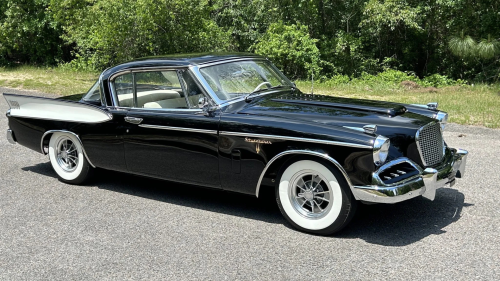
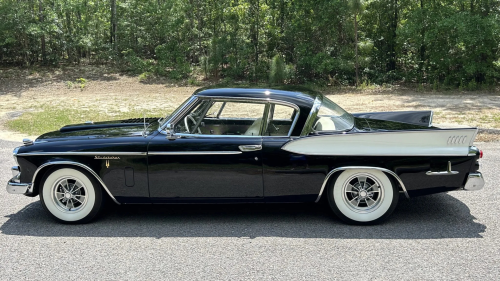
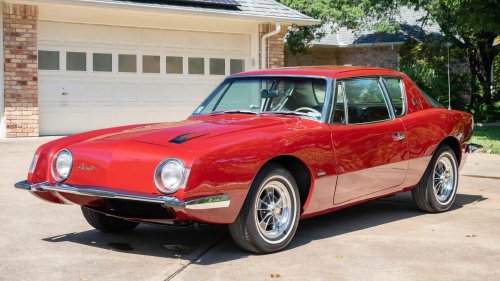
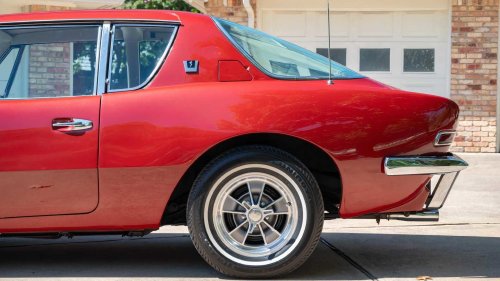
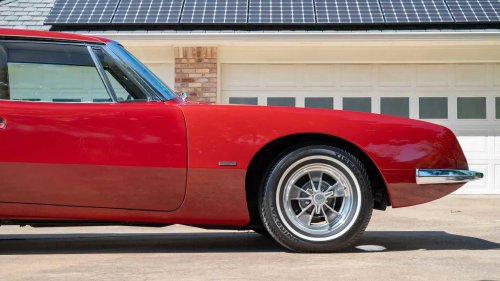
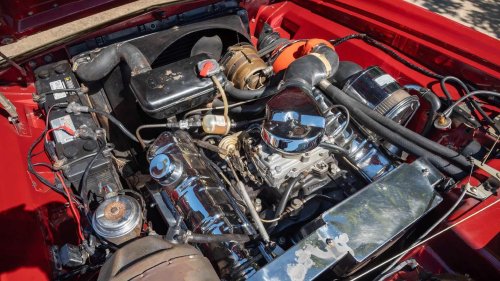
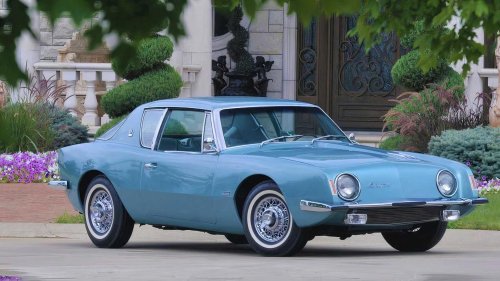
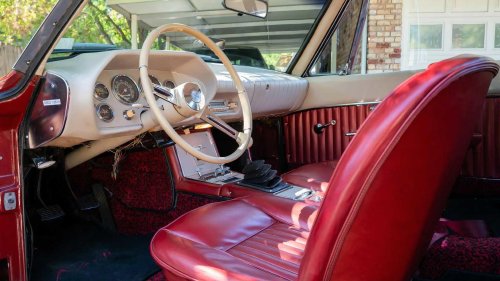
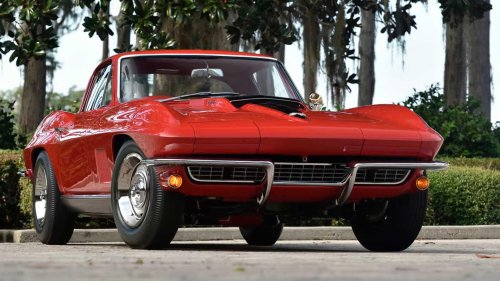
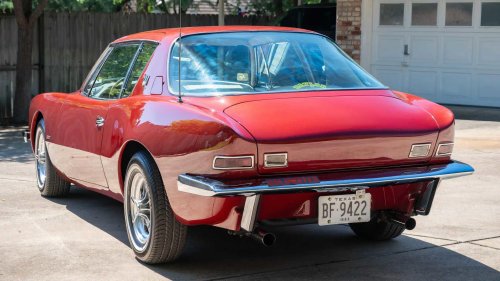



















The Americans love a sports car with a big-name badge. The legends usually come from the giants – Chevy sells the dream, Ford sells the hype, Dodge sells the smoke show. Sure, that makes sense – big companies have big budgets, big racing programs, and big ad departments that can convince a sensible person to finance a bad decision at 7.9 percent.But every so often, a smaller brand swings for the fences. It builds a car that looks like it landed from next week, not last year. It packs in ideas Detroit won’t touch yet, and tries to punch above its weight in a class where the heavyweights throw elbows. That’s exactly the story of a struggling American automaker that needed a headline and bet its future on one bold coupe with a weird body. The Last Great Gamble From A Company That Couldn’t Afford To Miss via Bring A TrailerStudebaker entered the early 1960s in a bad spot – sales shrank, the brand image sagged, and new president Sherwood Egbert knew the company couldn’t live forever as “the folks who sell the Lark.” The company sold only 72,155 cars the prior year, and only showed profit after it sold off its plastics division to Monsanto. That’s like “sell the furniture and hope the landlord doesn’t notice.”Egbert wanted a car that changed the conversation. He needed something that made people stop mid-step at the dealership window. Studebaker had to break its link to “plain-feathered” cars with something daring and new. Egbert sketched a new idea and took it to industrial design star Raymond Loewy. Loewy said he and Egbert shared the same “wave length,” which sounds like a 1961 way to say, “Yeah, this could be cool.”via Bring A Trailer The schedule made the plan even crazier. Egbert asked for a finished design in about 40 days. Loewy accepted, but he demanded secrecy and distance from the home office. He pulled a small team together and set up shop near Palm Springs to work fast and stay quiet. He rented a house and sequestered Tom Kellogg, Bob Andrews, and John Ebstein so they could focus and move at warp speed.Studebaker also planned a marketing blitz that acted like a victory lap before the car even hit full production. That materialized in a 16-day, 24-city tour right after the debut, with crowds placing deposits as the company pushed the idea of an advanced, fast, safe halo car. That part worked, actually – the buyers showed up, the problem came next, and it hit like a dead battery on date night. The 1963 Studebaker Avanti Anticipated The Future Bring A Trailer Studebaker called that car the Avanti, Italian for “forward.” When you look at it from a distance, the name makes sense, since it tried to drag an entire company into the future by sheer force of personality. To a large extent, the car was something U.S. motorists hadn’t seen before. The Avanti also arrived with numbers and hardware that backed up the attitude. Studebaker marketed it as “America’s Only Four-Passenger, High-Performance Personal Car,” and it leaned hard on speed records from Bonneville to support the brag. Ads also called it “America’s Most Advanced Car.”Under the skin, Studebaker mixed fresh thinking with smart parts-bin choices. The used a fiberglass body over Studebaker bones, including a frame and suspension derived from the Lark, plus a Studebaker V8 and a Paxton supercharger option. That mix kept costs lower than a clean-sheet platform, but it still delivered a car with a distinct personality. A Shape That Didn’t Follow Detroit’s Rulebook Bring A Trailer The Avanti’s styling came out of a pressure cooker, and it shows in the best way. Loewy pushed a grilleless nose, a coke-bottle waist, and a fastback-like tail. In Detroit, designers usually asked, “Where do we put the grille?” Loewy asked, “Why do we need one?”That nose still looks strange today, but it also looks modern. The air enters from below the bumper area, not through a big mouth up front, and later changes even added details around that opening. The Avanti basically did the “clean face” thing decades before every EV decided it wanted to look like a polite bar of soap.Studebaker also picked fiberglass to make the wild shape possible without spending like General Motors. It was reportedly a 129-piece body, and the shell weighed just about 550 pounds. Fiberglass let Studebaker chase curves and sharp details that stamping dies would have made painfully expensive. The downside came later, but on day one, it gave the Avanti a look that still stops people at gas stations. Yes, even in 2026. Tech That Reads Like A Modern Car Bring A Trailer The Avanti wanted to not just look like tomorrow, but also protect its passengers like tomorrow. A padded structural roll bar built into the B-pillar was offered as standard equipment. There was also an advanced roll-bar design, along with other features aimed at crash protection.Then come the brakes. Studebaker gave the Avanti power front disc brakes as standard equipment, and that was a first among domestic makes. The brakes were supplied by Bendix under a Dunlop agreement.Inside, the Avanti mixed luxury with airplane vibes and a few oddball touches. Overhead rocker switches are worth mentioning, and a pull-out “Beauty Vanity” in the glovebox. Yes, Studebaker basically built a makeup drawer into a performance coupe. That’s either brilliant or just stupid. Other options include power windows, seat belts, and even air conditioning on non-supercharged cars. The Avanti R2 Was The Fast One Bring A TrailerStudebaker offered multiple power levels, but enthusiasts usually chase the supercharged badge. The base R1 used a 289 V8 with about 240 horsepower. The R2 added a Paxton supercharger and bumped output to around 289 horsepower.The numbers land right where a real early-’60s performance coupe should land. Independent testing lists 0–60 in about 8.0 seconds and a quarter-mile in 15.8 seconds at 91 mph for an Avanti R2. That won’t scare a modern Hellcat, but it absolutely moved in 1963, especially in a four-seat package that tried to act grown up.And then Studebaker went to Bonneville to make the bragging stick, with 29 American national stock car records, including two-way averages like a flying mile at 168.15 mph and a 10-mile average at 163.9 mph, plus a return-leg peak of 178.5 mph on a longer run. Why It Ultimately Failed Mecum Auctions The Avanti didn’t fail because it lacked charm or speed – it failed because Studebaker couldn’t build enough of them, fast enough, with consistent quality. The fiberglass body, for example, caused the biggest headaches – Molded Fiberglass Products, the supplier that also made Corvette bodies, delivered panels that didn’t fit right, and Studebaker had to rework them. That rework slowed everything down, and it turned excitement into frustration.Studebaker planned volumes it couldn’t reach. The company aimed for about 1,000 cars per month, but only produced a fraction at first. That distortion during fiberglass curing contributed to delays, and Studebaker eventually added its own fiberglass body facility to try to fix the mess. Every week of delay gave buyers time to cool off, and buyers don’t stay loyal when another dealer across town has a Corvette in stock.Bring A Trailer Then the bigger problem hit – fear. Studebaker’s fiscal troubles deepened, and the public started to worry about buying any Studebaker at all. The company announced it would close the South Bend plant in December 1963, and the Avanti’s short run ended soon after. By the end, Studebaker shipped only 3,834 cars in 1963 and built about 4,643 total in that 18-month stretch. The perfect example of a great idea trapped inside a collapsing business. The Cars It Had To Beat Via: Mecum Auctions The Avanti walked into a shark tank. Chevrolet launched the C2 Corvette for 1963 with a fresh look and serious small-block options, and sources put 1963 production at 21,513 units. Studebaker built fewer than 5,000 Avantis across 1963 and 1964, and as everyone knows, scale matters in the car business. Chevrolet could flood the zone with parts, racing visibility, and dealer support, while Studebaker had to pick its spots and hope nothing went wrong. Plenty went wrong.Price didn’t help. A well-equipped Avanti costs around $5,000, and period pricing references list the base MSRP at $4,445 before options. The supercharger added about $210 The Avanti's Legacy Bring A Trailer Studebaker’s story ends sadly, but the Avanti refused to stay dead. Dealers Leo Newman and Nathan Altman bought the rights and restarted production after Studebaker bowed out. That reboot turned the Avanti into the Avanti II and kept the basic shape alive as a hand-built oddball long after the original company left the stage.The Avanti also left a quieter legacy in ideas. It treated safety as a feature, cleaned up the front end when everyone else still worshipped chrome grilles, and offered disc brakes up front as standard equipment when most Detroit cars still treated stopping as a polite suggestion. It did all that while carrying four people and their weekend bags. That mix looks normal now, but looked bold in 1962.Most of all, the Avanti gives enthusiasts a different kind of American performance story. It wins simply because it dared to act modern when its maker barely had money for lunch. The Avanti feels like a concept car that somehow slipped into the real world, grabbed a license plate, and started collecting bugs on the highway. That’s why people still smile when they see one. That, and because “Avanti” sounds like a pasta dish that can do 170 mph.Source: Avanti, Hemmings, MotorTrend