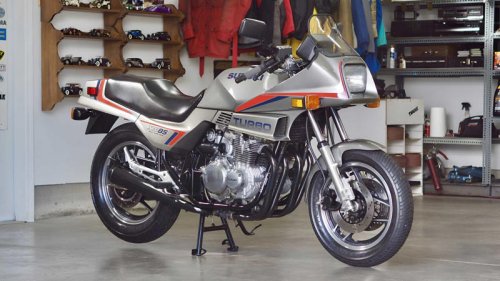
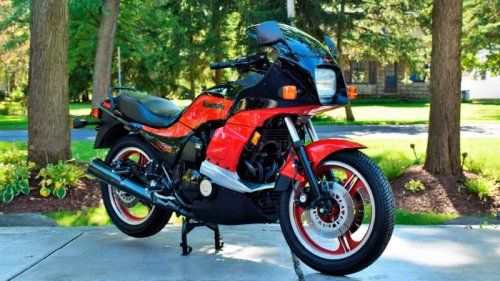
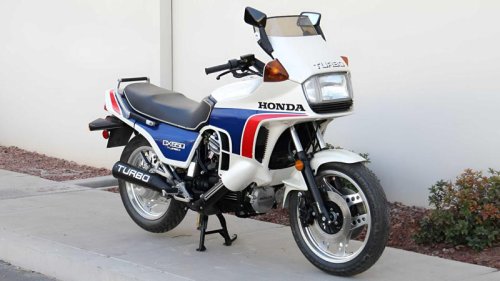
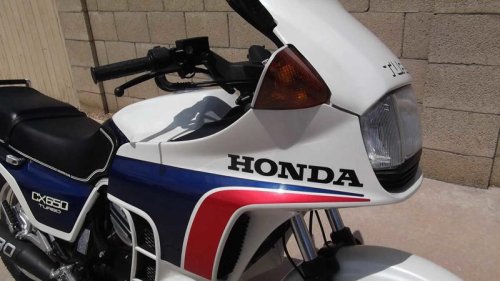
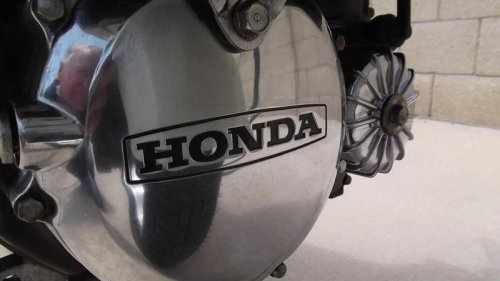
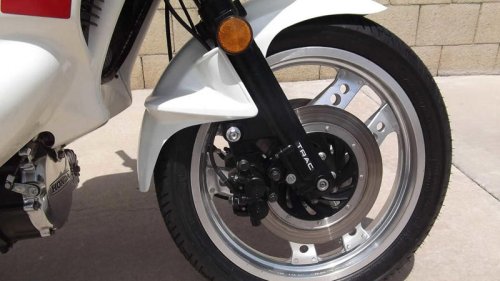
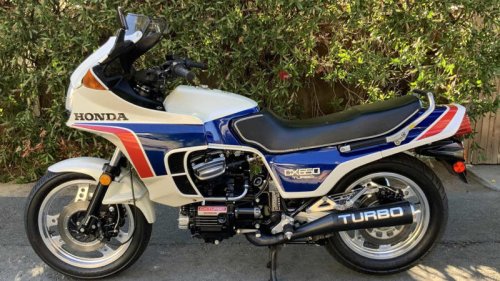
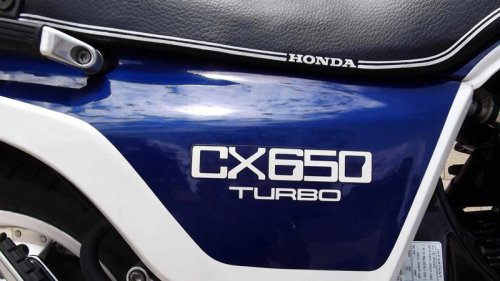
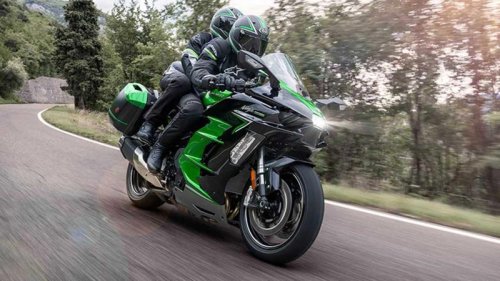
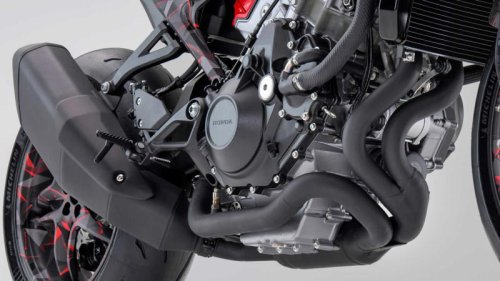


















In the early 1980s, motorcycle companies acted like the future would arrive through boost, sensors, and engineering tricks, not just bigger engines. Most street bikes still ran carburetors and simple hardware at the time, but Honda had started to think much further ahead—it wanted a machine that used electronics as part of the performance plan.The industry simply needed more performance without the efficiency penalty. Riders still wanted speed, but fuel economy and emissions had become harder to ignore after the 1970s, and turbocharging looked like a shortcut to both power and efficiency. Honda bought into that promise harder than anyone else. The Motorcycle Industry Thought Turbocharging Could Change Everything Bring a Trailer In the early 1980s, turbocharging looked like the next big leap for motorcycles. The pitch made perfect sense on paper—a smaller engine could make the power of a bigger one without turning the bike into a gas-hungry heavyweight. That mattered in a period shaped by fuel worries, tighter emissions rules, and a growing obsession with high-tech performance. Boost felt modern and sounded exciting—plus, it gave marketing teams a shiny new word to put in big letters.Honda saw more than a power add-on. It saw a chance to build a smarter kind of performance bike, one that used electronics and careful engineering to make turbocharging work on the street. Early aftermarket turbo kits often felt crude—they could make a bike fast, but not always friendly. Honda wanted to achieve boosted performance in the most refined way.Mecum Auctions The other Japanese brands jumped in too. Yamaharolled out the XJ650 Seca Turbo, Suzuki answered with the XN85, a more focused sport machine with fuel injection. Kawasaki came in with the GPz750 Turbo, which quickly earned a reputation as the brute of the group. For a short stretch, every major Japanese maker jumped on the same wagon – use forced induction to squeeze liter-bike drama out of a smaller engine.The problem came once riders left the showroom. Turbo bikes added heat, weight, cost, and complexity, and not all of them delivered smooth power where riders wanted it most. The idea still had real promise, but the hardware had not fully caught up. That is what makes this era so fascinating now—the industry was not wrong about the future, it just got there too early. The Honda CX650 Was A One-Year Wonder Mecum AuctionsHonda released the CX650 Turbo for the 1983 model year, and that was it. One year, one shot. It replaced the CX500 Turbo almost immediately after Honda realized the first bike had too much lag and not enough low-rpm shove. So the company enlarged the engine to 674cc, raised compression to 7.8:1, simplified the computer controls, revised the fuel injection, and changed the gearing.Those changes worked. The CX650 Turbo made a claimed 100 horsepower, enough to push the bike to about 140 mph in period testing, and that was serious speed in 1983. It also packed serious hardware around the engine, including triple disc brakes, Honda’s TRAC anti-dive front end, Pro-Link rear suspension, an integrated fairing, and those wonderfully odd boomerang ComStar wheels. It looked like a sport-tourer from the future, or maybe like a regular motorcycle that got hired for a role in a movie about the future. Even today, the bike has the kind of stance that makes enthusiasts stop mid-sentence and start pointing at details.BaT Yet the CX650 Turbo stayed in the catalog for only that single model year. Part of the problem came from timing – the market had already seen the earlier CX500 Turbo and learned to expect lag, weight, and complexity. Part of the problem came from identity—the CX650 was quick enough to wear a performance badge, but its shaft drive, fairing, and roomy layout pointed toward long-distance duty. Reviewers and buyers did not always know where to place it—Honda had built a motorcycle with a very clear engineering brief, but the market still looked at it and shrugged, like a dad trying to program a VCR. Electronic Fuel Injection And Boost Control BaTThe real magic lived in the electronics. Honda’s turbo project used a digital computer that read sensor data, tracked boost pressure, throttle opening, rpm, and temperature, and then adjusted fuel and ignition to match. That may sound normal now, but on an early 1980s street bike, it bordered on absurd. Most motorcycles of the day still solved problems with jets, screws, springs, and hopeful thinking, but the CX650 had an entirely different approach.That computer made a huge difference. When boost rises, cylinder pressure rises with it, and mistakes get expensive fast. Honda’s system varied fuel pressure with boost and adjusted ignition timing to keep detonation in check. On the earlier CX Turbo program, the computer even considered boost pressure as a core input in addition to throttle opening and rpm, something normal naturally aspirated motorcycle systems did not have to worry about. The CX650 then simplified that circuitry while keeping the core idea intact.BaT The CX650 also hid a few clever details that casual fans often miss. What looked like a normal fuel tank did not hold the whole fuel supply, because Honda placed an auxiliary tank under the seat and used an electric pump to link the two. The layout helped free up space around the engine and turbo plumbing, and it fit the bike’s layered, almost concept-bike packaging. The electronics even included fault indicators, a primitive version of the warning lights modern riders now take for granted. A Technological Marvel That Didn't Get Recognition Bring A Trailer The biggest reason the CX650 Turbo never got its flowers came down to timing and momentum. By the mid-1980s, naturally aspirated sport bikes were improving at a brutal pace—manufacturers found easier ways to make power, and they did it without the extra plumbing, heat, and engineering headache that turbocharging demanded. Honda itself soon had V4 machines that delivered strong performance with fewer compromises. In that environment, the turbo bike stopped looking like the future and started looking like a very expensive detour. It was still clever, still fast, and still packed with ideas, but the market had already moved on to solutions that felt simpler and easier to explain.The CX650 also paid for the CX500’s mistakes. The earlier bike had made headlines for its innovation, but it also taught riders to expect a soft low-end response and a noticeable rush when the boost finally arrived. The 650 improved that formula with more displacement, more compression, revised injection, and a smoother transition into power, but first impressions are very difficult to change. Honda solved a lot of the engineering problems just after many buyers had stopped listening.BaT Then there was the bike’s personality. The CX650 Turbo was not a razor-edge racer, and Honda did not really pretend otherwise. It had sporty numbers, but it made more sense on fast sweepers and long highway runs than on tight switchbacks. Period reviews often framed it as a sport-tourer with a warp button and not a pure canyon scalpel. That probably hurt it in showrooms, because buyers tend to understand clear categories – a machine that sits between them can end up admired by everyone and purchased by fewer people. The CX650 was a little like a Swiss Army knife that could also throw a punch – useful, fast, and a bit hard to explain in one breath. Turbo Bikes Vanished, But New Tech Brought Them Back Kawasaki The first turbo-bike wave did not last because the costs stacked up faster than the benefits. Honda, Yamaha, Suzuki, and Kawasaki all explored forced induction in the early 1980s, and then most of them walked away. The bikes cost more to buy, weighed more than riders expected, and added complexity to machines that already asked a lot from their owners. At the same time, naturally aspirated engines got stronger, smoother, and more efficient. Once that happened, the case for turbocharging on a street bike grew weaker in a hurry.Still, the core dream never really died – it just waited for better tools. Kawasaki proved that years later with the Ninja H2 family, which uses a supercharged 998cc engine and modern electronics to deliver the kind of forced-induction performance engineers in the turbo era could only sketch on a whiteboard. It is not a turbo bike per se, but it chases the same basic promise—more power from clever air management, wrapped in a package that actually behaves.Honda Honda has circled the same idea again, too. In late 2024, the firm unveiled a V3 motorcycle engine with what it called the world’s first electrical compressor for a motorcycle, and in 2025, it showed the V3R 900 E-Compressor prototype built around that concept. The big difference lies in response—Honda says the electrically controlled compressor can manage intake air regardless of engine rpm, which means it can deliver strong torque across the rev range without waiting for exhaust flow to spool a turbo. That attacks the exact weakness that haunted the old turbo bikes—same dream, but smarter execution.That is why the CX650 Turbo matters so much now. It was an early attempt to merge software, sensors, and forced induction into a real street motorcycle. Some of its solutions looked clumsy because the tools of the day were still crude, and some looked brilliant because Honda’s engineers saw the direction before most people did. The CX650 Turbo was simply ahead of its time.Source: Honda, Cycle World, Hagerty