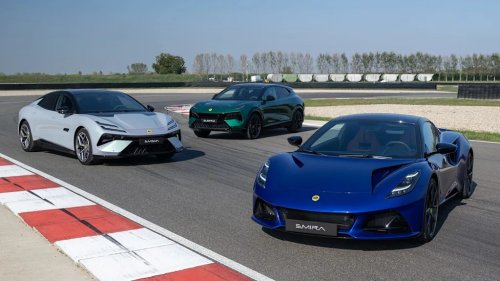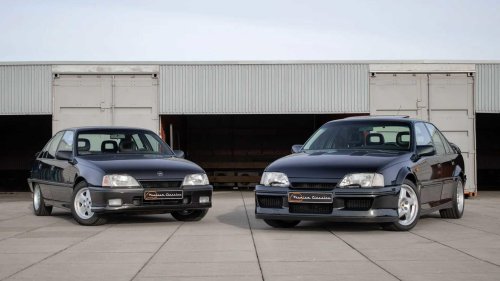
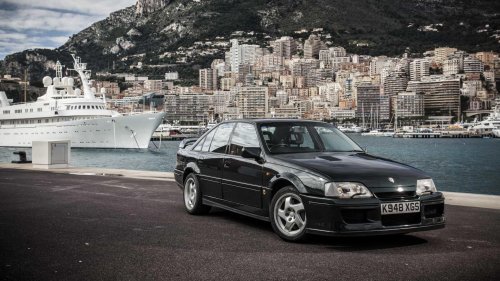
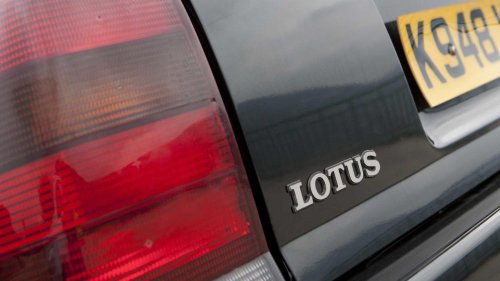
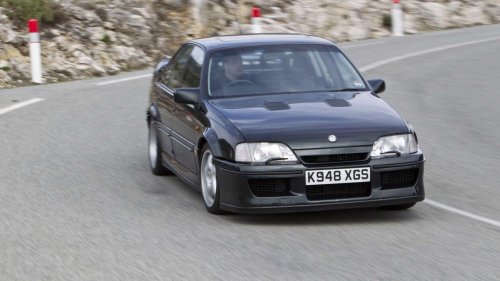
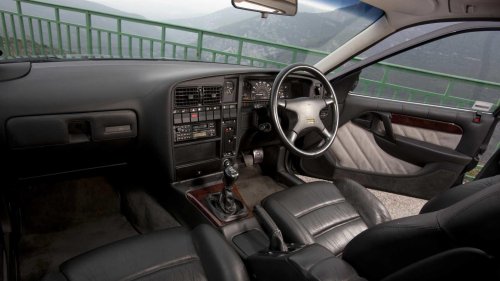
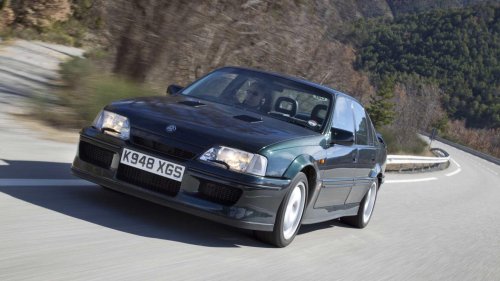
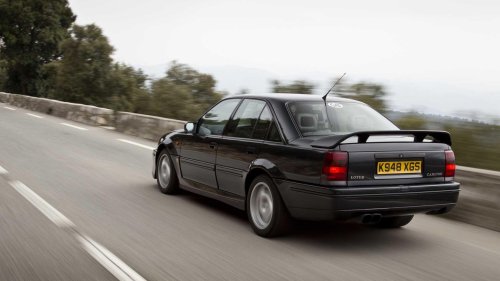



















The 90s witnessed the birth of some of the coolest cars ever made, and the Vauxhall Lotus Carlton was a legendary wolf in sheep’s clothing. This super-sedan began its life as a comparatively tame Vauxhall Carlton (also known as the Opel Omega A), which first came out in 1986. The Vauxhall Carlton's remarkable claim to fame was having a drag coefficient of 0.28Cd, as it was initially designed with fuel efficiency in mind. This made it one of the most aerodynamic production cars of the 90s. It even claimed the European car of the year in 1987, beating out impressive competitors like the Audi 80 and the timeless E23 BMW 7 Series.GM’s CEO at the time wanted to shed its boring car manufacturer image in Europe and decided that he wanted GM Europe (Opel) to make a fast and exciting car. During that era, Lotus Engineering was the go-to expert when it came to engineering fast cars. Although we all recognize Lotus for its incredible sports cars like the Emira today, back then, Lotus had more to bring to the table.Coincidentally, at the time, Lotus was already working with GM to build the LT5 engine featured in the underappreciated Chevrolet Corvette ZR1. Initially, the Vauxhall Senator was going to be used as a platform, but due to time and manufacturing constraints, Lotus switched to the Vauxhall Carlton. This historic decision would lead to the creation of the fastest sedan in the world. The Car That The Lotus Carlton Came From Vauxhall Carlton GSi 3000 Bring a TrailerBefore the Lotus-tuned sports sedan was a supercar slayer and a nightmare to all law enforcement, this four-door British sedan was dubbed the Vauxhall Carlton GSi 3000. Albeit nowhere near as mind-numbingly fast as the Lotus Carlton, the Vauxhall Carlton GSi 3000 held its own. Designed to be a hot sedan, but not as hot as a BMW E39 M5, the GSi packed up to a naughty 24-valve straight-six underneath its hood.Despite its age, even to this day, the old Vauxhall Carlton from the '90s can keep up with some lightweight sports cars like the Mazda MX-5 Miata. After all, the Carlton GSi 3000 reached 100 miles per hour from a stop in just 29 seconds. The GSi managed to accomplish all these feats due to the performance upgrades Vauxhall fitted to the car (without Lotus' assistance).Apart from improvements made to the engine, the Carlton GSi 3000 also benefited from a fully independent suspension that made the car sit lower to the ground, a limited-slip differential, larger and deeper bumpers, as well as a rear spoiler. Lotus Works Its Magic To Create The Vauxhall Lotus Carlton StellantisRegarding Lotus’ work on the exterior, the alterations were quite subtle, encompassing a rear trunk spoiler, cooling vents on the hood, Lotus badges adorning the front wings and trunk lid, a distinctive wide body kit, and notably broader wheel arches. These modifications set it apart from the standard Carlton model. Interestingly, the car was exclusively available in a single color—Imperial Green, which is different from British Racing Green.The Lotus Carlton’s styling was low-profile but gently foreboding, like the sight of an undercurrent. Next to other expensive sedans like the legendary BMW E28 M5, for example, the Lotus Carlton had a more muscular appeal, yet it looked dangerously similar to its lower-class brother, the GSi. However, what truly earned it notoriety was its astonishing speed. It was so fast, it was instantly outlawed in Britain, with legislators ordering the manufacturers to condemn their product. Several notable publications even ran slander campaigns trying to get the car outlawed. List of Engine Upgrades From Lotus: Expanded the Carlton GSi's 3.0-liter 24-valve straight-six engine to 3.6 liters. Meticulous upgrades to engine components, including pistons, crankshaft, connecting rods, intake, and exhaust. Incorporation of a pair of Garret T25 turbochargers. Resulted in a powerful 377-horsepower engine with 491 pound-feet of torque. Acceleration from 0 to 62 mph in 5.4 seconds. Official top speed of 176 miles per hour. Stellantis For such a formidable engine, Lotus also needed a transmission, which the company borrowed from the aforementioned American icon, the Chevy Corvette ZR1, as it was the only transmission that could handle the incredible torque. Chevrolet was not very thrilled to be sharing parts from their flagship sports car, and neither was Opel, which felt the Lotus Carlton was overshadowing their stock Opel Carlton GSi, which was the donor car.This meant that Lotus tried to hinder the production process of the Carlton as much as the British carmaker could. A single car took 130 hours to make due to an overtly complicated process involving the shipping of a fully made Carlton GSi back and forth between two facilities in Germany and the U.K.Lotus left no stone unturned in fine-tuning the Vauxhall Lotus Carlton's performance, and this included significant modifications to its suspension and steering systems. Building upon the already acclaimed multi-link suspension of the Omega, Lotus engineers enhanced it further to deliver superior high-speed stability and improved handling dynamics. A notable challenge Lotus addressed was the issue of substantial camber change, especially at high speeds or when the car was fully loaded.To tackle this, Lotus incorporated the self-leveling suspension from the Opel Senator, a thoughtful addition that contributed to the car's balanced performance. The final 17-inch wheel design, manufactured by Ronal, featured wider tires compared to those found on the Omega. These tires, called the Goodyear Eagle specifically, employed a tire compound akin to that featured on the Lotus Esprit Turbo SE. This compound blend facilitated heightened high-speed stability and enhanced performance, particularly in wet weather conditions. The Lotus Carlton Blew Away The Competition StellantisAll the controversy surrounding the Lotus Carlton only seemed to add an extra layer of mystique to the car, and enthusiasts were more interested in the car than ever before. A four-door Vauxhall that could seat five people comfortably was taking on the likes of attention-grabbing forgotten German and Italian exotic cars like the Porsche 911 Turbo and the illustrious Ferrari F40. Back in 1992, Autocar magazine timed the Lotus Carlton in its 0-100-0 MPH test in 17.0 seconds.The closest thing to it with four doors at the time was the BMW M5, which had way less power. If social media were alive, the Carlton would have blown up the web. The Carlton would have taken the crown as the people’s champion if not, for its relatively high price tag of £48,000 (which works out to $93,825 in today's money).Stellantis The price was high, and so was the insurance premium, which is ultimately what led to its demise, as people were not queuing up to buy them when there were plenty of cheaper cars from the '90s that were supercar killers. Besides, people already had their working-class hero in the shape of the iconic Ford Sierra Cosworth.However, the Carlton became a frequent target of car thieves and joyriders across the UK. An infamous story about a Lotus Carlton with the registration "40 RA" has become a part of Carlton’s history. It was reportedly stolen from a residence in the West Midlands region in the U.K. Over the following months, a group of criminals used the stolen car for midnight "ram raids", getting away with approximately £20,000 worth of cigarettes and alcohol.A police officer from the West Midlands Police remarked, "We've had an incredibly tough time trying to apprehend the culprits, and it appears increasingly unlikely that we ever will." This was because their police vehicles were ill-equipped to safely pursue the stolen Lotus Carlton. Interestingly enough, the criminals who did it were never apprehended, nor was the car ever recovered. In other words, the Lotus Carlton ran away from the law, and even some of the most formidable sports cars from the '90s. Remembering The Bold Spirit Of The Vauxhall Lotus Carlton StellantisIn hindsight, the Vauxhall Lotus Carlton did not drive out of dealerships, with just 286 examples sold in the U.K., as per Vauxhall Press records. At a price tag of £48,000, which was considered steep even in 1990, its limited market appeal was understandable. Yet, the legacy it left behind was far more enduring than its sales figures suggest.In an automotive landscape increasingly dominated by electric cars and eco-consciousness, the era of wild and unbridled creations like the Lotus Carlton has undoubtedly passed. While giants like BMW, Mercedes-Benz, and Porsche continue to craft powerful supersedans like the BMW M3 Competition, Vauxhall's bold foray into this realm during the 1990s remains a unique chapter in automotive history—one that is unlikely to be replicated.Stellantis The Vauxhall Lotus Carlton was a bold and audacious statement from an automaker willing to defy convention and push the boundaries of performance. It may not have been a commercial triumph, but it was never meant to be one. The unforgettable roar of its powerful engine on the open road reminds everyone of a time when automotive engineers dared to dream big. The automotive-obsessed community looks back at the Lotus Carlton as a relic of an era when sheer power and unadulterated speed were celebrated, a testament to the indomitable spirit of automotive innovation.