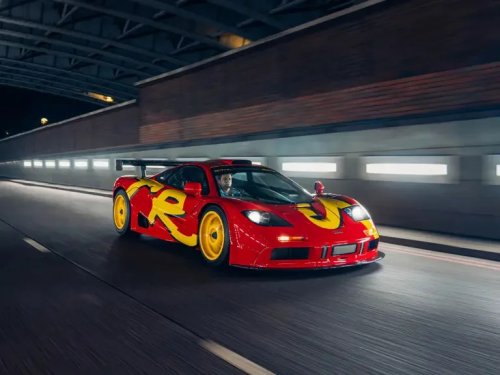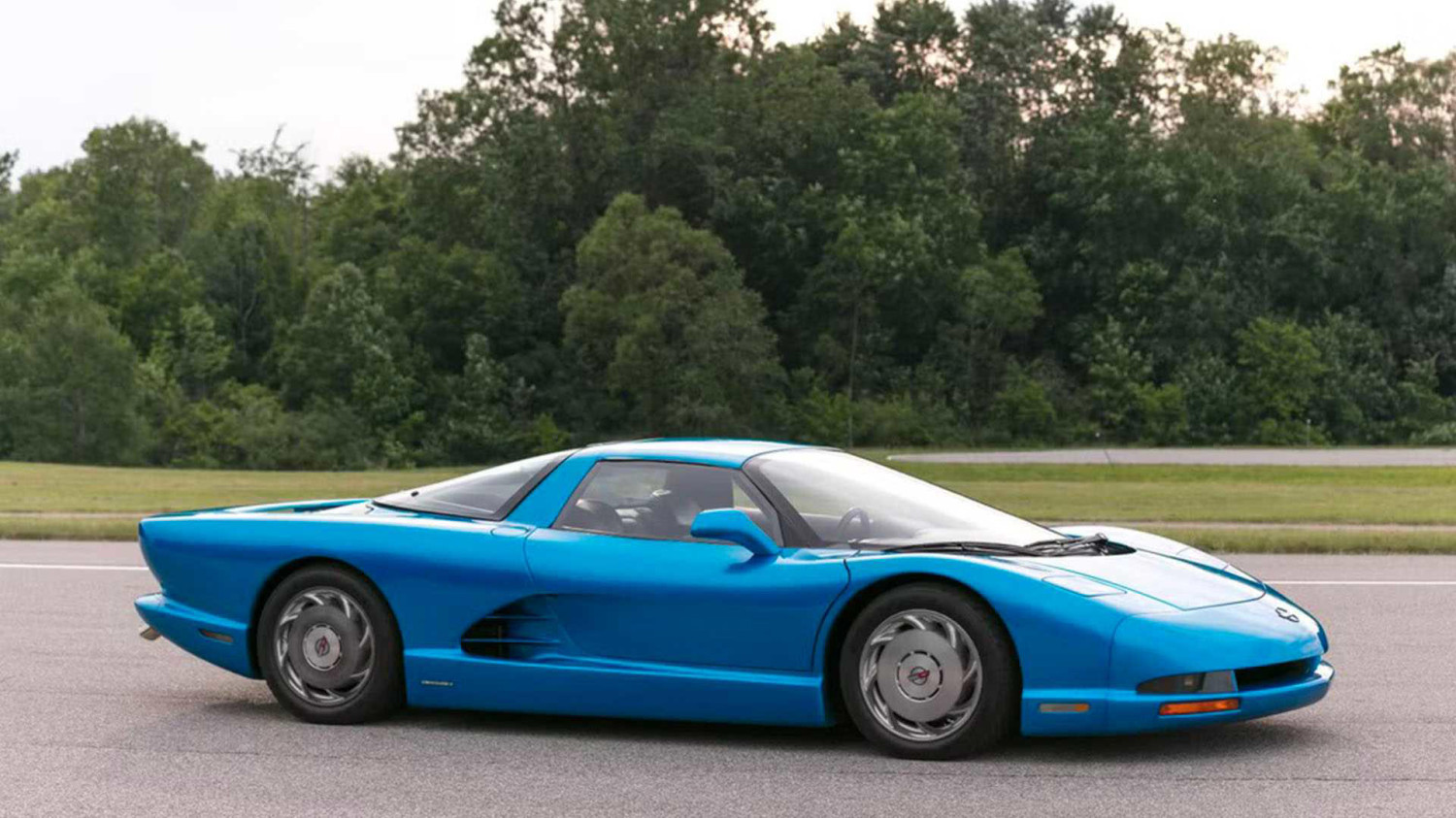
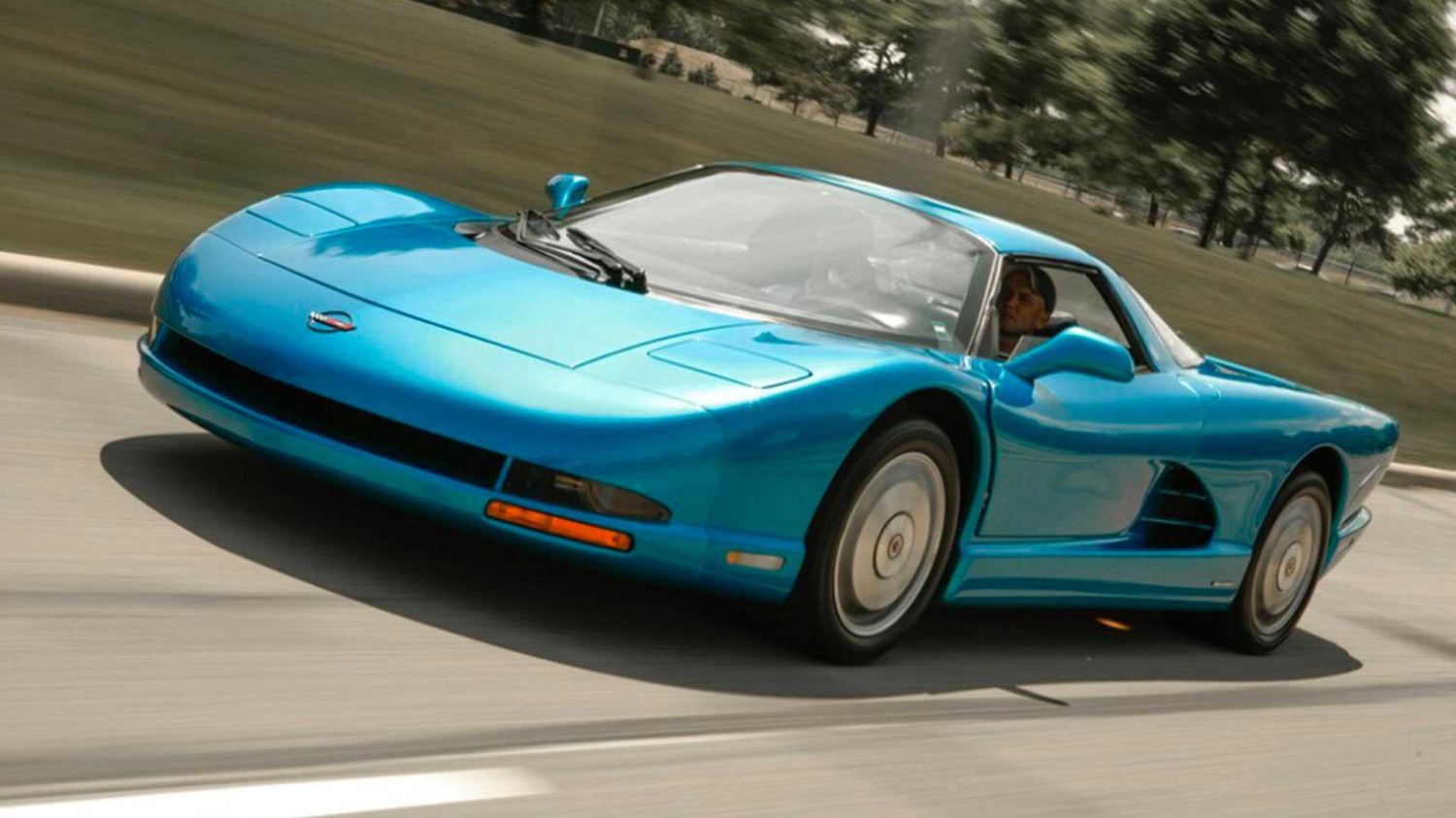
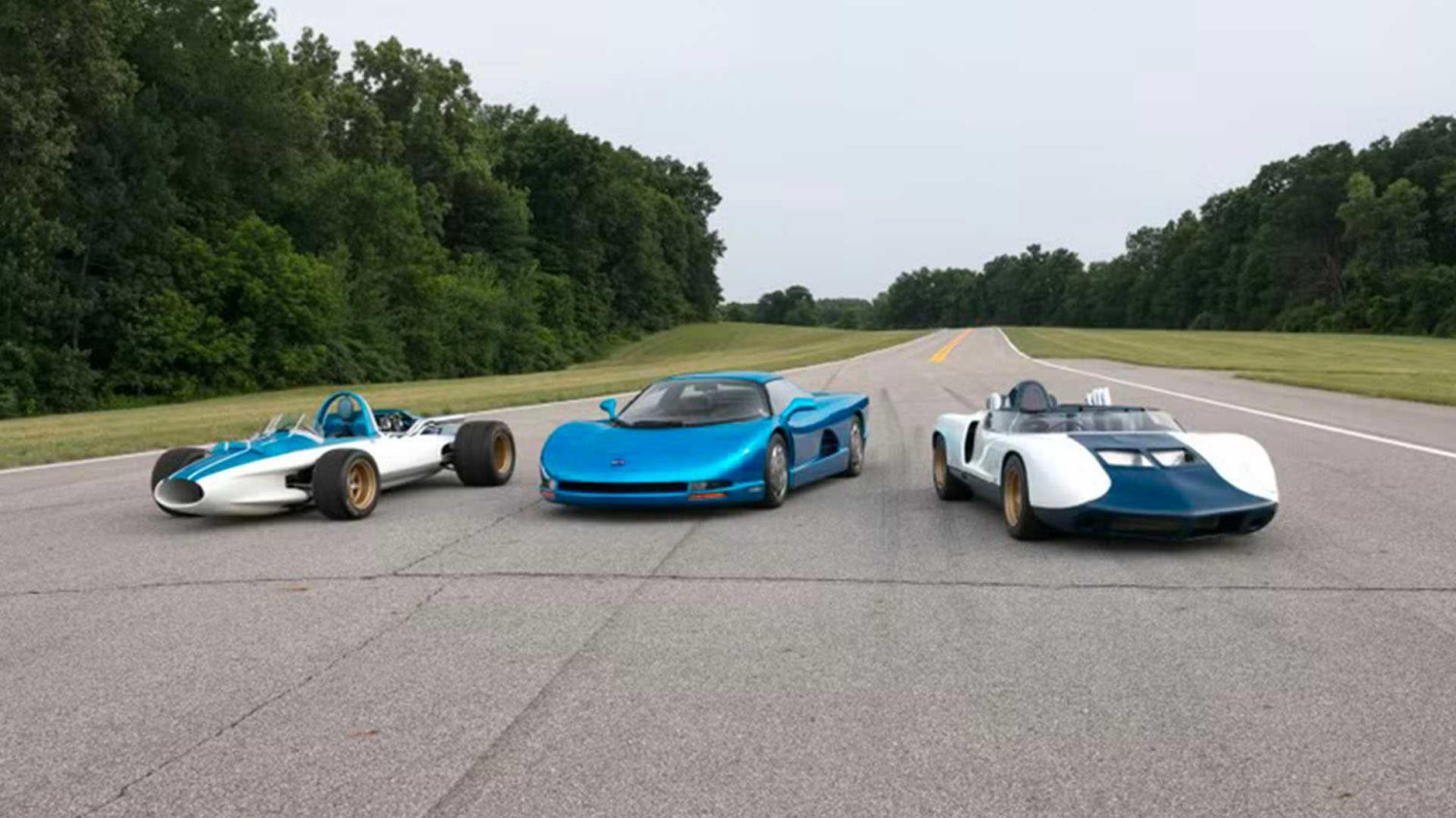



















The 1990s marked a turning point for supercars as automakers pushed the limits of speed, design, and engineering. The decade saw a wave of high-performance cars that redefined what road-legal vehicles could achieve. Among them, the McLaren F1 set a performance benchmark that stands strong three decades later. Launched in 1992, the F1 featured a 6.1-liter naturally aspirated BMW V12 engine, producing 627 hp and 479 lb-ft of torque. With a top speed of 240.1 mph, it remains the fastest naturally aspirated production car ever built.Other manufacturers followed suit, experimenting with lightweight materials, advanced aerodynamics, and an increase in the use of computer-aided design. Supercars like the Ferrari F50 and Jaguar’s XJ220 pushed boundaries with their own blend of power and design. These cars captured the imagination of a generation and became bedroom wall posters for enthusiasts around the world.In the background, American engineers explored their own radical visions of the supercar. These efforts didn’t always make it to production, but some concepts quietly matched, or even exceeded, the performance of their European counterparts. One of these projects, born in Detroit and packed with cutting-edge tech, and more power than the McLaren F1. Yet, most have never heard of it. The 650-HP 1990 CERV III Concept Was More Powerful Than The McLaren F1 1990 Chevrolet CERV III Concept Front Three Quarter Engine Specs (Source: Chevrolet)While the 240.1 mph McLaren F1 is often celebrated as the ultimate '90s supercar, the 1990 Chevrolet CERV III was fairly more powerful. With the McLaren F1 producing 618 hp from its V12, the 650-hp Chevrolet CERV III concept's twin-turbo V8 was substantially more powerful in terms of raw engine output.Chevrolet’s CERV III, however, came from a completely different philosophy. Designed as a high-tech research vehicle, it featured a 5.7-liter LT5 V8 developed in partnership with Lotus. Unlike the McLaren F1’s naturally aspirated engine, the LT5 in the CERV III used twin turbochargers to produce an estimated 650 hp and 655 lb-ft of torque. It also used a dual overhead cam, 32-valve setup, which was advanced by American standards in 1990.The powertrain didn’t stop at just high figures. The CERV III used an all-wheel drive system paired with a six-speed automatic transmission featuring paddle shifters, a rare feature in that era. Engineers also integrated active suspension and four-wheel steering, allowing the car to respond dynamically to changing road conditions.Although it remained a concept, the CERV III proved that American engineering could produce a vehicle that matched or surpassed the performance benchmarks of its European rivals. While the CERV III was the first mid-engined all-wheel-drive Corvette, the C8 is the first series production mid-engined model, wile the E-Ray is the first all-wheel-drive Corvette.While the McLaren F1 went on to define a generation of supercars, the CERV III stayed in the shadows, remembered mainly by engineers and enthusiasts. Still, on paper, its engine performance spoke volumes about what GM was capable of when it pushed the limits. 1990 Chevrolet CERV III – Engineering Highlights Developed in collaboration with Lotus Engineering First mid-engined, all-wheel-drive Corvette before the C8 Automatic transmission offered paddle shifters, revolutionary for 1990 The 1990 Chevrolet CERV III Concept Is Worth $400,000 Via: General MotorsIf Chevrolet had decided to build the CERV III in the early 1990s, it would have cost buyers between $300,000 and $400,000. That price placed it far above the standard Corvette C4, which started around $32,000 at the time. While the CERV III’s performance and technology may have justified the cost, GM chose not to produce it, citing internal financial concerns and market feasibility.The CERV III didn’t appear out of nowhere. It evolved from the 1986 Corvette Indy concept, a striking design exercise that aimed to showcase the future of Corvette performance. The original Indy concept featured a 2.65-liter twin-turbo V8 designed for IndyCar racing and came loaded with features well ahead of its time, including rear-view cameras and an early navigation system.Built on a composite monocoque chassis, the Indy’s body used carbon fiber and Kevlar and resembled the Jaguar XJ220 in form. Underneath, it included four-wheel drive, four-wheel steering, drive-by-wire controls, and active suspension, developed in collaboration with Lotus Engineering. But it wasn’t built with real-world usability in mind. Chevrolet created two units—one for publicity and another for testing—and never intended to sell them.By 1990, the design matured into the CERV III. Unlike the Indy, the CERV III met safety standards, had functioning windows, adjustable suspension travel, and a detailed interior with working controls. It looked ready for production. However, the estimated price, combined with GM’s financial limitations at the time, made the project commercially unviable. The CERV III remained a showcase of what could have been, rather than a car anyone could buy. 1990 Chevrolet CERV III Development Highlights With an estimated price between $300,000 and $400,000, if Chevrolet had built the CERV III, it would have been significantly more than the $32,000 base Corvette C4. The CERV III evolved from the 1986 Corvette Indy concept, which featured a 2.65-liter twin-turbo V8 designed for IndyCar racing and cutting-edge tech like rear-view cameras and navigation. The Indy concept included carbon fiber and Kevlar construction, a composite monocoque chassis, four-wheel drive, four-wheel steering, drive-by-wire controls, and Lotus-developed active suspension. Despite positive public feedback, the Indy was not production-ready due to limited ergonomics and interior space, requiring major redesigns for street use. By 1990, the CERV III had federal bumper compliance, rolling windows, a functional cassette-based navigation system, and a more practical interior—yet GM never intended to sell it due to high production costs and financial constraints. Anton-Zora Duntov Was Behind The CERV Projects Via: General Motors Long before the CERV III, Chevrolet engineers used the CERV program to test radical performance ideas. The first in the series, the CERV I, debuted in 1960 under Corvette’s chief engineer, Zora Arkus-Duntov. Built as a research platform, it featured a mid-mounted 283-cubic-inch V8 that made around 350 horsepower. The car weighed just 1,600 pounds thanks to its aluminum body and space frame construction. Engineers used it to develop suspension and chassis systems later applied to production Corvettes.In 1964, Chevrolet introduced the CERV II. Unlike the open-wheel CERV I, the CERV II had a full-body design and aimed to compete in international sports car racing. It used a 6.2-liter all-aluminum V8 producing around 500 horsepower. Engineers paired this with a dual two-speed transaxle system that drove all four wheels, offering torque distribution that was years ahead of its time. The CERV II reached speeds over 200 mph in testing.Chevrolet never entered the car in competition due to a shift in GM’s motorsports policy. In the late 1960s, the company shelved racing programs, keeping the CERV II as a research tool. These early CERV projects directly influenced future performance platforms and laid the foundation for mid-engine Corvette development.