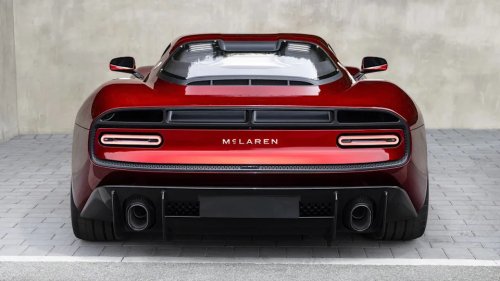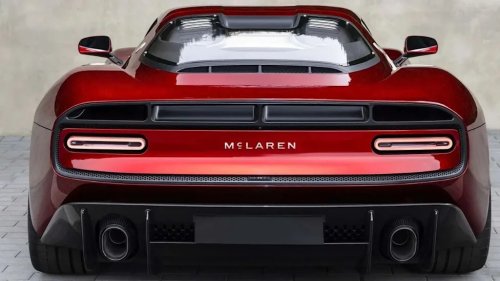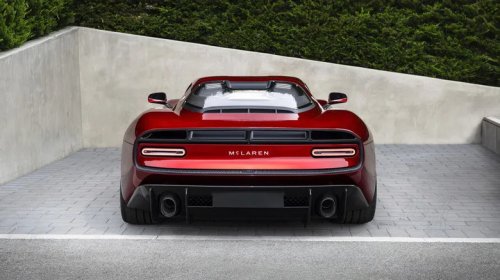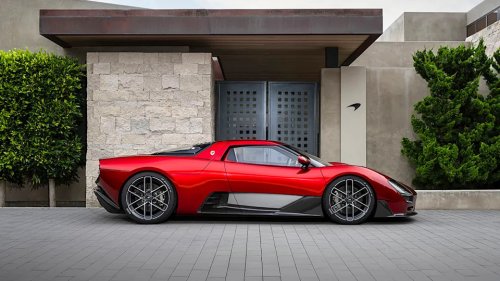




















McLaren Built A Le Mans Hypercar Too Extreme For Racing Rules And VIP Buyers Are Getting The Real Monster McLaren is heading back to Le Mans with a brand-new hypercar program, but the real story might not be the race car at all. It’s the machine buyers will never see on public roads and most enthusiasts will never get near. The British automaker has officially revealed the MCL-HY, its new challenger for the top class of the FIA World Endurance Championship. That alone is major news considering McLaren’s limited history at Le Mans despite winning the race outright back in 1995. But sitting beside the race car is something even more aggressive: the track-only MCL-HY GTR, a customer version that escapes the regulations holding the race car back. More Stories Like This The $2 Million Tractor That’s Causing a Stir: Inside Lamborghini’s Most Controversial Centenario Creation The Real Story Behind Greg Biffle Crash Lawsuits: $25 Million Fight Erupts as Troubling Flight Failures Surface Adria (Force) Hight, Daughter of NHRA Legend John Force, Dies at 56 After Lifelong Role in Building Racing Dynasty And that’s where things get interesting. Modern endurance racing is filled with balance-of-performance rules, weight targets, hybrid requirements, and restrictions designed to keep competition close. The result is that some of the most advanced race cars on earth are often prevented from reaching their full potential. McLaren’s new customer hypercar exists outside that system entirely. The MCL-HY race car is already serious hardware. McLaren confirmed the machine will compete in the FIA World Endurance Championship beginning next year as the company returns to the top level of Le Mans competition. The car will be driven by Mikkel Jensen with support from Gregoire Saucy and Richard Verschoor. Power comes from a hybrid-assisted 2.9-liter V-6 producing a combined 697 horsepower. The car also arrives wearing a Papaya-inspired livery influenced by the classic McLaren M6A prototype from the 1960s, connecting the new endurance effort with one of the company’s historic racing designs. For most manufacturers, that would be the headline. Instead, McLaren immediately stole attention with the unrestricted version. The MCL-HY GTR keeps the same six-cylinder foundation as the race car but drops the FIA-mandated hybrid system entirely. No race regulations. No road legality requirements. No need to comply with endurance-racing balancing rules. McLaren essentially removed the limitations and let the car breathe. That decision pushed output even higher to 720 horsepower. On paper, the horsepower increase may not sound massive compared to the race car’s 697 hp figure, but raw output only tells part of the story. The bigger advantage comes from what the GTR no longer has to carry around. Hybrid systems add complexity, cooling demands, packaging compromises, and weight. Race cars accept those trade-offs because regulations require them. The MCL-HY GTR does not. By removing that entire layer of hardware, McLaren created a lighter and more focused machine. That detail matters. You Should Read This Next Texas Chop Shop Busted After Traffic Stop Unravels Network of Stolen Vehicles Pickup Truck Climbs Over $250K Lamborghini in Florida Gym Parking Lot The company confirmed the GTR will weigh less than the FIA’s 2,271-pound minimum required for Le Mans hypercars. McLaren has not released an exact curb weight yet, but even a modest reduction transforms a car at this level. Less mass changes braking performance, cornering response, acceleration, and overall driver feel. That means the customer version could end up feeling sharper and more violent than the actual factory-backed race machine competing at Le Mans. And honestly, there’s something fascinating about that dynamic. For decades, race cars represented the absolute peak of what manufacturers could build. Increasingly, though, automakers are creating track-only customer cars that exist outside the restrictions strangling modern motorsport engineering. This is where the story turns. The MCL-HY GTR is not some watered-down collector special designed for valet duty at luxury events. McLaren appears to be positioning it as a genuine no-compromise track weapon for an extremely limited group of buyers. The company has already said the car will only be offered to carefully selected VIP customers through its Project: Endurance program. McLaren has not announced pricing, but nobody should expect this thing to land anywhere near normal supercar territory. The car is exclusive by design. Access matters as much as money here. That approach says a lot about where the high-end performance market is heading. Manufacturers are increasingly building ultra-limited track cars specifically for wealthy collectors who want experiences even road-going hypercars cannot deliver. These cars exist beyond emissions rules, crash standards, racing regulations, and practicality altogether. For enthusiasts watching from the outside, there’s both excitement and frustration in that formula. On one hand, machines like the MCL-HY GTR prove engineers can still create brutally focused performance cars when regulations step aside. Enthusiasts constantly complain that modern performance vehicles are becoming too heavy, too digital, and too filtered. McLaren’s answer appears to be removing the restrictions entirely and building something rawer. On the other hand, almost nobody will ever get access to one. And that’s where the divide inside the modern performance world keeps growing. The most exciting cars increasingly belong to a private tier reserved for hand-picked buyers, private track events, and invitation-only ownership programs. Regular enthusiasts can admire them online, but ownership remains locked behind exclusivity programs designed as much around status as performance. Still, from a pure engineering standpoint, the MCL-HY GTR sounds like the kind of machine enthusiasts claim they want. Lightweight. Track-focused. No unnecessary restrictions. More power than the race car itself. McLaren also appears serious about getting the car into action quickly. Testing is scheduled to begin later this month, with customer deliveries expected before the end of 2027. That timeline puts the company’s Le Mans return and its VIP hypercar program on parallel tracks. Here’s the bigger picture behind all of this. Motorsport regulations are supposed to improve competition and safety, but they also force manufacturers into increasingly narrow boxes. Cars become optimized around rulebooks instead of absolute performance. The MCL-HY GTR exposes that reality in a very public way because McLaren openly admits the unrestricted customer version is both lighter and more powerful than the actual race car. That’s hard to ignore. McLaren’s Le Mans comeback is important for the brand. But the unrestricted hypercar sitting beside the racer may tell the more revealing story about where elite performance cars are heading next. Via Mclaren