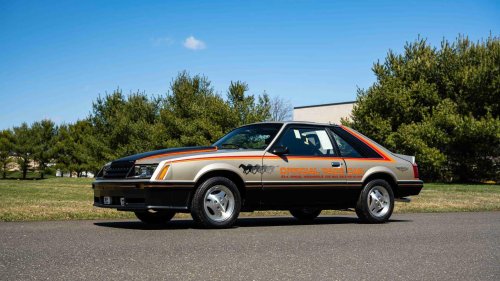
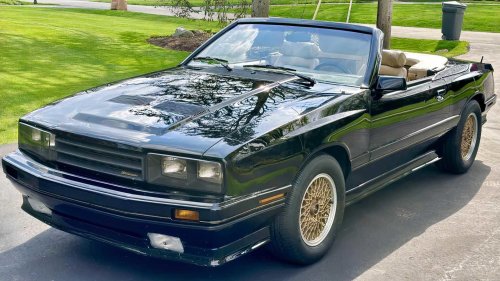
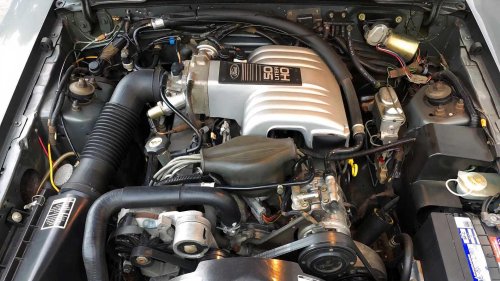
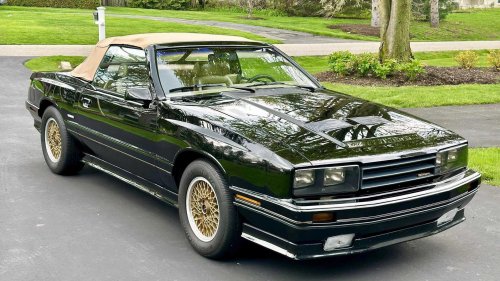
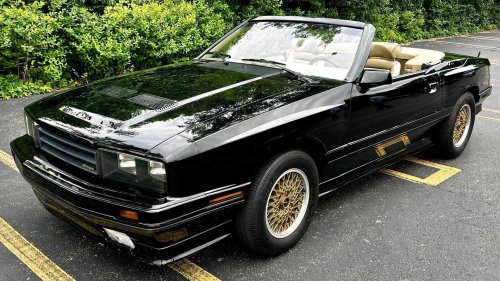
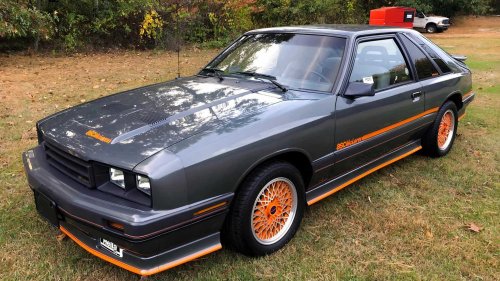
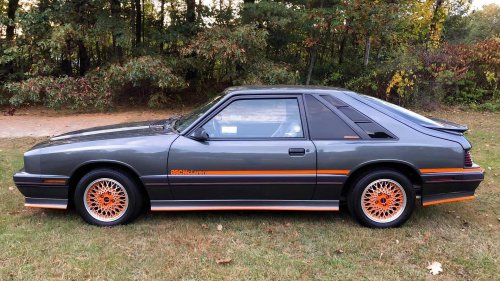
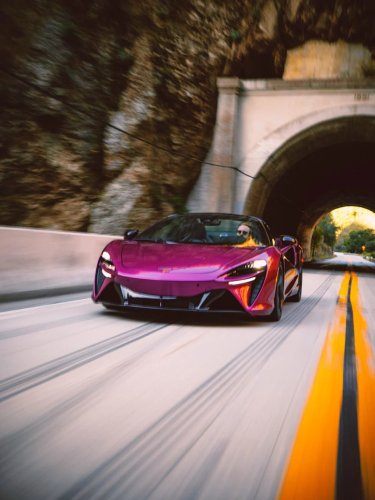
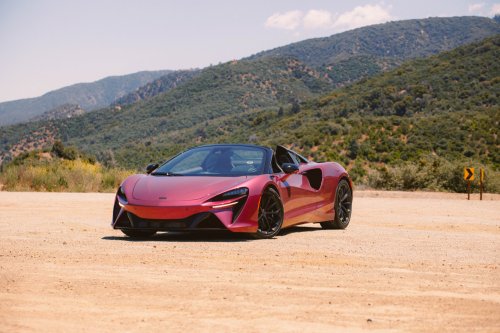
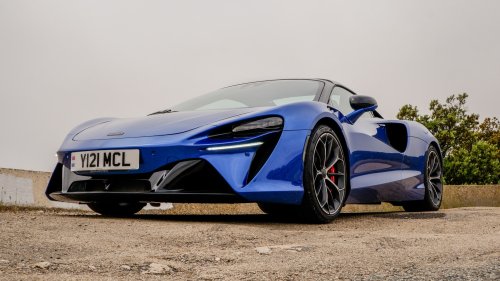
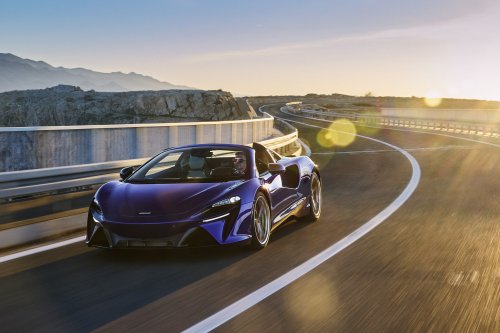
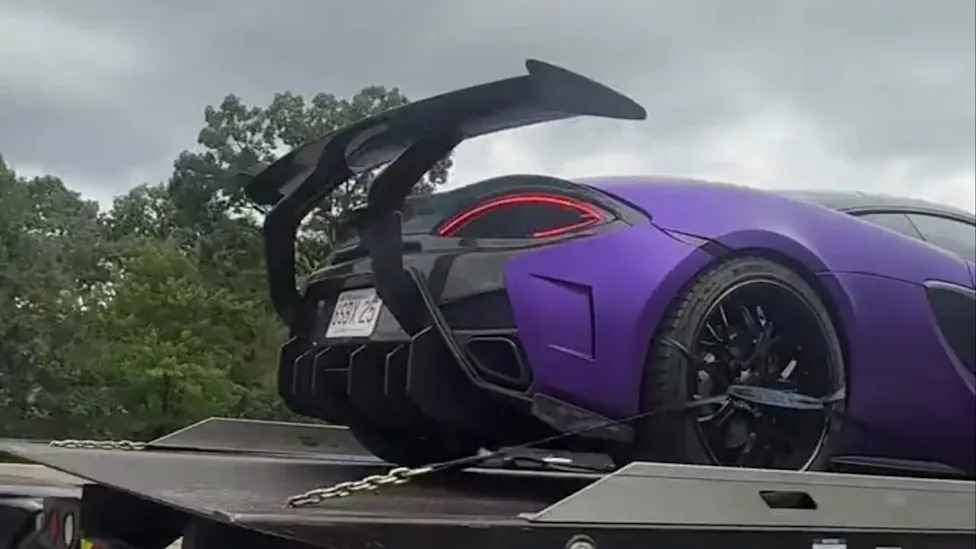
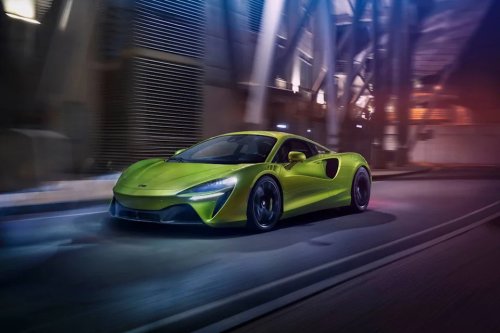
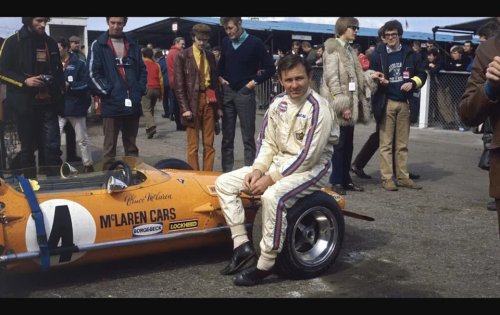
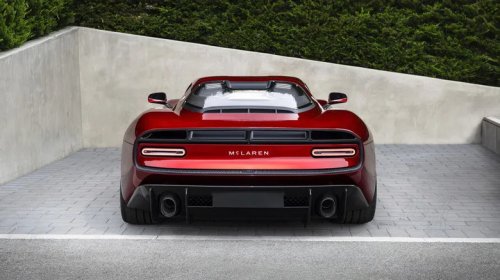
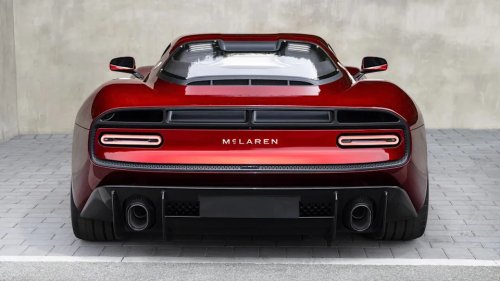
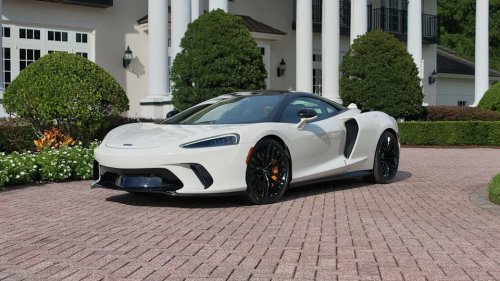
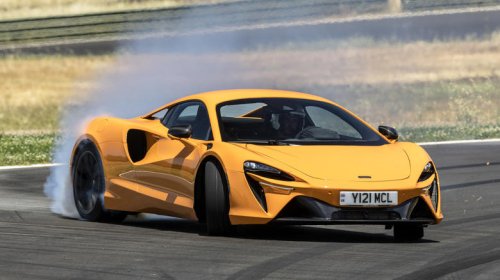
Today, when you hear the word McLaren, you think about a high-tech automotive manufacturer making some of the world's leading supercars and hypercars. The legendary McLaren F1 comes to mind, along with its legendary success in Formula 1 racing. This is the current image of McLaren, and only cars like these are worthy of bearing the McLaren name. But if you take a trip back to the mid-1980s, you would find a completely different machine wearing that legendary badge.This McLaren wasn't built in England; instead, it was built in Detroit with the badge of a completely different manufacturer. It was an era when a high-end racing team combined with a well-known American manufacturer to create a high-powered luxury GT car. If you saw one on the street, you might have mistaken it for a heavily modified Ford, but the story goes deeper than that. It represents one of the most fascinating, yet overlooked, collaborative efforts in automotive history. The Era When Muscle Cars Lost Their Edge Bring A Trailer To understand why this car existed, we have to look at the declining state of American performance cars in the 70s and 80s. The traditional muscle car era wasn't just ending; it collapsed under the weight of strict new federal emission standards, the oil crisis, and skyrocketing insurance premiums. These massive, high-compression V8 engines of the late 1960s were suddenly illegal, and the government was making sure they were phased out by adding more restrictive catalytic converters and detuned carburetors. Suddenly, your big block V8s were now making less power than some previous V6 engines.Detroit was forced to pivot overnight toward fuel-efficient and emissions-compliant vehicles, which meant performance engineering took a drastic hit. Performance plummeted across the board, and every major manufacturer was feeling the heat. For consumers and racing fans, this was not fun at all. Legendary nameplates that once commanded respect at every stoplight were reduced to graphics packages and decals on vehicles that could barely manage to outrun regular family cars. The industry had lost its way, and for nearly a decade, enthusiasts had no reason to be excited about new cars. The Fox Body Mustang Was Good But Not Good Enough via Mecum Auctions In 1979, Ford introduced the third generation of its legendary Pony car, commonly known as the Fox-body Mustang. This new lightweight, rear-wheel-drive Mustang gave fans something to be excited about with the addition of a new 5.0-liter V8. For the first time in years, a factory pony car had enough power-to-weight ratio to break the tires loose and give a good sense of speed. But this still wasn't good enough.For perspective, the first-gen Mustang made 271 hp and 312 lb-ft of torque from its original 4.7-liter V8. The most powerful Fox body, which was the SVT Cobra, made 235 horsepower and 285 pound-feet of torque, which is way less than the first-gen Mustang's high-output V8. Even with a relatively large engine, the car just didn't deliver the way people expected it to, compared to the fastest Mustang of the 60s. But it was an excellent, affordable platform for new drag racers and hot rodders, but it lacked the appeal to seasoned racers. However, this didn't stop a few big companies from coming together and making a more desirable car that was still based on the Fox platform. ASC And McLaren Turned The Mercury Capri RS Into A European GT Car Via BaT There were a few cars that shared the Fox platform with the Ford Mustang, including sister company Mercury. It had the Mercury Capri, which had a close resemblance to the Fox body Mustang and shared the same powertrain setup. Mercury was positioned between Ford and Lincoln and could command slightly higher prices because of more premium features. This is where a unique partnership was formed to elevate the status of the Mercury Capri to something truly premium. This partnership was formed between ASC (formerly American Sunroof Corporation, now known as American Specialty Cars) and McLaren Engines to create the ASC McLaren Mercury Capri from 1984 to 1986.At the time, ASC was an automobile supplier specializing in designing roof mechanisms and other special parts for other automakers.McLaren Engines was the American powertrain engineering arm of the legendary racing team responsible for Bruce McLaren's Can-Am and Indy car racing programs. Together, they turned their attention to the Mercury Capri, the sister car to the Mustang, and set out to re-engineer it into a sophisticated, European-style Grand Tourer (GT).The transformation began with a radical visual upgrade. The vehicle’s exterior was taken apart, and a sleek, custom aerodynamic bodykit was added to it. The front was replaced with a smooth, almost grille-less front fascia with aggressive ground effects and flared rocker panels. To complete the premium look, the car was equipped with a distinctive set of color-matched, multi-piece Italian Campagnolo or mesh-style alloy wheels that immediately gave it that premium European styling. The Upgrades Went Beyond Cosmetic Changes Bring A Trailer This collaboration was far from a simple cosmetic appearance package. The two companies, ASC and McLaren, each had their roles to make sure the project was executed perfectly.ASC's Craftsmanship: ASC focused heavily on structural rigidity and interior refinement of this vehicle. The transformation began with a radical visual upgrade. The vehicle’s exterior was taken apart, and a sleek, custom aerodynamic body kit was added to it. The front was replaced with a smooth, almost grille-less front fascia with aggressive ground effects and flared rocker panels. To complete the premium look, the car was equipped with a distinctive set of color-matched, multi-piece Italian Campagnolo or mesh-style alloy wheels that immediately gave it that premium European styling. It also got heavily bolstered Recaro leather seats, custom door panels, and a high-end sound system. But the main achievement was with the convertibles. They engineered a custom convertible top mechanism that folded completely flat beneath a hard tonneau cover, giving it that clean speedster profile. The job was done so well you'd think it came like that from the factory, as Mercury never made a Capri convertible. The windscreen was also raked an extra 10 degrees to improve aerodynamics. McLaren's Engineering: McLaren Engines utilized their racing expertise to optimize the powertrain and suspension. The 5.0-liter High Output V8 still made the same power as factory cars, but McLaren completely revised the suspension geometry. They installed shorter, progressive-rate springs, heavy-duty gas shocks, upgraded sway bars, and high-performance tires, significantly reducing body roll and sharpening steering response. The coupe versions were fitted with slightly smaller 225/50/15 BFGoodrich Comp T/A radials as opposed to factory 225/60/15 regular tires. These small changes improved acceleration and quarter-mile times. The Mercury Capri ASC McLaren Was Not Slow Bring A TrailerNote on Acceleration Ranges: The quicker times in the ranges above represent the Coupe conversions, which benefited from better aerodynamics and lighter weight. The slower times represent the Convertible conversions, which carried extra heavy reinforcement to compensate for the chopped roof.When the finished cars hit the road, it quickly proved that it was more than just a luxury cruiser. Thanks to the suspension and chassis tuning, the Mercury Capri ASC McLaren performed better than the factory car and a stock Fox Body Mustang. It could hit 60 mph in the mid-six-second range and complete the quarter mile around 15.0 seconds, which was still impressive despite almost no addition of power. More importantly, with its handling upgrades, it could hold its own against high-end European counterparts on twisty backroads. It offered a level of handling, precision, and confidence with effortless torque that most traditional muscle cars couldn't match. What Made It Special Wasn’t The Speed Bring A Trailer However, focusing solely on performance misses the intent of this vehicle and what made it appealing. It had the beating heart of an American muscle car but the driving dynamics of a European sports car. It was meant to be an enjoyable driving experience once you got to spend time with it. It managed to remain raw and torquey, which is what you would expect from an American V8 muscle car, but combine that with an open-air experience with the convertible. When you step on the gas, you still hear the muscular 5.0-liter rumble, but the chassis and suspension can keep up, and the bucket seats hold you in place. This was a more civilized and engaging driving experience that was way different from the original car that left the factory. It Was Also Quite Rare Bring A Trailer These cars weren't built in large numbers, and most people couldn't afford the premium for these coach-built vehicles. A standard Capri RS cost $10,223, the ASC McLaren Coupe was $14,435, and the convertible was a staggering $22,282. The convertibles sold more with 550+ cars, while the coupe had around 290 cars. When these cars were done in 1986, the ASC and McLaren partnership transitioned over to the Mustang platform from 1987 to 1990. Both ASC McLaren Capris and Mustangs are rare and hardly come up for sale. The convertibles are the most sought-after cars by enthusiasts due to their significance and extensive structural re-engineering required to build them, and they, of course, hold the title of the first convertibles on the Fox platform. The Mercury ASC McLaren is Still Affordable Bring A Trailer Despite its low production numbers and historical significance with the brands involved, the values haven't skyrocketed; instead, they've remained relatively stable and affordable. Current cars that bear the McLaren name are six-figure cars and in the rare case of the F1, eight-figure cars. But even a well-preserved Mercury ASC McLaren can easily be found under $20,000. The most expensive one ASC McLaren ever sold at public auction was a white convertible in 2023 for $33,000. The reason for the values being this low is actually seen in the Fox body market.When you look at the Mustang from that era, the average price across the board sits around $28,000. This is because the cars from this era also weren't very desirable. Although the Fox cars are now getting the attention they deserve, it isn't enough to push prices yet. Because the ASC McLaren Capri was built on a reliable and widely supported platform, sourcing mechanical parts for the engine or drivetrain is simple and very affordable. Pristine examples will still get the most money, but they remain one of the most affordable ways to own a genuine piece of McLaren-branded history in that unique era of boutique domestic coachbuilding.Sources: Ford, Road and Track, Classic.com, Bring A Trailer, Hagerty.