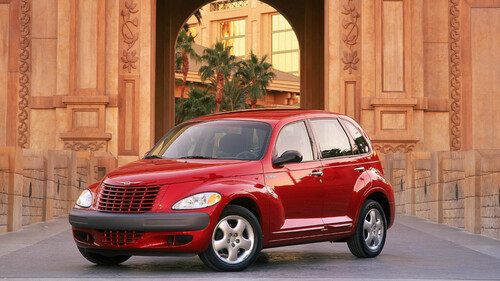
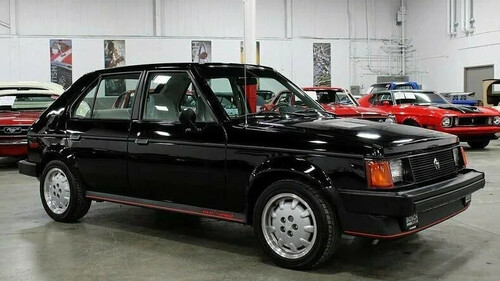
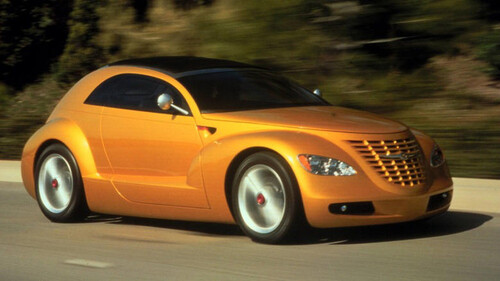
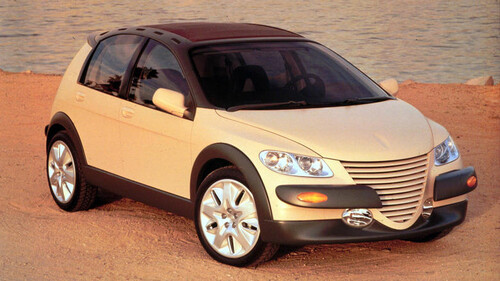
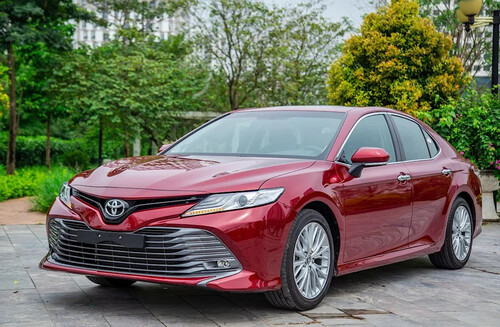
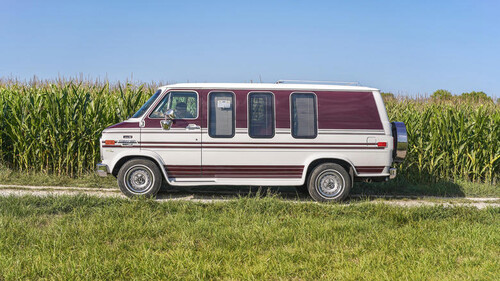
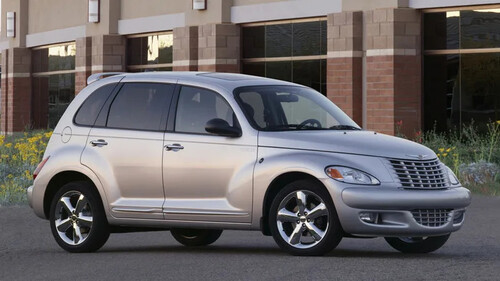
To compare Japanese performance cars to American ones used to be like comparing a mouse to a grizzly bear. One championed small dimensions and peak efficiency like a religion, and the other, well, it represented the polar opposite. But by the ‘90s, it was clear which side of the divide was most viable, and it wasn’t the side with the muscle cars. At one point or another, all three big Detroit automakers tried in different ways to mimic, to the best of their ability, the look, feel, and soul of a JDM tuner. Among them, one stands out above the rest. Chrysler: An American OEM With Wicked JDM Envy Bring a TrailerTo describe the situation over at Chrysler in the early ‘90s as precarious would be putting it lightly. Fresh out of the ‘80s, a time when Chrysler nearly collapsed early on, only for then-shot caller Lee Iacoca and his K car lineup to save the day, Chrysler was able to pay off the $1.5 billion loan it’d taken from the Federal Government well ahead of schedule.But every Dodge Aries and Plymouth Reliant sold, regardless of the profits they directed towards Chrysler, only proved one thing. No matter how much of a bargain they might’ve been, the K car was a pale imitation of Civics, Accords, Camrys, Corollas, and Altimas hitting American roads in their millions.This was of special consequence for performance cars. The ‘90s were the golden years in what we now know today to be modern Japanese tuner culture. A period where Japanese automakers took ordinary grocery-getters, fitted them with massive turbos, alloy wheels, and generally did a JDM take on classic American hot rods. In America, there simply wasn’t an answer to cars like this, at least not at first. An American Take on a Japanese Economy Car Bring a Trailer (RandulfMotorwerke)Perhaps no one else in all of Detroit was more aware of the need to counter the JDM tuner threat than Chrysler’s then Executive Vice President of Product Development and Design, Tom Gale. A Chrysler stalwart since the muscle car years of the late 1960s, Gale served under Lee Iacocca during the K years, helped design icons like the original Viper, and even played a hand in the development of the Lamborghini Diablo.Gale’s JDM countermeasures team was an eclectic mix of young, recent Chrysler hires and veteran old-heads recently acquired from Chrysler’s merger with America's "fourth brand," AMC. Like Japanese heavyweights like the Civic and Corolla, Gale’s team aspired to stuff as much space for cargo and people in as small of dimensions as they could get away with.The original concept debuted in 1991 to a capacity crowd at the 1991 Frankfurt Motor Show. In concept form, Dodge’s new compact econobox sported four sliding doors with no B-pillar, plus a 1.1-liter three-cylinder engine borrowed from Mercury Marine. But the production-ready variant was altogether simpler, and that was certainly for the better. Dodge Neon SRT-4: An Ugly Duckling Becomes a Turbocharged Swan Bring a TrailerIt was easy to make fun of the first-generation Dodge Neon. It was bug-eyed, powered by a puny four-cylinder engine, and it was slower than cold molasses. In practice, the Neon was as close to a Honda Civic as any American OEM had come to that point.Dodge Neon SRT-4 SpecsSpeaking of the Civic, the legendary Type R, plus its Integra cousin, were making the rounds in Japan during the Neon’s production run. Once again, Tom Gale was there to put his finger on the pulse of what was cool, and what was desirable. Once again, Gale assembled a design team, with the intention of bringing a sporty Neon to the 1998 SEMA Show in Las Vegas.With 17-inch wheels and a big wing, this was a step in the right direction – and coinciding with the launch of the second-generation Neon, it was furthered by the SRT concept in 2000. Sporting a supercharged four-cylinder engine and a body kit, the foundation for what would become the SRT-4 was here to stay. The production-spec variant wouldn’t be ready until 2003, but when it arrived, it was safe to say there was no American car quite like on the road. A JDM-Style Hot Rod for the North American Crowd Greg Gjerdingen, via Wikimedia CommonsFrom front to back, it was impossible to mistake a Neon SRT-4 for a lower, lesser trim. Its prominent rear wing and aggressive body kit, with a hood scoop, did wonders to make the standard car appear less wimpy. Sure, the supercharged four-pot from the SRT Concept was gone, replaced by a turbocharged 2.4-liter engine. To add insult, it’s the same basic block found in the PT Cruiser.Then again, it’d be wrong to say they were the same engine entirely. Thanks to a thicker block deck, a stronger crankshaft, forged connecting rods, larger diameter valves, and a larger turbocharger borrowed from Mitsubishi, the SRT-4 engine was an entirely different beast to the wet noodle that was the PT Cruiser.But with 215 horsepower at launch in 2003, and 230 hp in subsequent years with a tune and bigger injectors, the Neon SRT-4 was one of the most powerful cars in its class. Paired with a five-speed manual gearbox, independent testing often found turbo Neons could hit 60 mph in around 5.5 seconds. That’s .3 seconds faster than the 5.8 second figure advertised. With an independently-verified top speed of 153 mph, it was nearly fast enough to hit the speed governor on a lot of high-end exotic performance cars. There Will Never Be Another Dodge Like It Cars & BidsTo say the Dodge Neon SRT-4 was a watershed car for the brand would be an understatement. Not only was it a straight-line screamer, its thicker brake discs, limited-slip differential, and improved suspension geometry compared to the PT Cruiser it shared a platform with, ensured it was a competent handling machine as well.Slalom testing from the period coaxed 0.85Gs of lateral cornering force out of what’s still, at the end of the day, a five-seater four-door compact car. With its launch price of $19,450 back in 2004, that works out to just under $34,000 in 2026 money. Compared to rivals from other brands like the video game star Chevy Cobalt SS, but also the Ford Focus SVT, the Honda Civic Si and the Subaru Impreza WRX, the Neon was a compelling combination of fast and affordable. Adding a special edition in the Viper-coded ACR, with lowered suspension and better handling characteristics, the Neon SRT-4 squeezed a ton of potential out of what should have been a lowly platform.Today, you can buy a used Neon SRT-4 online for anywhere from $15,000 and change for one that’s well-used, to upwards of $30,000 for ultra-low miles and all-original everything. Before too long, the Neon SRT-4 platform will cross into classic car territory, and when that happens, you’ll have a genuine piece of vintage Mopar history on your hands.Cars & BidsNot one that the Stellantis group that owns Chrysler nowadays, mind you. But one they really ought to be inspired by at this current juncture. Something tells us that if Dodge were to try re-applying the Neon SRT-4 formula to a modern sedan with modern turbochargers and hybrid drive technologies would be nothing short of stellar driving experience. These days, we need more cars like that out on the roads. Just to break up the endless conga line of crossovers and pickup trucks we see everywhere.Source: Hemmings, Hot Rod