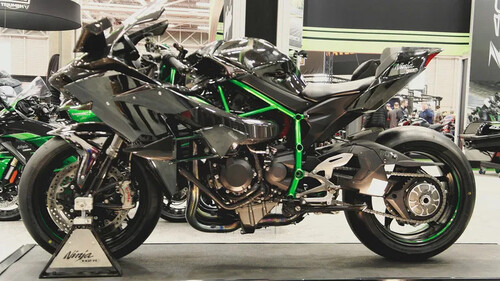
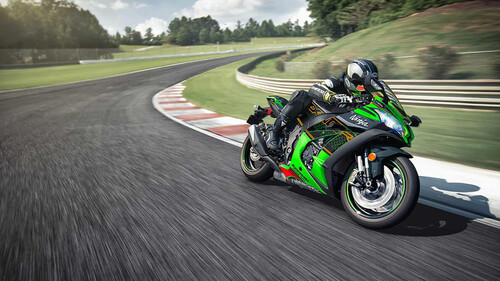
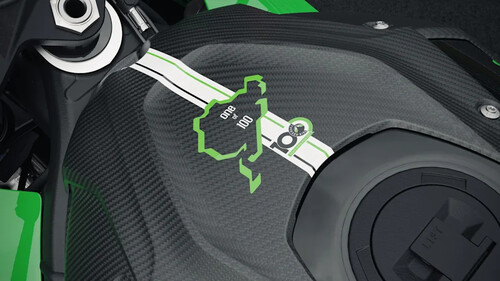
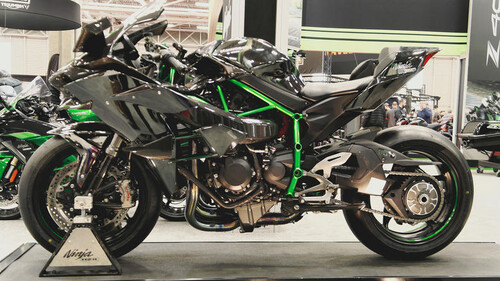
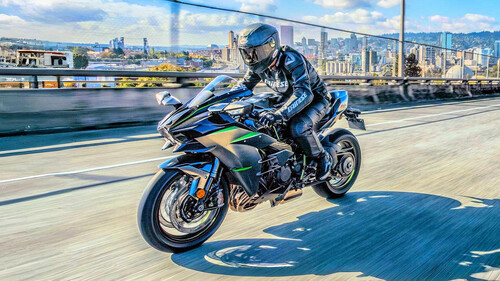
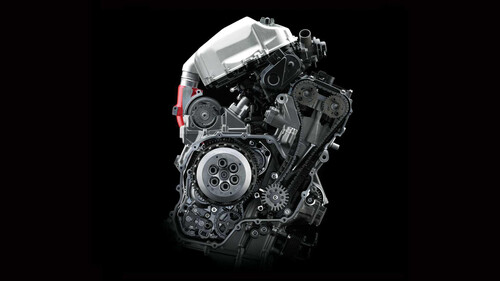
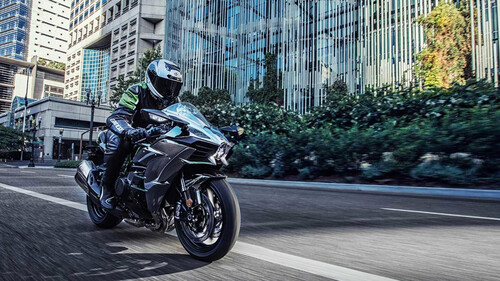
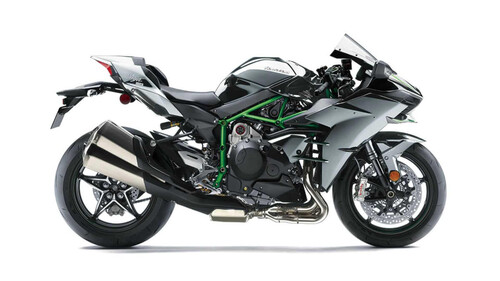
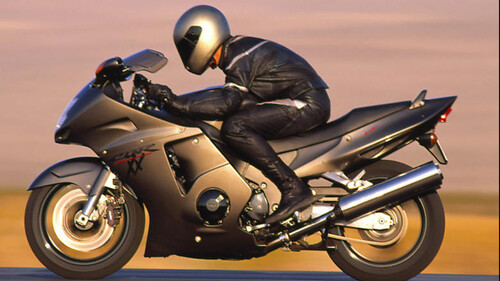
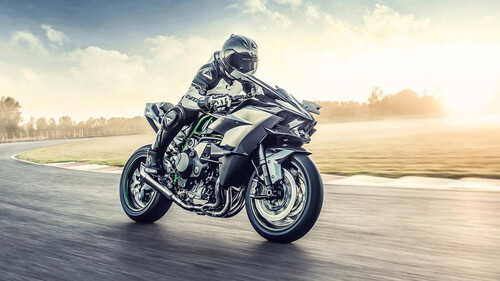
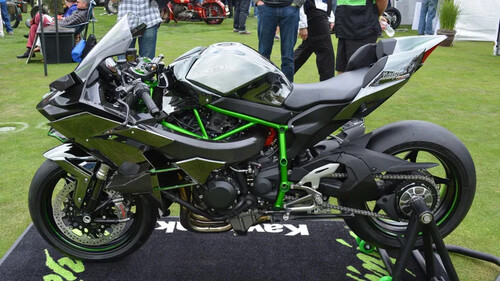
In the world of motorcycles, speed is more than just a number— it’s a statement of authority. Ever since the first two-wheelers took to the road, manufacturers have pushed the limits of engineering, chasing ever-higher top speeds in the quest to be number one. With the eventual rise of bikes like the Honda Blackbird, Kawasaki ZX-12R, and Suzuki Hayabusa, it even got to the point that a gentleman’s agreement between manufacturers was necessary to keep numbers reasonable. But that all changed in 2015.That’s because Kawasaki created a machine out of aerospace-grade ambition and a desire to dominate. It wasn’t just fast— it redefined fast, incorporating a supercharged engine, state-of-the-art aerodynamics, and top-shelf components. Track-only, brutally loud, and cloaked in carbon fiber, it arrived with a roar that continues to echo throughout the industry today. This bike was truly in a league of its own, even setting an unofficial world record for its top speed. With this in mind, we're taking a deep dive into how Kawasaki managed to make the fastest bike ever produced. The Ninja H2R Boasts Record-Breaking Top Speed The Kawasaki Ninja H2R holds a legendary status among two-wheelers on account of its pioneering engineering. In addition to being the world’s first factory supercharged motorcycle, the bike has also proven to be one of the fastest and most powerful— at least among regular gas production offerings. Following the H2R’s debut in 2015, Kawasaki performed an unofficial world record attempt on Turkey's Osman Gazi Bridge. Kenan Sofuoğlu hit a top speed of 400 kph (249 mph) in just 26 seconds, solidifying the bike as the standard for off-the-shelf speed. 26 Seconds Of Mind-Bending Acceleration As a four-time World Supersport champion, Sofuoğlu was hardly lacking in riding skills. Even still, the Turkish rider spent months preparing for the attempt, scouting the location for optimal conditions and making small tweaks to the H2R to ensure his chances of success. When Kenan Sofuoğlu signed with Team Green, Kawasaki told him that the bike topped out at 380 kph. However, after reaching 390 in his own testing, he knew that 400 was possible.“I reached 400 km/h, the maximum speed that this motorcycle could have, after a 4 long months of training. I do not remember where I got this idea of the record from first, but when I signed the agreement on 2016 with Kawasaki, I liked and wanted so much this special edition bike. When I asked for the motorcycle, Kawasaki said its maximum speed was 380 km/h and that their dream was to reach 400km/h.” — Kenan SofuoğluAlong with running the attempt at 5:00 AM to avoid the worst of the wind, Sofuoğlu also wore a special low-drag suit. As impressive as the 26-second run is from a performance perspective, it was also a necessity. According to Cycle World, the top speed had to be reached in 30 seconds or less in order to minimize the risk of a tire blowout. The fact that Kenan Sofuoğlu succeeded in doing so over a 1.5-kilometer (0.93-mile) suspension bridge makes the feat all the more impressive. An Impressive But Imperfect Attempt Without discrediting Kawasaki and Kenan Sofuoğlu's efforts, it's worth noting that the run didn't receive recognition from Guinness, as it lacked some key elements of a verifiable record attempt. Though the Turkish rider managed to hit 400 kph on the speedometer readout, variances in manufacturing tolerances and calibration mean that he was likely a little short. Moreover, in the absence of a radar or GPS-measured speed, there's nothing to verify that the speedometer was accurate.Even still, the H2R demonstrated some impressive acceleration during the run, and there are few other bikes on the market that come close in their power or their engineering. Interestingly enough, Kawasaki's supercharged H2 SX does hold a Guinness World Record for speed, though likely not as you'd expect. In 2024, Jonny Davies set a World Record for the fastest person to be dragged behind a motorcycle, recording an incredible 159.52 mph. The First Production Bike With Factory Supercharging Kawasaki H2R - 1Kawasaki has long been at the forefront of forced induction in motorcycles, as models like the Z1R-TC and GPz750 Turbo established the brand's reputation for building uncompromising speed machines. The H2 badge first appeared on a 750cc two-stroke triple back in the 1970s. The model was dubbed "the Widowmaker" on account of its thrilling performance, so it made for a fitting revival when Kawasaki incorporated the name on the first factory supercharged bike— the H2R —in 2015. 2025 Kawasaki H2R Engine Specs Kawasaki With the assistance of the Kawasaki Heavy Industries Gas Turbine & Machine Company as well as the Corporate Technology Division, Kawasaki Motorcycles developed the engine and supercharger simultaneously. Beyond the obvious advantages in efficiency and technological matching, this also allowed for a much lighter setup that does not require the use of an intercooler. In the case of the H2R, the supercharged inline-four initially debuted with 310 horsepower, though that figure has since risen to an authoritative 321.5 ponies. Kawasaki H2R Supercharger Characteristics The impeller blades measure approximately 1-mm thick The impeller rotates at 120,000 rpm and higher The impeller pumps over 53 gallons of compressed air per second Peak air pressure achieved is 2.4 times atmospheric pressure Each supercharger is adjusted using a dedicated dynamic balancer All finished superchargers are checked with a special performance tester Kawasaki first introduced the supercharged Ninja H2 line with the track-only H2R. Being exclusively for closed-course use, the bike was intended to push the limits of motorcycle performance, while the subsequent Ninja H2 and Ninja H2 SX were intended to translate those capabilities to the street. At the time of the bike's debut, reviewers found that even the road-going Ninja H2 could achieve 9-second quarter-mile performances, with 0-60 mph coming in just 2.6 seconds. The Ninja H2R and each of its subsequent derivatives were monumental efforts; over the course of their development, Kawasaki's motorcycle division tapped several outfits from the Kawasaki Heavy Industries umbrella. A Multi-Pronged Effort From Kawasaki Heavy Industries KawasakiBeyond the advanced supercharger and high-revving inline-four, Kawasaki worked to refine the H2R's chassis to ensure that the bike could translate the engine's immense power into speed. In practice, this meant choosing a high-tensile steel with a higher specific gravity than aluminum to construct the trellis frame. By decreasing the overall stiffness and reducing the tube wall thickness, Kawasaki was able to create a chassis that facilitated its concept of "avoiding disturbances with agility," stable at speed yet also dynamic and responsive through the turns. 2025 Kawsaki H2R Physical Dimensions KawasakiWhat's more, Kawasaki Motorcycles worked with Kawasaki Aerospace Systems to design the H2R's aerodynamic bodywork, incorporating elements from aircraft to maximize downforce and minimize lift with marginal increases in air resistance. Along with adding dog teeth and strakes on the winglets, the Ninja H2R also makes use of slotted flaps and a pointed cowl. Kawasaki conducted a total-vehicle computational fluid dynamics (CFD) analysis to determine the most effective positions of these devices as well as the optimal shape.As part of its CFD analysis, Kawasaki also focused on air flow for cooling and rider comfort. In the case of the former, this meant monitoring how air moved through the radiator to optimize engine cooling performance. By studying the cowl shape and its interaction with wind, Kawasaki was able to provide for more efficient heat transfer without having to create a larger radiator design. To account for rider comfort, Kawasaki designed the dog teeth and strakes on the winglets such that they directed air around and away from the cockpit, thereby minimizing buffeting at speed. A Project Of Significant Historical Importance Kawasaki incorporated its River Mark emblem on the Ninja H2 line The stylized kanji design (meaning river) dates back to the 1870s It serves as a symbol of Kawasaki's ongoing desire to push forward KHI reserves the emblem for innovations of significant historical performance As a truly collective effort from several different companies under the KHI umbrella, the Ninja H2R was bestowed with the Kawasaki River Mark emblem. The stylized Kanji design (meaning "kawa" or river) dates back to the 1870s, and it's reserved for innovations of significant historical importance. In other words, it's no small honor that the H2R was deemed worthy. A Bike That Epitomizes The Two-Wheeled Extreme Kawasaki Then again, it really should come as no surprise. The Kawasaki Ninja H2R is the epitome of unrestrained engineering, a motorcycle that pushes the limits of what's possible when you remove the constraints of road legality. Unlike the street-going H2, the H2R forgoes all concessions to regulations entirely. No headlights, no turn signals, no mirrors, and no concerns about emissions compliance. Its engine tuning is aggressive, with fewer restrictions, higher boost pressure, and race-spec mapping that delivers relentless acceleration. In fact, the H2R is banned from some racetracks due to its insane noise levels— at 120 decibels under load, it's louder than a thunderclap at full throttle.In any case, the H2R was more about making a statement than it was about creating a practical machine. It represents Kawasaki's ability to engineer a bike without compromise, and it showed the world what's possible when Team Green puts performance above all else. The H2R doesn't pretend to be useful or sensible in any way— it exists to thrill and to push the limits of motorcycle engineering. In everything from the H2 SX sport-tourer to the Z H2 naked, you can see the impact of Kawasaki's game-changing supercharged bike.