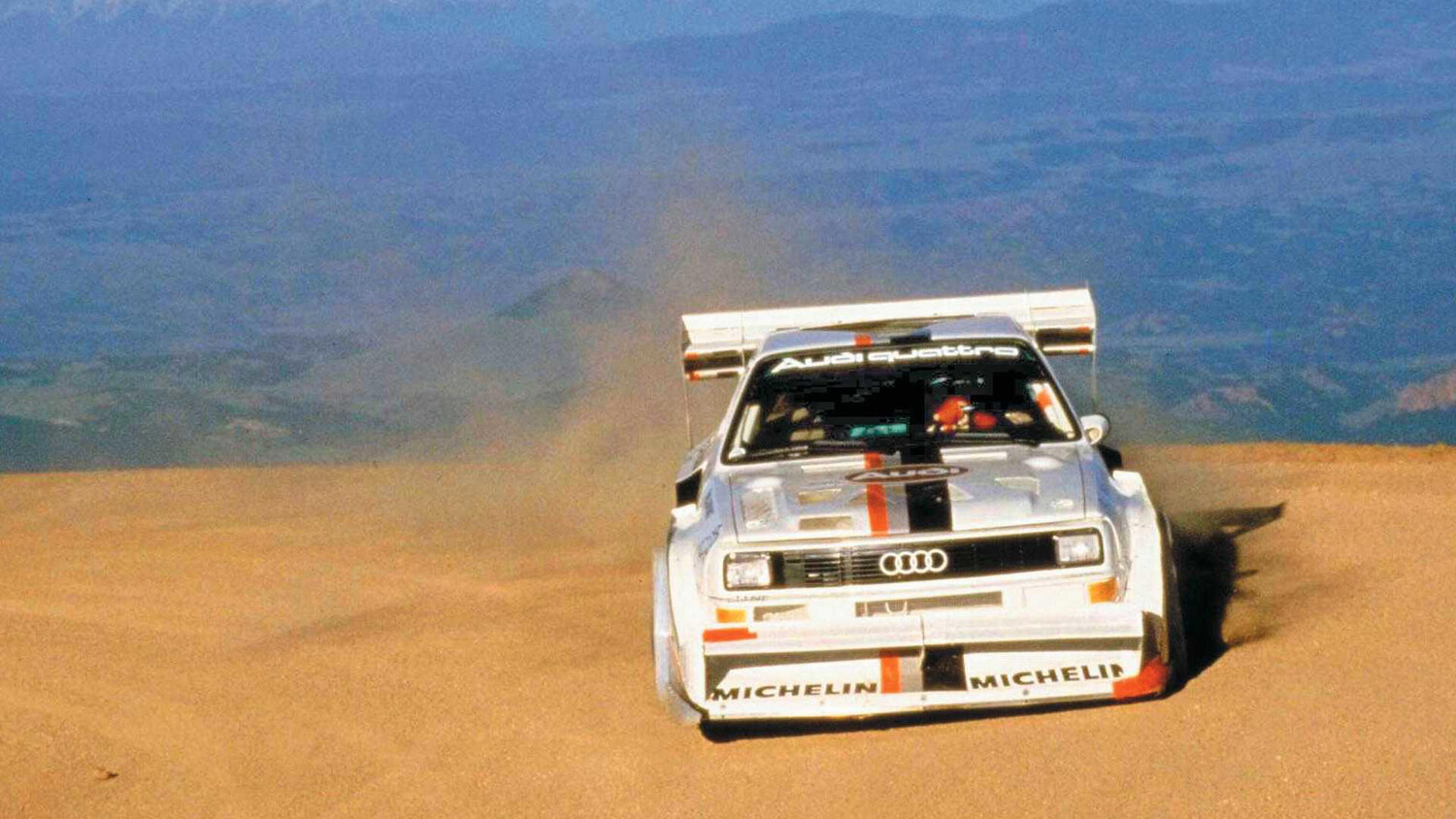
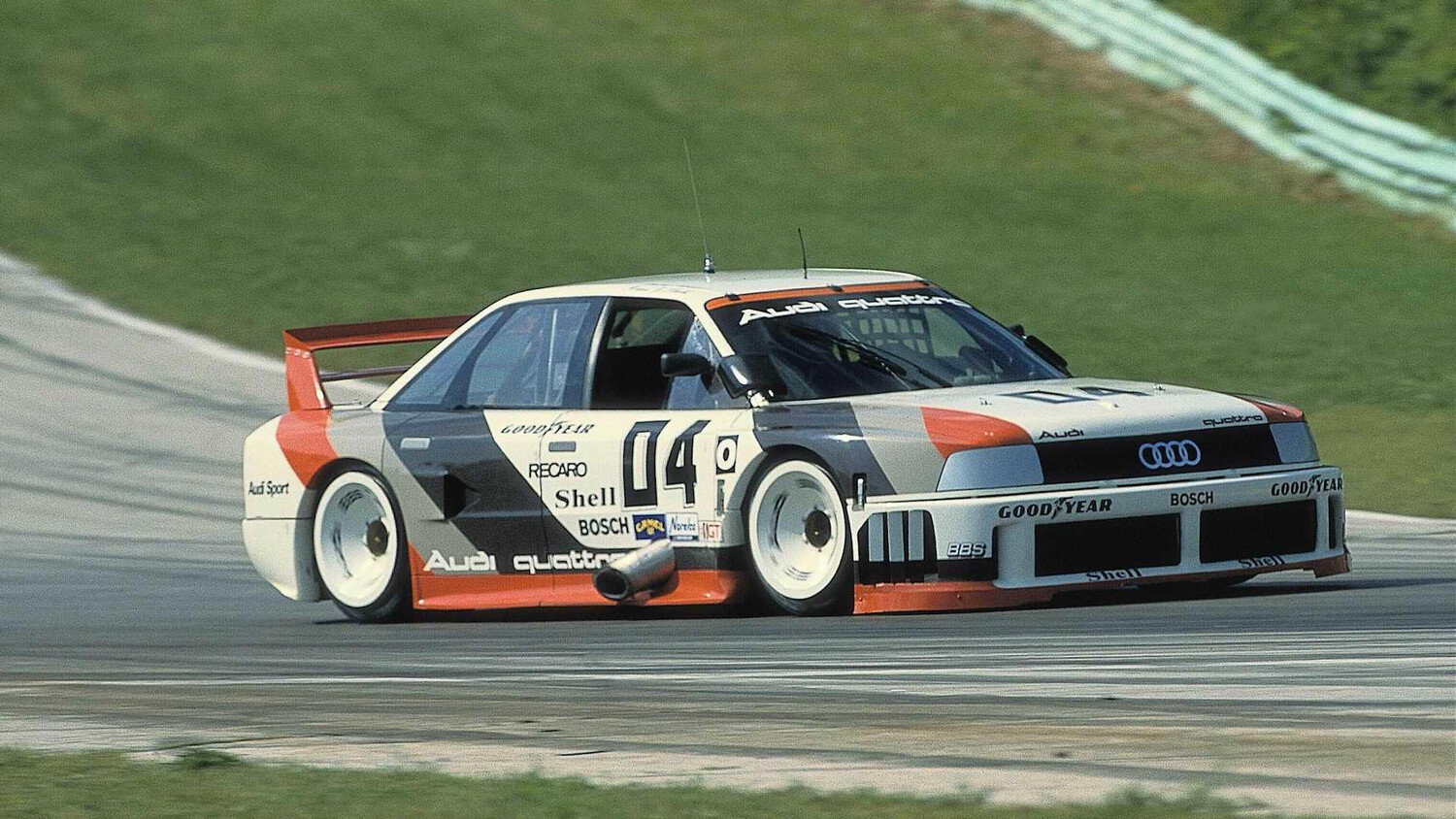
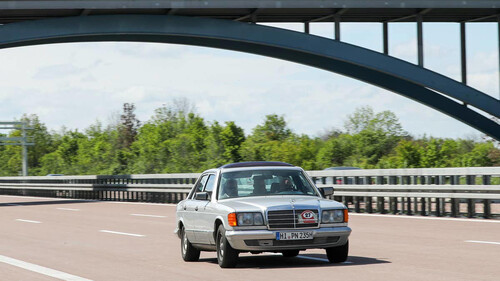
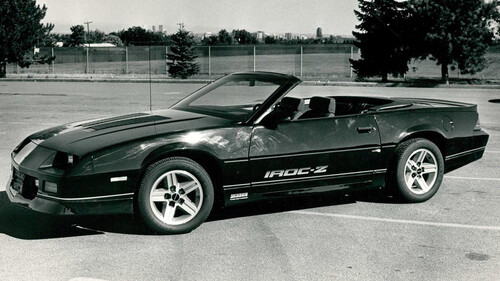
There are a few car companies that have such apt slogans that it's easy to see why they were chosen. Vorsprung Durch Technikor Progress Through Technology has become synonymous with Audi — and it's no surprise why, with models like the Quattro showing just how important all-wheel-drive will become in passenger cars, and the latest RS e-tron GT representing a new era for the entire Volkswagen Automotive Group.Perhaps the most famous is the former, though. All-wheel-drive may have started on tough rally stages around the world, but since then has become a standard feature on almost every premium car, even if they never stray off the road. Let's take a look at how Audi capitalized on quattro's success and built its entire brand around it. Its Origins Aren't In Luxury Cars Audi All-wheel-drive is now a staple on almost every premium car sold in the US, but it started out as a primitive technology that Volkswagen was developing for the German army with the Iltis off-roader in 1976. Luxury wasn't a consideration at all — it simply had to traverse harsh conditions, and in comparisons with front-wheel-drive Audi sedans, it beat them in every measure. So what if they could combine the two and make this technology available to all?Audi Walter Treser, who was a fresh-faced engineer at Audi, came up with the idea of the Audi Quattro, a passenger car using the same AWD tech. This car made its debut in 1980 at the Geneva Motor Show, and it was an instant hit with journalists and customers. Owners loved the extra confidence that quattro drivetrains gave them when driving fast or in difficult weather. Audi says its technology has been fitted to over 11 million cars.Now, Audi had to show that the extra weight, complexity, and cost was worth it for the average consumer. The way it did that? By throwing quattro at rally stages and racetracks for it to dominate. Win On Sunday, Sell On Monday: Motorsport As Marketing Both On The Rally Stage... AudiIf you know the story of Audi vs. Lancia, you'll know why the Quattro changed rallying forever. Introduced for the 1981 season, it was the first AWD car to compete, and while Lancia may have beaten it in its debut season using devious tricks, no one could overtake them after that. People didn't believe that it could seriously compete due to the extra weight of the AWD system, but the extra grip and confidence it gave drivers was worth it.It also took course records at Pikes Peak in 1985 and 1987 in the hands of drivers like Michelle Mouton before the whole course was even paved. Watching Audi take these records and wins meant the audience thought: 'if it can handle that, it can probably handle my commute when it's raining.' That worked wonders. Showing the technology at ten-tenths would prove to the masses that it could handle whatever you threw at it — be it a Finnish rally stage or a snowy Walmart trip. ...And On The Track AudiWhen the opportunity presents itself, we all like to see what our car can do. You might've once felt that chilling sensation of understeer in a front-wheel-drive car or oversteer in a rear-drive vehicle, but watching just how stable the Audi 200 TransAm was while beating RWD V8 muscle cars showed that even you could feel confident in pushing the limit. It was so fast here that the organizers banned AWD for 1989, prompting Audi to move to IMSA.It was a force to be reckoned with there too, and the company kept being successful with AWD racecars in the modern Le Mans era with its R18 diesel race car. Customers loved the fact that the same technology that took victory around the world could also be fitted to their family sedan. Audi Marketing Was All About Quattro AudiAs we mentioned, Voprsprung Durch Technik is a slogan that places Audi above its sister brands in the Volkswagen Group. It positions itself as a company that focuses on technology to set itself apart from the crowd, and even though its cars might not always shout about their capabilities, you can feel confident when you drive them. One of the company's most famous adverts is pictured above, and it shows that the manufacturer knew that its audience buys a quattro product for its quiet ability to out-perform lesser offerings.Luxury is all about feeling confident. Whether it's in yourself or your car, having the extra grip of quattro is a premium feature in itself. You know that when the going gets tough, you won't have to worry about getting stuck as this same tech has proven itself on the rally stage. While every brand in its ownership group has its version of quattro, like Volkswagen's 4Motion, buying an Audi means you're getting the originator of the trend. It Took Time For Rivals To Catch Up Mercedes-Benz While Audi started to offer the Audi Quattro in 1980, its two closest German rivals, Mercedes-Benz and BMW, did not have any all-wheel-drive vehicles on sale. It took time for them to bring them to the market too, and both the Mercedes-Benz E-class (W124-generation) and BMW 3 Series (E30-generation) would only start to be fitted with this technology in 1985. By that point, Audi's system was a proven beast and helped it stand out for superior grip and dependability.BMW What's also interesting is how these systems differed from each other. Audi went for the even 50/50 torque split with the Quattro in its first generation, while the BMW 325i 'Allrad' had a viscous coupling system that could split power 37% towards the front and 63% towards the rear. That may have helped with BMW's legendary driving dynamics, but in edge cases, the Audi may have had more grip. The Mercedes system was even more complex, and would use steering angle sensors and ABS to combat slip. Confidence Is Luxury: How Quattro Shapes Audi Today Ian Wright/CarBuzz/Valnet There's no doubt that Audi is a premium brand, and one of the ways it justifies the extra cost you're spending is through standard quattro all-wheel-drive. It's become synonymous with the brand, and unlike some other German brands, there's no extra cost to feel the difference in grip and performance, certainly not in Audi's flagship models, at least. With Vorsprung Durch Technik, Audi has also been able to adapt quattro into exactly what it needs to do, so in the budget-friendly A3 sedan it's efficient and provides sure-footedness in adverse conditions, while in the RS6 Avant, it helps with insane acceleration.Nowadays, you'll barely feel it working when you don't need it. The onboard computer can read road conditions and completely disconnect the two drive axles, improving fuel economy and only kicking in when the grip gets bad enough. That's exactly what Audi is trying to do with its most luxurious cars — make technology feel like it floats into the background, so there's no interruption.Sources: Audi, BMW, Mercedes-Benz, Volkswagen