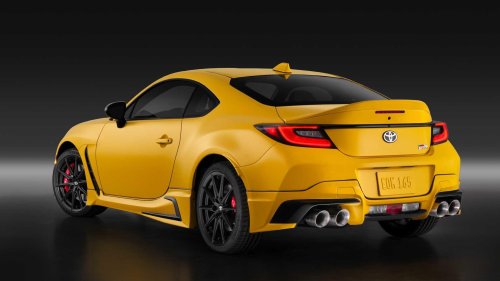
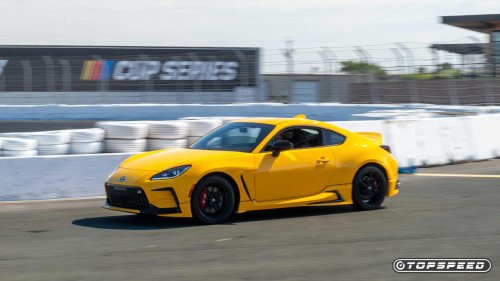
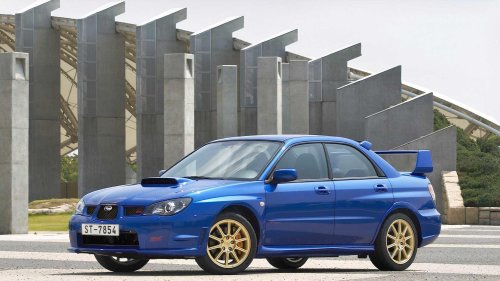
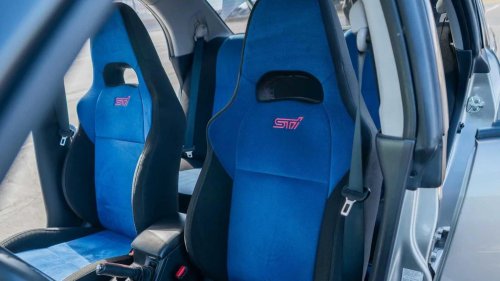
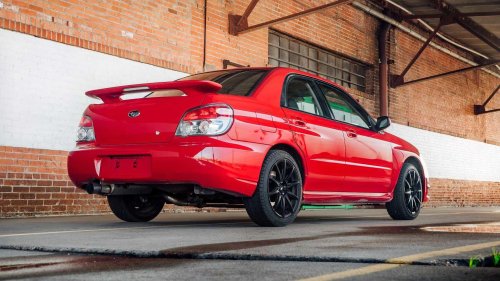
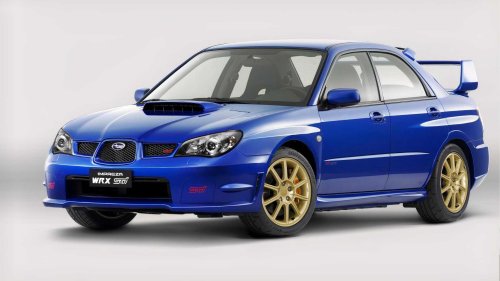
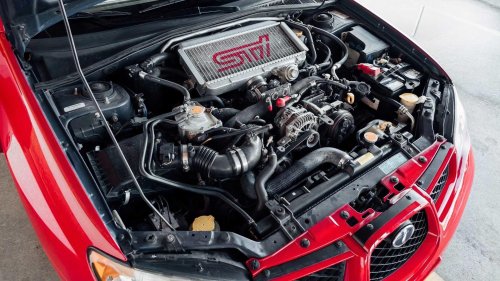
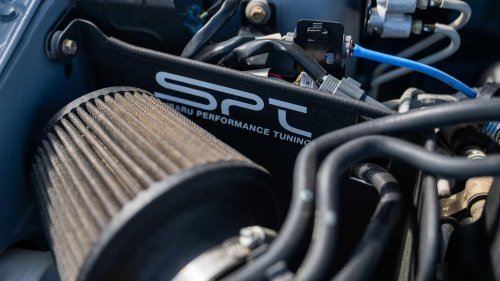
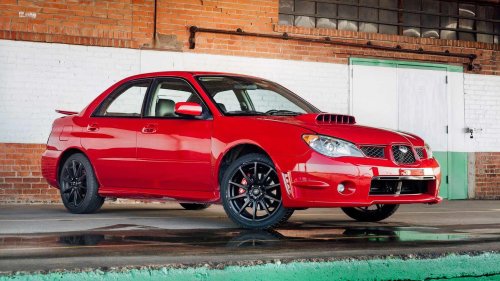
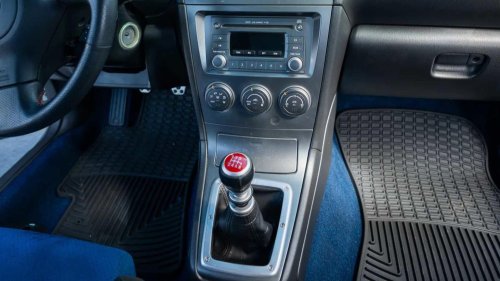
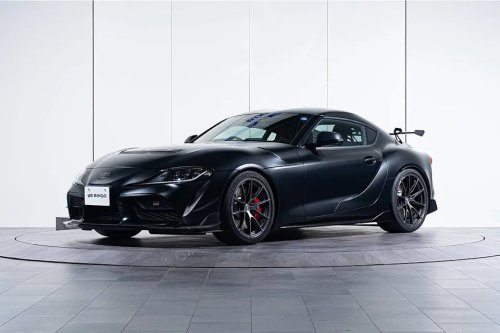
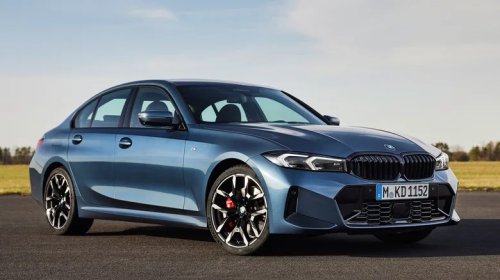
The sports car and rear-wheel drive are long-time friends. Inseparable chums. Give that throttle hell and break the back end loose. Push, rather than pull, a svelte performance car to high speeds and through corners. However, times change, and other drivetrain options have distinguished themselves in the sporty car space. The Honda Civic Type R, for example, is a front-wheel-drive-only affair, and it’s sure to delight during a spirited drive.Then you’ve got all-wheel drive. Don’t mind that sober sedans and dime-a-dozen SUVs routinely send power to all four wheels. All-wheel grip has a home in the performance car segment. Better yet, if you know where to look, you can get a sporty, surprisingly utilitarian AWD car for less than a new Toyota GR86, a RWD staple. Toyota Kept Things Simple And Sporty Toyota The Toyota GR86 might not be easy to live with, but it ticks many of the quintessential sports car boxes. Rear-wheel drive? Check. An eager engine? Check. Manual transmission? Oh, you betcha. It’s a back-to-basics approach to sports car building. Up front, the 2026 GR86 packs a naturally aspirated 2.4-liter flat-four cylinder engine. No turbos, just revs – to over 7,000 RPM. An automatic transmission is available, though the best driver engagement is found with the standard six-speed manual gearbox. Wrap the whole thing up in a rigid, two-seater coupe, and you’ve got the GR86. Rear-Wheel Drive Only Amee Reehal | TopSpeed Some cars offer a choice of drivetrains. Take the venerable BMW 3 Series, for example. For years, BMW’s resident sporty compact luxury sedan has been available in two flavors: RWD and AWD. Not the GR86, though. The Toyota GR86 and its mechanical sibling, the Subaru BRZ, are rear-wheel drive only. Now, for a taut little sports coupe, RWD delivers. But if you want the added grip of all-wheel drive, you’ll have to look elsewhere. Lucky for you, there’s a sporty four-door car with rally pedigree that you can get for less than the price of a new GR86. A Used Subaru WRX STi Is The Sporty AWD Ticket SubaruSubaru knows a thing or two about all-wheel drive. Hell, the automaker’s entire lineup, with the exception of the BRZ, rides on Subie’s symmetrical all-wheel drive. Make no mention of the brand’s rally sport heritage. Looking for a sportier AWD option without wallet-busting used prices? Enter the 2005 to 2007 Subaru WRX STi.Bring a Trailer Call it a “GD” model, or call it a “Hawkeye” (nothing to do with the Marvel character, everything to do with the shape of the GD’s headlamps), it’s all the same short chapter in the WRX STi’s second generation. But the GD WRX STi didn’t stop at updated, love-it-or-hate-it headlamps. For the 2006 model, the STi ramps things up from over the standard WRX, adding power, boost, bigger brakes, sport-tuned suspension, and a driver-controlled center differential. It’s as though a sports sedan and a rally car had a baby and named it WRX STi. Not the best baby name. Cheaper Than A Toyota GR86 Mecum So, just how much will a second-generation, GD WRX STi set you back? The answer: less than a new GR86. For example, the typical listing price for a 2006 Subaru WRX STi is $16,400. That said, your shopping experience will almost certainly depend on factors like mileage, condition, location, and options. The lower the mileage, the more you can expect to spend.For instance, a 2006 model with just 26,000 miles on the clock sold on Bring a Trailer for $30,500 — $2,095 less than the starting price of a new entry-level Toyota GR86. On the other hand, a different example with about 70,000 miles showing on its odometer sold in California earlier this year for $21,850. Not too shabby. Power To All Four Tires Subaru Subaru gave the GD WRX STi its symmetrical all-wheel drive system. That’s no surprise; you’ll find AWD in the less spicy WRX, too. The STi, however, gets a driver-controlled center differential (DCCD) exclusive to the top-trim WRX model. A front-mounted helical limited-slip differential teams up with a mechanical limited-slip differential and a planetary-gear center differential to split power between the front and rear wheels. As for suspension, the WRX STi gets independent suspension all around with a set of inverted struts. Stopping power is handled by Brembo four-piston front brakes and two-piston brakes in the rear. Hits Like A Boxer, Light On Its Feet Mecum The Toyota GR86 and Subaru BRZ are four-cylinder sports coupes, just like the perennially popular Mazda MX-5. Unlike the MX-5, though, the Toyota and Subaru siblings are powered by a boxer engine, also referred to as a “flat” engine. That means the cylinders and pistons are horizontally opposed compared to operating in a V or inline configuration like so many other engines. So too is the Subaru WRX STi.Bring a Trailer For the GD chassis, the WRX STi got a turbocharged EJ257 boxer engine with up to 14.5 pounds of maximum boost. That’s a noticeable increase over the WRX’s 11.6 PSI. Subaru claimed that the mill was good for 300 horsepower and the same number in torque. That’s quite the step up from the GR86’s naturally aspirated, 228-horsepower flat four. Want an automatic? You won’t find one here. Unlike the GR86 and BRZ, a GD like the 2006 model offered a six-speed manual gearbox as the sole transmission option. Not that rowing your own gears is complaint-worthy. 2006 Subaru WRX STi Specs So, Should You Buy One? Mecum The Toyota GR86 and Subaru BRZ might be the purest, no-frills sports cars on the market today. It’s a simple formula: small, usable package, revvy four-pot engine, rear-wheel drive, and a delightful rowable manual transmission. But a small two-door platform sending power to the rear wheels isn’t always the most practical option. That’s where a four-door, rally-inspired WRX STi with grippy all-wheel drive comes in. For less than a new GR86 (in some cases, way less), you can get your hands on an example with plenty of life left to live.Bring a Trailer That said, there are a few things prospective buyers should keep in mind. For starters, look for rust. A rally-pedigree car might get year-round use, meaning exposure to road salt. If you’re looking at a higher-mileage example, verify or budget for a replacement water pump and timing belt; Subaru says to replace those in the 2.5-liter engine after 105,000 miles or seven years. Also, consider getting an independent pre-purchase inspection. Doing so can reveal hidden issues and previous fixes you won’t find in a vehicle’s recorded history. Plus, you know, can you say "Baby Driver" cosplay?