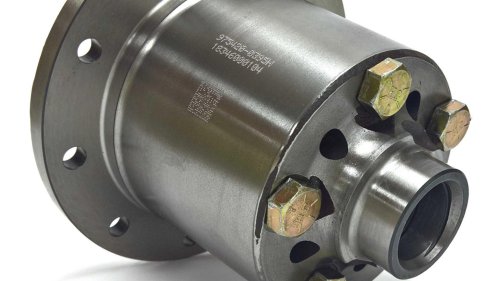
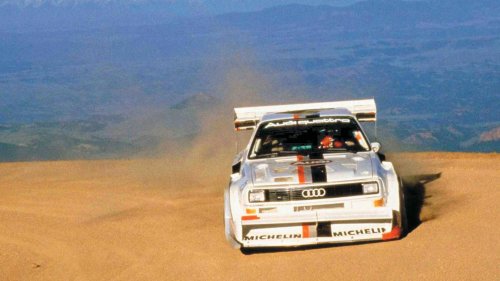



















Jump LinksThere Are Many Different Types Of LSDThe Torsen LSD Is Also Much Easier To MaintainNotable Vehicles Equipped With A Torsen LSD From The FactoryThere are many ways to extract more performance from a road car, with the most obvious being engine modifications that give the vehicle more outright grunt. Beyond this, bolting on a new set of gripper tires and installing suspension upgrades that make the car more balanced and agile on the road are also very effective. Every part of a performance car needs to work together perfectly to ensure there are no compromises, and one of the key drawbacks that can be most detrimental to overall performance is wheel spin.Whether you're taking on a normal road or tackling an off-road trail, a lack of traction can quickly see you going backward compared to your rivals. Fortunately, there is a handy way to get around this problem. A vehicle can send its power to all four wheels or just a pair, a limited-slip differential is a crucial ingredient for improving traction across a variety of surfaces. There are plenty to choose from, but Torsen's own design stands firmly aside from its rivals. A Limited-Slip Differential Prevents Wheels With Less Grip From Losing Traction SubaruLimited-slip differentials have been around for roughly a century now, with the technology being pioneered in racing during the 1930s. Drivers felt their potential was limited when accelerating from corners, as most cars in the early days of motoring were only equipped with an open differential. An open differential channels engine power to the driven wheels, but it only sends power to the wheel facing the least resistance. The design was developed to allow the driven wheels to spin at different speeds, as otherwise one wheel would skip across the surface, or the driveshaft wouldn't withstand the uneven forces and give out.Because the power is sent to the wheel with the least grip, that means one that is already struggling for traction will be forced to try and deal with even more grunt. When trying to accelerate away from a corner or deal with slippery off-road conditions, this means the wheel with more traction won't get any more power to compensate, and the one with less will spin faster. This lack of grip will cost you considerable traction out of a corner and potentially leave you stranded if you're off-road at the time. The limited-slip differential (LSD) was developed as a result, and it primarily works by using multiple clutches that allow a small amount of slip between the driven wheels. It's located between the driveshafts, enabling it to continuously monitor the power split and better share power between the wheels, resulting in vastly superior grip and traction when on power. There Are Many Different Types Of LSD Roger Biermann/CarBuzz/ValnetThe beauty of an LSD is that it can be developed to take care of more than simply acceleration. Two-way and 1.5-way LSDs can also monitor wheel grip during braking and when driving in reverse, providing greater stability when slowing the car. As a result, these kinds of differentials can essentially function in both directions. New innovations still turn up every now and again, from the likes of global giant Toyota.They're also available with a range of technologies, the most common being the clutch-based system first pioneered in the 1930s. Since then, electronic and torque-sensing differentials, which use sensors to determine the torque levels to send to each wheel to improve accuracy, have also become popular. And then you come to Torsen's unique design, which provides several benefits over and above a traditional LSD. Torsen's Limited Slip Differential Uses A Gear-Driven System TorsenThe issue with a standard clutch-based LSD is that it requires a certain level of wheel spin before it engages, which makes power delivery less smooth and more jarring. The result could be a loss of control when one wheel suddenly grips, which isn't ideal for driving confidence. This is where Torsen's design comes in. It uses a helical gear-based setup instead. This configuration is much more precise and can thus detect when a wheel is losing grip in real time, allowing it to work preemptively by having the wheel immediately turn the gears within the differential. The result is much smoother power delivery, as the Torsen LSD has sent the desired power to the correct wheel before the driver has even thought about the unloaded wheel, which could start having a tricky time.Not only does this reduce the chance of the unloaded wheel spinning, boosting traction considerably, but it also helps control the rear end from sliding significantly. This occurs when the car gets pulled from side to side as power is distributed to different wheels, but the seamless Torsen LSD keeps the car firmly on the straight and narrow under acceleration and braking, as well as when coasting.The Torsen design provided more predictable handling, whether from a standing start or while accelerating from a slower corner. It was also a game-changer for off-road cars, as the wheel with the most grip at a specific moment can be awarded extra power instantaneously, allowing it to pull the car free. In contrast, a clutch-based system would force a wheel to start spinning before it would begin working. The outcome of this could be that the wheel could dig a hole before the LSD kicks in, making its work harder, even when the wheel regains grip. The Torsen LSD Is Also Much Easier To Maintain Beyond the performance benefits of the Torsen LSD, the gear-based design also makes it maintenance-free. The various clutches used on a traditional LSD need to be continuously checked and have their friction plates replaced over time, as well as demanding more frequent oil changes. Torsen gears can last for years without major damage and need their oil refreshed less often to keep running optimally.The only real limitation of the Torsen design is that it requires the driven wheels to be on the ground. The system can't work properly if one wheel is fully lifted off the ground. This is where more expensive, more complex sensor-based LSDs come in, as the computer can recognize the situation and send the right amount of power to the wheels still on terra firma to keep the car moving forward until the other wheels hit the road again. Plenty Of Awesome Production Performance Cars Have Utilized The Design AudiTorsen's faster reaction time and smoother performance immediately made it attractive to racers, and Audi selected it to replace the manual locking differential used on its Quattro performance car during the early phase of its life. The Torsen was fitted to the car from 1987 onward, providing immediate benefits on both the world's demanding rally stages and normal roads. The component used on the Quattro, as well as on practically every performance-focused Audi model over the last 40 years, was a center diff that could monitor and distribute the engine's torque to all four wheels. Aside from Audi, Alfa Romeo also used Torsen's center LSD on models such as the 156 Q4 and Brera, while Toyota has also utilized it on its Land Cruiser and Sequoia models. Notable Vehicles Equipped With A Torsen LSD From The Factory 2004-2007 Alfa Romeo 156 Sport/Crosswagon Q4 1987-1991 Audi Quattro 2008-2015 Audi R8 2015-2017 Ford Mustang GT (Performance Package) 1985-2006 Humvee 2003-2012 Mazda RX-8 1999-2002 Pontiac Firebird The legendary Humvee military vehicle used two separate differentials, one on the front and one on the rear axle. At the same time, models like the 2014 Shelby Mustang GT500, the Audi R8, and the Honda S2000 also used one to control their rear wheels. The Torsen LSD has also proven a handy addition to front-wheel drive creations, with the likes of the Ford Focus RS, Honda Civic Si, and some versions of the Nissan Maxima all using one to great effect.The Torsen LSD provides not only superior performance on whatever machine is lucky enough to be graced with one, but also a smoother, more confidence-inspiring drive. At the same time, it's cheaper and less complex than an electronic LSD, making it an excellent compromise for those looking to extract the most from their vehicle.Sources: Torsen.