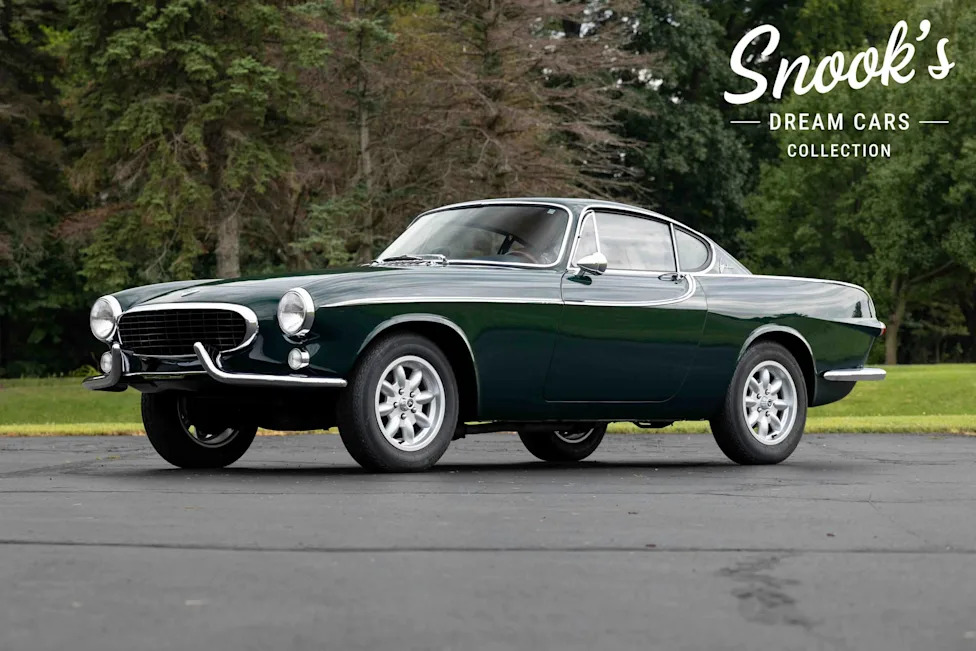
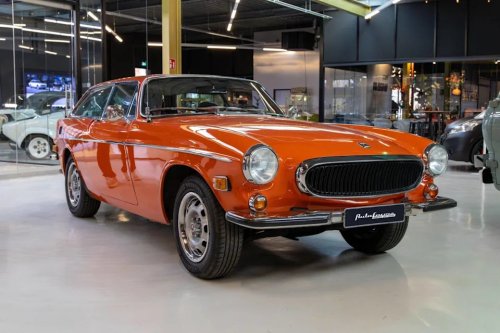
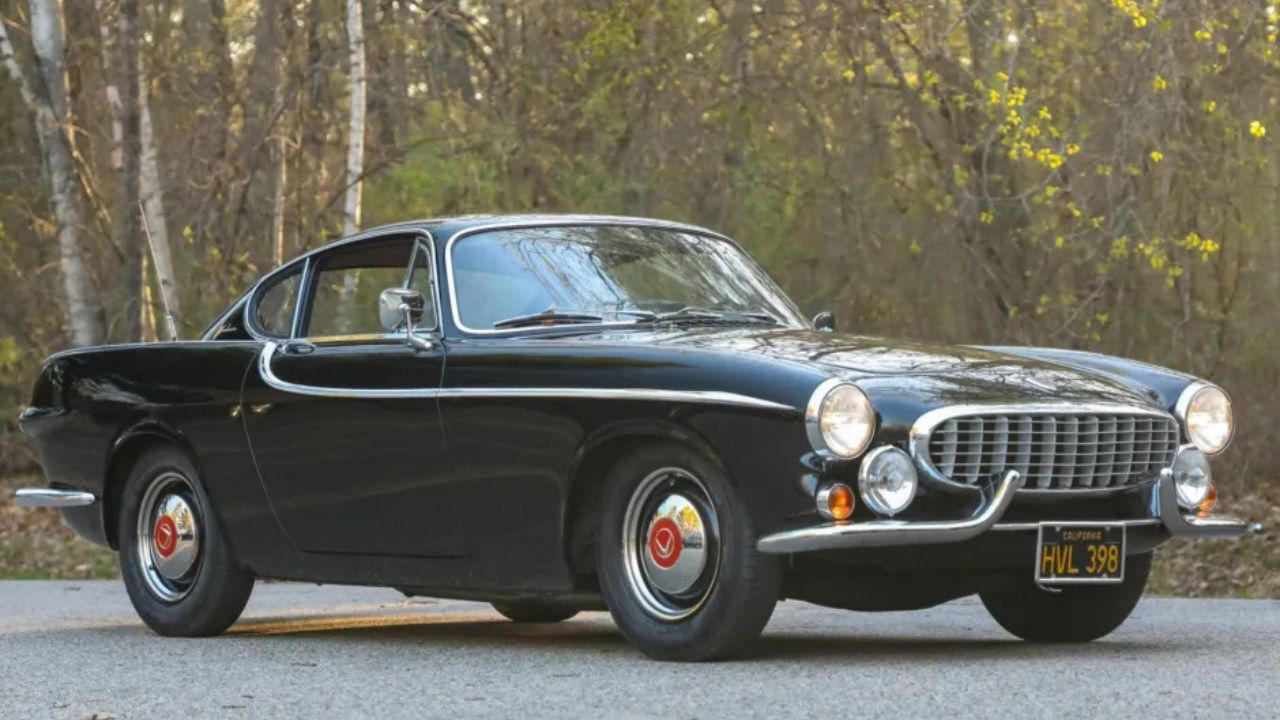
The 1964 Volvo P1800 arrived as a stylish outlier from a company better known for sensible sedans, yet it quietly grew into one of the most recognizable classics of the 1960s. What began as a niche Swedish sports coupe, built in small numbers and with modest performance, is now a fixture at shows, in collectors’ garages, and in popular culture. Its mix of Italian-flavored design, durable engineering, and unexpected celebrity exposure turned an unlikely experiment into a lasting icon. From safe saloons to a stylish gamble By the early 1960s Volvo had a reputation for sturdy family cars, not glamorous coupes. Commentators looking back at the period describe how Volvo was already well known for safe and sturdy family models in the 1950s, then chose to venture into sports cars as the 1960s approached, a shift captured in archival footage of the 1800 series. The decision to build the P1800 was a calculated risk, aimed at giving the brand some glamour without abandoning its core values of reliability and safety. Context matters here. In 1961, when the first production cars appeared, John F. Kennedy had just been inaugurated as US president, Stirling Moss had won the Monaco Grand Prix, and Volvo launched a low-slung coupe into a market dominated by British and Italian sports cars. A period review of that moment, framed around how Moss at Monaco intersected with the new model, underlines how strange it seemed to see a Swedish brand chasing style and speed. The P1800 project also reflected a broader European trend. Manufacturers that had built their reputations on practical cars were experimenting with aspirational models to draw customers into showrooms. For Volvo, the P1800 was less about chasing lap records and more about giving the brand a halo car that would stand out on the street and in advertising photographs. Italian lines, Swedish backbone The shape of the P1800 is still its calling card. The Volvo P1800 was a classic sports car produced by Volvo from 1961 to 1973 and was designed by Pelle Petterson at the Italian firm Frua, a collaboration that blended Scandinavian restraint with Mediterranean flair. A period profile of The Volvo 1800s highlights how The Volvo P1800, created by Designed Pelle Petterson at Italian Frua, has often been described as the most beautiful Volvo ever built. The 1964 Volvo P1800S sharpened that formula. Enthusiast descriptions of the model stress how it combines gorgeous almost Italian styling with hardy Swedish mechanicals, presenting the Volvo P1800 as a dream come true for drivers who want looks and longevity in one package. That blend of Italian design cues and Swedish engineering is a recurring theme in owner reports and in video features that focus on living with a. Under the skin, the car relied on proven components. Contemporary and modern reviewers alike point to its robust four-cylinder engine, straightforward rear-wheel-drive layout, and solid suspension as key reasons the car has aged so well. A social media profile of the 1964 Volvo P1800S describes how the car is known for its reliability, solid build quality, and comfortable ride, paired with an advanced suspension system that helps explain its long-term appeal. Why 1964 matters for the P1800 The 1964 model year is a turning point in the P1800 story. Production that had started in the United Kingdom was moved to Sweden, partly in response to quality concerns that threatened the car’s future. One retrospective on how Volvo’s greatest car was nearly derailed notes that British assembly problems almost killed the project before it found its footing, a brush with disaster that later owners rarely see when they look at the finished product. By 1964, the P1800S designation signaled Swedish assembly and improved build standards. Collectors often single out these early Swedish-built cars as a sweet spot, combining the original design with better quality control. A detailed listing for a 1964 Volvo P1800 S coupe describes how Volvo had a sensation on its hands, a feeling that only intensified when a white P1800 became the chosen steed of Simon Templar, the fictional hero of a popular television series, a connection that would soon transform the car’s public image. Enthusiast videos focused specifically on the 1964 Volvo P1800S underline how, at the time, Volvo did not spring to mind when people thought of 1960s sports cars. One presenter admits that the P1800 is not a car that attracted much attention initially because Volvo did not fit the mental picture of a glamorous coupe, a point made in a review of VOLVO P1800S (1964). That disconnect between brand image and product is part of what makes the 1964 car’s later fame so striking. How a TV spy created “The Saint car” The turning point from cult favorite to mass recognition came through television. The Volvo P1800 received prominence in the early 1960s when a white 1962 Volvo P1800 with number plate ST1 was driven by the character Simon Templar, played by Roger Moore, in the British series The Saint. According to a detailed history of The Volvo P1800, that car became instantly recognizable on-screen and around the roads of Britain, cementing the model’s association with suave espionage and continental travel. Film-makers initially approached other manufacturers, but the P1800’s distinctive profile and availability made it a natural fit once Volvo agreed. A documentary on the 1965 Volvo P1800S explains that Volvo was not synonymous with sports cars or touring cars at the time, yet the people responsible for the model seized the opportunity to place it in front of millions of viewers. The story of how the show created what fans now call “The Saint car” illustrates how product placement can redefine a vehicle’s identity almost overnight. The effect was immediate. The white ST1 car gave the P1800 a glamorous alter ego that showroom brochures alone could not create. Owners of 1964 P1800S coupes still trade on that connection, and auction descriptions routinely reference Simon Templar when they explain why a relatively modestly powered coupe commands such attention among buyers. Bulletproof reputation and everyday usability Beyond looks and television fame, the P1800 earned a reputation as a car that could be driven daily and maintained without drama. Enthusiast coverage describes the model as one of history’s most adored sports cars, in part because it is still considered one of the most beautiful vehicles of its era and in part because its mechanicals are so durable. A detailed feature on what makes the a bulletproof classic sports car emphasizes this combination of aesthetics and toughness. That durability is not just a marketing line. A widely shared story about Irv Gordon, a schoolteacher from New York, recounts how he made history with his 1966 Volvo P1800 by driving it more than 3.2 m, a Guinness World Record for a private car. A social media post celebrating Irv Gordon in repeats the 3.2 m figure and credits the Volvo engineering for surviving such use. Another account of the same feat notes that Irv Gordon drove a single 1966 Volvo P1800 for over 3.2 m, earning the world record for the highest mileage car by one owner. In that version, shared in a discussion of how the Volvo P1800 sets, the car is jokingly said to be worth one dollar per mile. A separate post about a Volvo P1800S owned by a gentleman who took loyalty to extremes describes how 3 million miles means this is the world’s longest driven car, reinforcing the same legend. The 1964 P1800S shares the same basic architecture that made Gordon’s car so enduring. Owners and reviewers frequently highlight the ease of sourcing parts, the simplicity of the engine, and the car’s ability to handle modern traffic. A feature from earlier this year on a 1964 Volvo P1800S in New Zealand describes it as a classic sports coupe renowned for its timeless design and robust character, and notes how it still turns heads whenever it passes in the street. From undervalued coupe to rising classic For years, the P1800 sat in the shadow of more famous 1960s sports cars. Prices lagged behind British roadsters and German coupes, partly because Volvo lacked the racing heritage that often drives collector interest. That has started to change. Market analysis of the 1961 to 1973 Volvo 1800 series describes it as a svelte Swede that is getting more attention from collectors, even as Occasional Polestar or R models dominate Volvo’s modern performance image. Commentators who track values note that Volvo road cars do not usually have a performance reputation, yet the 1800 series is a clear exception, a point made in a discussion of Volvo 1800 values. Part of the appeal is the car’s relative affordability compared with contemporaries. Buyers who want 1960s style without the financial and mechanical demands of some Italian or British exotics are increasingly turning to the P1800. A video review that labels the model the perfect 60s classic argues that combining gorgeous styling with hardy Swedish mechanicals gives the car a unique value proposition, especially for enthusiasts who want to drive their classics regularly. Specialist dealers echo that view. The listing for a 1964 Volvo P1800 S coupe positions the car as a quality classic and a good investment, noting that demand for well-preserved examples continues to grow. Owners who might once have viewed the car as a quirky weekend toy now see it as a legitimate asset in a diversified collection, particularly if it has strong documentation and ties to the early Swedish-built years. Living with a 1964 P1800S today Modern coverage of the P1800 often focuses on what it is like to own and drive one in the twenty first century. A long-term owner featured in a video about living with a Volvo P1800 describes how the car’s almost Italian styling still attracts attention, while its Swedish mechanicals make it straightforward to maintain. The car’s compact size, good visibility, and comfortable seats help it feel usable in daily traffic, even if its performance figures are modest by modern standards. Social media posts from classic car communities add texture to that picture. One enthusiast page describes the 1964 Volvo P1800S as a classic Swedish sports coupe that continues to impress with its solid build and comfortable ride, while another highlights a specific car that turns heads whenever it passes in the street. These accounts tend to emphasize reliability and usability as much as style, a contrast with some 1960s exotics that are admired but rarely driven. There is also a strong community culture around the model. Enthusiast groups share restoration tips, parts sources, and historical trivia, often drawing on both English and non-English documentation. Several language editions of Volvo P1800 Wikipedia entries, including Danish, German, Spanish, and Finnish versions, reflect the car’s international following and provide technical data and production history that owners rely on when restoring cars to original specification. More from Fast Lane Only Unboxing the WWII Jeep in a Crate 15 rare Chevys collectors are quietly buying 10 underrated V8s still worth hunting down Police notice this before you even roll window down

















 +67 others